



Category Archives: marriage advice
Divide over future children can split marriage: Ask Ellie
My husband doesn’t want any more children. This is heartbreaking for me. I still want at least one more child.
I recently discovered excitedly that I was pregnant, but learned that my husband was going to suggest an abortion.
I miscarried anyway, early on. He eventually said he would’ve stayed regardless if I were going to keep the pregnancy.
Now he’s paranoid about getting me pregnant again and there’s no changing his mind. He doesn’t want to have sex while I’m ovulating.
Meanwhile, I’m starting to dislike our sex life, which he’s noticed. The passion and romance seem to be disappearing.
I’m shocked that I’ve started fantasizing about cheating. I keep imagining being with a celebrity or a married stranger who also wants children.
I still love my husband. He’s my best friend and father to our son.
Should we get marriage-counselling, sex therapy, individual counselling, etc.?
Doomed Marriage?
It’s important to learn what’s behind your husband’s decision.
Does he have financial or health worries he hasn’t disclosed? Does he feel he can’t divide his emotions and attention between two children?
Does he fear he’ll “lose” your attention if you’re preoccupied with two children?
Read more:
My wife wants to sleep with multiple people but I only want her, what do I do?: Ask Ellie
My boyfriend hides our love from his daughter: Ask Ellie
Cheating husband cannot be dealt with alone: Ask Ellie
Your cheating fantasy is a diversion, related to your feeling deprived of your maternal wish and possibly reflecting grief over the miscarriage.
Marriage counselling is the first step to take. You’ll understand each other’s perspectives on this much better if you air it out.
But if he won’t go, or refuses to open up, get individual therapy about what’s behind your own escapist thoughts.
Is he a controller in other areas of your relationship?
While it’d be best if you can stay together to raise your son, such a strong divide between you can lead to a separation.
I’m a man, early 60s. We emigrated here 26 years ago, I started working and soon was earning six-figures.
My wife worked part time, our adult kids now have PhDs and Masters’ Degrees, and high salaries.
Last year, I had life-saving transplant surgery but now live on disability benefits. I became a liability in my family’s eyes.
Last year when joking with my son, he got offended and hit me.
It hurt physically and psychologically.
My wife separated her salary from me because I’m spending “her money.”
Recently, I heard a late-night heated argument between them. When I went to see what happened, both started yelling at me to “get out.”
They’ve isolated me.
I’m thinking to leave these jerks and start a new life. I’m not afraid. I’m a positive person thinking that this life with all its problems has to be lived in full and with fun.
Am I exaggerating? Or are we just old and fighting each other?
De-valued
Their disrespectful behaviour sounds both mean-spirited and worrisome to me.
But just walking out on your own, without a support system, sounds too risky to your health and well-being at this time.
See your doctor to discuss what’s needed for you to manage on your own. Call your bank and learn the extent of your financial situation.
Call or visit a legal clinic to discuss the “isolation” moves and mention your son’s hitting you.
Also check whether there’ve been moves to put your house or other assets in your wife’s or son’s name without your knowledge and/or agreement.
Your independent spirit is wonderful, but only serves you well if you can stay physically able to maintain yourself, with enough money to live on.
Tip of the day
Having a child should be a mutual decision or it can divide your relationship.
Read Ellie Monday to Saturday.
Email ellie@thestar.ca or visit her website, ellieadvice.com.
Follow @ellieadvice.
Author's husband's stroke lent strength to marriage
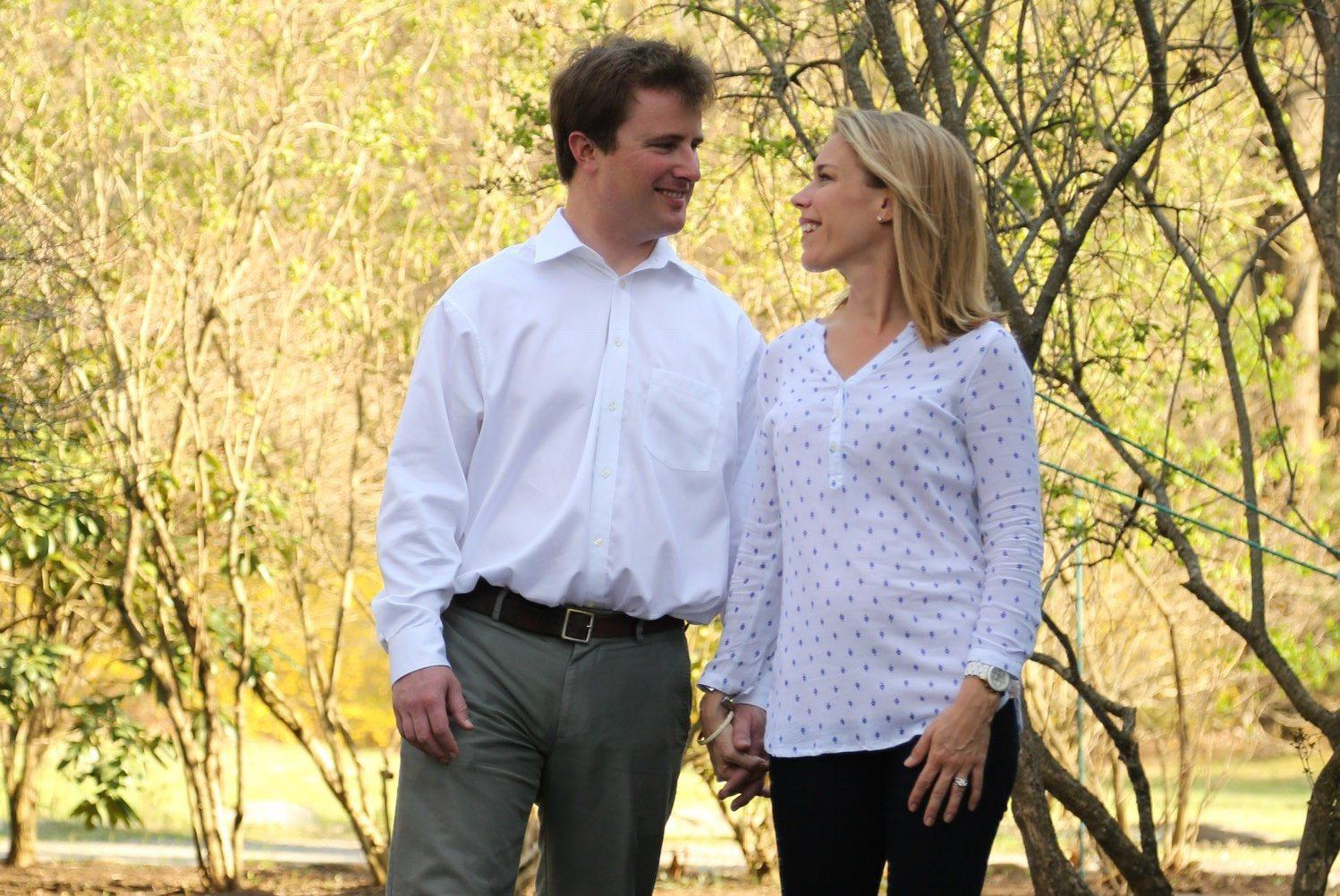
Allison Pataki and her husband were on an airplane in June 2015, heading to Seattle for a “babymoon” — a couples’ vacation before the little one arrived.
Dave Levy leaned over and asked his wife if his eye looked strange. Pataki looked up. She watched as her 30-year-old husband had a stroke and lost consciousness while they were 35,000 feet in the air.
The plane made an emergency landing in Fargo, North Dakota. Pataki spent the night in a hospital waiting area while doctors worked on her husband. She didn’t know if he’d ever wake up.
Levy, then a third-year resident in orthopedic surgery, did wake up, but he was initially unable to speak or remember who his wife was.
His hard-fought recovery is the basis for Pataki’s new book, “Beauty in the Broken Places,” a memoir about their determination and gratitude, and the value of putting one foot in front of another during a crisis.
Pataki, the daughter of former New York governor and Republican presidential candidate George Pataki, said that when Levy initially regained consciousness after his stroke, he couldn’t do anything on his own, even breathe.
“We had to start from ground zero. When he woke up he was less functional than a newborn baby,” said Pataki, 33, an author. “He had to learn to do everything again.”
She moved him to a hospital in Chicago, near where they lived. And the incremental healing began. He slowly started to gain back his functions. First, he could open his eyes, but he couldn’t move them side to side. If he wanted to see something, he had to swivel his entire head. He could talk but his words didn’t make sense.
There was not a definitive answer why an otherwise healthy, athletic man had a stroke. Doctors could not tell them exactly what to expect in his recovery, or just how much he would recover.
To cope with the stress and uncertainty, Pataki wrote letters to her husband daily. She did it on the advice of people who knew how slow, and maddening, progress can be after a brain injury.
“People told me it would be an important exercise. I was so close to the situation every day,” she said. “People told me, ‘you won’t see the hard-fought progress day to day unless you write it down.'”
They were right. But another byproduct of the letters is that she said she fell in love with her husband all over again.
“People were flooding us with these emails, cards, text messages, letters. So many of them were memories of Dave — small things he’d done for a friend that changed the friend’s life. Or how they’d always looked up to him. They were these poignant, heartfelt stories of Dave,” she said. “I fell in love with the man I married all over again.”
But it was also difficult to hear those stories about him.
“It broke my heart because I didn’t know if that man still was there,” she said.
In the middle of it all, their first child, Lily, was born. Pataki said caring for a newborn while caring for her husband was a logistical and emotional hurdle she’s not quite sure how she managed. She said she didn’t imagine she could hold so much love and so much grief in her heart at one time.
She’s frank about how hard the recovery was on their relationship.
“Our union and our partnership was stripped to the fundamentals, I didn’t realize we’d be reckoning with those values so soon in our marriage — sickness and health, better and worse,” she said. “We were in the fight of our lives. We were doing this for our past, were fighting for our future together.”
As Levy recovered, their relationship regained its footing as a marriage. Now, almost three years after his stroke, Levy is basically back to who he was before the stroke. Maybe more laid-back, Pataki said. He’s working again full time as a medical consultant, and he takes joy in his family, especially Lily.
“If you talk to him or you see him, you’d never know,” Pataki said.
She credits her faith, hope and old-fashioned determination with getting her through the hardest days. And in their most profound display of hope for the future, they are expecting another baby in June.
Pataki said that in the past few years she has felt as if she has been in perpetual motion and has had little time to reflect. The book helped her do that. Along the way she thinks she’s gained a bit of wisdom. She’s come to understand, she said, that control is an illusion.
“I have a sense that things can shift in the blink of an eye,” she said. “I have that outlook of appreciating the good moments.”
3 reasons to keep your money separate from your spouse

When I first got married, I thought my spouse and I were supposed to be attached at the hip in all things. Over time, I found that I needed more breathing room than the close embrace of early love allowed. For me, that meant separating my money from my wife’s.
“Every good marriage is based on an awful lot of separation,” Steven Nock, a professor of sociology who studies marriage at the University of Virginia, told WebMD. “People need to have a separate life and existence to feel validated as individuals. They can’t live solely as somebody’s partner.”
For many couples, this happy separation extends to their finances, as well as their social lives.
Our money separation felt harsh at first. I had decided to pay down some debts and improve my financial IQ, and I knew I needed a separate checking account to learn money management. To my wife, this seemed like a slap in the face. Over the years, however, our separate accounts have given us both the freedom to have a little fun with our own money, while still being financially accountable to each other.
Download the SmartNews app and add the Ladders channel to read the latest career news and advice wherever you go.
I’m not alone in wanting to maintain separate finances from my spouse. TD Bank’s 2017 Love and Money Survey found that 51% of the couples they surveyed combined all their finances, while 34% kept some money separate and 15% didn’t share money at all. The trend is stronger among millennials: 29% of couples under 34 have no shared accounts.
There are a number of reasons why married couples are joining the trend and keeping their finances separate from their spouses. Here’s why.
1. Two bank accounts are better than one
Mingling your money can add stress to your marriage, too. If you and your spouse have divergent spending habits and financial priorities, you can either fight about it or give each other some space to be different.
You might be happier if you didn’t know how much money went to piano lessons or that cute little Kate Spade backpack. That’s certainly true for some couples.
2. It doesn’t have to be all or nothing
Some couples take a “yours, mine, and ours” approach to personal finances. Each spouse has a separate account, and both contribute to a joint account to pay household bills.
My wife and I have come up with a version of this approach. We each have our own checking account as part of a jointly-owned credit union account. We have a joint savings account for reserves and another that we both contribute to for mortgage and property taxes.
In a pinch, either one of us can access the other’s checking account. Over the years, when one of us has made substantially more money, it’s been easy to transfer funds to support the other.
Best of all, I don’t have to weigh in on the new bike helmet she wants, and she doesn’t get to have an opinion about how many dresses I need to own (a lot). We can look at each other’s accounts if we want to, but we generally don’t.
I talk about money with my wife, and we make big financial decisions as a couple. But we stay in our own lanes for the day-to-day stuff. I think that’s the secret sauce for a happily married financial life.
3. Some of your finances are unavoidably intertwined — such as sharing a home together
There is a lot to be said for joint bank accounts. If one spouse dies, joint accounts usually give the survivor immediate unrestricted access, according to legal website Nolo. If your accounts are separate, then you’ll probably need documentation that proves you have a right to the money, and you might have to go through probate before you can touch the funds, Nolo reports. This can add stress to an already stressful time.
Joint accounts also foster financial transparency. According to the TD Bank survey, 13% of respondents said they concealed some part of their financial lives from their spouses. Millennials were much more likely to have undercover money (30%) than couples over 55 (4%). Secrets included clandestine bank accounts, and undisclosed credit cards and student loan debt. Worse yet, 35% of respondents said they had no plans to ever share their money secret with their spouses.
Financial cover-ups can send a marriage onto rocky shoals when they come to light. A recent “Dear Sugars” column had a term for this: financial infidelity, which associates hiding financial information as a form of betrayal to your partner.
Even if you keep your finances separate (in fact, especially if you do), there’s no way to avoid talking about money with your spouse. When you live together, your financial lives are unavoidably intertwined.
When my wife and I first separated our bank accounts, we tracked how much each of us spent on household items such as utility bills and groceries. I was surprised to find that I contributed just as much by purchasing household supplies and food as she did by paying our fixed expenses for things like car insurance and the electric bill.
Over the years, we’ve renegotiated who pays for what, as our financial and living situations have changed. What hasn’t changed is our commitment to sharing financial information with each other and making big money decisions as a team.
This article first appeared on Business Insider.
More from Ladders
The 'Wednesday Rule' that keeps Bec Judd's marriage strong
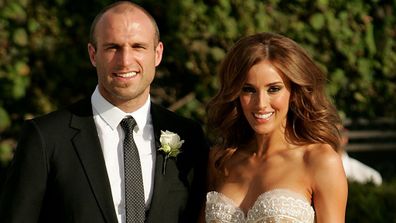
Rebecca Judd doesn’t do anything by halves — whether it be fashion, marriage, motherhood, career and now, a book about raising babies.
“I’ve been asked so many questions about so many different facets of being a parent,” 35-year-old Judd told 9Honey. “From exercise to routines to what I pack when we travel and what I did with the twins on the plane.”
And so, Judd enlisted the help of a slew of experts to write the ultimate baby book for parents called, The Baby Bible.
Featuring the likes of Dr Len Kliman, Dr Andrew Ngu, Midwife Cath, women’s health physio Shira Kramer and paediatric sleep specialist Amanda McGill, The Baby Bible is basically an encyclopedia for new parents.
Read more: Rebecca Judd’s way-too-honest parenting moment
“I’ve been lucky enough to surround myself with some of the most brilliant pregnancy and baby experts in Australia,” the mother-of-four said.
“I’m not an expert, but over the years I’ve learned so much,” says Judd, who is married to former AFL star Chis Judd.
Bec has been pregnant three times with Oscar, seven, Billie, four, and twin sons, Tom and Darcey, one.
She says each experience has been vastly different — from pregnancy to birth to breastfeeding.
“When Oscar was born I felt nothing,” she told 9Honey. “I knew I was supposed to have these feelings of overwhelming love but it took time.”
With daughter Billie, however, Bec said the feelings of love were “instantaneous”.
The Melbourne-based mum says she’s happy she had twins later in the birth order because it’s been an experience unlike any other.
“I looked like an alien,” she said of being pregnant with her twins. “I will never forget the pain of growing two humans.”
It’s important to Bec to share realistic experiences of motherhood, from stress and fatigue to working to keep her marriage healthy.
The model and mother has been married to former Carlton captain Chris for the past seven years.
She told 9Honey a non-negotiable date night each week is key to their continued happiness while raising four children.
“We have a date night every Wednesday,” she said. “We book in the babysitter and Chris is really busy and so am I [but] even if it’s just playing tennis, it’s really important to have that time together.”
The TV presenter talks throughout the book about the need for women to support each other, particularly when it comes to being a parent.
“Mums have enough to deal with every single day without worrying what everyone else is thinking of their parenting skills,” she said. “As long as our babies are safe and loved, they will be okay.”
(Image: Graham Denholm/WireImage)
Bec said while the experience of giving birth to her children was “overwhelming and amazing”, it wasn’t what she thought it would be.
“You think when you have a baby it’s all music and tears and magic, but it’s not like that,” she told 9Honey.
“It’s a shock. The obstetrician hands you a baby and the responsibility hits you.”
If she had to give one piece of advice to mums she’d tell them to “relax” and take it all in their stride.
“It can be really hard, but it will all come to you,” she said.
“Even when it comes to breastfeeding. With Oscar I really struggled and I got mastitis so I called it quits. With Billie, breastfeeding was a breeze.”
Judd gives lots of advice on raising twins throughout the book, saying mums of multiples hold a special place in her heart.
“I’m casual with them and they’re great,” she said of navigating her twin boys.
“And they are so different. Darcey is crazy and a risk-taker and Tom is calmer.”
The book even covers practicalities, like items expectant parents need to buy ahead of the birth of their child.
“I tell them just to buy lots of Bonds ‘onesies’,” she told 9Honey. “My twins are still in onesies.”
“When you go to the hospital you pack all the cute little outfits with suspenders and buttons but they’re just so impractical.”
Practicality and convenience are key to raising four children under seven.
Of baby showers, Judd said she feels there are no rules.
“I love a party and for me, having a baby shower each time I am pregnant is about getting my girlfriends over and the excitement of having a baby,” she told 9Honey.
“It’s not about the gifts. If you have a baby shower each time you are pregnant people think you are greedy. So I just say, ‘No presents, just good company’.”
You can purchase Bec Judd’s book The Baby Bible through Booktopia.