



Category Archives: Marriage & Divorce
The idea is not to lose yourself in the process [of marriage]: Deepika Padukone – DAWN.com
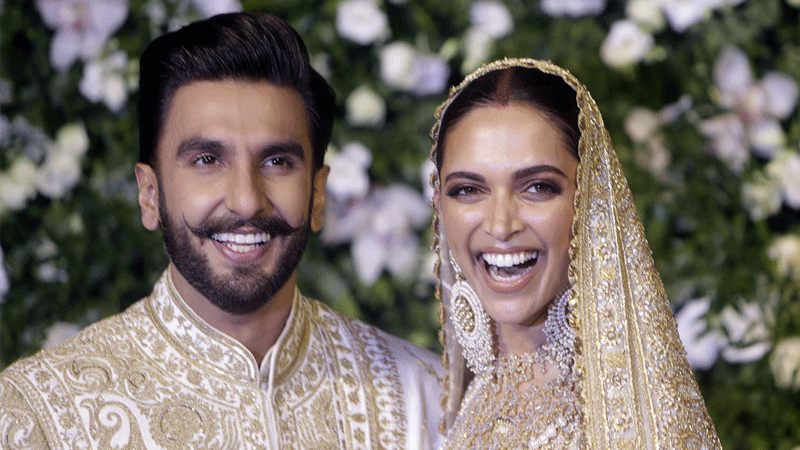
Deepika Padukone has finally opened up about her relationship with Ranveer Singh… now that the two are married.
The couple who recently tied the knot at Lake Como, Italy, looked very much in love during their multiple wedding events and Deepika’s latest interview — which happens to be her first interview post marriage — shows just how much the duo care for each other.
“With Ranveer and me, our relationship rests on the fact that we’re extremely liberal with each other, extremely supportive of each other’s professional careers and know each other’s personal needs,” said Deepika.
“I think when we started dating six years ago, professionally, we were both in very different places. My career took off slightly before his, but throughout our relationship, right from 2013 – even when I was shooting for [Goliyon Ki Rasleela] Ram-Leela and Chennai Express – nothing has changed.”
She added. “He is vulnerable, extremely emotional, very intelligent; childlike at times. That’s not to say that his irrepressible energy isn’t him, it’s very him. He’s a real people’s person, but there’s a quiet side to him too. Emotionally, I think I’m the more intuitive one. I’d say IQ is more him. But at the same time, he’s not all like, ‘I’m a man, I can’t show my emotions.’ He’s sensitive, and so am I, and it makes it easier to share a life with someone who understands that.”
And Deepika knew from the get-go that Ranveer was ‘the one’.
“I think you just know when you want to spend the rest of your life with that one person – and he’s everything rolled into one man. He’s my best friend, playmate, companion and confidant. I can be silly in front of him, I can be stupid in front of him, I can be sick in front of him, I can be whatever I want to be.”
Even photos from DeepVeer’s events saw the two having the time of their lives, and she said, “I think the pictures we shared [on social media] summed up the wedding – it was magical to have just family and friends there who mean something to you, who don’t really care about who you are professionally, but are there because they love you for who you are as a person. People who’ve seen you grow, been part of your journey and are genuinely happy for you.”
“Well, I’ve been running a home since I was 18, so I don’t think much is going to change in that sense,” said the 32-year-old actor.
“But of course, we’ll go through all the changes that happen when two people start living together. I was clear right from the start that I didn’t want to have a live-in relationship to figure out if I wanted to marry someone or not. Now [I’m expecting] everything that comes with being a newly-wed: sharing space, you know, or the bills, whatever it takes for two people to live a life together.”
And now that she’s married she’s got some useful advice for others out there who choose to tie the knot. “I’m aware of culture, tradition, all that… I also understand what it means to be my own person. Of course, it’s exciting to take your relationship to the next level, but at no point as a woman should you forget your sense of individuality. It’s important to remain authentic and stay true to who you are. The idea is not to lose yourself in the process [of marriage].”
For Deepika 2018 has “been one of the most incredible years of my life – professionally and personally. It’s been a complete high.”
'We're WHAT?' Why marriage default laws are misguided – The Conversation – Canada

Imagine that you move in with your intimate partner. Three years later, you get a letter from the province: “Congratulations! From now on, we view you as a married couple.”
While you might not actually find such a letter in your mailbox, this is essentially the system recently proposed by the province of Alberta under its new Family Property Act.
Alberta isn’t alone. British Columbia, Saskatchewan and Manitoba already have such systems in place (for B.C. and Saskatchewan, couples are considered married after two years).
Over the past few months, we’ve interviewed 15 unmarried couples in B.C., which has been considering live-in couples “spouses” since 2013. We found that the law, while well-intentioned, infringes too far on couples’ autonomy in shaping their relationships.
It makes many unmarried couples in the province married by default, does not necessarily reflect couples’ wishes and communicates a norm of commitment to couples who live outside marriage and might not be ready to commit or have good reasons to protect their assets from their partners.
Property division
The amendment to an existing law being considered by Alberta has compelling justifications: Making the law more predictable and thus more accessible.
Under current law, unmarried couples do not have the same rights as married couples regarding division of property when a relationship ends. Furthermore, the current law makes it difficult to predict the outcome of litigation in the event of a breakup. This encourages expensive legal help, which some partners cannot afford.
To fix this, the suggested reform proposes that after three years of living together, unless the parties have executed an agreement, the same rules of property division that apply to married couples would apply to unmarried couples.
This reform tells partners: You should decide in advance — and enter into a contract — about division of assets in case of breakup.
If, in three years, you haven’t done so, the province will decide for you by extending the rules of equal division of assets to you. It therefore serves to nudge couples to deliberate about their mutual obligations in advance.
Law is still uncertain
Sounds fair, right? However, experience in B.C. reveals a few problems with the system.
A study by Robert Leckey, dean of the Faculty of Law at McGill University, compared court cases before and after the reforms in B.C. and Saskatchewan. It found that couples still litigate obligations under the new laws, seeking judgment on whether their relationship falls under the definition of living in a “marriage-like” situation, or they dispute how long they’ve been in such a relationship.
Leckey’s study implies that uncertainties remain about cohabitation laws.
In another study, Leckey argues that post-reform cases show that when judges evaluate whether couples are in “marriage-like” relationships, those judges tend to use traditional ideas of “good marriages” characterized by “gendered and class-specific notions.”
Our concern is how the law operates both long before a breakup — when couples decide whether to move in together — and also at the two- or three-year threshold, when the law kicks in.
Our study finds that couples’ degree of familiarity with and understanding of the law is abysmal. About two-thirds of the 15 couples falsely thought they had to “apply” to be considered spouses. They did not understand that they are automatically covered by the law; in other words, they must opt out to avoid being affected by the legislation.
In addition, a third of the interviewees mixed up the federal and the provincial time requirements for recognition.
Understanding the law is also difficult. The most educated and sophisticated couples we interviewed were unable to get it right, even after making great efforts to do so.
Couples hope for the best
To clarify, most couples in our study had good reasons to know about the law because they had some properties together or other mutual assets. This is not a surprise: The couples we interviewed, like married couples, were often overly optimistic about the chances of staying together, or believed any breakup would be amicable.
No couple likes to ponder their breakup, and likes to believe if they did decide to part ways, it would be amicable. FreestocksOrg/Unsplash
In fact, only one couple had actually executed a contract, but even this one did not follow the required formalities (witness and signature), so it is unclear whether the contract will be enforceable.
Default rules —such as those concerning equal division of property —typically serve to maintain the status quo. Studies examining behaviours of parties to other types of contracts demonstrate that they don’t change the default rules, even if they don’t desire them, for many reasons.
Opting out from default rules concerning property division is procedurally onerous and, in practice, requires a lawyer’s advice, which many cannot afford. Furthermore, the defaults may reflect the wishes of many couples, but they also suggest a norm of traditional marriage.
Accordingly, couples after two years (in B.C.) interpreted the law as advising they should adopt traditional, marital-like behaviour. A few couples in our study affirmed that; they believed that by the two-year threshold, their level of commitment ought to have evolved. It was a sort of deadline marking the end of a period of deliberation about whether they wanted to stay together as a couple.
We think that reforming laws relating to unmarried couples in Alberta, and elsewhere, is long overdue. But we are concerned that the Alberta bill, like its predecessors, is a strong affront to couples’ autonomy and erodes the freedom to choose to live in non-marital situations.
It’s not a gentle nudge, but more like a push.
A more innovative approach would present ways in which couples can effortlessly indicate their preferences using an online form, or at least would better inform couples about the law so they can choose for themselves if they want to “marry” —or to avoid the consequences of “marriage.”
How to stay married, according to a divorce lawyer – Vox

If you want to know why marriages break apart, and what it looks like when they do, talk to a divorce lawyer. Better yet, read a book by a divorce lawyer about why people divorce.
Luckily for you, that book exists, and I decided to interview the author.
James J. Sexton has spent nearly 20 years handling custody disputes, child care payments, prenups and postnups, and basically every conceivable divorce scenario. His new book, If You’re in My Office, It’s Already Too Late, is a distillation of the lessons he’s gleaned along the way.
Over the course of our conversation, I asked Sexton why people end up in his office, what advice he has for people struggling in their marriages, why he calls Facebook an “infidelity-generating machine,” and why he’s still a romantic after all these years.
A lightly edited transcript of our conversation follows.
Sean Illing
What are the most common reasons people end up in your office?
James J. Sexton
They come in for big reasons like infidelity or financial improprieties. But from my perspective, these big reasons have their origins in a succession of smaller choices that people make that take them further and further away from each other, to the point where those small things no longer feel quite so small. Everyone, when they get married, starts off with the same destination in mind. We want to live happily ever after. No one ever gets married with the intention of getting divorced.
In Tom Wolfe’s Bonfire of the Vanities one of the characters is talking about how he went financially bankrupt and one of the other characters says, “Tim, how did you go bankrupt?” He said, “Well, I went bankrupt the way that everyone does, very slowly and then all at once.” I think that’s how marriages end. Very slowly and then all at once. There are lots of little things that happen and then the flood comes, then the big things happen. The question is, can we stop the little things that take us further away from each other before it’s too late?
Sean Illing
What’s your advice to people who are thinking about getting married?
James J. Sexton
Take it seriously. The simplest advice that I give to people is to look at it like the purchase of a car, because I think, sometimes, people give more thought to the purchase of a car than they do to the decision to get married.
If I said to the average person, “What car do you want? If you could have any car in the world, what car do you want?” Most people would say, “I want a Lamborghini. I want a Ferrari.” But if I said to them, “Well, this car that you choose is going to be the only car you can have for the rest of your life,” you have to change the analysis, right? Because the car you want in your 20s and the car you want in your 30s when you’ve got a couple of kids is very different.
So you’d have to take something that fits every part of your life. You’d have to pick something that was kind of fun and sexy enough to see you through your 20s but practical enough to handle when you have kids. I think it’s the same when choosing a spouse.
At the risk of sounding unromantic, I think you have to look at a person and say, “Okay, is this a person who is going to make sense at all different phases of this journey? Because my life is going to change. I’m going to change. What’s important to me is going to change. Is this a person who can change with me so that we end up [moving] in the same direction? Or is this someone who makes sense for me at this chapter and may not in the future?”
That’s the first thing. The second thing is to ask yourself the question: “What is the problem to which marriage is the solution for me?” Anytime someone tries to sell something to me, whether it’s a cellphone or a new app, I ask myself, “What is the problem this is seeking to solve?” So, if you say to me, “Oh, I’ve got this app that lets you order guacamole online,” well, is that a problem I actually have? I think people often assume marriage is a smart thing to do without even asking themselves this question.
Sean Illing
I’m not sure I buy the idea that marriage is — or ought to be — a solution to something, because that implies it’s filling a void of some sort. I think that’s a mistake.
James J. Sexton
I take your point. I suppose what I’m saying is that too many people just fall into marriage because they think that’s what people do at a certain age, rather than seriously asking themselves if it’s a good idea for them.
If you’re dating someone for four or five years and you said, “Hey, we’re getting married,” everyone would say, “That’s great, congratulations.” But if you were dating someone for four or five years and you said, “Well, we have no intention of getting married,” everyone might say, “Well, why? What’s wrong? Do you have relationship issues? Do you have intimacy issues?” It’s sort of assumed that marriage is a thing you do.
It’s worth asking why we do this. How will it improve our relationship, our life? Are we trying to solve the problem of loneliness? Because you can be married and still be quite lonely. Is it the problem of not having sex? Because you don’t have to be married to have lots of sex. Being married is no more of a guarantee of having lots of sex than living near a restaurant is a guarantee of being well fed.
So you ask yourself the question, “What is it I want to do? What is the problem I’m trying to solve?” Is it family pressure? Is it cultural pressure? Is there something that is lacking in the relationship that I think would be solidified by being married?
We have nothing to lose by pausing and considering these questions.
Sean Illing
What’s your advice to people who are struggling in their marriage and thinking about divorce?
James J. Sexton
We jokingly refer to these people as tire kickers in the industry. They come in and say, “Look, I’m not ready to get divorced, but things aren’t as good as I thought they’d be and I’m thinking about it.”
The first thing I try to do is educate people about their rights and obligations when it comes to marriage. Marriage is the most legally significant thing you will do, other than dying. It changes your property ownership rights. It changes your obligations when it comes to support. It changes all kinds of legal rights and you don’t even get a pamphlet when you get married that explains that to you.
You don’t get a one-page document that says, “By the way, your inheritance rates have automatically changed. Your ability to select a beneficiary for your life insurance policy has just changed. Your ability to hold property in your sole name just changed.” The first thing I do anytime anyone comes to my office, wherever they’re at in their marriage, is I just try to get them up to speed on what they’re already involved in.
Then, as a divorce lawyer who sincerely tries to be ethical, I talk to people about steps they might take to avoid the worst-case scenario. I suggest counseling or therapy and I’ll offer referrals. I try to make sure that they’ve exhausted all their options before making this final decision.
Sean Illing
In the book, you call Facebook an “infidelity-generating machine.” How many divorces in your experience stem from social media?
James J. Sexton
It’s a huge factor now, and it’s getting worse every day. I can’t remember the last time I had a case where social media was not either a root cause or implicated in some way. And it’s always the same story: people maintaining affairs via social media or communicating with people they don’t have any business communicating with. Infidelity is so easy now, and it’s poisoning marriages.
The problem I have with Facebook specifically is that Facebook creates these very plausibly deniable reasons for you to be connecting with people emotionally in ways that are toxic to marriages. And people are using social media when they’re bored or vulnerable or in transition, not when they’re having a wonderful time with their spouse or enjoying life.
And what are we looking at? We’re looking at someone else’s carefully curated greatest hits, right? Because what do we put on our social media? We post our best moments. We put our coolest pictures where we look the best. We put our most exciting things.
We curate carefully what we put up there. So if I’m in a vulnerable, lonely, bored place looking at everyone else’s curated greatest hits, of course I’m going to think I’m doing worse than I’m doing. Of course I’m going to think my relationship isn’t as interesting as everyone else’s, or as happy as everyone else’s.
Sean Illing
How often is sexual dissatisfaction the root cause of divorce?
James J. Sexton
Root causes are hard to identify, but it’s obviously a huge factor for people. Maintaining physical intimacy is so important. I think sex is the glue, but there are lots of reasons why people disconnect from each other physically. Very often, they’re well-intentioned reasons.
For example, people fall into routines. You meet somebody, you’re dating them, you both just throw your best stuff at each other, you try all kinds of different things, and if you’re a conscientious person who’s a good lover, you learn what things your partner likes and you keep doing them. Eventually, that becomes a routine, which becomes more solidified over time. And then anytime you try to break out of it, it can be kind of weird and unexpected.
So people stick to what they know. But it’s very hard to maintain excitement or novelty that way, and that can definitely create unhappiness.
Sean Illing
I want to ask you about the importance of forgiveness, of not letting resentments build up and eat away at a relationship. I admit that this is something it took me far too long to fully appreciate in my own life, and it’s a big part of your book.
James J. Sexton
Well, it’s just toxic. This is what I was getting at earlier when I said that it’s all those seemingly little choices that, over time, metastasize into massive problems. It’s never, “Remember that time you slept with my best friend?!” It’s always those tiny discourtesies — that annoyed look on your face, that time you ignored your partner when they needed you, all those times you couldn’t bother to give that person your full attention. These are the small things that become big things over time.
In the book, I urge people to just “hit send now,” which means always call out those little things immediately in the moment, always address them right now. If you don’t do that, if you let the resentments grow, those raindrops become a flood and it’s too late to put everything back together again.
Sean Illing
I think that’s right, and it’s worth pointing out, as you do in the book, that most of the time, it’s not about one person being bad and the other person being good. Instead, it’s about both people failing in their own ways over and over again.
James J. Sexton
Absolutely. I’ve represented every imaginable divorce client, and I’ve seen it all. I have to tell you, I don’t think it’s as simple as good people over here and bad people over there. I think that all of us, if you catch us at the right moment, can be good or bad.
Most of us just want to stay connected, and we really do want to love people and be loved ourselves. But it’s easy to get off track. The world is antagonistic to marriages, and there are a million different things that limit your access to your spouse’s attention. And if you don’t do the work of constantly checking in, of keeping that connection, you will lose it.
Sean Illing
Has your career made you a cynic about marriage?
James J. Sexton
I don’t think so. It’s made me a realist. I’m a romantic, but I don’t believe in fairy tales. I think that we sell people a bill of goods about what love is supposed to look like. Love is a verb. I really do believe our lives are richer when we open ourselves up to love, and I’m not cynical about love.
My career has made me really realize how much people value love and how we’ll run into walls to try to get it. We’ll risk everything we have personally or financially to get it. But I really think we’re not honest with ourselves or with each other about where it’s challenging.
Love is so quick. You meet someone, there’s an attraction, and it happens fast, but falling out of love is very slow. It’s a very gradual process. You put on weight slowly and you lose weight slowly. So there’s a balance there, right? You don’t just wake up one day and you’ve gained 20 pounds. You very slowly gain weight, but sure enough, it happens.
It’s the same thing with love. I think you fall in love really fast, then fall out of love slowly. And if you want to keep your love alive, you have to be attentive to all the little things that go wrong along the way, and constantly course-correct. If you can do that, you’ll never set foot in my office.
Carole Middleton just shared valuable advice for any mother of the bride – GoodHousekeeping.com
Getty ImagesChris Jackson
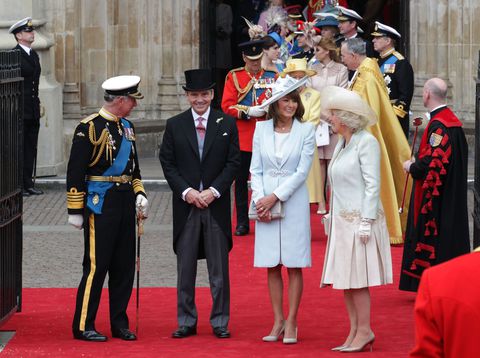
Carole Middleton might be renowned for impeccable mother of the bride style, but the Duchess of Cambridge‘s mum also knows a thing or two about how to handle the responsibility that comes with the role.
After all, she played an important part in one of the weddings of the decade when her oldest daughter married Prince William in 2011. Six years later, she took on the duty once again when Kate’s younger sister Pippa married James Matthews in 2017.
Advertisement – Continue Reading Below

Speaking to The Telegraph, Middleton revealed that both of her daughters turned to her for advice in the lead-up to their big days. “We talked about music… everything. I was involved lots with both Pip’s and Catherine’s weddings,” she said.
However, there was one important lesson Middleton learned throughout the journey – and it’s a useful tip for anyone who is about to have a mother of the bride moment: it’s your daughter’s day.
“I think the most important thing, as a parent, is to listen to what your daughter wants. You can have all the ideas in the world, but it has to be about them,” Middleton said. “And don’t muscle in on the guest list.”

At the royal wedding, Middleton’s powder blue Catherine Walker outfit was hailed as a triumph, so it made sense that she stuck to a similar style by the same designer when Pippa tied-the-knot. With both nuptials attracting global attention, looking the part was essential.
Advertisement – Continue Reading Below
“Like every mother, I wanted to look my best, make my children proud and enjoy the day,” she recalled. “I honestly don’t think I was any more stressed than any other mother-of-the-bride.”
Quite an achievement for a wedding that was watched by some 24.5 million Brits.