



Category Archives: Marriage & Divorce
This Mexican Resort Is Now Offering Instagram Consultants for Your Beach Wedding – Coastal Living

Beyond the ubiquitous photo booth, there’s a virtually limitless arsenal of extras brides today can choose to make their big day as special as possible (permanently tattooing your guests, for instance).
But when all is said and done, what remains of the wedding day are memories and photos, the latter of which often trickle in from guests through Instagram.
And that’s where the latest wedding perk from Mexico’s Velas Resorts comes in. At two of its popular destination wedding locations—Grand Velas Riviera Nayarit and Casa Velas in Puerto Vallarta—the resort is now offering the betrothed the services of an Instagram consultant, whose job is to make sure your wedding hashtag is filled with frame-worthy ‘grams.
Courtesy of Casa Velas
How does one pull off such a task? With the services of an Instagram consultant, couples will be advised of ways in which the Insta-worthiness of their beachfront venue can be maximized. Suggestions might include “jazzing up the walk down the aisle with sweet signs, greenery walls, and paper pinwheels to add some color and excitement to the photos,” according to the resort.
The consultant may also advise having photo booth-like backdrops with fun props for guests to enjoy, as well as photo-enhancing decorations such as succulents and neon signs.
Related: Wedding Etiquette Isn’t Hard, But Just in Case, Here Are Eight Tips:
If you opt to say your “I dos” at one of the Velas Resorts, the service of the Instagram consultant is automatically included. Implementing the ideas during your ceremony and reception, however, will cost more.

©Victor Elias
Courtesy of Grand Velas Riviera Nayarit
But even if you decide against the Instagram-enhancing extras, you’ll likely find another Velas Resorts wedding perk among its long list of offerings—from having your first dance professionally choreographed by an alum of Dancing with the Stars to employing the services of a live wedding painter or live streaming the ceremony online.
And if you simply don’t trust your friends’ Instagramming skills? There’s also a personal social media concierge you can hire to do all your photographing and social posting for you.
#BestWeddingEver? We think so.
The Queen's sweet advice to Prince William when he became a father – Yahoo Lifestyle
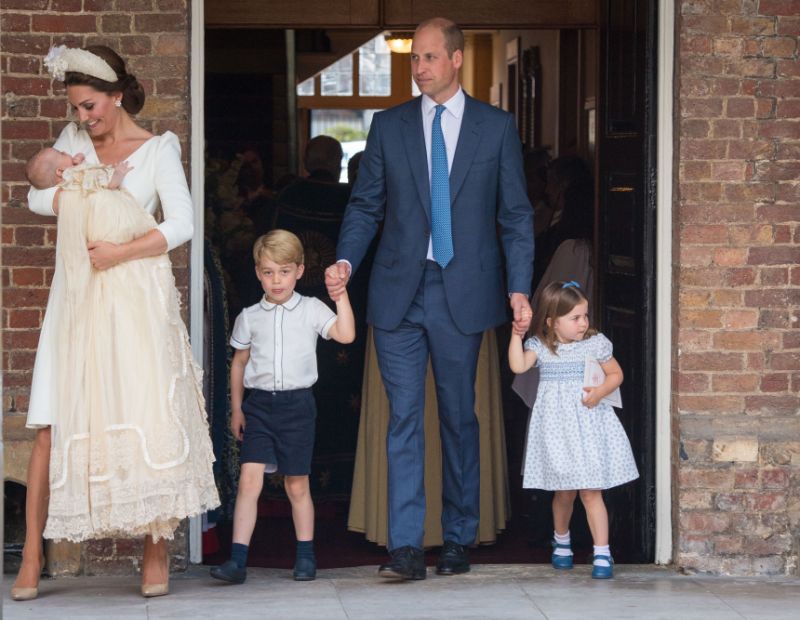
Prince William and Kate Middleton welcomed their third child Prince Louis in April this year and since Kate returned from maternity leave in October, the pair have been juggling family life with royal duties.
The Duke gave up his role as a pilot with the East Anglia Air Ambulance back in summer 2017 to focus on his duties and the family moved from their Norfolk home, Amner Hall to Kensington Palace, their permanent London residence.
While William has been carrying out more official engagements on behalf of the Queen as she starts to take a step back, he faced criticism in the past, with some referring to him as a ‘part-time royal’ because he spends time away from the capital with his young family.

But according to filmmaker Nick Bullen, this traces back to the Queen, who gave William some advice when he first became a father to Prince George in 2013.
“There was a conversation we had with Prince William when we were making a film about the birth of George and he came straight from a meeting with the Queen, where the Queen had literally said to him, ‘just enjoy the children, enjoy your time, there is no rush,’” he tells Yahoo UK‘s The Royal Box.
“There was this sense that he needed to join the firm and start working properly.

“And the Queen had told him absolutely directly, ‘no, do what you need to do with your children, do what you need to do with your family and actually the real royal jobs will come in time.’
“I think that’s born out of what she didn’t have.”
Speaking from experience
Queen Elizabeth missed out on quality time with her eldest children Prince Charles and Princess Anne, leaving them at home when she and the Duke of Edinburgh went on official overseas visits.
She had unexpectedly became heir to the throne at the age of 10 when her Uncle Edward VIII abdicated and her father George VI succeeded him. But his death in 1952 meant Elizabeth became Queen at the age of 25 and just a mere five years after she had married Philip.
The Queen was reportedly hurt by Charles allowing his autobiographer Jonathan Dimbleby to reveal that he felt “emotionally estranged” from his parents. It appears she doesn’t want William’s children to say the same about him.
She’s said to have a much closer relationship with her youngest children Andrew and Edward, who were born when she was much more established and confident in her role as monarch.
Nick Bullen is the founder of TrueRoyalty.TV.
Got a story tip? Send it to tips@oath.com
Want more lifestyle and celebrity news? Follow Yahoo Lifestyle on Facebook, Twitter and Instagram.
Or sign up to our daily newsletter here.
What Is EFT? The Best Marriage Advice From Emotionally Focused Couples Therapy – YourTango

It’s all about emotional connection.
By Graham Techler
Marriages, much like everything else, are all about effective communication and listening. That much we know. If you’re asked to do the dishes enough times and still don’t, what happens next is all on you.
Beyond that, the functionality of a marriage is still one of life’s great mysteries. Raising kids? Forget about it.
Now, keeping an open ear for what your partner and kids are looking for shouldn’t be a huge ask, but if it’s something you struggle with in your family, there’s another solution and it’s easier than you might think. In fact, it produces better results anyway — relieving you and your partner of the burden of putting what they want and need into words of pleading and, ultimately, frustration.
It’s called emotional synchrony, and no, it’s not the name of a prog-rock supergroup, no matter how much it sounds like one.
It’s what happens when two people — often, but not necessarily — bound by love, literally tune into each other’s wavelengths, feel what they’re feeling, and understand the reality they live in at any given moment.
If this sounds like science fiction, just take it from Dr. Sue Johnson, the developer of Emotionally Focused Therapy (EFT) and the author of Hold Me Tight: Seven Conversations for a Lifetime of Love.
“We read people’s emotions in about 100 milliseconds,” says Johnson, “and then the muscles in our face imitate what we see in their face and give us a tangible sense of what they are feeling and what their intentions are. Our nervous systems naturally resonate with this – it’s a safety cue – another is with you and connected to you. It is a natural cue for joy.”
Emotionally Focused Therapy has been shown to be extremely effective in more than 20 outcome studies, helping people dial into the emotions of others by having a therapist guide them through difficult conversations. It’s a process that’s both physical and emotional and can help save your marriage and lead to healthy relationships.
“You see folks naturally leaning in and imitating each other’s movements when they are trying to connect,” says Johnson. “We help people craft change events, where partners and parents and kids can slow down their emotions, shape this synchrony, and share the fears and vulnerabilities they need help with as well as their emotional needs.”
Johnson adds that these dialogues predict relationship satisfaction at the end of therapy and into the future.
Let’s take a look at an example. Jacob is eleven, acting out, and unable to share his feelings with his father Steve, who he feels is too distant to connect with. “[Using EFT,]” Johnson says, Steve is able to tune in and respond in a different way, not with rules and instructions, but with soft reassurance and openness.” There’s a sort of emotional dance the two of them do together, allowing for, in Johnson’s words “affection and play and reassurance.”
“Dad also gets his kids’ needs in a new way and understands the desperation that is fueling his kids anger,” says Johnson. “Emotional responsiveness is the key ingredient in a secure loving bond.”
Practically, this level of intimacy goes hand in hand with an impartial mediator. They will validate Steve’s good intentions and frustrations. The goal is to break Steve away from reciting and imposing rules on his son. These dictums, Johnson says, are out of touch with what Jacob needs.
As the focus turns to Jacob, she does the same thing, asking questions and starting a dialogue that lets Steve know how Jacob’s needs can be met. “This new dance,” Johnson says, “changes Steve, Jacob, and their family as a whole.”
The benefits of this kind of work extend from the most serious emotional complications all the way down to the, perhaps, pettier “dish” arguments mentioned earlier. EFT’s aim is to teach techniques that will not discriminate between big interpersonal problems and small ones.
“Love,” Johnson says, “is an ancient, wired-in security code designed to keep those we can rely on close. This tuning in and responding with is the greatest gift a parent can give a child and the greatest gift romantic partners can give each other.”
Ultimately, the building blocks for this kind of connection already exist in any loving relationship. “The music and the orchestra are already there,” Johnson says. “Wired into our nervous system. The therapist, if you choose to use one, acts as a conductor and just directs attention — supports the players and brings out the emotion in the music.”
After this, ideally, that connection will become intuitive, almost non-verbal. You’ll never be asked to wash another dish again as long as you live.
Graham Techler is a writer and comedian. Follow him on Facebook.
This article was originally published at Fatherly. Reprinted with permission from the author.
Marriage Advice On The Most Effective Communication Skills In Relationships – YourTango

Your marriage is totally on point.
By Matt Christensen
Teamwork makes the dream work, or so the saying goes. And, actually, according to several studies, it’s true — assuming the dream is to be part of a healthy, productive relationship.
At work, for example, 91 percent of employees confirmed that feeling valued as part of a team caused them to do their daily best. In the NBA, teammates who engage in outward displays of trust and cooperation (high-fives, butt-pats, helping each other up, etc.) have a higher win percentage than those who don’t.
And in marriage, couples who start their relationship working as a team tend to cross the finish line together much more frequently than those who just passively mosey along.
Human beings are social by nature, so our need to be part of a team goes back to the days of cuddling with that special Neanderthal under a mammoth pelt, next to a roaring cave fire. That’s why, when our home team —our relationship — is struggling, we have trouble communicating, cooperating, and scoring.
The problem, however, is that it’s easy to think you’re acting as a team when you’re actually not.
So what does good marriage and great teamwork look like?
We spoke to some relationship experts about that signs of a healthy relationship and what it means to be part of a good team, and what to look for if you think you and your partner could use a bit of coaching.
Here are their characteristics of a winning franchise.
1. You are fluent in the language of compromise.
According to Robyn D’Angelo, licensed marriage & family therapist, and the founder of The Happy Couple Expert private practice in Orange County, CA, compromise is a matter of winning and losing for both of you.
“Even if a compromise is 99 percent in her favor,” says D’Angelo, “She knows there’s a part of you that’s not happy. As a team, your job as loving, mature adults is to experience those ‘micro-disappointments’ and move through them. It’s like walking; it takes balance.”
This is to say that, when you lift up one foot to take a step, you engage the rest of your body to support your body. A good teammate, then, is able to give up something he wants while looking for other areas that can be engaged. “In a team, compromise is about ‘What I am willing to accept?’, and ‘What I’m not willing to accept?’,” says D’Angelo. “A good team will be clear, flexible, and willing to manage emotions when something has to be given up.”
2. You don’t allow negative self-talk.
“Being a good teammate means you generally like, appreciate and value what your team members bring to the game,” says D’Angelo. “If you find your thoughts focused on how much your partner nags, or how nothing you do is ever good enough, your partner is going to sense that, and is going to start feeling inwardly negative.”
A good teammate, then, isn’t afraid to verbalize what he or she likes, loves, or cherishes about their partner, which everyone loves hearing. According to Juan Santos, lead counselor and owner of Santos Counseling, PLLC, negative self-talk can distract your relationship from its ultimate goal of happiness and fulfillment. “Focus on that mutual goal,” Santos advises. “And hold each other accountable when you notice negativity. A good team will be able to do this together, and constructively.”
3. You notice each other’s moods and energies.
“I used to watch the X-Men cartoon a lot when I was a kid,” recalls Santos. “I loved how Professor X. could read minds. But, that’s the opposite of what you want to try and do.” A good teammate, then, doesn’t assume he or she knows what the other person is thinking while trying to solve the problem. Instead, per Santas, to help the team grow, it’s more important to communicate and be on the same page before examining a solution.
“Women get stamped with this label of wanting men to be mind readers,” says D’Angelo. “Spoiler alert: We don’t want you to read our minds, we want you to know us. And knowing us means noticing us.” Noticing a new haircut or outfit is great but, per D’Angelo, a good teammate notices shifts in our moods or our energies and responds lovingly. “It’s not your job to take away her pain or have all the answers but, as a team, you should be curious about one another to show how well you know each other.”
4. You let little things go.
“You can’t grab something with a closed fist,” says D’Angelo. “So, receiving things like forgiveness, kindness, or apologies is impossible if you’re holding on too tightly to a negative emotion.”
Being angry and frustrated about ‘little things’ is normal — and healthy! — but, as a good teammate, you know when to let them go. “It’s a cycle of connection, then disconnection, then reconnection. If a disagreement occurs, a good team tries to move toward repair as soon as possible,” says D’Angelo.
5. You respect each other’s time.
“Partners in healthy relationships respect communicating the importance of each other’s time,” says Santos. “They explore what they like to do as a couple, and individually, to grow the relationship, as well as themselves,” he adds.
“Men are more likely to do nice things for people who show them massive amounts of respect. That’s how male brains are wired,” explains D’Angelo. “In a relationship, it’s important to know that her brain is a little bit different. When it comes to planning and scheduling — two activities that actually relax the female brain — you both want to feel important. Including each other in the decision-making process shows that you care about each other’s schedules and interests.”
6. You energize and inspire one another.
“I never understood why all the men in my life gushed about Tom Brady,” admits D’Angelo. “And then I watched them watch him play. He trusts his teammates, and his teammates trust him. That’s why he’s so good, and so in his element on the field. You might not throw TDs like Tom Brady, but you definitely have that ‘thing’ that lights you up — and so does she. When you see each other, in your elements, you’ll become impressed, inspired and excited, which will help strengthen your team.”
Santos adds that simple gestures can go a long way to energize your team. “Healthy couples know the importance of that ‘unspoken language’. Small things like eye contact or small talk are often overlooked, but can really help boost someone’s mood.”
7. You don’t keep score.
“Opponents keep score to track who’s winning and losing,” says D’Angelo. “You want to win or point out how hard your opponent is losing. That’s the opposite of creating connection, motivation to collaborate, or any sort of partnership, which is what good teams do High Five each other — or pat each other on the butt — when either of you win. That’s a team I’d root for.”
For the sake of a healthy relationship, Santos also says to avoid keeping score at all costs. “This usually happens early in the relationship, and it’s not healthy. If you find yourself in this type of situation with someone you care about, work on creating a value that opposes it.” Like, you know, teamwork.
Matt Christensen is a writer for Fatherly.
This article was originally published at Fatherly. Reprinted with permission from the author.