



Category Archives: Marriage & Divorce
Ex not sure whether to attend wedding

Adapted from a recent online discussion.
Dear Carolyn: I married my high-school sweetheart when we were both 25 – not because we were soul mates or even particularly happy together, but because we were imagination-lacking, co-dependent and afraid to let go. We stayed married for three years before I cried uncle and filed for divorce, with his agreement that it was the right thing to do. While it was painful at first, we have wound up more or less friends again, and share a social circle.
He is getting married again in four weeks, and I’m invited to the wedding. First marriage for the new bride. I’ve been perusing their wedding website and, maybe this is my glass of wine talking, but I’m having a hard time with all the quotes and hashtags that reference “forever.” She is so happy they will be together “forever.”
Don’t get me wrong, I hope their marriage works out, but that language seems ridiculous considering he has been married before, believing it would be “forever,” and it wasn’t. This is leading me to rethink attending their wedding – I’m afraid I might scoff my way through the ceiling. Any ideas to reshape my thinking?
– Feeling Discarded
Oh, but it’s so easy – you guys thought it was forever, but you were “imagination-lacking, co-dependent and afraid to let go” (now there’s a sign to have tastefully lettered and mounted over my sink), and this time the couple is mature and clear-eyed and in loooove enough for a lifetime.
Yeah, yeah.
But do you really want to live in a world where hope never triumphs over experience?
Read more:
And/or where a bride-to-be hashtags, #hopingitsticks?
I don’t. But if you do, or if you don’t but you’re not feeling it, and/or if you present even the slightest scoff risk, then maybe it’s time to back out. Doing so four weeks out is not the most polite move ever, but it beats the day before, and it beats eye-rolling the bride.
Re: Scoffing: She and her ex “have wound up more or less friends again,” but the letter suggests “less” is winning out. Skipping the wedding seems like a mercy.
– Merciful
Re: Ex’s Wedding: Don’t go. I have a few friends who have attended the wedding of an ex and it always turned out to be a bad idea. Not necessarily because they did something dramatic and embarrassing there, but because my friends came away feeling like crap. The nature of a wedding is just not designed to leave an ex feeling good about attending.
– Anonymous
Re: Wedding: I’m getting married soon. Three of my four bridesmaids are my fiance’s exes. Last weekend I was my best friend’s maid of honor. My date was my fiance, her ex-boyfriend. They’re good friends. It was a beautiful wedding and we were honored and joyous to be there.
I think “Discarded” shouldn’t go if she’s not feeling it, but it’s by no means a universal rule that you shouldn’t attend an ex’s wedding. If you’re actual friends – not just amicable former partners – you should go if you want to, without worrying that you’ll come away feeling like crap.
– No Bridesmaids for Me?
You’re right – and, may I say, gloriously entangled, disentangled and re-entangledish. Thanks.
Email Carolyn at tellme@washpost.com, follow her on Facebook at www.facebook.com/carolyn.hax or chat with her online at noon Eastern time each Friday at www.washingtonpost.com.
Read or Share this story: https://www.freep.com/story/life/advice/2018/11/19/wedding-ex-husband/2002512002/
Ladies' man turns out to be husband material
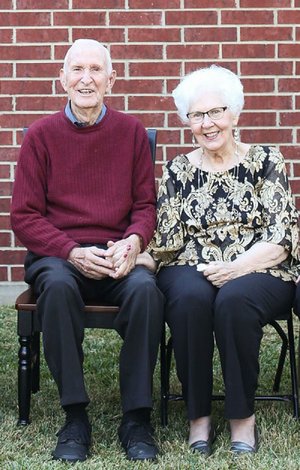
Velmarie “Val” Parker had heard countless times that she needed to meet Leland Callaway. Leland had heard the same from their mutual friends.
“But when we first met there were no sparks flying at all. He went his way and I went mine,” Val says.
The first time I saw my future spouse:
She says: “He is so handsome. He had dark black wavy hair — and a lot of it. He was just a handsome man. I thought I would never have that handsome a person as a husband. He was very, very handsome and he was very outgoing, somebody you could just fall in love with immediately — but it wasn’t the time.”
He says: “She was very cute, she was fun and she was outgoing. She was really a pleasant person.”
On our wedding day:
She says: “I was amazed at the number of people who came because this wasn’t where I grew up. This was the church that I attended and so many people from where I worked were there. I was amazed by the number of people who came to my wedding.”
He says: “She wanted it to rain — and it rained everywhere we went.”
My advice for a long happy marriage is:
She says: “Let Jesus be the center of your relationship. Don’t hold grudges. Be forgiving and don’t take things personally — realize that there are times in your life that you don’t feel as well as others and you might say things you wouldn’t say otherwise. And just always try to put the other person first.”
He says: “Both of you be Christians, that was one of the main things for both of us.”
Val had moved from near Glenwood, where she grew up, to Little Rock to go to nursing school just about the time Leland had left Little Rock for Jacksonville College in Jacksonville, Texas.
They both went to Temple Baptist Church — first Leland, and then Val — and they had the same group of friends there.
“But, of course, we did not know each other,” Val says. “Our friends would all say, ‘Oh, you’ve got to meet Leland,’ and then they would say to him, ‘Oh, you’ve got to meet Val.'”
When Leland returned to Little Rock for a visit and saw his friends at church on a Sunday morning in 1957, they made sure to introduce him to Val.
“We just met in the foyer of the church and everybody was there, people coming in and going,” Val says. “He had been to church there and everybody loved him and was talking to him. We said hello and then we just sort of went our different ways.”
Leland left to go back to Jacksonville right after the morning worship service, with no more than that brief introduction to Val before he left.
But when he was back in town a year or so later they met again.
Leland went to the Wednesday night service at church and afterward he joined his friends for bowling. His friends were also Val’s friends, of course, and she went, too.
“She was a good bowler. She was a real good bowler,” Leland says. “I watched her bowl and thought I sure would like to date her. She sure is cute. I called her the next day and asked her out.”
They went to a service at another Baptist church led by a friend and former roommate of Leland’s and afterward they went to his friend’s house.
“We just laughed and had a good time talking,” Leland says. “When we left and I took her home, to the dorm where she was staying, I told her, ‘I’m going to marry you.'”
Val’s response was probably not the one he had hoped for.
“I said, ‘You’re just like what I thought you were. A ladies’ man,'” she says.
Leland went back to Jacksonville, and he began writing to Val.
“We had a dating relationship that way. He wrote a letter to me every day,” says Val, who wrote to him most days, too. “We dated through the mail. He is a natural writer. I can’t think of that much to say. I don’t have that much to say. But he would write two pages every time and it was all very interesting.”
He came back to Little Rock to see her when he could, and she visited him in Texas a couple of times as well.
“From that first time I said I was going to marry her I started working toward that end,” Leland says. “She was everything I had been looking for, both physically and spiritually. I was a ministerial student at that time and she was just fit in every way for that.”
They eventually started discussing marriage and made the mutual decision to exchange their vows.
“I was 24 so I was over the age of the average dating person and I was very interested in my work but I was also ready to have a husband and a family, so it was the right time,” Val says. Leland is 4 1/2 years older than she.
They were wed on June 5, 1959, in Temple Baptist Church, where they had met.
It was a rainy day — just what Val had prayed for — and the rain followed them all the way to Gulfport, Miss., where they honeymooned on the beachfront, then back to Little Rock to pick up Val’s belongings and then to Jacksonville, where they moved into their first apartment together as newlyweds.
“It rained, but it was romantic,” she insists. “I love rainy weather. It’s one of my favorite things.”
Val got a job as a nurse in the Jacksonville hospital and Leland continued his work at the college there, along with his ministerial studies. They moved from Jacksonville to Magnolia, where they live today, but there were a few other moves along the way. From Magnolia they moved to Lubbock, Texas, where Leland got a doctorate in business, then back to Magnolia.
“In 1990 he decided to quit teaching and just pastor so we moved to College View Baptist Church in Nacogdoches, Texas, and after about 10 years we decided to move back to Magnolia and we’ve been here ever since,” Val says.
The Callaways raised four children– Kelli Harwell, Khalin Callaway and Kyle Callaway, all of Magnolia, and Kevin Callaway, who died about five years ago. They also have six grandchildren and five great-grandchildren.
“The Lord has blessed us in so many ways,” Val says.
If you have an interesting how-we-met story or if you know someone who does, please call (501) 425-7228 or email:
kimdishongh@gmail.com
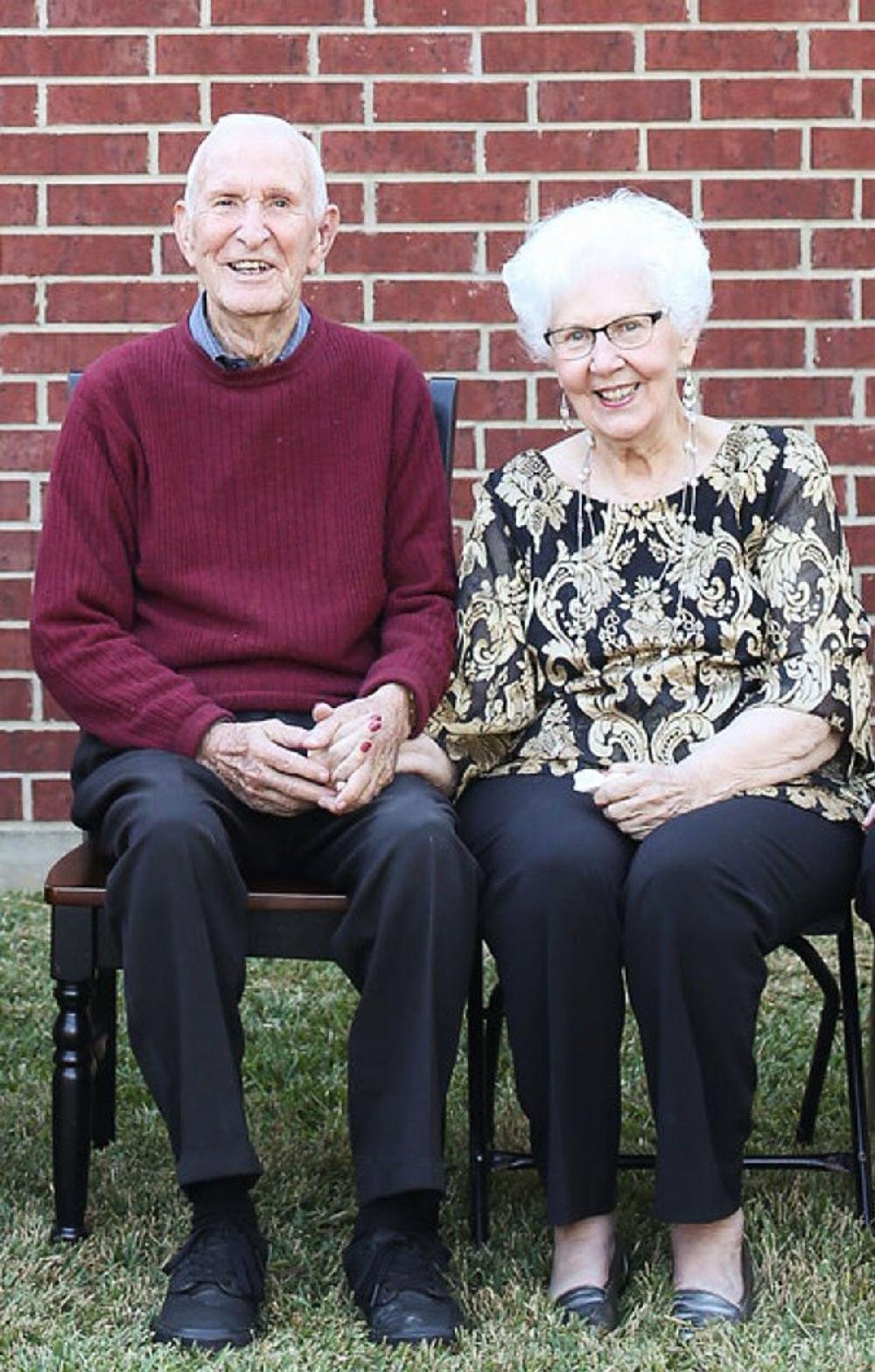
Leland and Val Callaway met in church in 1957, introduced by mutual friends they met at separate times. “She was everything I had been looking for, both physically and spiritually,” Leland says.
High Profile on 11/18/2018
Ask Amy: Experienced advice for Sad Mom
Dear Amy: To “Sad Mom,” who was overwhelmed with love for her new baby, but not feeling any love for her toddler; more than 50 years ago I gave birth to three little girls within 2½ years. It was tough, even with two sets of loving grandparents nearby. There were days I never took off a flannel nightgown until dinnertime, when I was buried by mountains of diapers and baby clothes, stacks of dishes, a vacuum sitting in a corner and a load to put in the dryer downstairs.
My advice to Sad Mom is this: if there are any young teenagers (12 or older) in your neighborhood and you can afford to pay them for an hour or two a day two afternoons a week, right after school, hire them immediately to come and play/watch your kids while you go for a walk, take a shower or a bath, get a manicure, go grocery shopping, whatever you need to give yourself a break. It will be the best money you will ever spend. It will save your sanity, even your marriage.
If grandparents are nearby and willing, ask for their help.
You do not have to go through this alone. No money? Even if you and a neighbor trade kids for an afternoon, figure out a way to get help.
Your babies will be better off for it, and so will you. Been There
Dear Been There: Sage advice. Many people who responded to this situation noted how expensive child care is, but I completely agree with you that a “mother’s helper” or a neighborly trade-off will help.
Dear Amy: I just read this line in your column, responding to a person who was judging someone else very harshly:
“You should feel compassion toward someone who doesn’t have your expansive capacity.”
Amy, this brought tears to my eyes. This applies to so many different situations. Thank you. I’m going to remember this. A Fan
Dear Fan: Thank you.
I want you, and other readers, to know that over the many years of writing this column, my own compassion toward people with problems, large or petty, has expanded to fit the space.
This has been the most surprising impact of being an advice-giver: I may have many of the answers, but I still have problems and empathy for others who are also struggling.
The Obamas went to marriage counseling, and so should you

From the outside looking in, Barack and Michelle Obama appear to have a killer relationship. They seem to revel in each other’s company, challenge each other in healthy ways, and create protected space for their family—no small feat when their home for eight years was the White House. There’s romance, and substance. Dreamy.
But in her memoir Becoming, Michelle Obama lets on that it wasn’t always smooth sailing. After the couple had young kids, and she was a high-powered lawyer, Michelle often found herself on the hook for dinner, bath time, books, and bedtime. Barack, she notes, had an “optimistic” sense of time: He would often call to say he was on his way home, then wouldn’t turn up for awhile. In an interview with Michelle in Elle this week, Oprah said she could hear the former first lady’s anger through the page. Michelle responded:
I was mad. When you get married and have kids, your whole plan, once again, gets upended. Especially if you get married to somebody who has a career that swallows up everything, which is what politics is. Barack Obama taught me how to swerve. But his swerving sort of—you know, I’m flailing in the wind. And now I’ve got two kids, and I’m trying to hold everything down while he’s traveling back and forth from Washington or Springfield.
What she learned—what most of us learn—is that that thing that attracts you to your partner often becomes the thing that drives you bananas. She’s the box-checker and he’s the “swerver,” which was awesome when they were complementing each other. But after having kids, Michelle kept checking boxes, while Barack was still swerving. She believed in what he was doing—fixing inequality, making communities stronger, politicking—but day-to-day conflicts stewed.
So they went to therapy. Michelle thought a counselor would help Barack see the shortcomings of his ways (most of us start this way: a referee! And I will win! ) “You go because you think the counselor is going to help you make your case against the other person. ‘Would you tell him about himself?!’ ” Michelle told Oprah.
Instead, she discovered that she needed to figure out how to make herself happy, and to be clear about the support she wanted from Barack. “I needed to figure out how to build my life in a way that works for me,” she told Oprah.
Many of us go into marriage with some Jerry Maguire-inspired preconceptions: He/she will complete me. We will share everything. We will divide all chores and kid stuff, 50/50, start to finish.
Then reality gets in the way. You realize that you’re heading into a lifetime of learning how to live with another person, a person who has way different needs than your own, whose history is woven into their fabric of what the future will be in ways they don’t even know yet. Barack needed to swerve, while Michelle’s very nuclear upbringing meant being home for dinner together was important to her. As one person put it in a review (paywall) of my own book about marriage:
When I was single, I was regularly baffled by the behaviour of my married friends, male and female. Every time I witnessed one of those “I told you we needed milk” conversations, I thought: “Blimey, just nip out and get some, it’s not the end of the world.” Marriage, from the smug slopes of singlehood, looks like a doddle that’s being messed up by stressed-out, small-minded people. Right up to the point that I got married four years ago, I assumed my marriage would be different — all love and easy sharing.
This is where therapy becomes helpful: to try and identify what you need, what love language you speak, and what your partner speaks (if you don’t know about Gary Chapman’s love languages, you need to). You figure out whether you can offer what your other is asking for, and whether they can give you what you need in return. It requires vulnerability, honesty, and ultimately, a huge amount of compromise. Some make it, some don’t.
The Obamas did, and we got to benefit from a scandal-free eight years (thanks guys!) Shortly before the end of his presidency, Barack wrote an essay in Glamour, apologizing for dumping so much of the parenting on Michelle. “I’ve seen how Michelle has balanced the demands of a busy career and raising a family,” he wrote. “Like many working mothers, she worried about the expectations and judgments of how she should handle the trade-offs, knowing that few people would question my choices.”
The first time I read that, I thought, “he gets it!” But Becoming teaches us that that such inspired thinking was not innate, or even inspired. It likely came from the same place it does for most couples: hard damn work. Counseling included.