


Category Archives: Relationships
Dating Unscripted: Ending the Endless Text Conversation
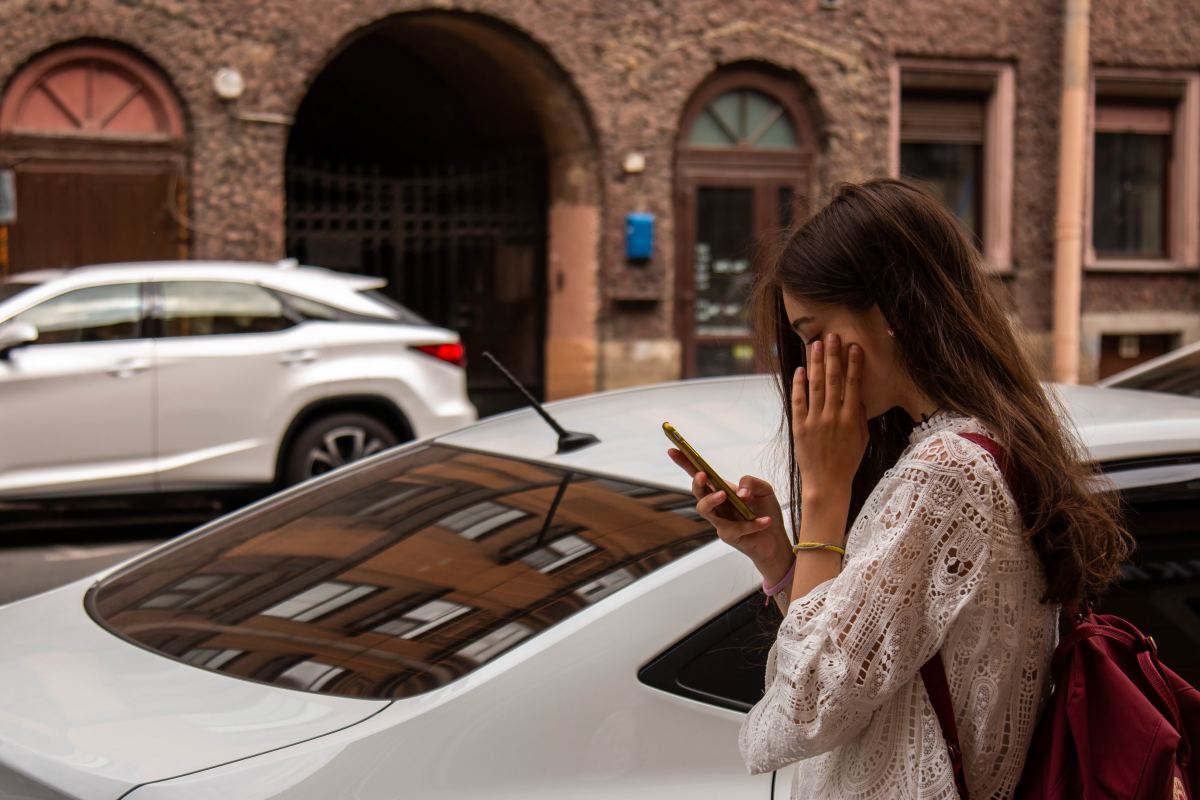
“What are you up to this weekend?” he texted me.
I rattled off a few plans, noting my obvious windows of free time, should he want to meet up: “Dinner with friends on Friday night, relaxing on Saturday, a Baptism for a friend’s child on Sunday in the morning, but relaxing again in the afternoon. What are you up to?”
His response arrived shortly: “Sounds fun! I hope you have a good weekend! I’m just relaxing all weekend.”
Hmmm. Not quite the way I expected this conversation to go.
We had met on a dating app, and after a few weeks of nearly daily texting, we still hadn’t met in person. I had hinted at my openness a few times—“oh, our offices are so close to each other. We’ll have to meet up sometime!” I’d write. That’s about as direct as my old-fashioned dating ways would allow me to be. “Yeah!” he’d exclaim, with absolutely no movement to making it happen. Yet, every single day, he found a reason to text me, and so our conversation would continue.
According to his profile and through our texting, we discovered we shared a lot of values and aspirations for life. We had some similarities in our upbringings, including some cities we once called home before moving to our current city. But I’ve dated enough to know that those checklist details and a connection online are not a barometer for actual compatibility. The elusive spark we call chemistry can really only be determined by meeting in person and seeing if our personalities match, if we find each other actually attractive (instead of just objectively good looking via our profile photos), and so forth.
The longer we texted, the more invested I felt, and yet I also could feel my growing resentment toward him and toward this whole modern dating approach. Here I was, spending time every day considering the right words, phrases, and timing of texts (you know you do it, too), when we could easily establish in one coffee date if this “relationship” is even worth either of our time.
He continued to text over the weekend, and I responded when I was able, which meant longer than normal delays, and not as well thought out texts. Sunday night rolled around, and around 9 pm he texted “I’m bored, lol. You should come out, haha.”
I wasn’t laughing. I was in sweats at home, and planning to head to bed in the next hour. He was supposedly free all weekend, we have never met, and this is how he wants a first meeting to go.
Blame it on my tiredness, and my dear roommate who also fumed with me at the half-hearted invitation, but I texted back what I was really thinking.
“Well, this is unfortunate. I thought I was talking with someone who would be a bit more thoughtful about an invitation to meet for the first time. I’m also not looking to ‘entertain’ anyone, I’m looking to get to know someone. I can’t come out right now, because I’m about to go to bed.”
The text was unusually bold and direct, especially for me and my personality. Some friends wondered, in a supportive way, if I should embrace the casual nature of dating today, and that it wouldn’t have hurt to have taken the opportunity to meet up.
I had few regrets about how I handled it, though, especially when he finally texted back. It was early evening Tuesday, and he wrote:
“I think my text came off the wrong way. I’d like to make it up to you by taking you out for a drink or dinner when you’re free and it’s convenient for you. Let me know.”
Now, that’s what I’m talking about! I wasn’t trying to be mean or play hard to get. I just wanted an opportunity to meet for the first time in a more intentional manner—when I could look nice and be a bit more awake.
A few days later, we met for drinks at a wine bar in between our apartments. The conversation was fun and lighthearted, but it was clear to both of us by the end of the date that we weren’t a match. Yet, I walked away from this encounter with more confidence and a better approach to my dating life, online especially.
Relationships are about give and take, and it’s important that we’re able to communicate with one another what we need and want. This sharing of expectations is part of the process of determining compatibility, too. We don’t have to go with the flow to an unending degree, even in the early stages of dating.
A little directness, properly placed and politely stated, can go a long way in helping to sort out what you desire and deserve, and whether a man is right for you.
Editors’ Note: Submit your own Dating Unscripted story here.
Freaked Out By 'Dirty John?' 8 Ways To Stay Safe While Online Dating
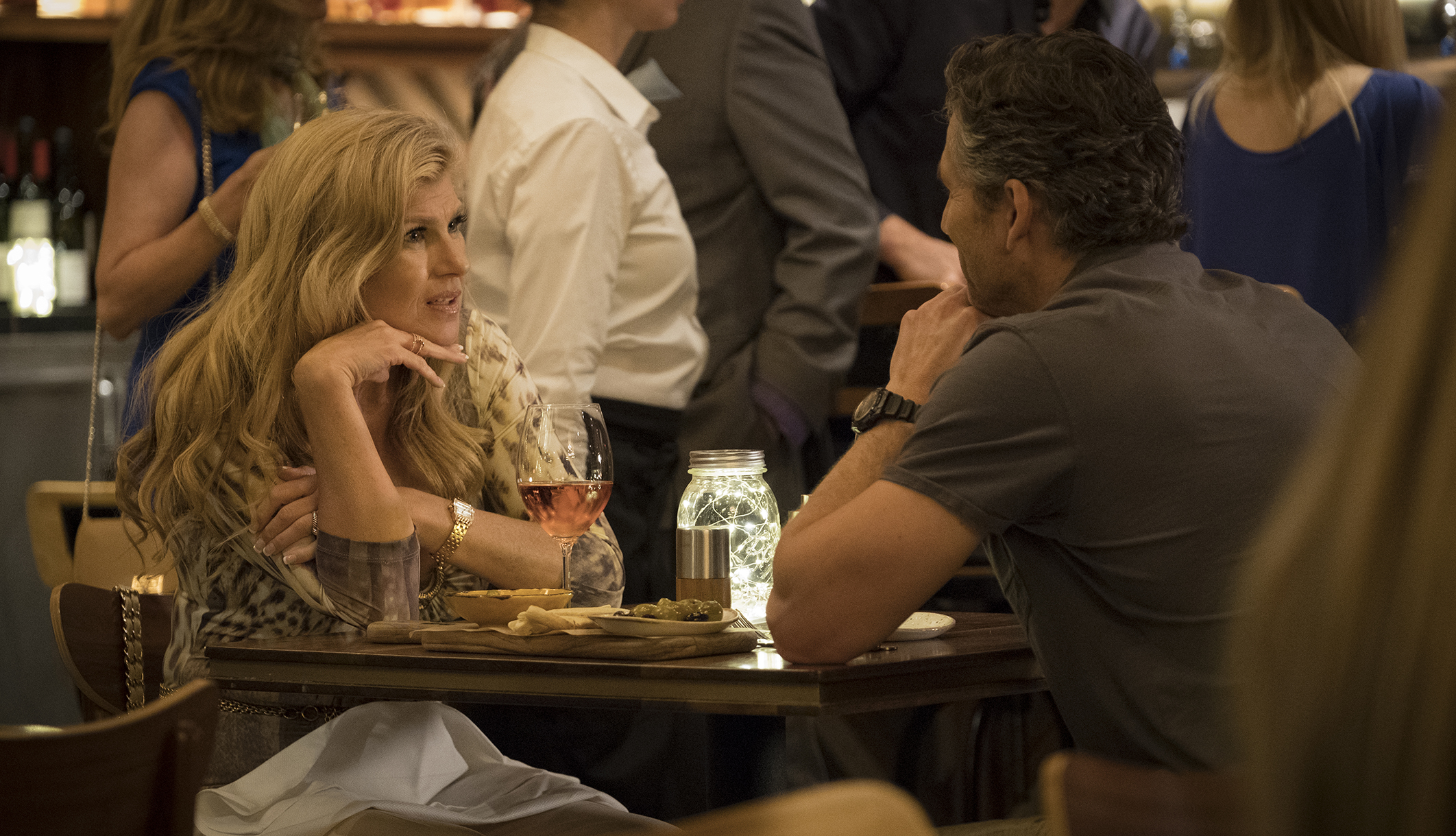
Debra Newell thought she had perhaps found her soulmate when she met John Meehan on an over-50’s dating website. Meehan explained away the inconsistencies in his story for a while, but then Newell slowly found herself diving deeper into a dark web of lies and deception. Newell’s harrowing journey has since been documented in the critically acclaimed podcast “Dirty John,” hosted by journalist Christopher Goffard. Now, the beloved true crime investigation is being turned into a Bravo scripted anthology series based on the true story. The series will premiere Nov. 25, and on Nov. 15, fans can get a first look when the pre-linear premiere debuts on YouTube, BravoTV.com, VOD and the Bravo App.
In a conversation with The Sydney Morning Herald, Goffard went as far as describing the original “Dirty John” podcast as “a cautionary tale about the ways that a sociopath, like a predator, can find the victim and tell these victims exactly what they want to hear.” The psychological explanation behind Newell’s continued commitment to Meehan despite his slowly-unfurled history of abusing women is complicated, but Newell’s story nonetheless serves as a warning for anyone looking for love online.
Oxygen.com spoke with Janice Miller, Director of Programs and Clinical Services at the House of Ruth Maryland, an organization that provides aid to victims of intimate partner violence, for her expertise on warning signs and advice for people looking for romance in the digital age.
Here’s are some tips on how to stay safe while searching for love in cyberspace:
1. Don’t always trust media narratives about romance
“Online dating is a tricky business because it’s very easy for people to misrepresent who they are through an online presence. While people are aware of that, we have a tendency to want to trust that someone we’re connecting with is telling us the truth about who they are and what their motives are. When you couple that with the widespread media and entertainment presentation of romantic love — as being swept off your feet, as being pursued and falling for someone almost against your will — those two things together really set up a dating person for the possibility that they’re going to ignore their gut feeling.
What ends up happening is people feel something is too good to be true, but something’s nagging them: they’re romantic, they’re saying exactly what I want them to say. So they ignore that gut feeling, and everyone else around them is also fueling the idealized version of that relationship. ‘Isn’t it romantic! Who would have guessed you met online? You guys were made for each other.’ Television ads about dating websites always make it sound like you’re going to find your soulmate.
I think when you’re out there, one of the things you need to do is remind yourself that real life is not a fairy tale. The goal is not the idealized version of romance. (Even though It makes me sound terribly unromantic when I say that.)”
2. Don’t give all your information away
“Don’t give all the details of your life away to someone you just barely met. People who have a mind to control someone else are looking for avenues by which they can make that control happen. So if I know all the details about your family I can figure out where I can drive a wedge between your relationship with that family or I can position myself so that you want to be with me and not with them, and therefore isolate you.
Is someone talking down about your current set of friends and family? Because, remember, that’s your support system. Be aware of people you don’t know very well trying to distance the supportive people in your life.”
3. Watch out for negging
“[Negging is] negative comments designed to make you change who you are and what you’re doing. That’s a real telltale sign — they’re testing the waters to see how much you’ll bend to meet someone else’s expectations. Early in the relationship it may be something like, ‘I like it when you wear your hair that way,’ or ‘I saw this person who had their hair this way, maybe you could try that.’
But what happens later in the relationship when it’s something more serious? Like, ‘I don’t want you talking to anyone else unless I’m around.’ Those kinds of requests that some people find bizarre: they don’t start off that way. They start off with someone trying to get you to change yourself. They’re trying to see how far they can get you to adjust to please them.”
4. Be careful of someone moving too fast
“Things like: ‘I’m so in love with you, I see us together for a long time.’ Those kinds of absolute statements when you haven’t even had your first fight yet, like a conflict over whether or not the toilet paper goes front to back. That’s a warning sign that someone’s trying to rush you into a commitment before you’ve had a chance to know the other person. Things like, ‘Let’s not talk to other people, let’s be exclusive and see where this is going,’ if it’s online. Pressuring to meet up or incessant contacting. I think it’s not unusual in this day and age to send tons of text messages back and forth. But the point at which that messaging is interfering with your daily activities and the person seems upset if you’re not responding — that’s such a warning sign.”
5. Set a limit
“One thing a person can do if they’re feeling unsure is set a limit and see whether or not the person will respect that limit. If you say, ‘Look, I have a lot going on in my life right now, could we just agree to only communicate in the evenings,’ and then see if the person tries to contact you during the day time. It tells you about the person and whether or not they are willing to respect a relatively innocuous boundary, which later on might be, ‘I don’t want to have sex.’ [An abuser] could carry those boundary violations out to the extreme.”
6. Double check the person is who they say they are
“Do they have another online presence? What else can you find out about the person? We all have multiple social media accounts. There are ways that you can go about checking on if the person is really who they say they are. Is that a picture of that person or is that a photoshop? And how important is that to you?”
7. All these tips apply to LGBTQ relationships, too
“You can look at [these tips] through the lens of the relationship. So if you’re giving away all the details of your life, for example, and one of those is, ‘My job doesn’t know that I’m gay,’ — that’s a piece of information that you’ve handed to someone that they can use to coerce or control you. Or using your tenuous relationship with your family to try to keep you from them.
Especially in smaller communities, there’s pressures to stay in a relationship that’s toxic because of the misperception that you’ll never find another person who will accept you. So if you’re community is extraordinarily small, or if the community of people who accept you as a trans person [for example] is extraordinarily small then you’re more likely to stay in relationship that is physically or emotionally abusive because you feel like if you leave or sever the relationship or try to set limits you may end up alone for the rest of your life.”
8. Reach out to your friends who are at risk
“Friends and family members: if they see somebody engaging in an unhealthy relationship whether it’s online or in person, the tendency is to say, ‘I think that person’s no good for you, I don’t think you should be with them,’ or, ‘You should leave.’ I don’t find that to be a particularly useful strategy. A better strategy is to approach a friend or family member and say, ‘I want to see you happy. I want to see you with someone who loves and respects you.’ Or when they are describing some of the interactions they’re having, you can ask, ‘Are you happy with how that occurred?’ Leaving the door open to disclose that something as happening as opposed to try and tell somebody to stop. Because relationships are hard and it’s not always that easy to stop.
The House of Ruth Maryland is Maryland’s largest provider for intimate partner violence victims and abuse intervention. The organization has created a 24 hour hotline, a shelter program, and a rapid rehousing program with service coordination advocacy, along with adult and child counseling that works on reducing trauma symptoms in conjunction with an on-site health clinic. You can donate to their organization here.
'Queer Eye' Stars Antoni Porowski & JVN Say Yay or Nay to the Internet's Most Basic Dating Tips
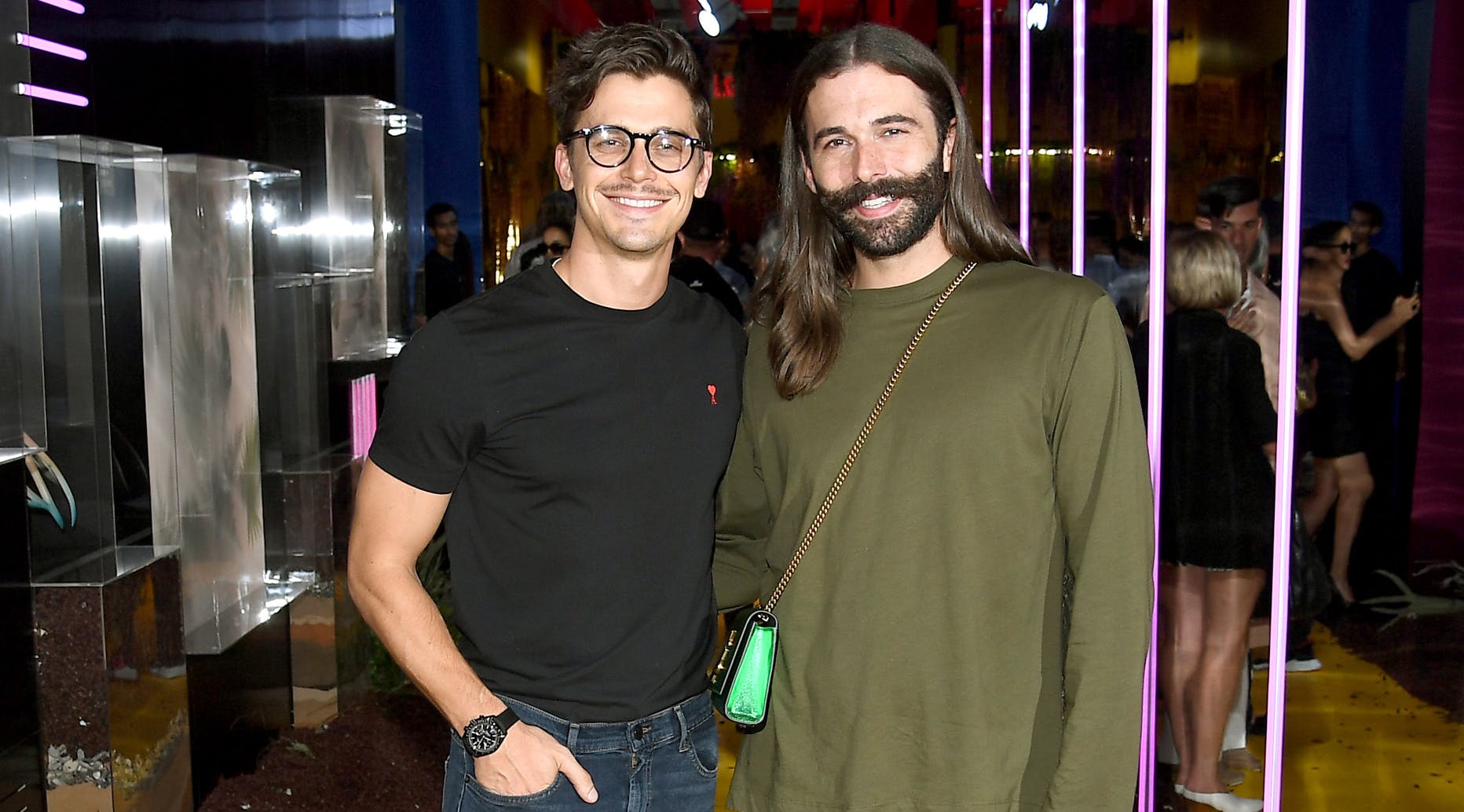
So what did we learn? JVN, 31, is a huge proponent of the sorority arm and he doesn’t take kindly to those who aren’t, Porowski, 34, is not about selfies, and neither Queer Eye star is here for outdated gender stereotypes.
But all of their joking aside, both Van Ness and Porowski suggest you have a short and quippy bio, include a photo captured in natural light and let your true self shine through.
When all else fails, Van Ness says, “Make like Dory and keep on swimming.” Aye, aye.
RELATED: Reese Witherspoon & Jonathan Van Ness Finally Reveal Their Secret Joint Project
4 Things I Wish People Would Stop Saying to Single Women

I don’t talk much about my personal life, especially on the internet. Why? Partly because I tend to be a pretty private person, but also because I’m a single woman in my 20s. Mentioning my singledom, whether to friends and family or in passing online inevitably leads to a slew of uninvited comments. It definitely doesn’t help that I’m hitting that age where the people I used to eat lunch and talk about philosophy homework with are getting married and having children and posting it all over social media. And as genuinely nice as it is to have people asking about my life because they care about me, it’s also a little much sometimes — and my other single friends seem to run into a lot of the same things. So what are some of the most common things I hear? Here we go.
1. “Let me set you up with my (friend/coworker/brother’s roommate’s cousin)”
While I appreciate the thought, I really wish people would stop immediately trying to play matchmaker. While blind dates might work for Prince Harry and Meghan Markle, more often than not, they’re awkward and forced and the parties don’t actually turn out to have as much in common as the matchmaker thinks. Offers like these put me in an awkward spot: How do I gracefully decline without hurting your feelings or indirectly insulting your friend? If we’re actually close enough friends that I would go to you for dating advice, I promise I’ll ask you directly if I think that guy from your cooking class’s group Insta photo is cute. Otherwise, please let it be.
2. “You must not be trying hard enough.”
GIRL. Believe me, I have tried. I really have a hard time when people say this because it implies that dating is something like riding a bike or learning to speak French; an objective thing that can be “achieved” through sheer willpower and effort. But since you’re dealing with complex things like emotions and other human beings with emotions and free will, dating is not anything like that. Some of the single people I know have tried endless dating apps and hobby groups and all the “right” things and are still single, while some of the happiest couples I know met with almost no effort whatsoever, like something out of a movie. You can’t “try” to fall for someone or “try” to have a connection, either.
The corollary to this: I genuinely think people who say things like this don’t realize how much pressure it can put on the single person they’re talking to. For me, at least, I can get pretty up in my own head when it comes to dating, and it can be hard sometimes to remind myself that my single status is not a “failure” on my part, but a simple fact of circumstance. But when people say things like this, it puts me right back in that mindset — and that’s not conducive to trying to date either.
3. “You’re single? But you’re so (fill in positive adjective)!”
Uh, thanks, I guess? I never know what to say with this one. It’s like a weird backhanded compliment. But, surprise! Singledom is not the domain of the “flawed”; being single does not mean something is wrong with someone. Being attractive / smart / good at talking / whatever is not the only thing that’s important in dating. I know you think it’s a compliment, but from the other side of it, it doesn’t really feel like one. Plus, it’s super awkward to try to figure out a response to that. I can’t say “thank you” because it’s not really a compliment, but I feel like I should because it sort of is one. It’s just uncomfortable. Honestly, I’d rather talk about something related to whatever that trait is — that way, I know you see me as a whole person, not just with the big label “SINGLE” above all else.
4. Anything about how unhappy I must be, aka variations on “Don’t worry!”
OK, I’ll admit it: sometimes I do worry about dying alone. I’m pretty sure everyone who feels romantic attraction worries, at some point, about never meeting the love of their life. But here’s the thing: that doesn’t mean life doesn’t start until then. I’m passionate about my career and have a master’s degree to prove it. I love my friends and family. I have hobbies I enjoy. Pop culture so often portrays romance as the “missing puzzle piece” or something like that, but I don’t think of it like that. It’s more like moving into a different sized apartment: there’s nothing inherently wrong with a small one, life just expands in interesting ways.
The truth is, sometimes I’m unhappy about being single. The truth also is, sometimes I’m perfectly happy being single. There are even times when I’m unhappy and it has absolutely nothing to do with my relationship status. It’s not a one-size-fits-all thing, and it’s certainly not a small-talk topic of conversation. I get it: the people who say something along these lines really do care about me; they say it because they don’t want me to be unhappy. Assuming I’m unhappy single, though, makes me feel like the other things I do aren’t of value or aren’t enough to make a person happy.
What all of this really boils down to is this: please stop making assumptions about me just because I’m single. A relationship is certainly something I want, but it’s still super uncomfortable when everyone tries to give me unasked-for advice, and it puts me in an awkward spot because I know the questions and advice do come from a place of caring. But when it comes down to it, I’m so much more than my relationship status, and in most cases, I’d much rather talk about something related to my work or my hobbies or my friends. And someday when it’s time to introduce a wonderful guy, I’ll feel a lot better if I can feel comfortable knowing the first words out of my loved ones’ mouths won’t be “Oh, FINALLY!”