



Category Archives: Relationships
Erika Ettin: Ghosts don't only lurk in dating

There was an article posted back in June on LinkedIn called, “People are ‘ghosting’ at work, and it’s driving companies crazy.” The gist of it was that, since the job market has gotten somewhat better, people are actually accepting jobs and not showing up, or not even answering the call to accept the job! Worse than not answering, though, is outright ignoring multiple messages, some checking in on that person’s well-being if, god forbid, something awful happened. And still no response. It’s not difficult to say, “I got another offer. Thanks for your time.” Why don’t people? Maybe embarrassment has set in, thinking, “Well, if I haven’t replied to any of the previous messages, I certainly can’t start now.” Yes, you can! It’s never too late to provide closure.
The concept of ghosting is not new. It’s simply disappearing —poof —after being in contact with someone, in person or via some other means. It’s usually related to dating, but as we saw on LinkedIn, not always. I contend that using such a cutesy term makes the behavior, which is not cute at all, seem somehow okay. It’s not. I’ve been ghosted. My friends have been ghosted. My clients have been ghosted. It’s never okay.
The reason I’m writing this article today is to extend the ghosting trend even more. As you know, if you read my column regularly, I run a business. The goal of my business is to help people navigate the often-complicated nuances of online dating and dating in general. Most people, when interested in potentially working with me, will schedule a free consultation call on my website. I have language indicating that if you need to cancel this scheduled call, to please do so more than 24 hours in advance of the call since I keep a fairly packed schedule and like to keep things on time. When I make these consultation calls, about one out of 10 people simply don’t answer the phone. Now, I know as well as anyone else that sometimes unforeseen circumstances come up, usually work-related, but even when I follow up to ask if this person would like to reschedule… crickets. I was ghosted.
Now, when I do have these calls, I spend up to 20 minutes of my time getting to know a potential client and explaining how my services work. Many sign up on the spot. Some don’t and ask me to follow up with them. I always do. My personal rule is two emails and a phone call to follow up after a consultation call, all a week or more later. The number of people who ignore these follow-up messages is appalling. While I know I run a business, it’s still my time. Just say, “No, not interested.” I will in no way be offended. No one would.
Whether a job or dating or business connection, the best advice I have is to communicate. Over-communicate if you have to. Rejecting someone, or a company or service, is no big deal. (Trust me —I’m plenty busy.) But, looking at your messages and actively deciding not to reply is just plain rude and cowardly. Try to remember that there’s another person —a real person —at the other end.
How do we combat this? Obviously in business, I’m not going to say something negative to someone who abuses my time, but in dating, you can. You can ask, “Are you ghosting me?” or say, as I recommend to many clients, “I’m disappointed that I didn’t hear back from you, even simply to provide closure. All the best.” This says to the ghoster, “My time is valuable, and I deserve to be treated better.” Sometimes when you don’t get closure from someone else, you have to get it for yourself, in the form of this type of message. Use the language that suits you best, but let’s combat ghosting, one unanswered text and call at a time.
___
(Erika Ettin is the founder of A Little Nudge, where she helps others navigate the often intimidating world of online dating. Want to connect with Erika? Join her newsletter, eepurl.com/dpHcH for updates and tips.)
___
(c)2018 Erika Ettin
Distributed by Tribune Content Agency, LLC.
_____
PHOTO of Erika Ettin is available from the Columnist Mugs section of www.tribunenewsservice.com.
Sheriff's program helps Butler County teens with dating violence
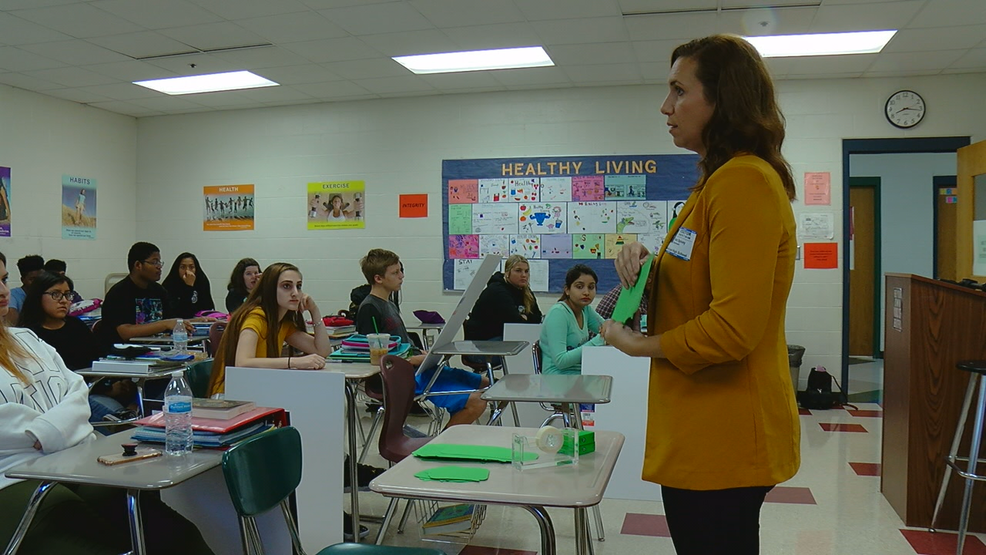
Butler County Sheriff’s program called Break the Cycle teaches students about dating violence (WKRC)
BUTLER COUNTY, Ohio (WKRC) – Female high school students in Ohio are more than twice as likely to experience sexual violence than males but a Butler County Sheriff’s program for teens and dating violence seems to be working.
Once a year, a representative from the victim assistance program goes into schools and teaches about dating abuse. This year, the program called Break the Cycle includes students like Alyssa Longworth and Kelsey Eck, both seniors at Lakota East High School.
“It happens a lot unfortunately,” said Alyssa Longworth
“It’s kind of scary that it actually goes on,” said Kelsey Eck.
Members of one class read out loud what they believe to be an example of an abusive conversation between a boyfriend and girlfriend through texts, and other social media apps.
They’re teaching the students how to watch out for themselves. “If I was in an abusive relationship, get out of it as soon as I see red flags and to make sure I tell somebody that way I’m not too late not do something I’m regretting,” said Alyssa.
Learning what to do if they find themselves in those situations. Longworth says she knows how to stick up for herself, and for her friends if she spots red flags. “I tell them to try and get out of the relationship and tell their parents,” said Longworth.
“If we don’t talk about what abusive behaviors are right now, they don’t realize in their future relationships that they’re engaging in or being a victim of those abusive types of behaviors,” said Sara Spivey.
Spivey is with the Butler County Sheriff’s Office. She teaches the week-long class. She says 1 in 4 Ohio teens affected by dating abuse contemplate suicide. It’s a number Spivey believes can be lowered through education.
“I can look back on this class and see the warning signs,” said Longworth.
“I think this is awesome. I like that we have people come in and talk to us about this stuff opens my eyes and I like hearing people’s advice about things,” said Eck.
Parents can help by sitting down and having a conversation with their children and having an open dialog even before they get in a relationship.
What You Need to Know About Romance, or the Lack of, When You Have CF

I’ve been single for a year now, and I’m darn proud of it. I didn’t think I could do it, and I’ve grown so much because of it.
From ages 17 to 24, I was with a wonderful person. It was us against the destructive titan, cystic fibrosis. We fought side by side, not against each other. Our relationship seemed untouchable, except by the trial of me getting better, healthier. People think of “sickness” as being the complex part of “in sickness and in health.” But once I recovered from my end-stage CF and deafness — through my transplant and cochlear implants — we realized our goals and priorities had drifted apart. I had been dependent upon her, and she’d found identity in caring for me. The dependency was suddenly unnecessary, and so our roles in the relationship shifted.
Ironically, we agree that breaking up was the best thing that could have happened to our relationship. At first, I plummeted, devastated. But like an arrow pulled back, back, back, I shot forth with intense velocity toward aspirations and missions I’d previously never imagined achieving. In my relationship, I was comfortable. Once I left it, I needed to dive into discomfort, which led to epic adventures.
She and I remain close friends — she even offered to buy me a concert ticket for our “breakupiversary.” How could we not feel a continued bond after she supported me through those countless days in the hospital, transplant, and deafness?
Here’s what I learned from that relationship and while flying solo:
Dating ain’t easy
In the graphic novel “Scott Pilgrim,” a Canadian dude crushes on a girl named Ramona Flowers and must battle her seven evil exes to date her. Being with a CFer is like dating Ramona. Perhaps the seven evils are prednisone rage, limitless vomiting, mucus (lots!), sterility and infertility, traumatizing hospital stays, mental health crises, and … fear of planning for the future.
A nurse said that, on the bright side, I will stay looking young forever (a CF stereotype) and will never get “fat like most middle-aged men.” Shrug.
Relationships can motivate
I didn’t consider lung transplant until I was in love and found the will to live. Before then, I didn’t care much for life because I didn’t feel it was worth the investment. In hindsight, that’s a load of malarkey. But my girlfriend at the time served as my motivator. I got the transplant because I dreamed of the future — unafraid for the first time in years. Although we didn’t stay together, I love my transplant life, and I’m relieved I took the tough track to thrive.
Or relationships can be your undoing
Be cautious. I’ve known many who lost interest in life after a breakup. Be loyal to yourself before you become loyal to someone else. If a relationship ends, you still need the will to take care of yourself.
Be OK with singleness
After my breakup, I struggled to realize what I’d fought for. I downloaded dating apps against the advice of my friends who said I needed to focus on myself for a while. I felt like I needed to leap into a new relationship to reclaim self-worth. With terminal illness, it often seems like I’m racing the clock. But, dude, I’ll have many years ahead because I have learned to love myself enough that I chase life without pause. I am my motivator.
I haven’t entered any romantic relationships since the breakup. That’s good, for now. While single, I’ve traveled every few weeks, picked up new hobbies, worked on building self-esteem, pursued volunteering opportunities, and deepened friendships. Most importantly, I spent money I’d usually spend on a girl … on truly exceptional food. Treat yo’self.
Have high standards, then go higher
Before things get serious, inform the person you’re dating about your disease. Give them a respectful chance to back out if they don’t think they can handle a life with chronic illness — this can save both you and them heartbreak. That may feel unfair to you, but it’s better than being in a long-term relationship with someone who isn’t prepared for your life storms.
Your life is hard enough, so don’t waste energy on someone who doesn’t treat you special. Find someone who is open-minded, determined and relentless, patient, optimistic yet realistic, humorous but respectful. An advocate, a caregiver. A tall order, but a good order.
***
Six years into my relationship, I discovered that love does exist, even if it morphs into pure friendship. I learned the ideals of a caregiver and how to navigate dating in CF’s shadow. In the year since, I found myself and the adventures that made me thrive. Relationships can be great for a person with CF, as can singleness.
Follow my adventures on my Facebook page and Instagram.
***
Note: Cystic Fibrosis News Today is strictly a news and information website about the disease. It does not provide medical advice, diagnosis, or treatment. This content is not intended to be a substitute for professional medical advice, diagnosis, or treatment. Always seek the advice of your physician or other qualified health provider with any questions you may have regarding a medical condition. Never disregard professional medical advice or delay in seeking it because of something you have read on this website. The opinions expressed in this column are not those of Cystic Fibrosis News Today, or its parent company, BioNews Services, and are intended to spark discussion about issues pertaining to cystic fibrosis.
The 10 commandments of online dating
Online dating is an emotional rollercoaster.
One minute you’re raving about your new #bae and all of the niche boxes they tick – ‘wears uniform, enjoys crime podcasts, identifies as gluten-free’ – the next, you realise you’re sitting opposite a total stranger drinking lukewarm beer and wondering why on earth you swiped right.
In a sea of catfish and other equally complex creatures, when it comes to modern-day matters of the heart, it’s easy to feel like you’re drowning in the nuance of it all.
In order to navigate the murky waters of online dating and actually find someone you can tolerate, let alone fancy, you need to go in armed and equipped. But preparation goes beyond knowing your ghosting from your breadcrumbing.
From abandoning ‘the waiting game’ to rehearsing your bad date exit strategy, here are the 10 commandments of online dating, as supported by science and well, common decency.
1. Thou shalt not say things thou does not mean
People like it when people like them, that much is a given. So when we meet someone we fancy online, it’s tempting to become an effusive people-pleaser in the hope that your affections will be reciprocated.
However, going overboard with the compliments so early on (think: “your eyes are beautiful like the sun” and “you’re more irresistible than chocolate”) is risky, argues dating psychologist Madeleine Mason.
Either it will seem like you’re being inauthentic, she tells The Independent, or your over-enthusiasm will engender false feelings of hopefulness that will cause problems down the line.
If you mean it, say it. If not, keep mum.
2. Thou shalt not be neither cat nor kittenfish
By dint of being exclusively online platforms, dating apps foster a culture of deception. This can take varying degrees, from lying about your height (kittenfishing) to creating entirely false identities, otherwise known as “catfishing”.
A study carried out by social media analytic professors at the University of Oregon found that men are most likely to lie about their occupations on dating apps, whereas women tend to have less photographs than men in that they’re either old images or recent ones that have been heavily edited.
The research revealed that most of the lies people tell on dating apps derive from wanting to present ourselves in ways we think the other person will deem attractive.
For example, if a match says they’re into fitness, you may lie about how often you go to the gym.
The repercussions of lying to a partner are obvious, but Mason says that it could keep you from finding love forever.
“Styling your online image that is not a true likeness of who you are will set your date up for disappointment and you will remain single,” she says.
3. Thou shalt not start a conversation with an emoji
Not only does this give the impression that you have the vocabulary of a five-year-old, but it’s downright lazy.
Remember that you do not know this person; if you want sparks to fly, you need to dig a little deeper than digitally-enhanced fruits and vegetables.
Despite their popularity, a recent study carried out by dating site Plenty of Fish found that peaches and aubergines are the most-hated emojis when it comes to online dating conversations.
The research also revealed that only eight per cent of people think sending an emoji message will get you a reply in the first instance.
“Try and start out with at least a sentence or two, ideally including a question the person can answer you,” Mason advises.
“Basically you want to invite a conversation, not merely state your presence.”
4. Thou shalt not play ‘the waiting game’
Tempting as it may be, it’s best not to play games with your beloved when it comes to communication i.e. purposely delaying responses so as not to seem desperate.
While nobody wants to be dubbed a “keen bean”, it sets a toxic precedent if you’re obsessing over such trivial matters so early on.
A study from 2017 revealed that similar texting habits can be key to finding love online, but that doesn’t mean you need to match someone’s response time to the minute.
“Adopt the same ‘timings’ as you would a friend,” Mason suggests, “which is most likely to be when you have time and an answer.”
5. Thou shalt have a well-rehearsed escape routine
Whenever you meet an online match in person for the first time, you run the risk of spending an hour wincing with awkwardness, wondering what compelled you to agree to a date with this person.
In such circumstances, it’s key to have an exit strategy prepared.
Some general rules of practice: be polite (“This was great, but my Uber is waiting”), don’t tell a farfetched lie (“My cousin’s guinea pig just fell down the loo”) and never dine and dash (“I thought I’d paid via telepathy”).
6. Thou shalt ignore the advice of coupled-up friends who met IRL
When you’re single, your smug friends in relationships will inevitably try to offer their support, by repeating statements like: “you’ll find someone when you least expect it” and “patience is a virtue”.
The thing is, if they met in real life, your naive, loved-up friends know diddly squat about the convoluted online dating landscape – they may as well be teaching a camel how to swim.
“There is a reason why there’s a rise in dating coaching,” Mason points out, “many people have little clue on how best to date successfully and for those who have met IRL, their empathetic, well-meaning advice is often inefficient, especially when it comes to things like what photos should go up on a dating profile.”
Don’t listen to your smug pals, dear single camel, you and your humps got this.
7. Thou shalt ‘play the field’ with caution
Dating apps endorse a degree of polyamory due to the way they work.
As soon as you swipe right or left on a dating app, another person’s profile appears on your phone.
If multi-tasking is what you’re into, go forth and well, multiply, but note that things can get messy if you start dating several people at once.
Not only will you find yourself repeating stories because you’ve forgotten what you’ve said to who, but you’ll struggle to commit to just one person due to constant distractions.
“It’s not to say you can’t go on several different first and second dates,” says Mason, “but once you start seeing someone frequently, focus on one person at a time.”
8. Thou shalt read verbal and non-verbal cues
In a today’s #MeToo age, it has never been more important to be aware of what your match is and isn’t comfortable with in terms of physical intimacy.
This can be trickier with people you’ve met online, as you’re likely to have fewer ties to one another, which can cultivate irrational or erratic behaviour.
Today, we have consent apps to help assuage some of these grievances, but criminal lawyers argue these wouldn’t stand up in a court of law, rendering them futile.
Instead of clicking ‘yes’ or ‘no’ on a smartphone, it’s crucial to use your intuition when broaching matters of intimacy on a dating app date, even if it’s just a kiss.
“Dating is more like a dance than a game,” says Mason.
“You work out where the other person ‘is’ and respond.” If you’re unsure, be straightforward and have a conversation about it. In these instances, it is always better to be safe than sorry, even if you feel it compromises your ‘playing it cool’ facade.
9. Thou shalt split the bill on the first date, or at least try to
It’s a debate as old as time: in heterosexual partnerships, who should pay on the first date?
A YouGov study from 2017 found that 40 per cent of men think they should always pay for the first date while just 29 per cent of women felt the same.
People feel very strongly about this, which is why it’s best to avoid the risk of causing a ruckus over something so menial and vow to split the bill early on.
10. Thou shalt not social media stalk (in excess)
Curiosity killed the cat – and it may well kill the person spending hours trawling through a match’s old Facebook photos.
What might start as an innocent browse through someone’s Instagram feed can easily descend into a three-hour-long social media deep dive, leading you to the Twitter profiles of distant family members and old flames – do not fall down this rabbit hole.
Obviously it’s fairly acceptable to engage in a mild amount of pre-date social media stalking to make sure the person you’re meeting actually exists, but Mason advises keeping your searching to a minimum so as to get to the know the person in front of you and not a fantasy version you have gleaned from social media platforms.