


Category Archives: Relationships
Tips to Make Dating with Cerebral Palsy Less Intimidating
Hey, everyone! Last week I wrote a column that didn’t get a chance to be published. I thought I would have it for you this week, but it’s going to take some extra time. This week, instead, I’ll discuss dating and being in a relationship with a partner who has a disability. While looking through my past columns, I was actually pretty shocked that I never really touched on this topic before, because it’s discussed pretty often online.
The questions regarding dating and disabilities are what you would expect and, I think, something people with disabilities think about already:
- How can I help?
- How do I know if I’m helping too much?
- What do I need to know about dating a partner with a disability?
My first piece of advice is to remember that everyone goes through the awkward stages of a new relationship and getting to know someone, regardless of disabilities.
My second piece of advice is to remember that communication is key. I clearly have a physical disability, but I used to think that it was best just to ignore that obvious fact unless my partner or potential partner wanted to talk about it. But that makes the situation awkward for both sides of the relationship. The person with disabilities feels on guard, just waiting for the hammer to drop. And the able-bodied partner feels like the topic is off-limits for discussion because the person with disabilities didn’t bring it up themselves. Remember, they like you and have an interest in you, regardless of your disability. And they don’t want to offend you. So, talk about it.
Here’s a tip for able-bodied partners: Imagine you’re planning a night out with your partner who has disabilities. You want to see a movie and have dinner, but you aren’t sure if the venues are accessible. You could always take the initiative and call to ask, or you could visit the places, of course. But when you ask your partner out to those places, ask if they WANT to go, not if they CAN go. See the difference? If you ask if they want to go, this leaves the conversation open to the ways of making the outing work. If you ask if they can go, your partner might suddenly feel uncertain or overwhelmed about how it could work.
My next piece of advice is to stay open — both of you. I think, as someone with a disability, we can sometimes be a little cynical and assume the worst of people. It’s a bad habit that needs working on. If you need help, ask. Your partner will be more than willing to help; this will become second nature over time anyway. If you are the able-bodied partner, listen to your partner’s needs and pain points without judgment and offer a solution. The truth is that your partner wants to be treated just like everybody else — as a normal person. We are people first, before our disability. We can still do lots of things and we want to, we just may need a little extra help from time to time.
One of the best things a person with disabilities can do (not only for themselves but also for others, dating or not), is to have a response to the basic questions one hears all the time. For example, if someone asks, “What happened to you?” have something prepared. “Oh, I was born with cerebral palsy. Here’s what that means. …” I’ve found that this preparation really helps me to not be so easily offended or taken off guard. I can’t be the only one who gets a little confused for a moment when asked, “Hey, what happened to you?” But having something prepared helps lessen that surprised feeling for me while also helping to educate the person, no matter how briefly.
Above all, able-bodied partners, don’t be afraid to ask questions and seek clarity about unfamiliar concepts. Your partner with disabilities will tell you when they need help, and they will also tell you when you’re helping too much or when they don’t need help. If they don’t need help, don’t be offended, it just means that they want to do it themselves. People with disabilities are still people who want to contribute to their communities and have meaningful relationships. Let your partner guide you.
***
Note: Cerebral Palsy News Today is strictly a news and information website about the disorder. It does not provide medical advice, diagnosis, or treatment. This content is not intended to be a substitute for professional medical advice, diagnosis, or treatment. Always seek the advice of your physician or other qualified health provider with any questions you may have regarding a medical condition. Never disregard professional medical advice or delay in seeking it because of something you have read on this website. The opinions expressed in this column are not those of Cerebral Palsy News Today or its parent company, BioNews Services, and are intended to spark discussion about issues pertaining to cerebral palsy.
Kevin O'Leary shares his No. 1 rule about paying for dates
With drinks, dinner, movie tickets, cab fare, a haircut and new clothes, dating can cost a fortune. The average single American spent $1,596 on dating in 2016, according to a survey by Match. Men spent $1,855 on average, and women spent $1,423.
And in the era of endless dating apps, young people are spending more time on dating than ever before — one survey found millennials spend 10 hours a week swiping through suitors.
For young people searching for their soul mate, Kevin O’Leary, personal finance author and investor on ABC’s “Shark Tank,” has a word of advice: Think of dating like an investment, and make sure it’s one that will pay off.
“You’re going to spend money and you’re going to spend time [on dates], so look at that significant other in the context of, ‘Do I want to spend time with them?’ And, ‘Do I want to invest money in them?'” O’Leary tells CNBC Make It.
“If it doesn’t look like a good return is there, don’t spend the money,” he says. “Move on, meet somebody else.”
But until you’re sure about the other person, there’s nothing wrong with inexpensive dates, O’Leary says — you can be frugal without looking cheap.
“If you think about dating on a budget, because when you’re starting out you don’t have a lot of money, you’ve got to be crafty,” O’Leary laughs.
If you plan to eat out on the first date, “make it a low budget restaurant,” he suggests.
Or, if dating is high priority, look to your budget to see where else you can save instead, suggests personal finance expert Dayana Yochim. “What else are you spending on that’s not bringing you joy, or not bringing you closer to your life goals? Cut back there,” Yochim tells The Washington Post.
After the meal, if you’re interested in the person, pick up the check, advises O’Leary. (Though according to etiquette expert Lizzie Post, the great-great-granddaughter of Emily Post, “it’s the person who does the asking who should do the paying,” Post tells CNBC Make It. “Or at least who should be prepared to offer to pay.”)
With later dates, consider low-cost ideas like taking a walk — or cooking, says O’Leary. On his second date with now-wife Linda in 1982, the pair made dinner at his apartment.
“I went to the grocery store and bought a bunch of stuff that would be really hard to chop up so we could do it together in the kitchen,” O’Leary says. “We had a great time and we got to know each other a little bit.”
Ultimately, for O’Leary, love isn’t just about what the heart wants — it’s also about setting yourself up for success.
“The whole idea is to remember you’re building for your future. Don’t get into debt, save, save save and invest,” he says. “It’s a fantastic way to protect yourself down the road.”
Don’t miss: Kevin O’Leary: Ask your significant other these money questions right now
Like this story? Subscribe to CNBC Make It on YouTube!
Disclosure: CNBC owns the exclusive off-network cable rights to “Shark Tank.”
Podcast and Broadcast Become One in Collaboration Between Anna Faris and iHeartMedia
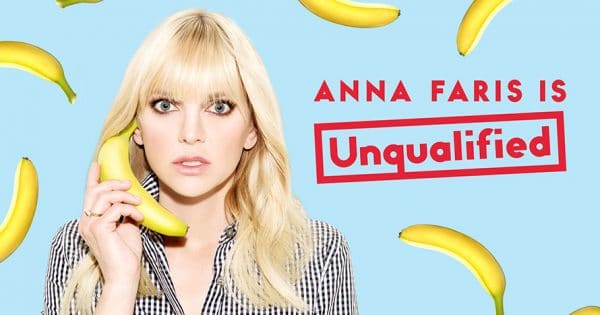
If there’s anything people in relationships want, it’s iffy advice from perfect strangers. Now, broadcast radio listeners across the country will be able to tune in for unsolicited and highly questionable dating advice, thanks to a partnership between Anna Faris and iHeartMedia. The company and Faris have joined forces to bring her podcast, “Anna Faris is Unqualified,” to iHeartMedia’s listeners.
On “Unqualified,” Faris and co-host Sim Sarna discuss the ins and outs of dating, alongside various celebrities and cultural icons, and offer up dubious relationship advice to callers.
“I am absolutely thrilled to be partnering with iHeartMedia to bring ‘Unqualified’ to millions of new listeners,” said Faris. “At ‘Unqualified,’ we pride ourselves on generally not knowing what we are doing, and it seems iHeart is willing to accept our values and form this expansive partnership with us. Being able to embarrass Sim to millions of new listeners is simply a dream come true.”
“Unqualified” is also collaborating with iHeartRadio’s podcast network on bringing exclusive content to iHeartRadio’s listeners. The initiative is aimed at bringing awareness of podcasts to broadcast listeners who may not otherwise be exposed to the medium.
“We are so excited to introduce our podcast to millions of new listeners that may not have known that Anna Faris had a podcast, or even what a podcast is,” said Sarna. “We hope that by working with iHeartMedia, we can give even more people deeply unqualified advice.”
Common Dating Rules Make You Attract Unavailable Partners

Dating gurus will often give you a set of dating rules to follow to get your soulmate. These rules are designed to get someone to fall in love with you. To chase you. To find you so attractive that they can’t resist you.
Those bullshit dating rules go something like this:
-
- Don’t make yourself too available. (Message: available people are not desirable. Reality: Available people are the most attractive partner. They are supportive, caring, and invest into the relationship)
- Say you’re busy, even if you’re not. (Message: lie, because…that’s a healthy way to start a relationship? Reality: Starting out with a lie only encourages you to hide your true feelings and lie later in the relationship.)
- Don’t call him – wait for him to call you. (Message: don’t express your needs, they’re not valid. Reality: Your needs come first. If you lack the self-respect to express your needs, how do you expect someone else to respect them?)
- Don’t appear to care too much. (Message: showing someone they matter is not a way to keep them. Make them feel insecure and they’ll stick around. Reality: You will never have amazing sex or a happy relationship unless you can be vulnerable and truly care about your partner.)
- Act mysterious. (Message: Uncertainty in a relationship is healthy. Reality: Studies show constant uncertainty and lack of security in the relationship leads to health issues and depression, among other problems. There is always a sense of mystery to every person, but it doesn’t mean you have to hide things to keep life sexy. That leads mistrust. Mistrust leads to misery. )
◊♦◊
All of these messages teach us that independence is the way to preserve our dignity and gain our partner’s respect. If you are following this advice and you are “needy,” you’re doing the exact opposite of your true self. You’re behaving in inauthentic ways that are not true to your needs and feelings. You’re manipulating someone to fall in love with a fake person.
You put on a mask to appear strong and self-sufficient.
◊♦◊
But these books and the advice they offer are correct. They do indeed make you more attractive.
What they neglect to tell you, because they’re unaware of the science of love, is that they will make you only attractive to a very specific kind of person; a person who is emotionally unavailable. The one that pushes you away when you need closeness.
Why?
The advice is teaching you to ignore your needs and let the other person dictate the amount of closeness in the relationship. The person you will attract will be able to have his cake and eat all of it. They get to enjoy the closeness when you are together, and then they can can ignore your needs for intimacy and togetherness the rest of the time.
By being someone you’re not, you’re allowing another person to decide the terms of your relationship.
In the long run, you’ll turn into a crash test dummy who’s getting slammed into the emotional walls your partner puts up. Only to tear open your heart. After that happens, the emotionally unavailable partner will notice the real you starting to show.
We all know we can only hide our true self for so long.
◊♦◊
When you start to show that you want intense intimacy and desire to spend a lot of quality time together, you’re partner will turn cold. They’ll start to disengage from the relationship in any way that they can.
Taking the common dating advice to heart will only break your heart. You’ll never win because you are attracting the wrong kind of partner for you.
You’ll attract someone who:
- Sends ambiguous messages about their feelings and commitment to the relationship.
- Longs for an ideal relationship, but subtly hints that you are not that ideal person.
- Disregards your emotional needs and will disregard them, even when confronted.
- Tells you that you are “too needy,” “the sensitive one” or “overreacting.” All of these tell you that your feelings don’t matter to them. They’ll make you second-guess yourself.
You are only as troubled as the relationship you’re in. If you don’t want to have the most toxic relationship of all, then follow the 5 secrets to finding your soulmate here.
◊♦◊
By Kyle Benson
This article was originally published on Kylebenson.net
◊♦◊
Photo: Pixabay