



Category Archives: Relationships
Why Does This Right-Wing Dating App Have a Urologist On Call? – Splinter

Photo: Getty Images
Rejoice, for this Christmas season has birthed unto the world a new dating app: Righter, which has pledged to be an alternative to all the lib-addled dating services that presumably exist. That’s fine! What we urgently needed to know after a minute or so of engaging with it was why Righter has a urologist on call, as part of the app.
Righter generated a modest wave of headlines before it launched; its founder Christy Edwards Lawton demonstrated a flair for a certain kind of publicity, doing things like pledging to sue “liberals” who used the app. (No such rule actually exists in its terms of service, that we can see, and it would be tough to enforce such a non-specific user ban). There were also a lot of social media posts extolling things like “feminine women” and “complementarity.”
Lawton is an Idaho-based businesswoman who, per her LinkedIn, has worked as a consultant for right-wing youth group Turning Point (best known for its too-online leader Charlie Kirk and its members’ enthusiasm for diapers). She was also, according to LinkedIn, previously the proprietor behind something called Street Fox, which pledged to offer love advice to “high net worth” individuals in the Rocky Mountain Area.

Advertisement
That service doesn’t appear to have taken off, though you can still enjoy a cached version of an interview Lawton did with a local publication about the challenges of finding love connections for the Rocky Mountain area’s heavy hitters. “The clients that I am dealing with are people that could never put their face on a website,” she mused in the interview, not entirely convincingly. “They are people that are either well-known—celebrity or tied to celebrity—or they are people that are business owners or CEOs or people that just flat out want their privacy yet they want to find love. How are they supposed to go about doing that in this small town, in this community? It’s been very challenging.”
Sure. There, too, Lawton demonstrated a singular focus on retiring, modest, virginal “feminine women” and the men who love to pursue them. Perhaps Righter will be the golden ticket for all those extremely real people. The app, however, does seem a little buggy: My editor and I, logged in sitting across from one another, were both told that there were “no more people in your area,” which bodes ill for any conservatives looking to find a geolocation-based kind of passion.
My editor then set his app to look for users within 500 miles, which resulted, curiously, in the same lack of matches or even the appearance of another human being on the high, lonesome tundra of this app. (Although, frankly, it could also be an issue with him. That’s a possibility.) The following day, he finally appeared in my list of potential suitors—along with a number of other men from up to 5,000 miles away, even though the app is auto-set to only find love connections with 20 miles, unless you change it manually. My editor, meanwhile, discovered a lone nurse several hundred miles away.
Advertisement
Nonetheless, Righter does have one fascinating feature: a special medical subscription, which for just $24.99 a month allows you online consultation with what they’ve termed the “Righter Medical team.” As it stands, the medical team kind of looks like one guy, Dr. Joseph H. Williams, an Idaho-based urologist.
Urinary health and adjacent issues are important, of course, though they are, many would agree, but one piece of a more comprehensive health regimen. Righter is like that: sort of curiously specific about some details (you have to enter your height to register, for instance), while rather lacking in some more general areas (the app never actually asks whether you’d like to look at men or women; its emphasis on social media is strenuously heterosexual, but you’d think they’d make sure.)
Advertisement
The community guidelines and other legalese associated with the site are also strewn with typos (“Everyone is held to the sake standard”), but really, none of that was more interesting to us than the urology. Lawton did not respond to a request for comment, but Dr. Williams did; he told us by phone that Lawton is an old friend and that he, quite reasonably, sees Righter as a way to talk to a new audience of men about their sexual health.
“I take care of a lot of guys who are having medical difficulties when they’re aging or when they’re re-entering the dating world,” he told us. “And I do a lot of work with guys who are having difficulty with intimacy physically and to a certain extent mentally.” He also said it “takes time and consideration and frequently some medical intervention to help make sure a guy is normally functioning and can have success and frankly be competitive in the dating world.”
Williams was clear that he wasn’t necessarily endorsing the political views of the app. “I’m not a politician and I don’t like to comment on politics because I’m not an expert, but within the context of this app when it comes to the fact that it’s a right-wing dating app, it’s an avenue to reach men. If Tinder had this kind of application and they reached out to me I might consider it. It’s just a venue for providing care wherever it arises.”
Advertisement
Should a woman have medical questions, Williams added, “There are experts on my team who I’ll be able to reach out to to bounce stuff of. We have a neurologist, a female PA. We have our bases covered and we’ll expand the team if we need to.”
While it is of course tempting to continue poking gentle fun at Righter, if an audience of older men use it to seek out medical advice they wouldn’t otherwise try to find, that’s probably a good thing. A free-market solution, if you will.
With that burning question addressed, I was content to quietly delete Righter from my phone, just in the nick of time: I’d both beheld a man in a TRUMP KANYE 2020 t-shirt and realized that after very few swipes, the app rather insistently redirects you to a page where you’re encouraged to purchase “Righter Luxe,” another Tinder-knockoff feature which costs $9.99 a month.
Advertisement
Also, and this is not passing judgement one way or another, but sort of generally noting: This app seems, well, attracted to the president. Sexually. And really, given the app’s apparent audience of aging men who have physical and mental issues with intimacy and are in need of medical intervention, it makes perfect sense.
6 Money Tips From Self-Made Billionaires – Entrepreneur
Entrepreneurship is not an easy road. You must carve your own way to success.
9 min read
Opinions expressed by Entrepreneur contributors are their own.
Becoming a self-made billionaire puts you in a league of your own. Of the approximately 585 billionaires in the US, about 360 have made their own fortunes. These are people who have made it big through hard work, sheer will, tenacity and being in the right place at the right time with the right idea.
We all want to know the secret to success. So, if you could sit down with a self-made billionaire, what kind of money advice would you seek from them? What were the key lessons they learned about managing their finances on the way to boundless fortune?
Here are some of the best pieces of advice offered up by self-made billionaires. Use these tips wisely, and you can put yourself on a path to financial solidarity and success.
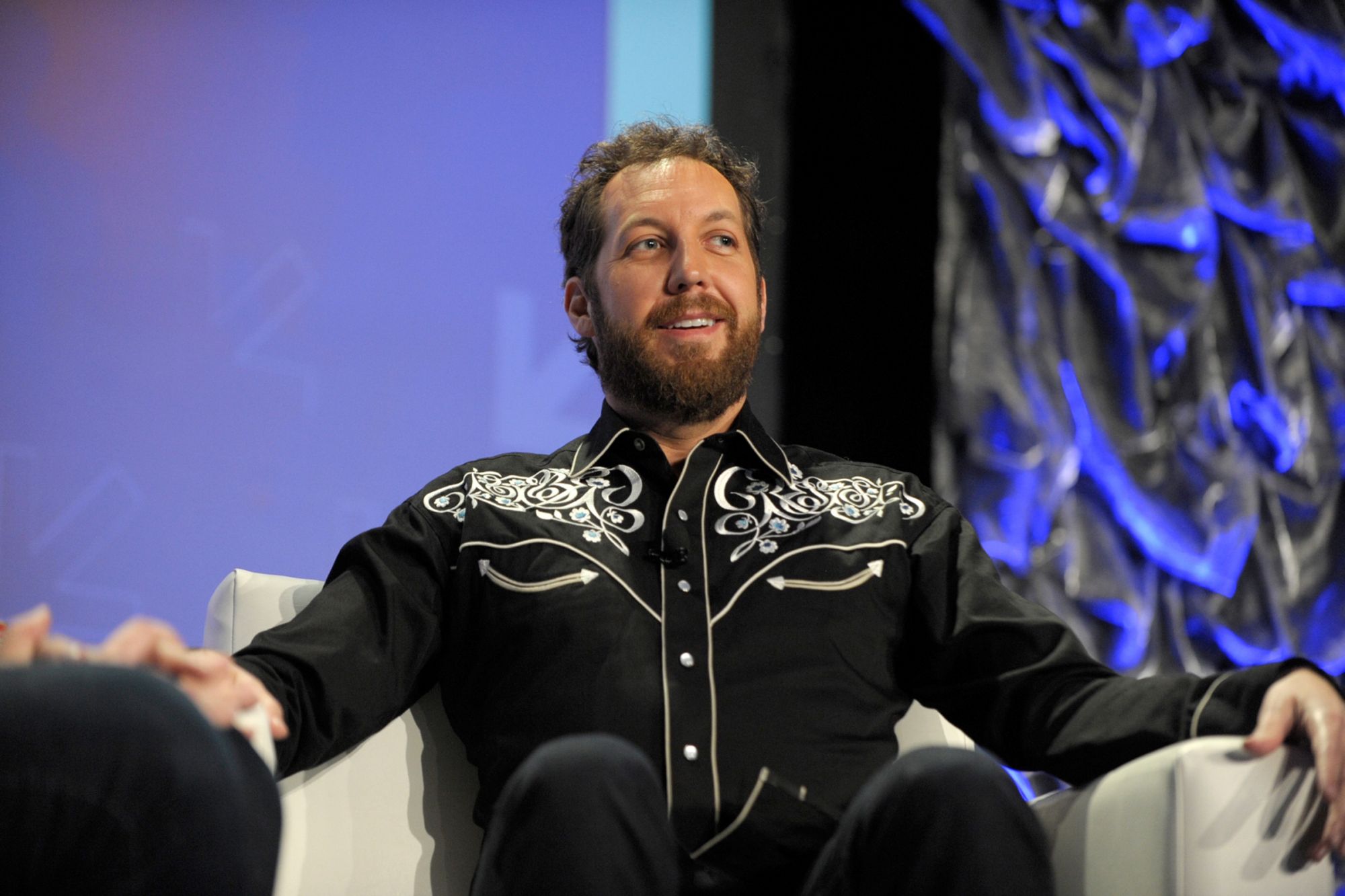
1. Chris Sacca — Be a cheap bastard.
Chris Sacca is known for his Midas touch as a tech venture capitalist. He was an early backer of Twitter, Uber, Instagram and Kickstarter. Those bets paid off, propelling him to billionaire status.
Sacca’s best advice to young adults hoping to build their portfolio is: Don’t spend your money! Instead, he advises you to pinch your pennies and have your priorities in order for the long haul. “Being a cheap bastard now means so much more freedom and choices later,” Sacca said in an interview with USA Today.
He has observed that, too often, people allow debt to pile up while spending too much on buying things to fulfill their desires. If you can learn to live simply, you’ll have money to spare and that will give you more options to start new projects or launch new ventures.
For young entrepreneurs hoping to follow in his path, Sacca cautions that it’s not an easy road. Each entrepreneur must carve his or her own way to success. “There is no well-trodden route to where I am, no formula to replicate,” he said. “But without exception, everyone I’ve ever met who is authentic, daring, empathic, tireless and willing to ask for help has gone on to be happy and fulfilled.”
Related: Billionaire Venture Capitalist Chris Sacca on the ‘Quickest Way to Get Rich’
2. Reid Hoffman — Have a lifeboat.
He’s often called the Oracle of Silicon Valley for his remarkable track record on building companies and his success as a capital investor. Reid Hoffman is a co-founder of LinkedIn and the dating website SocialNet, and was Chief Operating Officer for PayPal. He even worked on Apple Computer’s eWorld, an early attempt at creating a social network.
Hoffman now works to educate entrepreneurs on career planning and risk-taking. He calls this ABZ planning. You have Plan A, which is a your current plan, the business you’re trying to launch or the job you’re working at. It’s your plan to move up in the world.
Then you have a Plan B, your backup plan; it’s what you’ll switch to if you get out of Plan A. Maybe your Plan B is a side project you’ve been working on, or other jobs you’re thinking of applying for. But your Plan B should be flexible. You should be open to pursuing multiple opportunities or having a variety of backup plans should your Plan A fall through.
But having a Plan B isn’t enough. You also need a “Plan Z.” This is your safety net, so if everything goes wrong, you won’t be left completely destroyed. It’s what Hoffman calls your lifeboat. Having a lifeboat option is important, because if potential failure could leave you bankrupt and homelessness, you won’t want to take any risks — and therefore you’ll never grow.
For instance, when Hoffman was getting ready to launch SocialNet, he asked his father if he could live with him if the company didn’t pan out. If that happened, Hoffman planned to find another job and work his way out of debt, but he knew he’d have someplace to go.
3. Warren Buffet — Live simply and invest in yourself.
Known as the Oracle of Omaha, Warren Buffett is famous for shunning a lavish lifestyle (despite his $86.5 billion net worth). The CEO of Berkshire Hathaway has simple tastes, lives frugally and enjoys being a generous philanthropist.
Buffet still lives in the house he bought in 1957 for $31,500. He seldom buys new cars. He often grabs a cheap breakfast from McDonald’s on the way to work. But there are some things that are worth investing in, according to Buffet. And at the top of that list should be yourself, he said in an interview with Forbes.
Whatever your weaknesses are, take steps to address them and overcome what might be holding you back. For Buffett, that weakness was public speaking. As a young man, he took a Dale Carnegie course and gained so much confidence that he proposed to his wife, Susan.
“Nobody can take away what you’ve got in yourself, and everybody has potential they haven’t used yet. If you can increase your potential 10 percent, 20 percent or 30 percent by enhancing your talents, they can’t tax it away. Inflation can’t take it from you. You have it the rest of your life.”
He also goes out of his way to show his love for friends and family, but he doesn’t rely on extravagances to show others he cares. Instead, he might send news clippings by mail or personally drive to the airport to pick up a friend.
Related: Warren Buffett’s 3 Top Pieces of Advice for Entrepreneurs
4. John Paul DeJoria — Have an emergency fund set aside.
Life hasn’t always been easy for self-made billionaire John Paul DeJoria, but his experiences have taught him valuable lessons.
Born into a poor immigrant household, he began working when he was 9, selling greeting cards and delivering newspapers to help earn money for his family. As an adult, he found himself homeless several times, including shortly after launching a line of hair-care products with his friend Paul Mitchell.
DeJoria would eventually see sales of John Paul Mitchell Systems hair products skyrocket. And he would go on to build other ventures, including founding Patrón Spirits Co. But the first several years of getting his business off the ground were grueling. DeJoria said their fledgling hair-care business constantly ran behind on paying bills. They finally felt they had turned a corner with the business when they could start paying bills on time after two years.
DeJoria’s advice to young entrepreneurs is to make sure you have a cash cushion before you launch your business. “Before investing or starting a company, make sure you have enough money saved for at least six months to pay bills or anything else that might come up financially,” DeJoria said in an interview with Business Insider.
5. Sara Blakely — Don’t quit your day job.
Sara Blakely, founder of Spanx, is the youngest female self-made billionaire ever to be included in the Forbes World’s Billionaires list. She came up with the idea for Spanx when she was 27 and used $5,000 — her entire savings — to get her business off the ground.
But it was slow going at first, and she ran into many dead ends trying to get hosiery mills to manufacture a prototype. She persisted, until finally a mill owner (who ran the idea by his daughters) gave her a shot. Meanwhile, she continued to go to her day job, working her Spanx business as a side hustle until she was sure it was financially viable.
Through it all, Blakely pinched her pennies and avoided incurring any debt as she went through the process of launching her business. She wrote her own patent using a textbook and designed her product packaging with the help of friends. She never accepted any money from outside investors. She continues to own 100 percent of the company, debt free.
Related: Why You Shouldn’t Quit Your Job to Start a Business
6. Dustin Moskovitz — Understand that entrepreneurship is a high-risk path.
Dustin Moskovitz became one of the world’s youngest billionaires as a Facebook co-founder, helping then-roommate Mark Zuckerberg launch the social media site from their college dorm room. He is also the founder of Asana, an enterprise project-management tool. Although he was able to find success at a young age, Moskovitz cautions others that becoming an entrepreneur is rarely a path to fame and fortune.
Entrepreneurship is a high-risk path, and the odds of achieving billionaire, or even millionaire, status are extremely low. Only a handful of companies end up growing to that kind of scale, Moskovitz said during a presentation to Stanford business students.
Entrepreneurs often work long, grueling hours and there’s very little glamour to it, he said. According to Moskovitz, a surer path to wealth is joining a later-stage company and helping them grow it. You’ll have a better chance of getting a high salary and achieving financial stability.
Moskovitz is also known for his simple lifestyle and his charity work through his foundation, Good Ventures. In answering a question on Quora, he wrote: “I never viewed money as being ‘my money.’ I always saw it as ‘the money.’ It’s a resource. If it pools up around me then it needs to be flushed back out into the system.”
Single Vermonters: Maybe avoid doing these things on your Tinder date – BurlingtonFreePress.com


If you’re looking for love online the best time to swipe right is on Monday evenings. Buzz60’s Sean Dowling has more. Buzz60
Single Vermonters might feel the pressures of “cuffing season”, when the cold makes you feel the need to be “tied down by a serious relationship.”
Or maybe you just want a relationship, regardless of the weather.
Either way, the Vermont Comedy Club hosts a recurring show “Tinder Nightmares” that uses audience members’ dating horror stories to fuel improv scenarios.
Tinder, an online dating app, requires users to swipe left or right in order to match with potential dates. It falls into a larger pool of apps, like Bumble and Hinge, that facilitate conversation based on mutual interest.
The show on Thursday did not require audiences to focus solely on unsavory Tinder encounters, allowing participants to branch out into bad dating experiences overall.
Tips for a Tinder date
Based on the stories, here are a few takeaways to keep in mind for dating, whether you download an app, get set up by a friend or meet at a bar.
- Avoid being in an exclusive relationship with your significant other.
- One audience member recalled telling her coworker about someone she met up with for drinks. The coworker realized her colleague’s date was in a relationship with someone else — in the same office.
- Know your limits when drinking or smoking so that — even if the date ends early — the rest of your day can still be enjoyable.
- One audience member described going on a date, which included smoking weed and feeling tired. After not having much of a connection, he remembered going home, laying in bed for hours and throwing up on himself.
- Be ready to: 1) navigate out of potentially uncomfortable conversations about beliefs and ideologies or, 2) Have a spirited debate, and maybe a plan to leave.
- One person volunteered a story that he said ended in an argument over politics and him leaving his date’s place.
- If you’re being set up on a blind date, don’t be afraid to get a little information about the other person from the friend coordinating. And if you’re doing the coordinating, try to see beyond the obvious when considering compatibility.
- Someone remembered being set up by his boss on a blind date. The only reason he thinks it was suggested in the first place? They are both gay.
Ultimately, there are no foolproof ways to ensure you have a good time this cuffing season. But maybe these can help you navigate the holidays with a little more ease.
Contact Maleeha Syed at mzsyed@freepressmedia.com or 802-495-6595. Follow her on Twitter @MaleehaSyed89.
Read or Share this story: https://www.burlingtonfreepress.com/story/life/2018/12/17/tinder-advice-vermont-comedy-club/2329957002/
She hates the outdoors, he enjoys the fresh air – Detroit Free Press

Adapted from a recent online discussion.
Dear Carolyn: I don’t like to go outside. I don’t really see the appeal. I enjoy indoor activities like reading and binge-watching shows and cooking. I will sit outside for a game or something, but I don’t go outside for outside’s sake.
I get a lot of pushback. People are really shocked when it’s objectively a nice day out and I couldn’t care less. I’ve shrugged them off, except I have been dating a guy who is into getting outside “to enjoy the day.” I live somewhere with rough winters so it isn’t a big deal until it warms up, but every good weekend he wants to go for walks or sporting events or eat outside. On a nice day recently, I wanted to go to the movies, come home, and hang out inside. He said he felt like we “wasted” the whole day and the nice weather.
I really want to find a compromise because I really dig him, but I feel hesitant to even tell him how much I dislike the outdoors because it’s been criticized most my life. Any suggestions?
– I Don’t Like to Go Outside
Tell him. Not telling is not fair. If this incompatibility is intractable enough and affecting parts of your lives that both of you are unwilling enough to compromise on, then it’s time to break up.
The compromise, by the way, is for you to force yourself outdoors on nice days to see if it’s a trade-off you’re willing to make in return for the pleasure of his company. But you don’t get to do it secretly, because he also needs to decide if he’s willing to be with someone who has to force herself outside.
Read more:
That’s not just because people who are being good sports about something are less fun to have around than people who genuinely enjoy it. It’s also because there might come a point down the road where the thrill of his company wears off a bit and the effort to get outside feels bigger every time and the balance of your trade-off shifts toward “nah.” He needs to make an informed decision about you, and that possibility is likely enough that he has to be able to weigh it for himself.
Imagine if you commit long-term and get transferred to a warmer climate. Then you’re not sucking it up for shorts bursts, but instead tormenting each other year-round.
Please note that none of this has anything to do with any pushback you’ve gotten. Your way is good for you, their way is good for them, and anyone judging your standards by their own really needs to butt out.
Re: Outside: You’re not alone! There are people out there like you, and you owe it to yourself to find them (or not, if you don’t want to). I have never been one for the outdoors, and I live where hiking is the preferred hobby of seemingly everyone. It doesn’t help that I’m also allergic to everything that blooms and prone to heat exhaustion. But regardless of the reasons, you’re entitled to the environment you enjoy. There’s no good reason to tie yourself to someone who doesn’t respect the things you enjoy.
– Inside, Please
Right – and calls them a “waste.” Thanks.
Email Carolyn at tellme@washpost.com, follow her on Facebook at www.facebook.com/carolyn.hax or chat with her online at noon Eastern time each Friday at www.washingtonpost.com.
Read or Share this story: https://www.freep.com/story/life/advice/2018/12/17/dating-relationship-advice/2288349002/