




Brian Ziff/Island Records
Tag Archives: dating advice
Episode 14: Dan Ariely, world-renowned social scientist
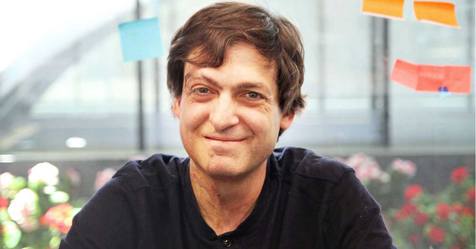
The Duke University professor is a leading expert on the most basic of human endeavors – decision-making. So how did he decide to answer our questions?
Transcript
Benyamin: On this episode of Our Friend From Israel:
Dan: I think it’s worthwhile to think that our basic ideal about human motivation is that we think about people like rats. People don’t like to work. If we were left to our own accord, what you would be doing, we would be on a beach somewhere, sipping mojitos. The only reason we work is because we need to get money so that we can eventually sit on the beach, drinking mojitos.
Benyamin: That’s Dan Ariely. He’s a tenured professor of Psychology and Behavioral Economics at Duke University. If an academic could be a rockstar, then Ariely is certainly one. His books are New York Times bestsellers and have been translated into more than a dozen languages. He has close to 200,000 Twitter followers. His numerous TED talks have been viewed 13 million times. Millions more listen to his podcast and read his advice columns each week in The Wall Street Journal. The New York Times has called his research revolutionary.
Benyamin: Dan Ariely has become one of the world’s leading experts in decision-making, which, in essence, makes his talent of enormous interest. CEOs of major corporations have Ariely on speed dial, hoping to pick his brain about human behavior; about what motivates consumers to make the choices they do. Once, when Prince Andrew discovered that Ariely was in London, he invited the professor to Buckingham Palace for tea.
Benyamin: Why is he so popular? Ariely translates what could be a ho-hum topic like behavioral economics into mainstream morsels of wisdom. He studies everything from income inequality and pizza delivery to dating advice and IKEA furniture. He’s launched several startups and has invented technologies that were later sold to Google, including a time management app that the search giant acquired. In today’s episode, we visit with Dan Ariely to talk about what he’s researching now, a strange experiment involving clowns in traffic, and how a new scale he invented may actually help you lose weight. Stay tuned.
Benyamin: Welcome to Our Friend From Israel, a podcast brought to you by fromthegrapevine.com. I’m your host, Benyamin Cohen, and each week we’ll have a conversation with an intriguing Israeli. They’ll come from all walks of life: Actors, artists, athletes, academics, archeologists, and other news makers. In today’s episode, we chat with Duke University’s Dan Ariely.
Benyamin: Hello, everyone, and welcome to today’s show. I am joined today in the studio by my colleague Ilana Strauss. How are you, Ilana?
Ilana: Hey. Pretty good.
Benyamin: Yeah? You got the enviable job of getting to interview Dan Ariely for this week’s episode. I am kinda jealous, I gotta tell you that.
Ilana: I’ve been stealing him from you for years now.
Benyamin: The reason we gave you this assignment is because you’ve actually hung out with Dan Ariely. You went hiking with him last year in Israel?
Ilana: Oh, yeah. Yeah. That was a seven or eight hour hike. It was intense.
Benyamin: How did that come about? How did you end up hiking in Israel with Dan Ariely?
Ilana: I think he posted on Facebook or something. Basically, he had an open invitation. People can send in an application and a certain number are chosen to be able to go hiking with him if you can get out to Israel.
Benyamin: He was doing this for his 50th birthday? It was like a bucket list thing or something? He was trying to walk across Israel for his 50th birthday, I think.
Ilana: Yeah. I think hiking the Israel Trail, which is this trail that just kinda goes all throughout the trail. We hiked a good ways across the width of it, actually.
Benyamin: He’s a smart guy. He’s a professor. Was he teaching you guys stuff as you were hiking?
Ilana: Oh, yeah. People were asking him behavioral economics questions as we went. I mean, I was.
Benyamin: Just to be clear, this podcast was not recorded while hiking. This was recorded later. I mean, he’s involved in so many random things. Didn’t he invent a new scale?
Ilana: Yeah. He had the glorious insight in that the regular bathroom scale doesn’t really help people lose weight too much. It makes them freak out over decimals. You go up or down a few pounds and you’re like, “Oh, my God. This exercise routine isn’t working,” or whatever. And really, your body just fluctuates a little bit. So, he came up with this sort of new scale that wouldn’t make you depressed after you stepped on it, basically.
Benyamin: Wow. Sounds cool. It’s been great catching up with you, and I’m looking forward to hearing today’s episode. So, here we go: This is Ilana Strauss interviewing the one, the only, Dan Ariely.
Ilana: Well, how’s it going today?
Dan: Okay, in general.
Ilana: I haven’t actually seen you since we were hiking in Israel, but I’ve heard you since then, and you’ve been very busy.
Dan: I am busy.
Ilana: Are you working on any new experiments now?
Dan: All the time. All the time. That’s what we do. There is a phenomena called “paradoxical persuasion” that I find fascinating. The idea of paradoxical persuasion is that imagine somebody holds some beliefs. Let’s say they are against vaccination. We know that giving them information from the other side of the spectrum just doesn’t help. If you go to somebody who is against vaccines and you say, “Hey, vaccines are really good. You should do it,” they just don’t listen. Paradoxical persuasion is about saying, “Let’s give people opinions that are from their side of the belief, but even more extreme than what they are right now.” Right?
Dan: It’s not just about being more extreme; It has to be more extreme and challenge the people’s identity. Let’s say something about vaccination: “Let’s have our kids be carriers of diseases, and then if people who meet them are weak or old or something like this, from a Darwinistic perspective, maybe it’s time for them to die anyway.” Right? People who don’t vaccinate themselves, it’s not just about risking themselves, it’s about the fact that they become carriers.
Dan: There was a study that showed that there was one year that was a shortage of vaccinations in Japan, and that year, lots of grandparents died, right? Because the kids themselves, they get the flu, but they are strong enough that they get sick but they don’t die. But then, they go and visit their grandparents for Christmas, and the grandparents get the flu, and for them, it’s much more damaging. Instead of just saying it, you basically kind of embrace it, and you say, “People don’t need to live so long. If somebody is weak and old, they’re just a drain on society. Let’s get this over quicker.”
Ilana: Did you run this experiment, where you …
Dan: We haven’t run those yet, but we’re about to start. We’re about to start doing those things both in the political domain and in health, so we’ll see how that will pan out. I’ll tell you about one other fun thing that we’re working on. There’s something called “benign masochism”.
Ilana: Okay, this sounds fun.
Dan: Benign masochism is when we enjoy pain, or we learn to enjoy pain. We started this by actually observing Olympic athletes, and we found out that Olympic athletes, particularly cyclists, really suffer. Cycling is a very, very tough sport, right? It’s very, very painful. We found that these cyclists sometimes just say, “I just want to last 30 more seconds,” and they last 30 more seconds. “I just want to last 30 more seconds.” It’s the same muscle group working against friction; Very, very hard. But they also learn to enjoy pain. [inaudible 00:09:43] cognitive reframing, where if they don’t have pain, they don’t think that they’ve done their job, right?
Dan: There’s something about their pain that is … kind of has a positive reflection. Now, it’s not as if you come to them and you say, “Would you like to be hit over the head?” They say, “Yes, please.” But they interpret muscle pain in a different way, right? The body gives us signals for pain to say, “Avoid this.” But if you do it for something different, you say, “Yes, the body’s saying, ‘Avoid this,’ but we understand that this means improving our long-term stamina, changing our muscles, burning folic acid … not folic, whatever the thing is, and improving our muscles.” They learn to reinterpret the pain.
Dan: Right now, we’re doing other experiments to figure out where else can we get people to start interpreting pain in a more positive way. Of course, the Holy Grail would be to get people to think in a different way about side effects of medications. Can we get people to experience medications in a less negative way? I’m not sure that we can get there, but that’s the goal.
Ilana: It’s kind of like mouthwash, right? You use mouthwash, and you feel like if it’s not burning … I mean, I think that was an ad campaign, actually. “If it’s not burning, it’s not working,” or something like that.
Dan: There was something on kind of Head & Shoulders, I think … Or, “Itching does it,” or something. I think there are beliefs like that, and that’s part of it. Yeah. So, those are some things we’re just working on now and trying to figure out whether we could get people to do more … become healthier.
Ilana: No results yet, though.
Dan: No results.
Ilana: Okay.
Dan: Takes time.
Ilana: You’re supposed to do it immediately. What is taking so long?
Dan: No, no, no. Enjoy the process. Enjoy the process.
Benyamin: When we return, Dan Ariely explains the logic behind a new futuristic scale he invented, and it doesn’t even tell you how much you weigh.
Dan: So, we said, “Let’s create a scale with no display. Let’s separate the act of stepping on the scale, which is good, from the act of reporting about it. Let’s create a scale with no display, and when people step in the morning, we say, ‘Congratulations, you’ve done your job.'”
Benyamin: All that and much more after the break. If you’re enjoying this episode, you’ll also wanna check out our recent interview with classical pianist Michael Pasikov. After surviving cancer, he lost the use of his right hand. What could have been the end of his career, Michael instead saw it as an opportunity.
Michael Pasikov: So, if you get depressed over what’s happening, it’s like you’re wasting the day. I look at it as a growth opportunity to learn more about music than I ever would have done had it not happened.
Benyamin: Hear Michael’s incredible and inspiring story at ourfriendfromisrael.com. That’s where you’ll find a complete archive of all of our episodes. And now, back to today’s interview with Duke University’s Professor Dan Ariely.
Ilana: Have you been noticing, sort of in your daily life, kind of bits of human behavior that have sort of interested you?
Dan: Lots of things, but I’ll tell you about maybe the two thing that excites me the most these days.
Ilana: Yes, wonderful.
Dan: They both relate to kind of startups that we try to do to change behavior.
Ilana: Okay, awesome.
Dan: The first one is a company where we said, “Let’s help people lose weight.” I’m going to describe to you kind of the thought process, because I think the thought process was very nice. We said, “Let’s help people lose weight,” and we said, “When do people think about health in general?” The answer was, “Almost never.” It just doesn’t come to mind. It’s not as if you go around your day and you said, “Let me be more healthy.” It’s true for lots of things. Most of things are kind of brought to mind by something in the environment. You see the refrigerator, you open it, you think about what to eat … We see things, and then things come to mind.
Dan: So, I said, “Okay, if we want to be part of people’s health life, we need a starting point. We need a Trojan Horse. What would be a good Trojan Horse?” We said, “Let’s take over the bathroom scale.”
Ilana: Oh, interesting. Right, because everyone’s got one.
Dan: That’s right. If you have an app and you’re on page four of somebody’s phone, you’re not going to be top of mind. If somebody gives you two square feet of their bathroom floor, that’s an important thing, so let’s take it.
Ilana: That’s valuable space. It’s like a billboard in your house.
Dan: Yeah, exactly. So, we said, “Let’s take over,” and then I said, “Okay, so what do we know about the bathroom scale?” We know three things: The first one, it’s really good to step up on the scale every day. Actually, it’s good to step up in the morning; Not so much in the evening. The reason for that is that if we step in the morning, we remind ourself that we want to be healthy. It’s like a little ritual, right? You stand on the scale, you remind yourself you want to be healthy, and then you eat a little bit less for breakfast, right? We do small things after that. If you step on the scale at night, you weigh a bit more, that’s true, but the real thing is you just go to sleep. You don’t get this opportunity to change your behavior.
Dan: So, it’s really good to step on the scale every morning. That’s point number one. Point number two is that weight fluctuates a lot. If you’re not a heavy person, weight can fluctuate two or three pounds a day based on salt intake, when the last time you went to the bathroom, and stuff like that. If you’re obese, it can fluctuate eight pounds a day. This fluctuate creates two things: The first one is what we call “gain aversion”. In standard behavioral economics we have “loss aversion”, right? Loss is a little larger than gains. If you lose $1000 you’ll be really miserable; If you gain $1000 you’ll be slightly happy, but they don’t balance each other out. Losing is more painful than gaining is making you happy.
Dan: Weight is the opposite, right? A day that you gained two pounds is really miserable; A day you lose two pounds is slightly happy. But on average, it doesn’t balance it out.
Ilana: The same principle … Oh, sorry.
Dan: That’s right, same principle. Imagine somebody who doesn’t gain weight on average, but weight goes up and down, up and down. Every day weight goes up, it’s real misery; Every day it goes down is light happiness. The average is not good news, right? So, what happens? People stop weighing themselves. Okay, so that’s the second thing. The third one is that people … we expect our bodies to change very quickly. Lots of people say to themselves something like, “I’ve been on a diet since yesterday morning. I had nothing, and nothing has happened.” Right? It’s the motivator. Now, I’m joking about “since yesterday morning”, but if people have been on a diet for three days, they certainly expect to see something good happening, and it doesn’t. The body can take eight days, like to weeks, to react to a diet.
Dan: Now, think about what it does. You go on a diet for three days, you ate nothing, and then you step on the scale and your weight went up by 0.7 of a pound.
Ilana: I’ve literally had this experience. Has this ever happened to you?
Dan: Oh, yeah. A lot. A lot. It’s just heartbreaking. It’s heartbreaking. And you say, “Something about the laws of physics is not operating in my bathroom.” Because it just feels like nothing came in. Nothing came in. How can it be? Now, I read the papers. I know it take eight days to two weeks, but no matter what you know, it just doesn’t seem like it’s possible. Imagine somebody who is on a diet for three or four days, they step on the scale, their weight goes up a little bit. Then they take a few days off, and then the weight goes down. Right? Yet they say, “Oh, weight go down after a day of Netflix.”
Dan: The point we got to is it’s good to step on the scale in the morning, but weight fluctuates a lot, gain aversion, people expect things to be faster and they’re not … how should we fix it? We said, “Let’s create a scale with no display. Let’s separate the act of stepping on the scale, which is good, from the act of reporting about it. Let’s create a scale with no display, and when people step in the morning, we say, ‘Congratulation, you’ve done your job.'”
Ilana: All right, there’s gotta be more to it than that, right?
Dan: Of course. Of course. And then we said, “Let’s do give people feedback, because feedback is good, but let’s not give the feedback on a daily basis, let’s give it on a running average of the last three weeks.” Right? Now, you would basically eliminate the randomness. But then we said, “Okay, something else. In health, it’s really good when nothing bad happens.” If you spend a whole year and nothing bad happens, that’s great news. But we don’t naturally celebrate nothing bad happens. So, we said, “Let’s not do the average weight, let’s do a trend of the last three weeks, and let’s celebrate when nothing bad happens.”
Dan: We came up with a five-point feedback mechanism. Nothing bad happened in the last three weeks, you’re just the same, slightly worse, much worse, slightly better, much better. It’s just basically the trend over the last five weeks. We do one other trick, and I’ll tell you about the result of the study: If you’re a woman and you’re on your menstrual cycle and you’ve gained two pounds, in a regular scale what you’ll do is you’ll step on the scale, you’ll say, “Oh, I gained two pounds,” and then you say, “Oh yes, but I’m on my second day of my period. Let me deduct a little bit because of that.” Instead, we say, “Why ask women to do that? Let’s just do it for them.” So we ask women to tell us when the day of their cycle is, and we make this in a better way.
Dan: That’s basically the system that we created. Now, here’s the study: We went to a call center. We went to four call centers around the US, and we picked call centers because call centers are places where people are low income and generally obese. Not everybody, but of course, in general. We wanted to try and change some of the hardest people to change. We went to a call center and we got people to … some people got the regular scale, some people got our scale. Some people got a scale that told them their weight in decimals, some people got our scale, and what happened is the people who got the regular scale gained a little bit of weight every month for five months. The study lasts five months, and they gained on average 0.3 percent of their body weight every month for five moths. So, that’s the general trend we see. People gain a little bit of weight all the time.
Ilana: You think that’s because they had the scales, or just because people gain weight? Yeah.
Dan: No, that’s just general. People gain weight. A bit more in the end of the year, but on average, that’s the trend. It’s a creepy increase that happens all the time. The people who got our scale lost 0.7 percent of their body weight every month. Most interestingly …
Ilana: How much is that in pounds?
Dan: Well, if you’re 200 pounds, one percent will be two pound a month, right? People lost, if you think about 0.7, it’s maybe a pound and a half per month for five months.
Ilana: Oh, that’s pretty good.
Dan: Right? Yeah, it’s pretty good. It’s not enough. I would have loved for people to lose one percent, so one percent of their body weight in a sustained way. 0.7 is … there’s still room for improvement. But here’s the thing for me as a social scientist: We look at everyday objects and we say, “If you look at everyday objects from the lens of a social scientist, what can you improve?” If you think about the digital scale, we had an analog scale, a mechanical scale, and we had this thick needle, and with the thick needle, we never knew exactly how much we weigh. And then we moved to digital, and the first thought was, “Let’s stick it in the same way. Let’s put the display in the same way that we had the display before, and let’s just add some decimals to it. So, now I know I’m 162.75.”
Dan: But when you think about it from a social science perspective, you say, “What’s the right information we should really give people? What’s really helpful?”
Ilana: So, it got worse, is what it sounds like.
Dan: That’s right. I think that the digital scales actually made things worse. I think they got more gain aversion, they got more confusion than if we didn’t have it. Also, people don’t like stepping on them anymore. [Nati 00:25:17], my partner in this, did a funny experiment. He went to Starbucks and tried to just ask people to step on the scale, just to see how much they weigh. People hated it. 30 people agreed to step on the scale. He had to offer them money and coffee and all kinds of things to do it, and everybody had a story, right? “I’m wearing my heavy cotton,” or, “It’s my day of the month,” or all kinds of things like that. We have this scale, which is in principle, an amazing tool, but we’ve made it something that people just hate.
Ilana: Yeah. That’s a gutsy thing to do: Walk into a Starbucks with a scale just to weigh people. Did he have to psych himself up for that? Did he just …
Dan: No, he has a good sense of humor. He’s the kind of guy that embraces these kind of things.
Ilana: That’s good.
Dan: But when we think about the quantified self, we can say, “What is the quantified self for? Are we trying to just give people more information, or do we want to do something where we would give people kind of information that would actually get them to make better decisions?” I’m in favor of the “getting people information that would get them to make better decisions”. I think we need to think very, very differently about that.
Ilana: So, this is a real scale that … Can people buy it? Is it out?
Dan: Yeah, it’s out. Right now, the way we’re thinking about it is to say that it … Okay, so here’s one thing that I didn’t expect: 79 percent of the people step up on the scale six times or more per week, which is amazing. Which is amazing that it’s so frequent. With this, what we’re trying to do is we’re trying to figure out, okay, so should we now make that the starting point for people’s health journey, right? If it’s something that people stand up so often, should we maybe not settle for just a scale and weight reduction? Should we also use this as a starting point for people’s health journey, to talk about medication adherence and vaccination, and all kinds of other things?
Dan: Right now, we’re trying to talk to some health insurance companies about doing something together, where the scale is not just a scale, but it’s kind of step one of starting your health journey for the day.
Ilana: Okay. What are the other steps?
Dan: It’s about medication adherence, for people with diabetes, it’s about checking their feet. I mean, there’s all kind of things that happen with specific illnesses that we’re trying to get into. What are the health things that you do every day, that during those moments, you’re actually receptive to thinking about your health? Brushing your teeth and standing on the scale. That’s about it. And if you eat a very healthy breakfast, then it might also be during breakfast. Those are the moments.
Ilana: Yeah, I was thinking cooking. Every time I plan on cooking something, I sort of have to survey … Really, I just look in my fridge and figure out what I have and try to make something out of it, but there’s a decision: How healthy of a meal should I make?
Dan: Probably, it works for you if you cook healthily.
Ilana: Right.
Dan: Right? It’s about being in the healthy mindset. If you cook something very healthy, let’s say kale, that’s probably a good moment for you to think about other health-related things that are consistent with that. But if you’re just getting out a frozen dish from the refrigerator, it’s probably not going to have an impact.
Ilana: Right.
Benyamin: Hello, listeners. You’ll notice that every single podcast on the planet asks you to rate and review them on iTunes. Why is that? Well, here’s the answer: The more reviews and ratings that a show gets, the higher the show winds up on the iTunes charts, which in turn helps more people find the show. So, if you’re enjoying this podcast, please head on over to iTunes and leave us a rating and a review. It’s greatly appreciated. If you’re looking for more episodes of Our Friend From Israel, head on over to fromthegrapevine.com. One episode we’d recommend is our interview with Brian Blum, the author of a book about an Israel startup called Better Place and its charismatic young CEO, Shai Agassi.
Benyamin: I think I read in your book he was also a competitive poker player with Ben Affleck and Tobey Maguire, and he ran in those circles.
Brian Blum: Well, I wouldn’t say he exactly ran in those circles, but he used to sometimes play in the World Series of Poker, which took place in Las Vegas. At some point, Ben Affleck and Tobey Maguire were also in those World Series of Pokers, and Shai won a few small but decent sized pots as part of his poker playing, but he gave that up, actually, when he started Better Place. When Better Place went out of business, actually, he went back and played a little poker and won a little bit more.
Benyamin: Look for that episode at ourfriendfromisrael.com. And now, for the conclusion of today’s interview with Dan Ariely, we pick up with a conversation about his book on dishonesty.
Dan: With dishonesty, there’s a slippery slope, and there’s not a slippery increase, right? We haven’t found the ability to just switch people slowly.
Ilana: It’s like Jenga. You take out a piece and it kinda falls, and it’s hard to …
Dan: Well, it’s slower than that.
Ilana: That’s good.
Dan: Thankfully. But you need a coordinated action. One of my favorite politicians ever, Antanas Mockus, was the mayor of Bogota. Bogota, at the time, there was this problem that people just did not stop on red lights, right? You got your red light, some people stopped, some people went into the junction and just tried to get faster out. You don’t need that many people to get into the junction for the whole system to not work, right?
Ilana: Right. It’s like a game theory problem.
Dan: Yep. You can’t solve this problem by getting people to be one percent better, right? Every day. You have to stop it immediately, and he understood it. What he did was he hired hundreds of clowns. They were dressed in kind of white with the gloves and so on, and he got them to be stationed in every street corner in the city. Every street corner in the city. They basically, with their bodies, stopped traffic and made fun of people who did not obey the traffic law.
Ilana: Oh, that’s adorable.
Dan: It’s wonderful. Immediately, he changed equilibrium, right? Basically, what happened is everybody stopped on the same day. People realized that this new world is a better world, right?
Ilana: Right, because traffic’s more efficient.
Dan: That’s right, and everybody benefits from this new world. I think that’s what we need to do, is we need to basically create this stopping point. If you think about politics, and you say, “What are the odds that if we let it alone, that the next political season will be more honest than this one?” Not that high. What we need to do is we need to do something much more intensive, and kind of basically do a reset. Will we be able to do this reset? Will we have the political guts to do it? I’m not sure, but if you ask me what do we need to change, is that’s the kind of things that we need. We need to recognize that we need to take a big step. We can’t just fix things here and there.
Ilana: What you’re saying is we need more clowns.
Dan: Yes. I wish I came up with that sentence, but yeah. That’s a great sentence. Very good. I have to run. Keep me posted.
Ilana: Yeah. Thanks for meeting. This was really cool. I loved hearing about the clowns in particular.
Dan: It’s always my pleasure. Talk to you soon.
Ilana: All right. Bye.
Dan: Bye.
Benyamin: Our Friend From Israel is a production of fromthegrapevine.com. Extra notes and a transcript of today’s episode can be found at ourfriendfromisrael.com. Want behind the scenes access to the show? Join the Our Friend From Israel Facebook group. Subscribe to our podcast on iTunes, Google Play, or your favorite podcast app. Feel free to leave us a review there. When you do, it helps others discover Our Friend From Israel. Our show is produced by Paul Kasko. Editorial help from Jamie Bender. Our Head Engineer is Everett Adams. Our theme music is by Haim Mazar, a Hollywood film composer who grew up in Israel. You can visit our website at ourfriendfromisrael.com to find more episodes of the show. And if you have an idea for a future guest that we should interview, send me an email at bcohen@fromthegrapevine.com. I’m your host, Benyamin Cohen, and until next time, we hope you have a great week.
Shawn Mendes Says He Isn't “Supposed” to Be Dating Right Now

Shawn Mendes isn’t looking for love—at least not right now.
The 20-year-old “Nervous” singer, who is profiled in Variety‘s Power of Young Hollywood issue alongside comedian Pete Davidson and actress Amandla Stenberg, insists he is happily, decidedly single. “I’m not currently dating anyone, but it’s not because I don’t have time—I don’t know if I’d be dating anyone if I was home in Pickering, either. It hasn’t stumbled across me, and I’m not chasing it. Of course, seeing all those other artists and people in relationships, you think, ‘Maybe it would be nice; who would be great for me?'” the singer-songwriter says. “And that’s when you realize: ‘This is wrong. Let it be. I’m not supposed to be with anyone right now.'”
Though Mendes was last linked to Hailey Baldwin, whom he calls “one of the most beautiful souls I’ve ever met,” the musician maintains he’s happy for her recent engagement to Justin Bieber. “It’s great to see two amazing people get together. If you know them both separately, it does make a lot of sense,” he says of the on-again celebrity couple. “A little bit of yin and yang.”
For now, Mendes is focused on preparing for his upcoming world tour. “I want to push myself to my limit of what I can handle and play as many shows and write as many songs as I can and fly around the world 10,000 times in a year, pushing myself to the point where it seems crazy,” he says, citing his friend Ed Sheeran as an example of someone who’s paved the way for him. “He’s just nonstop movement, and there’s something so exciting about pulling at that energy.”
Sheeran isn’t the only person giving Mendes advice, as he’ll turn to Elton John, John Mayer and Taylor Swift for tips about how to build a lasting career in the music industry. “Ed told me never to say no. He said, ‘Can you go to every radio station in America?’ And for the next two years, in just about every radio station in America, I saw a signed photo of him, like, ‘I’m watching you. Taylor told me to stop worrying so much about whether the audience is enjoying the show—’It’s not a singing competition, nobody came to not enjoy it, so you’re already up,'” the “In My Blood” singer tells Variety. “And Elton is somebody who, no matter how successful, creative and praised he is, stays humble, and that’s a really big reason I don’t let the ego get to me.”
Mendes want to remain grounded, and he does so with the support of his “amazing parents and incredible friends.” Still, he fears “becoming the one thing everybody tells you not to be.”
John has no doubt Mendes will stay on the straight and narrow. “For someone so young, he is remarkably accomplished and professional. He has impressed me with his ability to grow as an artist on record, and especially live,” the living legend gushes. “A wonderful future awaits him.”
Mendes says he hopes to have a career akin to Mayer’s, “because he had an entire fan base when he was young, but now he’s 40 and all those people still love him but his music has transcended time and generations.” Mendes idolizes the singer-songwriter, saying, “It’s so impressive to be able to do that—to become something different without losing those people.” Having mentors like John, Mayer, Sheeran and Swift has been invaluable for Mendes. “I think maybe John and Ed saw something in me that they had in themselves, which is a desire to be great. It’s not something you can acquire, and maybe it’s rare. I meet a lot of people who ask, ‘How do I do what you do?’ and within the first 10 minutes, from the way they talk about music, I can see that as much as they want to want it, they don’t. It’s just something you kind of have,” he says, adding that he’s never been afraid of hard work. “People forget how important groundwork is—physically being in every city, meeting people, like in a presidential campaign.”
To be clear: Mendes isn’t complaining. “I’ve known nothing but that since I was 15, so it’s not like I was at one time very private and now I have to be open. I’ve always been like that,” he continues. “I don’t find it hard or disruptive, and I think I’m OK with it—until I’m not, anyway.”
Why I Just Can't Quit Watching Reality Dating Shows

When Are You The One? returned to MTV this month for a seventh season, it did so with all the predictable tropes of the reality dating subgenre. There was Zak, the Toxic Relationship Addict. Kayla, the Guy-Crazy Romantic. Kwasi, the Muscled Egomaniac. Sam, the Independent Feminist. Tevin, the Too-Suave Pretty Boy. All were reductive archetypes; all were irrestistible.
The primary architecture of the show, too, adheres to a simple, if effective formula: throw a group of beautiful, sex-drunk souls into a house, add endless amounts of liquor, stir, and wait for the drama to spill over. It’s a social experiment disguised as a dating show. And, like the best dating shows, it melds fact and fantasy into something that’s more like the real thing than you might expect.
In 2016, I began obsessively watching the MTV franchise—then in season 4—as a form of self-care. I was in search of easy detachments from the nonstop barrage of daily life, with its personal and professional glitches; mindless reality TV worked like the perfect tranquilizer, helping to momentarily alleviate the disquiet that rattled around me. AYTO was a mirage, and there was solace in its fabrication, in the spectacle and riot it made out of love. If real life had become too defeating, perhaps there was something I could discern from the unreal.
I don’t consider myself a reality TV junkie, but there is a unique magic to the genre’s dating shows I find especially intoxicating. In my 32 years, I’ve failed—spectacularly, foolishly—at fortifying any semblance of true romance. It’s partly why I’m enthralled by this particular breed of show.
The early-aughts run of mid-tier reality dating staples—Blind Date (UPN), Change of Heart (syndicated), Next (MTV), and Paradise Hotel (Fox)—exposed me to the genre’s saccharine chaos. I was a teenager completely, and oddly, enraptured by the romantic failures of grownups. In time I saw through its pretense of realness. But such is the nature of TV that hinges on confession and courtship, where authenticity is a matter of perception: we yearn for the big reveal no matter how hollow it turns out to be, no matter how quickly we puncture its illusion. The consumption of these shows became my own secret diet. I devoured them without a thought.
In Captive Audience: On Love and Reality TV, Lucas Mann writes of the genre’s inherent polarity. “In proximity, the two words begin to chip away at each other’s meaning. Reality should not be a performance; a show, if it’s any good, should probably be exaggerating something. The resulting promise of the phrase, then, is an impossibility: transforming facts to the level of the spectacular.” Then and now, I find myself striving for the opposite of this: I hope to whittle the spectacular into fact, to mold the exaggerated into a shield against imminent failures of the heart.
With its choreographed sentimentality and the promise of emotional sabotage, Are You The One? exploits a uniform TV framework with a twist. The conceit of the show tests science against free will. MTV picks “22 singles who suck at love”—11 women and 11 men; like most reality dating shows it’s stubbornly heteronormative—and puts them in a house for a given number of weeks (typically no more than two months). Before AYTO contestants can enter the house, however, they must consent to a detailed matchmaking test, whereupon producers secretly pair the most compatible guys and girls. Once in the house, through a series of drunken social encounters and challenges, contestants have to find their “perfect match.” Emotions bubble and froth, arguments are had, and by the finale, with $1 million on the line, the goal is to have all the perfect matches coupled together.
Having to find one’s “perfect match” in such a truncated, high-stakes time frame forces contestants into a continual state of exchange: through conversation, through sex, through fighting. This reciprocity often translates like Twitter or Instagram, with its never-ending circus of communication between users and its manufactured gaze: we enact a performative identity so that others might see us as we wish to be seen.
Kelli Korducki, writing in Real Life about ABC’s Bachelor franchise, pointed to the sticky parallels between reality TV and social media. “Any person with an Instagram account can confirm that it’s pleasing to see people as they desire to be seen, even while knowing that the proffered glimpse is curatorial at the least.” But it doesn’t typically play out like that on a show like AYTO. What I’ve come to love particularly about the various, and very cheesy, reality dating series, above other reality TV subgenres, is how contestants seem less polished; there is a loss of control that, at some point, overtakes the show—one contestants seem to willfully embrace.
And so reality becomes a fantasy for us, and a dark fiction for the contestant. The gulf between the image on screen and our interpretation of it, as Mann points to in his book, expands and contracts, and pleasure—at least, the pleasure I’ve found in such shows—arises from what we choose to hook our hopes, fears, and desires into.
In April, Hulu acquired Love Island, the popular UK reality dating show that just ended its fourth season. As with AYTO, I’ve become consumed by it. Unlike AYTO, though, it’s a show of shameless, indulgent excess: seasons run 34-57 episodes, each is an hour long, and it airs six nights a week over the summer. (I’ve made my way through the first two seasons.)
What transpires on screen has less of a maximalist feel: five guys and five girls live and sleep together in a mansion in Majorca. (Even if couples don’t share a romantic spark, they must still share a bed). They drink, bicker over easily-resolved miscommunications, and occasionally compete in embarrassing challenges. Not a lot happens. Every few days the public votes contestants in and out of the house, and the lone surviving couple wins a lump sum of cash. But Love Island is not without its cracks. The show is a brash representation of its predecessors: all but one or two of the contestants are white and thin, and everyone is aggressively straight. It’s a stark reminder of how archaic the subgenre remains. (Are You the One? is reportedly seeking “sexually fluid” castmembers for its next season, however.)
For the longest, I told myself, there were nuggets of emotional acuity to be mined from Are You The One? and Love Island. In front of me was profound advice—on how to open up, or how to better communicate—but only if I watched long and intently.
But I don’t know if this is true any more, or if it ever was. Maybe I just wished it was for my own sake. I now realize what mesmerizes me isn’t the wisdom of these shows, but their brazen emptiness. It’s what I’ve come to enjoy the most. They manufacture authenticity not into a utopian form of devotion or unattainable love—there are no perfect relationships on display—but into a messy vision of affection and longing.
The pursuit of love is an imperfect, chaotic endeavor. Scripted stories strive to acknowledge that in their own way, whether syrupy melodramas and meet-cute rom-coms—but it’s the ersatz verité of these gaudy dating shows that fully captures the shaggy unpredictability of passion and partnership. In all their contrived falsity, they manage to be more alive, more true, than anything else on the screen. And they’re why I continue to have faith.
How We Love
- How technology is changing the way we love
- Has tech ushered in a golden age of long-distance dating?
More Great WIRED Stories
- Saving lives with tech amid Syria’s endless civil war
- The revolutionary (but imaginary?) superconductor
- Meet the man with a radical plan for blockchain voting
- Everything about every hero in Avengers: Infinity War
- How 3-D printing exposes the fallacy of federal gun laws
- Looking for more? Sign up for our daily newsletter and never miss our latest and greatest stories
First Dates' Fred Sirieix gives Love Island's most hapless Casanova Doctor Alex some top dating tips

To view this video please enable JavaScript, and consider upgrading to a web browser that supports HTML5 video
First Dates’ Fred Sirieix knows a thing or two about chemistry being Channel 4’s answer to cupid.
So, it’s not surprising that when he made an appearance on GMTV opposite Love Island’s most famous failed Casanova, Doctor Alex George, he was grilled for tips.
The 46-year-old maitre d’hotel was being grilled by stand-in host Jeremy Kyle over his ability to spot a match, when he nodded in Alex’s direction and told the French star to give him some tips.
Looking rather sheepish Doctor Alex obediently sat there and smiled (sort-of painfully) at Jeremy’s remarks.

Fred had some top tips for Doctor Alex (Picture: Ken McKay/ITV/REX/Shutterstock)
‘I think Alex is a perfectly fine young man,’ Fred begain – seemingly putting the belligerent talk show host in his place while raising a smile from the lovelorn A&E specialist.
Advertisement
Advertisement
Giving him some earnest advice from his own experiences in life and on First Dates, Fred opined:
‘I think it’s all about confidence, and it’s all about making a connection with people. Being able to engage on the same level as the person in front of you.’

‘I think it’s all about confidence, and it’s all about making a connection with people,’ he told a slightly sheepish Alex (Picture: Ken McKay/ITV/REX/Shutterstock)
To his credit Doctor Alex thanked Fred for his advice – and if we’re being honest, he could probably use it.
The reality star and A&E doctor is appearing on the ITV breakfast show all this week, where he’s standing in for Dr Hilary.
Speaking about his appointment on Good Morning Britain, Alex said: ‘Next week Dr Hilary is away, the fantastic Dr Hilary, so I’m very excited to say that I’m going to be stepping into his very big shoes for the week, and doing my very best. I’m really excited!
‘I’m really looking forward to it. I’m very passionate about my job, I love medicine, I love health and wellbeing, I’m really excited to have that opportunity to talk about topics.’
GMB airs Monday – Friday on ITV from 6:30am.
Advertisement
Advertisement
MORE: Love Island’s Dani Dyer reveals Stranger Things’ Millie Bobby Brown slid into her DMs
Advertisement
Advertisement