

Category Archives: Dating Advice
Pensacola man robbed through dating app – NBC 15 WPMI
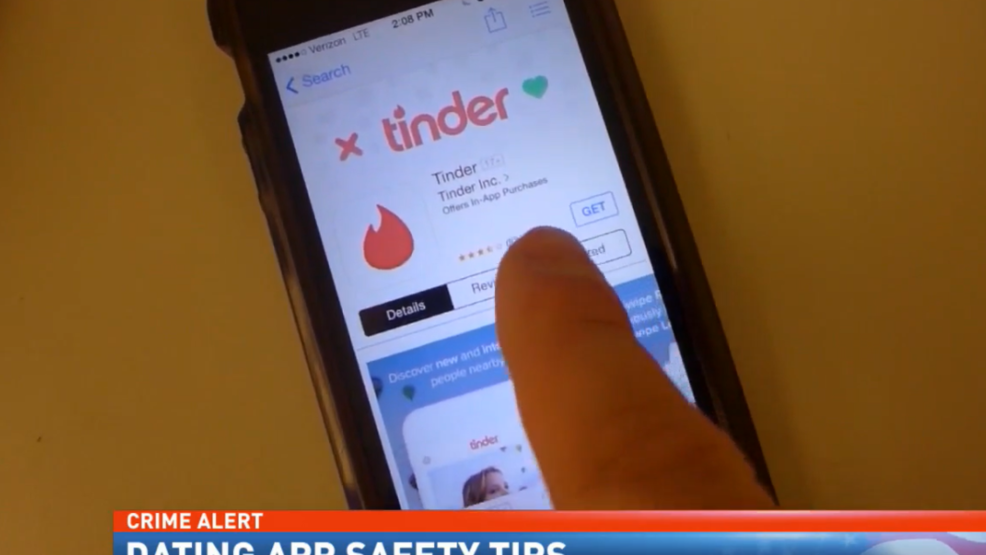
(image: WPMI) Pensacola man robbed through dating app
A Pensacola man says he was attacked, beaten up and robbed after using a dating app.
The victim did not* want to be identified, but he says he met Rebecca Cooley on the dating app ‘tagged.’
The police report says the two met for drinks at her apartment.
The report says about 30 minutes later, three men attacked him, held him at gunpoint, and stole his phone and wallet.
Cooley and her boyfriend, Ellery Laster, now face robbery charges.
Laster has also been charged with aggravated battery and criminal mischief.
Authorities are still looking for two other people who may be involved.
If you have any information call Escambia County crime-stoppers at 850-433-STOP.
After this robbery, Pensacola PD is now offering advice to anyone using dating apps
Officer Mike Wood says first, always meet in a public place and stay there throughout the date.
Second, let someone know when and where you’re going.
Finally, listen to your gut.
Matchmakers In The City™ Helps Clients Find Long-Term Romance – DatingNews
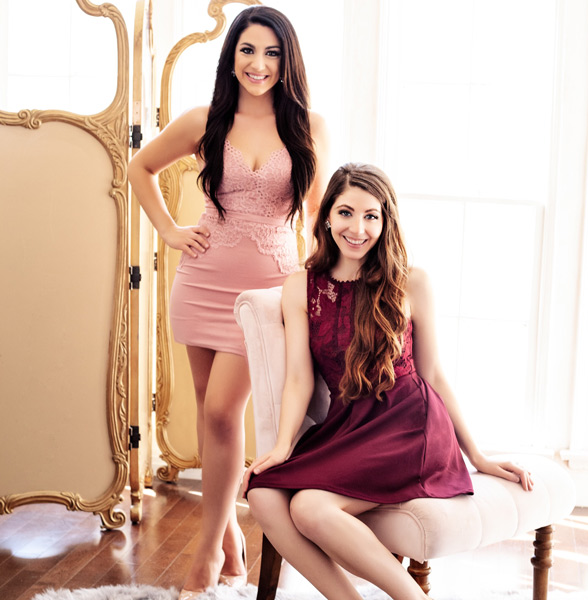
Legendary “Millionaire Matchmaker” Patti Stanger has high praise for the Beverly Hills-based Matchmakers In The City. She calls the young co-founders — sisters Cristina Conti Pineda and her sister Alessandra Conti — the “new generation of matchmakers.”
Patti’s endorsement rings true, as the Conti sisters are developing a unique brand of matchmaking services for their clients. The practice includes one-on-one meetings, but the sisters also share their insights through podcasting, blogging, and TV appearances. Alessandra was even chosen as the matchmaker for seasons seven and eight of MTV’s romance-oriented reality show “Are You the One?”
Cristina Conti Pineda (right) and her sister, Alessandra Conti, founded Matchmakers In The City to help singles in big cities find outstanding matches.
“She interviewed and helped to choose all the matches for the show; 2018 has been a year of immense growth,” Cristina said.
From Alessandra’s perspective: “2018 was a year filled with lots and lots of love for Matchmakers In The City. Our matchmakers have been responsible for engagements, marriages, and even a few Matchmakers In The City babies.”
The team of matchmakers offer their services to singles in Los Angeles, New York, San Francisco, and Washington D.C., but even those who don’t live in these cities can receive advice through their online content. Their podcast, Dating in the City, is updated monthly and answers questions, including “What does it mean if someone is on social media too much?” and “Are astrological matches useful?” The sisters’ blog is also filled with down-to-earth tips.
Matchmakers In The City has seen monumental success since the sisters combined their matchmaking talent, entrepreneurial spirit, and business know-how to launch it in 2011, and they now have a team of matchmakers in Los Angeles, New York, San Francisco, and Washington D.C., who are working with individual clients across the country — and a few throughout the world.
Cristina attributes the business’ success to the sisters doing things the right way.
“When you’re doing something well, people take notice, and it snowballs,” she said. “That’s why a matchmaking company is not something you can build overnight. It takes many years of trust, hiring the right people, and having the right company culture.”
The Goal: Real-World Connections for Frustrated App Users
Many of Matchmakers In The City’s clients are recovering dating app users. For many unsuccessful daters, apps can seem like a godsend because they’re convenient and hold the promise that compatibility can be just a click away. However, dating apps can force users to put in a lot of time and energy, and they often don’t see any results, Cristina said.
“There’s a backlash from dating online. People think it will be a quick fix to meet people, but it poses many other problems they’re not expecting,” she said.
“I think that now, more than ever, people are getting fed up with the apps and online dating. They crave a more authentic and genuine connection, which is why I believe matchmaking has been such a popular option in the past few years,” Alessandra added.
For example, some unhappy dating app users find matches who are only interested in hookups, not in real relationships. Others may be lying about their identities or where they live.
In contrast, Matchmakers In The City takes away that uncertainty about a person’s truthfulness. The team thoroughly reviews clients, chooses matches, and receives peer reviews about the matches they’ve created from other matchmakers on staff.
“We provide background checks for all our clients, so we know they’re being truthful about where they live and work. You don’t get that on an app or online,” Cristina said.
Further, they try to ensure that matches in the service’s database are authentically seeking relationships.
“Everyone has to be looking for love. They have to be ready to meet the right person for their lives,” Cristina said. “We’re so much above the fray, which is why clients value us.”
This kind of personalized service helps differentiate Matchmakers In The City from the crowded dating app industry by providing security and confidence. With a matchmaker’s help, clients don’t have to worry about being ghosted or used; instead, they can focus on what matters: compatibility and long-term possibilities.
Coaching Sessions Can Set Singles Free from Instagram-Perfect Expectations
While the oversaturation of dating apps has discouraged daters, so has the spread of social media-perfect photos. Though most people know there are tools to make men and women look better online than they do in real life, this phenomenon can mean that women aspire to look like these images and men seek impossibly beautiful women.
“They’re looking at Instagram photos and saying, ‘That’s what I want.’ Apps that make people look perfect are contributing to singles being less willing to connect with real people,” Cristina said.
Matchmakers In The City offers personalized coaching that encourages daters to be realistic about their expectations. One of these coaches’ most difficult tasks is ensuring clients recognize looks are not the most important part of a relationship.
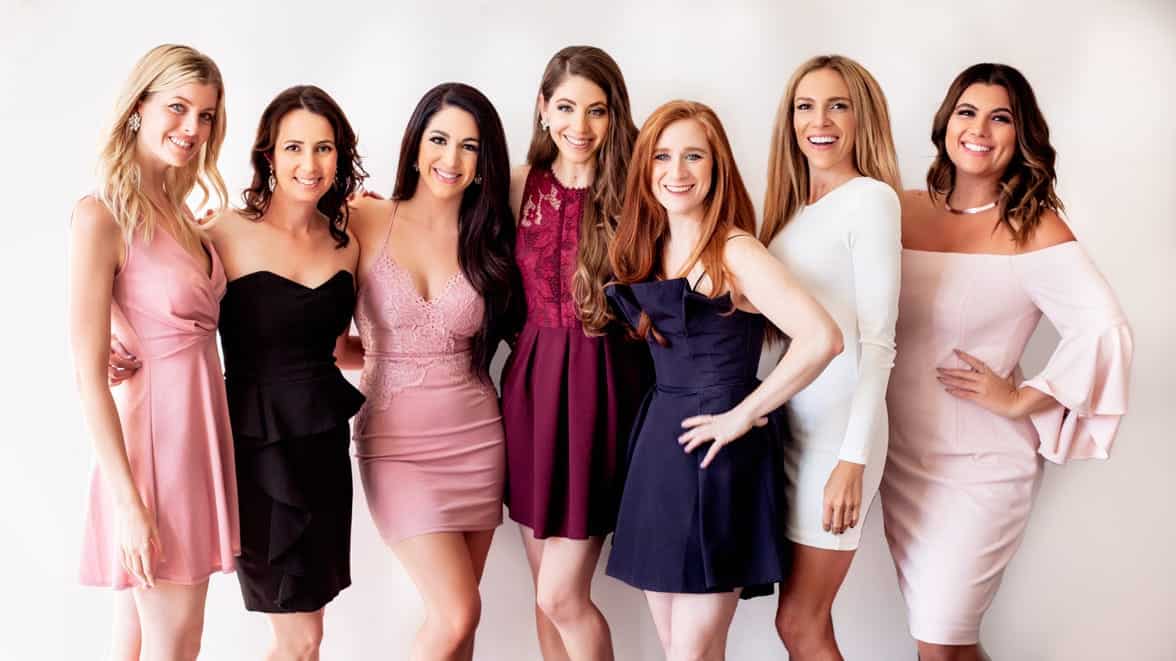
The Matchmakers In The City team of matchmakers helps singles move past appearance and focus on compatibility.
“It takes time to unwind from physical perfection because singles see it everywhere,” Cristina said. “We like our clients to go through social media cleanses because it can be problematic, especially for men. It can make them antisocial and unable to have a real relationship.”
After the matchmakers coach their clients on being realistic about their expectations of another person’s appearance, they encourage clients to choose the five inner qualities they want in a long-term partner or spouse. They don’t ask clients to change themselves or their values, just to be realistic about whether their needs are even achievable.
“The matchmakers get to know our bachelors and bachelorettes and bring them back to reality,” Cristina said. “We don’t ask them to compromise on the five inner qualities they’re looking for in their future spouse. Qualities like trustworthiness and reliability are so important in future husbands and wives.”
The Team of Matchmakers are Building More Relationships With Daters and Matchmakers Around the Country
Since Matchmakers In The City was founded in 2011, it has developed a reputation for creating high-quality matches. The combination of its careful policies, client-centered focus, and commitment to authenticity have led to many successful relationships, engagements, and marriages.
“It’s really an art to be a matchmaker. Reliability is important, and a lot of companies fail because they can’t provide that kind of consistency. People see our results, and that’s why our business has grown,” Cristina said.
Another uncommon aspect of Matchmakers In The City is that it doesn’t compete with other services. While the company is always looking to expand its clientele, the company recognizes that it can’t make matches for everyone. Instead, it works with other agencies to provide quality referrals.
“It’s all about creating a beautiful relationship that will change the world in beautiful ways.” — Cristina Conti Pineda, Co-Founder of Matchmakers In The City
“A big part of our job is revolutionizing the dating agency by changing the policies we have in place in our company,” said Cristina. “ We want to help as many people as possible, but we can’t help the entire population of singles.”
“It’s been seven years of bringing people who would have never met together, helping them become the best versions of themselves through working with our experts and matchmakers, and being a support system for them through the trials and tribulations of dating,” Alessandra said. “It is one of the most rewarding jobs in the world, and we have been honored to work with thousands of men and women who have trusted us with such an important element of their lives.”
Cristina developed this interest in helping many people find love because she herself found a happy marriage — through an introduction from her sister. Both Cristina and her sister think of their profession as more than a job, but rather a passion to help people find happy relationships. And while a real relationship may not be as perfect as depicted on social media, it can help both partners find fulfillment in themselves and their pairings.
These positive, loving unions help more than just the people in them, according to Matchmakers In The City. The Conti sisters said they believe healthy relationships have a significant impact on society.
“It’s all about creating a beautiful relationship that will change the world in beautiful ways,” Cristina said.
DonaldDaters Is a Safe Space for Republicans Looking for Love – ELLE.com
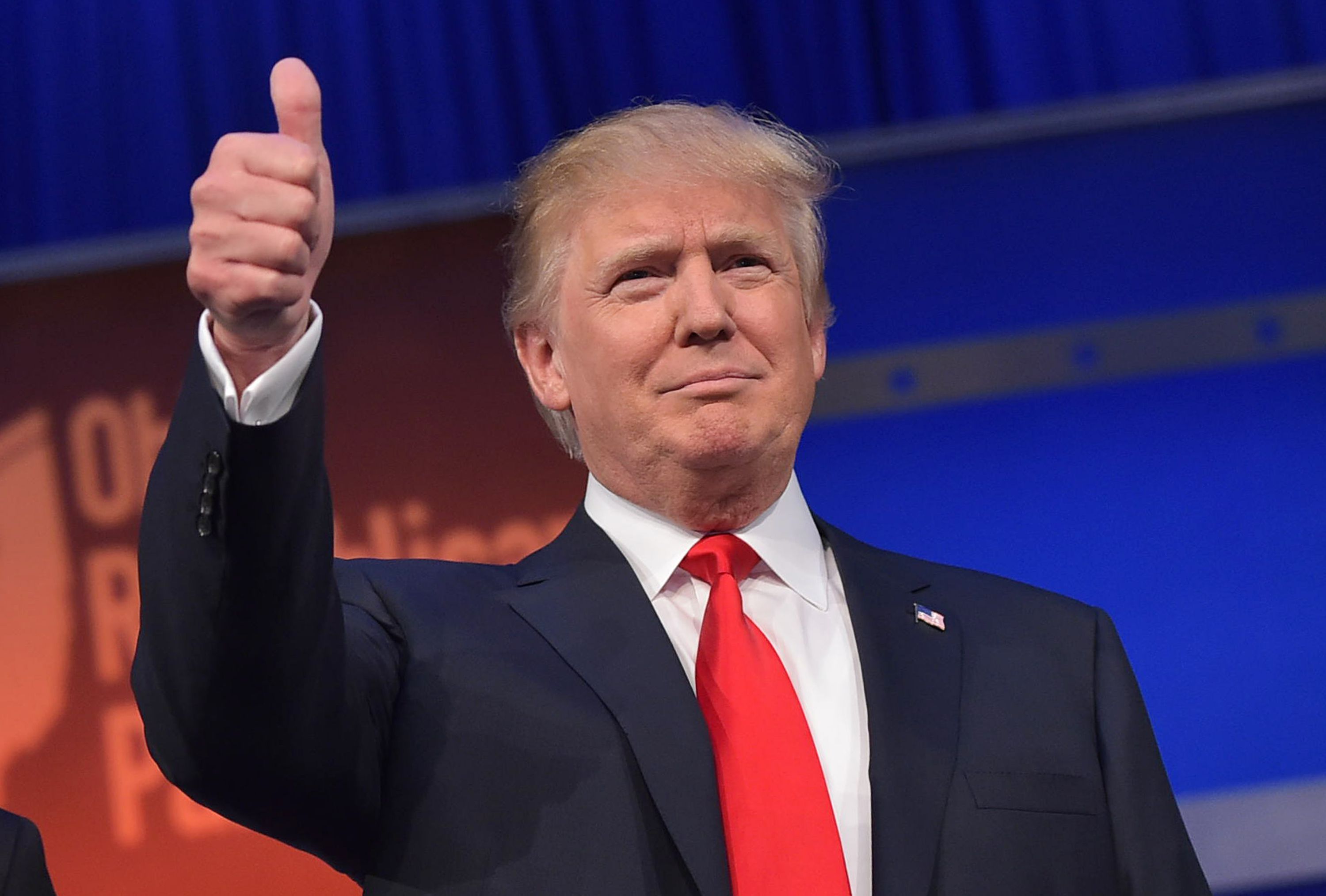
Among the least dire concerns of the Trump era is that it has been been tough on love. Couples are struggling to reconcile political differences in their marriages, according to New York magazine. The Washington Post’s blind date column illustrated the difficulty of getting through a first date without rehashing the (terrible) news. Earlier this summer, Fox News reported that young Trump and GOP staffers were struggling to find love in Washington D.C. One 29-year-old lobbyist told the outlet that dating as a Republican in Trump’s America is “absolutely insane” and “getting so bad.” Politico wrote about the phenomenon, explaining that for Trump staffers, D.C. is “hostile territory.” One administration official in her early 30s told Politico that someone on a dating app said to her, “Thanks but no thanks. Just Googled you and it said you were a mouthpiece for the Trump administration. Go fuck yourself.”
And with every perceived problem comes a solution. This fall, Emily Moreno, who knows firsthand the struggles of getting a second date in our divided America, started her own dating app for those who support Trump: DonaldDaters. Moreno previously worked for Senator Marco Rubio and Senator Ron Johnson before deciding to take a break from campaigning. She looked into public affairs, and from there, launched DonaldDaters. As of mid-November, she says the app has about 25,000 downloads.
“People that are Trump supporters, they’re told if they support this president to swipe left,” she says. “What I think [is] even worse, in some instances, if people do get a date, either they have to self censor or they don’t get a second date.” One of her friends went on a date with a guy who kept saying Republicans are the worst thing that’s ever happened. “Not the Civil War. Republicans.”
It’s a sign of the hyperpolarized times that one can easily imagine getting into it about the Civil War on a first date. According to a Reuters/Ipsos poll of over 6,000 people from late December 2016 to early January 2017, the number of people who argued with friends and family about politics jumped six percent in comparison to a poll taken in October before the election. Sixteen percent of those people said they stopped talking to a family member or friend due to the election, while 13 percent ended a relationship with a close friend or family member.
Moreno herself went on a disastrous date in 2016 with someone she met through a dating app. They went to a bar, and when he asked about her job, she said she was working on Senator Johnson’s re-election campaign. “From there, I mean, it was over. He went on this five minute monologue. He basically filibustered my date, saying that, how could I be a woman, which is always my favorite, how could I be a woman—and I always remind them in that moment that I’m a hispanic woman—how could I be a woman that could be a Republican?” She went home, deleted the app, and swore off online dating. She admits that the guy probably wasn’t her prince charming, but she wishes she had a chance to get to know him and vice versa.
“He was so quick to dismiss me without knowing me. I think that speaks to what a lot of people feel, a lot of people feel like as Trump supporters, we’re not even given a chance.” And it’s not just dating. Moreno says she lost friends she’d known for 10 years because of her opinion on the Kavanaugh hearings. “We should have dialogue when we disagree with each other. The majority of my friends are Democrats, and we’re still friends because, one, my relationships aren’t built on politics and, two, if we ever talk about politics, it’s always respectful.”
Moreno’s business approach is more open-minded than her app’s name may suggest. Non-Trump supporters are welcome on the app; that’s not what she cares about. Mostly, it’s meant to be a place where people won’t be turned down simply because of their political opinions. “This is not like, a Trump brainwashing app,” she said. “Go on there, and the only rule is to be tolerant. Or don’t talk about politics. That’s completely normal and probably good advice for anyone looking for a date.”
Even if her advice is well-intentioned, it’s no secret that when people self-segregate from those who disagree with them, it’s easy to egg each other on and to become even more extreme within a particular bubble. It was widely reported that Robert Bowers, the alleged shooter who killed 11 people in a Pittsburgh synagogue in October, was linked to anti-Semitic posts on the social media site Gab, which says it champions “free speech, individual liberty and the free flow of information online.” (Wired reports that Gab took down the account linked to Bowers and contacted the FBI.) It might seem like a big leap, but I asked Moreno if she ever worries that DonaldDaters could foster these kinds of conversations.
She doesn’t bat the question away. “I think that’s a really good point,” Moreno says. “And I thought a lot about protecting my user security. What I would say is that anyone that is on there that feels like someone else is using the app for the wrong intentions can be blocked. If the same user is blocked twice, they are immediately suspended from the app, and they’ll have to go through an entire appeal process.”

DonaldDaters
For Moreno, the more pressing concern is that “liberals who aren’t the blue dogs that allow for free conversation” will infiltrate the app in order to expose Trump supporters. After all, it’s already been exposed to hackers. The day DonaldDaters launched, a French security researcher was able to download users’ photos, names, and messages. Moreno says her team worked to fix the app’s vulnerability, but she says people are still trying to hack their system all the time.
Security threats aside, DonaldDaters is a lot like other dating apps, though the stock photos on the login page are all white and heterosexual. On your profile, you can answer prompts like, “My favorite president..,” “The right date for me…,” and “I am triggered by….”
In the app store, the reviews are mixed. Some specified that while they think the idea is great, they found the app didn’t match them well and would crash, and some complained about needing to pay for certain features. One reviewer wrote, “I’m beginning to suspect that somewhere out there there’s a Trump hating liberal laughing at how he tricked thousands of Trump supporters into giving up their info.” Another said, “It’s only been out for a minute but that doesn’t matter! Met the hottest girl ever off here and I can take her in the sun because she isn’t a snowflake!”
DonaldDaters is a conservative dating app, but the name itself does imply support of a particular person: Donald Trump. I ask Moreno if she thinks there’s a difference now in what Donald Trump’s name means, as opposed to back in 2016. Before he took office, it was mostly provocation and people might say that voting for Trump meant you were OK with his racist and misogynistic comments, that you could look past his desire to grab women “by the pussy.” But now in 2018, those words have turned into action and policy, and support for Trump might suggest someone doesn’t believe in climate change or agrees with his decision to separate parents and children at the border.
To her, it’s not that black and white. She says she thinks of Donald Trump in the same way that someone might think of Hillary Clinton; she doesn’t agree with everything he does but using the moniker is a way to find people she more closely aligns with.
“I think there’s a lot of Democrats who say, ‘I disagree with the way Hillary Clinton handled her federal investigation,’ but that doesn’t mean that someone that supports her is rubber stamping that. Just because I agree with Trump on his economic policy, on all of these policies that he sets forward, doesn’t mean I love the way that he tweets. No, it means I can have disagreements.” (Though she clarifies that she doesn’t think Trump is a racist or that he hates women.)
Really, DonaldDaters is about creating what some liberals might call a safe space. “If someone’s ever felt embarrassed or ever been talked down to because they wear a Make America Great Again hat or they’re ever told, ‘You have to swipe left because you support Trump,’ or ever been on a date that as soon as politics comes up, they either have someone walk out on them or they get a drink thrown at them, we offer a platform where that isn’t going to happen,” she says. “And I think that’s really necessary right now.”
Tinder and Bumble Are Hungry for Your Love – The New York Times
Tinder and Bumble are desperate to convince you that you’re not desperate. Dating, they promise, is fun, so fun, that when one date ends badly, it’s a barely disguised blessing: You get to stay on the apps and keep on dating!
Both companies are pushing this message with recent advertising efforts. Tinder has a new publication, Swipe Life, specializing in personal essays that reinforce the idea that dating misadventures are cool, or at least exciting, invigorating and youthful. (Swipe Life says downloading Tinder is a milestone in human life akin to buying your first beer and losing your virginity.)
Bumble is selling itself as a means to personal betterment and greater sophistication. It is profiling good-looking, high-achieving New Yorkers on articles on its blog, the Beehive, and on bus stops and billboards around New York City. The dating-slash-friendship-slash-networking app is hoping to sell users on various types of upward mobility. The right romantic partner is surely on the app, but making other connections could serve you just as well.
Other dating apps are also getting into the content business. Grindr has its own site, Into, on which it publishes original reporting, story aggregation and commentary; Hinge, as part of an advertising campaign last year, published short-form fiction on walls and billboards.
It’s as if the apps have realized we’ve become disenchanted with their ways, and now they’re making an effort to treat us right. They want to gain our trust, so we’ll settle down with them for the long haul.
After all, it’s been more than half a decade since they were invented, and if you’ve been single in the last five years, chances are you’ve used one. In its annual survey of 5,000 Americans, Match Group, the dating conglomerate that owns Tinder and OkCupid, found that singles met first dates on the internet more than through any other venue, and that 62 percent of millennials surveyed had used a dating app.
Dating via phone app was once novel and, consequently, exciting. Now, it’s just dating.
Selling Short
Tinder is the top dating app in the United States and worldwide, according to App Annie, the mobile data and analytics provider, and it tends to skew young. More than 50 percent of Tinder’s users are ages 18 to 25, the company said.
Elie Seidman, Tinder’s chief executive and the former head of OKCupid, said that the company wants to brand itself as the leader of early-adult dating.
“We actually embrace the fact that our members are in that dating-as-a-leisure activity phase of life,” Mr. Seidman said. He added that, with the new editorial content, Tinder hoped to offer users a positive outlook on that landscape. Tinder relationships often don’t go anywhere at all — and that’s fine!
When Swipe Life began this fall, its articles sang of the exciting spontaneity of singledom. For example: “I Moved to L.A. for a Tinder Relationship That Lasted Two Weeks, But I Don’t Regret It — Here’s Why.”
[Relationships and advice. Beauty and health. Stories picked for you. Sign up for Of the Moment.]
The author, Belinda Cai, wrote that she visited Los Angeles in the summer of 2017, met a guy through the app, hung out with him twice, and then stayed in touch by phone. They bonded over their childhoods and “leftist ideologies.” Soon, she had moved from Ohio to live with him in California, but quickly found his apartment too messy, his “affinity for drinking” too gross and his “large hair-shedding dog” too destructive. As for their shared ideology? In the end, she wrote, he turned out to be “a total brocialist.”
Still, she praised Tinder for spurring her cross-country move, even though the relationship was a bust. “Little did I know, when I used the app last summer, I wasn’t swiping for love or anything crazy like that — I was swiping for change,” she wrote.
“GET ON TINDER,” reads the large, hyperlinked button at the end of the piece.
Many other essays published this fall ended when the writer became single once again, and, consequently, ready for more Tindering. In another article, a woman who dated her neighbor until she realized he had a drinking problem wrote, reflectively: “My time with my neighbor may have been fairly brief, but during those months, I think we actually gave each other exactly what the other one truly needed.”
Bumble in the Jungle
If Tinder has taken a page from the confessional style of sites like Thought Catalog or xoJane, Bumble’s strategy seems inspired by the Forbes’s annual 30 Under 30 lists. Its “Find Them on Bumble” campaign collects the 112 “most inspiring New Yorkers,” according to the company, and subtly links their success to Bumble’s services. (In addition to being the second-most popular dating app in the United States according to App Annie, Bumble connects people to new friends through Bumble BFF and with professional contacts through Bumble Bizz.)
In interviews, some of the campaign’s participants said that they had only joined the app as a condition of appearing on billboards and bus stops. That is to say, you could not “find them on Bumble” until shortly before Bumble said you could.
“A bunch of my friends work for Bumble,” said Noah Neiman, a 34-year-old co-founder of the boxing gym Rumble, whose face graces many a bus ad. (His mom has sent him a steady stream of photos of the billboards and posters featuring him in New York, even though she lives in Pittsburgh.)
Mr. Neiman is single, but when asked about whether he uses dating apps, he was explicit: “No,” he said. “No, no, no, no.”
“It’s the devil’s playground,” he said. “I try to avoid all that temptation.”
Todd Wiseman, another New Yorker featured in the Bumble campaign and the founder of the video production studio Hayden 5, said that he did use Bumble to find romantic prospects before he was chosen to embody the brand. If he could choose, though, he said: “I would prefer to meet someone out in real life.”
Still, the campaign is supposed to show that the app can be used to create all kinds of connections, romantic and otherwise, which explains why the “Find Them on Bumble” list includes so many people who are already partnered up. Maybe you cannot woo Alyssa Mastromonaco, the White House deputy chief of staff for operations under President Barack Obama, because she has been married since 2013. But perhaps she would be willing to network?
The ballerina Isabella Boylston, who is also in the campaign and also married, said that she was on Bumble’s BFF platform, though she politely declined to answer a question about whether she uses the app regularly.
On dating apps in general, she said, “I feel like I was already in a relationship when those kind of became mainstream.”
She added: “Otherwise I totally would have been on there, for sure.”
Alex Williamson, Bumble’s head of brand, said that the search to find the New York Bumble representatives was extensive.
“For years we’ve been talking about an opportunity to showcase our users and their stories,” she said. “While we love our product, our product in some ways is really our people.”
Not a Bad Gig
The move to publish stories about romance is smart. It’s a subject people like to read about. (See: the success of our very own Modern Love column!)
More generally, branded content is big business — kind of like editorial magazines used to be. Swipe Life, the Beehive and Into represent a small fraction of editorial content now being funded by companies. Snapchat sponsors an online publication, Real Life Magazine. The mattress company Casper started a digital site, Van Winkle’s, and last fall, pivoted to print, with a magazine called Woolly. Dollar Shave Club has Mel Magazine, Equinox has Furthermore and Airbnb has Airbnbmag.
Brands don’t always clearly disclose their exclusive sponsorship of their publications’ editorial content. Into, for instance, says nothing about Grindr in its URL, on its home page or even in its “About” section. It’s only when you click on an “Advertise” button that you are taken to a site explicitly associated with Grindr.
And these sites can certainly bring negative attention to their benefactors. In late November, Into reported on a Facebook post written by Grindr’s president, Scott Chen, that suggested he was opposed to gay marriage. Mr. Chen said in a comment on the site that the report was “unbalanced and misleading,” and that he should have been asked to weigh in.
More recently, an Into article that called a new music video by Ariana Grande “virulently anti-queer” and “transmisogynstic” was torn apart on Twitter; many users suggested the article was poorly argued and offensive in its own right. Into added an editor’s note and removed the author’s name, saying that she had received death threats and would be barred from writing for the time being. (The author, who seemingly deleted her Twitter account, could not be reached for comment.) Into later published a takedown of the original piece, calling it “cringe-inducing.”
With digital media companies like Mic continuing to lay off journalists en masse, Tinder, Grindr and other brands offer opportunities for young writers to make some money. Stephanie D’Agostini, a freelancer who has written for Swipe Life, said that she did not see Tinder’s website as any different from writing for sites like Refinery29.
And over the past few months, Swipe Life in particular has become more nuanced. One essay, “My Year-Long Love With an Undocumented Immigrant,” was messy, possibly exploitative and occasionally earnest. The piece did not end with the “Get on Tinder” button. It was a more subtle advertisement for the qualities with which Tinder hopes to be identified: personal growth, empathy and close connection that can feel difficult to find online.
Swipe Life received only 4,000 unique views on desktop in October, its first month, according to comScore. But mobile views, which comScore could not provide, are likely higher, and Tinder’s senior director of content, Kelsey Blodget, said that the company had been “pleasantly surprised” by the response to the site.
“This is definitely ancillary to the app,” she said. “The app is our core business. But this is something that we hope can accompany our users on their dating journey.”
Ms. Williamson said that Bumble’s campaign has been a success. Though she could not provide specific numbers, she said that the app had seen a “significant uptick” in users since the campaign started in October, and that the company would be choosing cohorts of spokespeople in other large markets.
The campaign, she said, was “a celebration of what we’ve been able to build” — even if that isn’t lasting romance.
“We really are trying to connect people to meaningful relationships,” Ms. Williamson said. “Whatever shape and form that looks like for you.”