



Category Archives: marriage advice
'LHHH' star Princess comes for Brandy and her mother; Twitter is in stitches

Singer Brandy. [email protected]
The bell has rung, and round 2 of the heated Princess-Brandy feud has commenced.
Rolling out previously reported on the escalating beef between Princess, Ray’s J newlywed wife, and Princess’ in-laws, mainly singer Brandy and her “momager” Sonja Norwood. This past week, Princess unfurled some stinging zingers at Brandy that sent Twitter into a tizzy.
This time, Princess zapped Brandy when she barked this on the latest episode of “Love and Hip Hop Hollywood”: “I’m not going to take marriage advice from someone who can’t even be in a relationship for more than three months!”
This imbroglio was born several months ago when Princess Love took to social media to express her outrage at Ray J’s unexplained six-day disappearance. While this was going on, Princess says Brandy was blasting her for besmirching the Norwood family name and making them all look bad in the media.
Exacerbating the situation between the two camps, Sonja Norwood demanded that Princess apologize for falsely accusing her son of rampant infidelity, which Princess refused to do.
Princess shot back and believed she was being ganged up on by Brandy and her mother, Ms. Norwood, and also felt that Ray J was not sticking up for her. If anything, Princess believed Ray J’s mother should have convinced her son to apologize to her for messing up their fledgling marriage.
The situation exploded when, during the baby gender reveal party for LHHH, Ray J told his mother and sister that Princess was going to make a public apology as a way to restore his reputation. Interesting perspective, many fans felt, because Ray J became a huge star right after his porn video with Kim Kardashian sent both of their careers into orbit.
When Princess laughed at the idea of apologizing, the conflict degenerated into a full-scale war of words, on and off the air.
Sonja Norwood tells Princess that she wasn’t “raised” right and Princess blasted Brandy for giving out marriage advice after Brandy faked her marriage back in the 1990s and got exposed.
Twitter is doubling over in laughter at Princess’ sharp retorts to Brandy and her mother. These are just a sampling of the responses.


What Does Mutual Respect Look Like in Marriage?

When your “Who Wants to Be a Millionaire? Or “HQ Trivia” moment happens and the cash-money question is: what is the cornerstone of a marriage? Chances are, the final answer you’d lock in would be love. Cue: awwws from the audience and buzzers from the judges. You’re not entirely wrong, but you’re not exactly right either. The right answer would be “respect.” Without respect, love erodes.
In most marriages and long-term relationships, respect is more crucial than love. When one partner loses respect for the other, the relationship crumbles. But when pressed, most couples would probably affirm that, yes, they have the “respect” box checked when it comes to how they view their partner. But how do they show that respect? What does it actually look like in a marriage? Are they doing it the right way?
ADVERTISEMENT
“In a relationship, mutual respect looks like speaking to one another in a respectful and considerate fashion, keeping your partner in mind when you’re making decisions, and responding to your partners needs and wants,” says Saba Harouni Lurie, a licensed marriage and family therapist, and founder and owner of Take Root Therapy in Los Angeles. “That doesn’t mean necessarily sacrificing yourself in order to make or keep your partner happy, but it means communicating with love, even when it’s difficult.”
Simple, right? But it’s easy to think you’re being respectful when you’re not. Respect can be lost when one partner chooses to define the word on his or her own terms.
Featured Video
Loading Video Content
“A lot of times, couples try to establish respect by working within their own definition and trying to make things fair by being equal,” says Aricia E. Shaffer, MSE, a therapist and coach specializing in parenting. “They believe, for example, that it’s respectful for both partners to be able to go out one night each week. The problem is that it’s not about keeping everything equal, it’s about being equitable. One partner may want to go out with friends once a week while another partner may prefer a weekend with friends. Or maybe they’re an introvert and would just like a massage.”
That breakdown of communication, a lack of understanding of the other’s needs, is the beginning of the eroding of respect.
“Respect requires a conversation,” says Shaffer. “We don’t know what feels respectful or disrespectful to our partners unless we ask. There are some obvious things, of course, but deep respect lies in the subtle details and it’s different for everyone.”
For example, Shaffer says leaving the garage door open all night may drive one person insane and not bother another. “But it’s not about the garage door — it’s about listening to our partner and remembering what’s important to them — and then taking that into account when we make decisions.”
According to Lurie, mutual respect can take root when both partners come to the realization that each is in the relationship by choice. “Being in a relationship isn’t easy and every relationship will have its difficult — or sometimes seemingly impossible — periods,” she says. “Even in those moments, remind yourself that you are choosing to stay, and if that’s the case, choose to speak to your partner with the same respect you would grant a friend or even a stranger. If you wouldn’t give yourself permission to yell or swear at a stranger, then the hope is that you would also maintain that same standard for your partner.”
ADVERTISEMENT
Tina B. Tessina, a licensed psychotherapist in Southern California and the author of such books as How to be Happy Partners: Working it out Together and Love Styles: How to Celebrate Your Differences, says that mutual respect is contingent on four conditions, mutual love, mutual trust, mutual benefit, and mutual support.
“When the above four conditions exist, the mutuality necessary for true love exists,” she says. “Recognizing this is especially important if you have past relationship experience in which your needs have not been met, you felt unloved, or you were abandoned. Evaluating your mutuality is also a good way to discover whether you are ready to commit to a relationship, or need more time to build. If you’re paying attention to whether you and your partner both feel love, trust, benefit, and support, your intuition will probably be a pretty good indicator of whether mutuality truly exists.”
When it comes to building respect equity in their relationship, couples need to focus on being responsible for how their actions affect the other. “Some of it is common sense and usually centers around being personally responsible,” says Shaffer. “Don’t put the empty milk carton back in the fridge, clean up after yourself, let your spouse know if you’re running late. In other words, basic human consideration. But it also means taking responsibility for your own triggers or needs and having a talk with your partner as needed.” Without constant communication, true respect will never be achieved.
Who Is Pastor Calvin Roberson From 'Married At First Sight'? He's An Expert At What He Does

Married at First Sight has had seven seasons so far and after each one, viewers have wondered about who the new couples are in real life. But who is Pastor Calvin Roberson from Married at First Sight? He’s one part of the marriage counseling team that makes it possible for individuals to find a spouse and agree to marriage before even meeting that person. He’s more than just your average run-of-the-mill marriage counselor, though. Roberson has dedicated his life’s work to his marriage counseling organization, Marriage Ain’t for Punks, working as a pastor and life and relationship coach, and performing at public speaking events on relationships and marriage.
In addition to being the go-to expert on Married at First Sight, Roberson has also appeared on Little Women of Atlanta, Seven Year Switch, and Ultimate Staycation to give his expertise on relationships. Outside of TV, however, Roberson is just as busy. He and his wife, who’s been featured on Married at First Sight, travel to different conferences and speaking engagements, but he offers even more for fans. Roberson regularly posts videos on Instagram to answer fan questions in regards to relationship or marriage advice. That’s basically free advice from someone who’s been at work in the field for literal decades, so it’s kind of amazing.
Before Married at First Sight was even a thing, Roberson and his wife founded the Progression Church in Atlanta, Georgia, which then led to all of their different TV opportunities. He still preaches at the church today and serves as the lead pastor, but he also travels across the country coaching and counseling couples. He’s also worked for the New York Stock Exchange and was at one time the Dean of Arts at Duke Ellington School of Arts in Washington, D.C.
When he’s not spending time with his wife and their daughter, working on TV, or helping couples through in-person sessions, Roberson is also available for private bookings. You can book him for your event or organization on his website and while he doesn’t come cheap, it’s a small price to pay to have the marriage guru at your disposal.
Fans who have watched Married at First Sight know some of the painstaking steps that are taken to ensure that couples are matched up correctly. But they might not know that it goes even deeper than that, and it’s thanks in part to Roberson.
“We first start with a very large group and then by the time we get to workshops, there are a number of reasons that people are eliminated first,” he explained to MadameNoire. “They may have been married before. They may have children. We don’t do children. Some people may be too young or may not fit the age demographic of the show. And so that’s the big, general weeding out. And by the time we get to it, as the experts, we go through a number of tests. We do psychological evaluations. They answer a 370-something questioned questionnaire, and then after that, we sit down with personal interviews.”
Roberson’s steps in the process of matching couples also involves background checks, credit checks, psychological and health evaluations, and of course personal physical preferences. So just in case you thought Roberson developed a glorified dating app algorithm, it’s much more in-depth than that. And, it would seem, only Roberson could be capable of making it happen for these couples, even if not all of them work out in the end.
Whether or not the married couples stay together is dependent on them specifically and the same goes for real life couples who Roberson counsels. He obviously knows his stuff better than almost anyone else in the business, so it’s really no wonder why he’s one of the experts on the show.
Keys to better investing may be hiding in your tax return

By now, most Americans are pretty hip to the importance of saving for retirement. Buzz60’s Natasha Abellard has the story. Buzz60
Corrections & Clarifications: Corrects name of the firm Rowling & Associates
If you work with a financial adviser – or a prospective one – that person might offer to check your latest income tax return to help you become better at investing. Or you can do it yourself.
The information on tax returns doesn’t necessarily correlate with what’s in your portfolio, but there can be signs of tax-inefficient investing and missed opportunities.
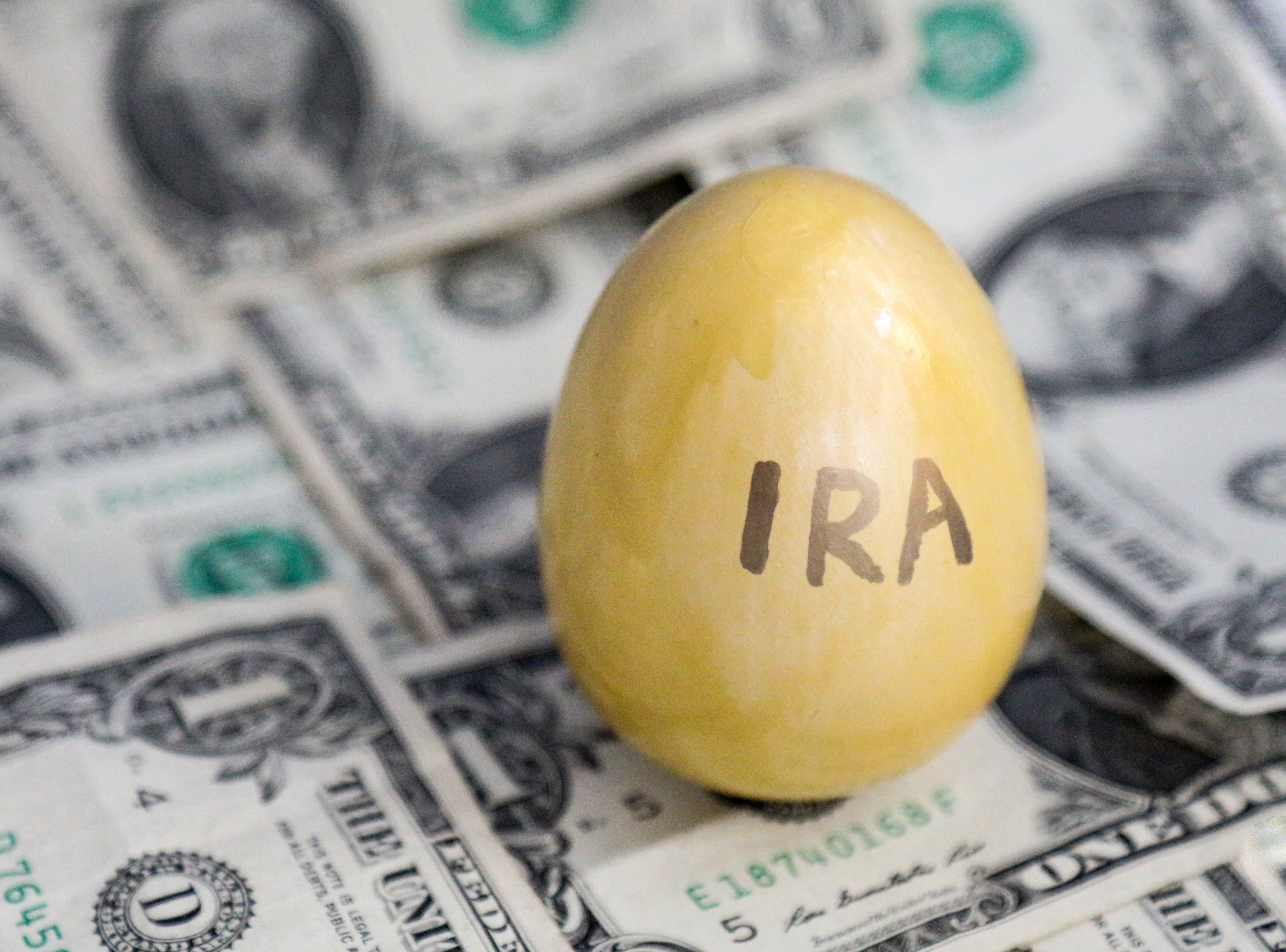
One common missed opportunity is failing to contribute to an individual retirement account or other retirement plans, assuming you qualify to make deductible investments, as most Americans do.
Only about one in 12 eligible investors contributes money to an IRA, making them an underutilized tool.
Similarly, you might be wasting an opportunity to let your money compound longer if you withdraw IRA money earlier than required, especially if you must pay taxes and a penalty for pulling out cash before age 59½. Investors list their IRA contributions and withdrawals on federal Form 1040.
Tax-inefficient investing often involves placing the wrong types of instruments in less than appropriate accounts. For example, you wouldn’t want to hold municipal bonds or bond funds within an IRA because muni interest already is tax-free, negating the sheltering benefits of the IRA.
Although muni interest generally isn’t taxable, you do need to disclose it on federal tax returns. Muni bonds typically don’t yield as much as corporate bonds and bond funds. Thus, they aren’t the best choices for people in low tax brackets.
What to look for on tax returns
These are some of the “secrets” to be found in tax returns, Sheryl Rowling, a certified public accountant at Rowling & Associates in San Diego, wrote in a recent edition of Morningstar magazine. She is also head of rebalancing solutions at Morningstar. Here are some of her other suggestions:
- Look for excess cash by reviewing interest listed on Schedule B of form 1040. Too much cash could be a sign you invest too conservatively. If you have a lot of nonsheltered income from certificates of deposit, bonds and even stock dividends, shift some yield-focused investments to retirement accounts. This can be especially wise for high-income taxpayers subject to the Medicare surtax, Rowling noted.
- Look for too much concentration in a few stocks. High dividends from one or a handful of stocks could signal that you hold too much of your wealth in a few companies, which can reflect a lack of diversification. It’s also smart to check whether you own stocks that pay “qualified” dividends. These are preferable to nonqualified dividends, as the tax rates are lower.
- Examine capital gains and losses on Schedule D. A lot of gain or loss entries could be signs of too much trading, possibly driving up costs and incurring unneeded taxes. Also, examine the dollar amounts of gains. If they’re large, it could mean you’re choosing to sell lower-cost lots or batches of shares. Usually, it’s smarter to sell high-cost lots, as these have smaller gains on which taxes apply.
Perhaps the key tip is to look for a lot of short-term gains. This can be a big sign of inefficient investing, as higher, ordinary-income tax rates apply on short-term gains compared to those held more than one year (and qualifying for lower capital-gains rates).
If possible, follow a “harvesting” strategy by selling some investments at a loss and using these losses to offset taxes on other investments sold at a gain.
Marriage penalty in new tax package
The tax reform package adopted late last year aimed mainly to cut taxes and simplify return preparation. It didn’t overtly target the “marriage penalty,” but there are a few provisions that eased things for couples – and one notable new item that hurts them.
The marriage penalty refers to rules that impose an increased tax burden on couples compared to what two individuals would pay if filing separate returns.
The key factor that worsens the marriage penalty is the new federal limit on state and local tax deductions. The same $10,000 cap on these itemized deductions applies to both single and joint filers, researcher Wolters Kluwer said.
With other deductions, couples receive twice the benefit of single taxpayers.
More: Retirement: Plan to work 2 years longer than you thought, survey suggests
More: 6 retirement goals for people in their 20s
More: How to find balance and get your retirement plan back on track
Conversely, the legislation eliminated several marriage penalties where they had existed, said Mark Luscombe, principal federal tax analyst at Wolter Kluwers.
For example, the new rates don’t include a marriage penalty except for the top 37-percent bracket, which kicks in for singles with income above $500,000 and for married couples above $600,000.
For lower brackets, the married-couple thresholds are exactly double those for singles.
Under the old rules, marriage penalties were associated with several of the higher brackets. For example, the old 25-percent tax rate applied for singles with up to $91,900 in income, compared with up to $153,100 in income for married couples.
The new tax bill eliminated the personal exemption and the phasing out of itemized deductions for high-bracket taxpayers. As both of those provisions had a marriage penalty, eliminating them removed the associated marriage penalty.
The nine-year stretch of rising stock prices won’t last forever. So now’s a good time for investors to bear-proof their 401(k)s before the next financial storm. USA TODAY
Reach the reporter at russ.wiles@arizonarepublic.com or 602-444-8616.
READ MORE FROM RUSS WILES:
Read or Share this story: https://usat.ly/2v4KnxP