



Category Archives: marriage advice
Next Avenue: How and when to give guidance to your son-in-law or daughter-in-law

You are in a public park with your son-in-law when you realize that your young grandson is building up to a bloodcurdling screaming tantrum that will be heard for miles. Your son-in-law isn’t handling it like you would, and you’re itching to tell him. Should you?
No. Keep your words to yourself. End of story.
Thank you, good night!
I’m kidding — that was my inner daughter-in-law talking. In fact, giving your son-in-law or daughter-in-law advice is sometimes completely appropriate and welcome. I, for one, relish advice from my in-laws about gardening and choosing a good French red wine to pair with dinner. However, you must follow some ground rules, says Emily C. Klear, a licensed marriage and family therapist.
Klear says it begins with your son or daughter and your child’s spouse establishing a clear understanding about whether your child-in-law welcomes your advice.
“I often say blood manages blood — of course, recognizing that this isn’t completely the right phrase since many people are adopted — but you should each manage your own family,” she says. “And one of the early discussions in a marriage is about establishing a clear expectation of what kind of guidance you want from your parents.”
Klear notes that all too often, it is actually the daughter-in-law bearing the brunt of family communication and management for both sides of the family, so she is too often the recipient of unwanted advice.
“We have a common cultural belief that it’s the daughters who are the ‘kin keepers,’ and there’s a lot of feeling that it’s always the wife who will manage the husband’s parents. This applies to both generations, too, and many times the mother from the older generation managed her husband’s family, but it should not work this way,” she says.
A tip: Ask your adult child how comfortable he or she is with you giving advice to his or her wife or husband. Clear communication — preferably in advance of a situation — is key.
“One of the biggest things in any family as a couple gets married is the parent-child dynamic in establishing clear boundaries,” Klear says. “Couples have to have a clear expectation of what kind of guidance they want from their parents, and [the parents’] child by birth should communicate that to them.”
These topics will vary by family. Sometimes, parents are uniquely qualified to give advice; for example, they might have valuable knowledge they learned from firsthand experience or expertise on the job.
So, what if you really cannot bear to keep quiet about something, like your belief that children in restaurants should be eating and talking to you rather than staring at iPads? Don’t disguise a complaint or preference as well-meaning advice. Klear advises that you instead mention in advance to your child your preference that kids give up the screens when your families dine together.
Instead of remarking how you raised your children differently, let your child know that it is important to you that everyone be present in the moment sans technology.
Giving parenting advice is tricky business, but if you establish in advance that doing so is OK, Klear says it’s fine. This goes for almost all topics, she says.
Almost? Are any topics verboten when it comes to in-law advice?
“Yes. I would say that — unless you have a unique family context that warrants it — giving advice about sex is probably off the table!” says Klear with a laugh.
John Stryon: The 'advice Shower' and Uncle John's Top 10 lessons for marriage

Another of my nieces is planning a wedding. When my wife asked what kind of shower the extended family should give — thinking maybe kitchen gadgets or china — my niece answered: “Advice.”
“Oh boy,” I thought. “Is this going to be a shower or a tsunami?”
Given that I have four brothers and a sister and we’ve all logged decades of marriage, and that my mother would be there still in deep reflection over the 60-plus years of marriage she had with my late father, that some of the cousins are just far enough into their bringing-up-baby marriages to have fresher perspective, and that other cousins are in their late teens and early 20s and marriage is not even on their radar yet, the event promised to be interesting, perhaps enlightening, maybe hilarious.
My niece (let’s call her “Eve”) is clearly not a material girl. She has long demonstrated a distinct family love and loyalty; her choice for an “advice shower” is consistent with her nature; nobody doubted that she could roll with the punches. Most of us are still just getting acquainted with her “Adam,” so we didn’t know how he would perform under a little pressure. There were lots of ways this could go badly.
My sister threw in a new twist: We would pass the book of advice around the room and each read an entry but not our own. Adam and Eve would have to guess whose advice they were hearing. My wife kept score.
A lot of the advice boiled down to, “Don’t keep score.”
Of course, that’s part of the fun in a game, necessary in business and much of life but potentially disastrous for relationships of love. Experience spoke. The temptation is ever-present and strong — we said to Adam and Eve — to reach for that one fact that will put your spouse in his or her place. Our failures on this front made excellent fodder for humor.
Some advice was ironic: “Beware of marriage advice from your family.” Some was odd: “Always neuter your pets.” Some was not particularly good (in my opinion): “Don’t go to bed angry.” (I’ve found that a good rest and the work the mind does during sleep is way more constructive than a late-night harangue.) And then there were recipes, the most practical kind of advice, full of the wisdom of experience.
I tried to tailor my words to the couple, who are both brainy and headed for grad school in biology (her) and nuclear engineering (him). Here’s my “Marriage Advice from Uncle John.” It’s a top-10 list of things I’ve learned from marriage (and Google); as I said to Adam and Eve, take any of it you like and discard the rest.
10. Most advice about marriage is discarded — until much later when you find yourself saying things that your old gray uncle told you years before but you couldn’t take him seriously because he had hair growing out of his ears.
9. The human body, like all matter, is mostly empty space; for example, a hydrogen atom is about 99.999999999 percent empty space. This reality is not what you see when you gaze lovingly into one another’s eyes. Some realities are very difficult to perceive.
8. Studies have shown that most people do not actually know themselves very well; spouses are crucial correctives to this. Speak up. Listen up. Some realities are very difficult to accept.
7. Never mistake truth for love.
6. Always distrust words such as “never” and “always,” particularly when describing the shortcomings of your spouse. You will eat those words one day.
5. Actual eating is more important than almost anything. Meals together — especially when you share the preparation and cleanup — are sustenance for the soul as well as the body. Take this communion often.
4. Your spouse’s soul and body are not yours, which may be the main reason they are so delicious. The best marriages honor the distance between two people and nurture the full flowering of each.
3. A full flowering marriage is like a biome. I have read that biomes are complex adaptive systems in which macroscopic patterns reflect the collective dynamics of individual units at lower levels of organization and feedback to affect those more microscopic dynamics. This is a pretty good definition of a marriage. It takes love to keep it healthy.
2. Love is made. You may think it is a miraculous gift from above, and it is, but the gift is actually your capacity to make love — by making the bed, making a meal, making your spouse’s day in any way small or large. (Sub-point: Lovemaking is not sex, but it is sexy and adds enormous heat.)
1. All marriages fail. Your marriage will fail — it will fail your expectations. But I trust it won’t end. The difference is in your commitment to make love even when you don’t feel like it. Happily ever after is actually today. Carpe diem! This is the day the Lord has made! If you, with word and deed, pronounce one another husband and wife each day, love will never fail.
Now, get this: Out of about 30 bits of advice, Adam and Eve, correctly identified the giver nearly every time. They have been watching us more closely than we knew. There is a lesson in that for all of us.
John Styron is a freelance writer in Granby.
The brilliant thing about Barack Obama's relationship advice is that it's blindingly obvious
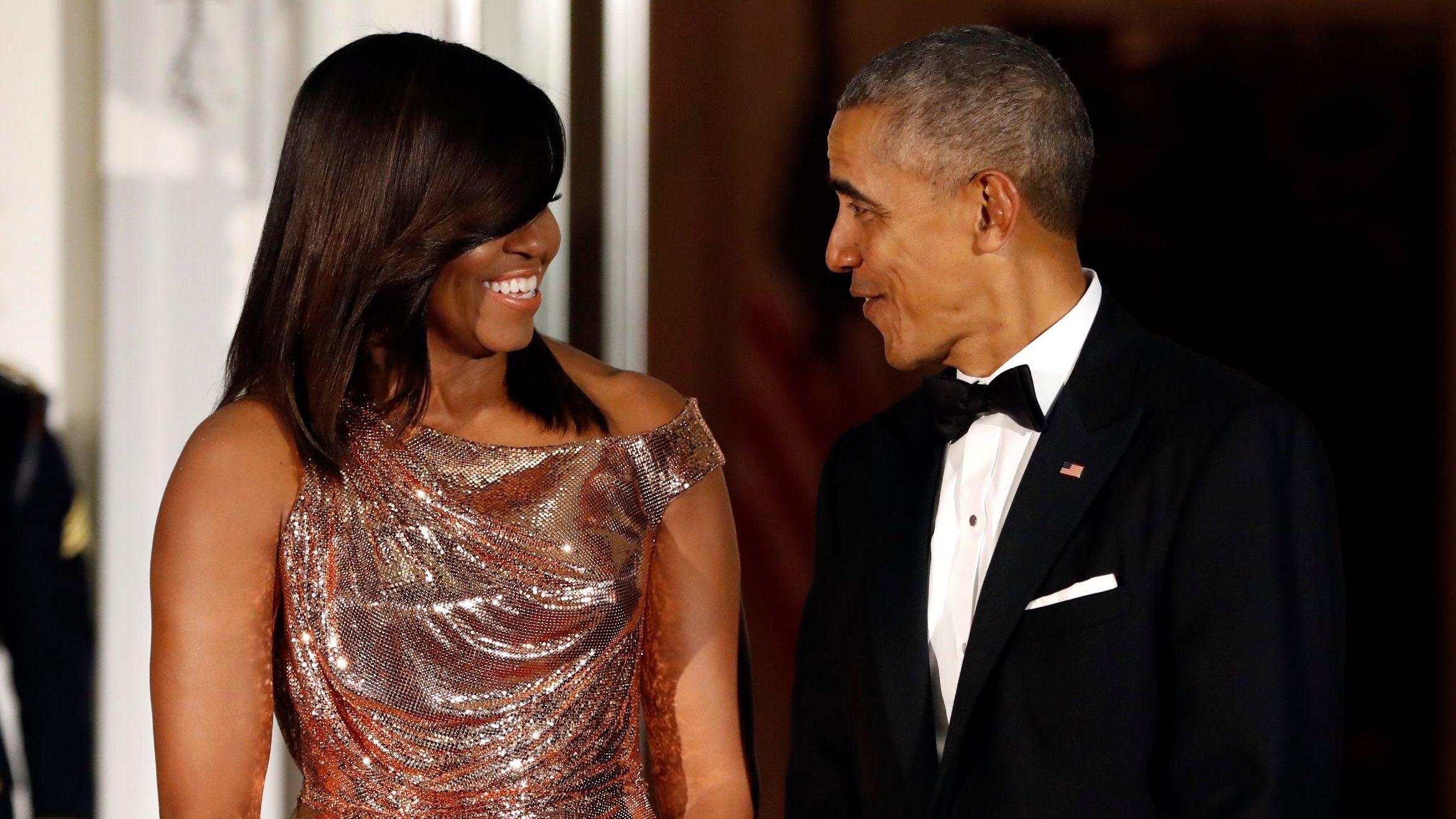
In his new book, Yes We (Still) Can, Dan Pfeiffer, host of the podcast Pod Save America, writes about his time working on the Obama White House communications team. As with most political memoirs the most interesting bits are the small moments that punctuate the larger narrative. In this case it’s Pfeiffer sharing with the world relationship advice he once received from Barack Obama.
Pfeiffer writes that when he and his now wife were moving in together, Obama asked him a question that changed the way he thought about relationships. “Here’s the advice I give everyone about marriage—is she someone you find interesting?” The president went on, “You will spend more time with this person than anyone else for the rest of your life, and there is nothing more important than always wanting to hear what she has to say about things.”
Do you find your partner interesting? Does this person make you laugh? If you see children in your future, will this person be a good parent? That’s what a good marriage hangs on, according to Obama. So obvious it would be mansplainy, if it weren’t for one thing—the Obamas clearly adore one another. Is there a modern marriage that embodies #relationship goals more fully?
Not everyone wants children, and it’s hard to imagine a human relationship not improved by humor. The idea though, that the most important thing about your partner—more than physical attraction, shared values, or their approach to life—is whether or not you find them interesting, is a little subversive.
It’s part of a school of thought that takes all the sweet nothings about romance, all the flowers and butterflies and late nights and lazy mornings, smiles gently at them, and says the following: You can have good times with any pretty stranger. That’s not the job you’re applying for with marriage.
In an article about how to choose the right romantic partner, the explainer site Wait, But Why frames good marriages as epic friendships. In her Ask Polly column for The Cut, relationship advice maven Heather Havrilesky says, “True love is not a 40-year-long orgasm.”
So what does this long game theory of marriage look like?
It’s, if you’re lucky, 40 years of dinner table conversation with the explicit understanding that you’re going to be chatting over grilled cheese or rotisserie chicken you grabbed on the way home a lot more often than at your favorite restaurant. If you sign on for the children portion of this program, there will be entire years where neither one of you gets to finish an entire thought while your offspring are awake.
A marriage in which you’re frustrated by this—but only because you still want to hear what your partner thought about that movie, or book, or the news cycle? That’s a sign that you’ve followed Obama’s advice and married someone you find interesting.
The Mentalist's Simon Baker Opens Up about His Happy 20-Year Marriage – and Why They Won't Celebrate Anniversary

Simon Baker is a pretty fortunate guy.
In addition to a successful and lengthy Hollywood career, including his well-received directorial debut Breath, Baker is coming up on his 20th wedding anniversary with wife Rebecca Rigg — though he’s not yet planning to celebrate it.
“We’ve never really been big on it,” Baker, 48, tells PEOPLE in this week’s issue. “Anniversaries, they’re an odd thing, aren’t they? I have some friends that are very strict about anniversaries of everything. There was one year, I think, that we went out to dinner and I bought a gift, and we had an argument. Because I think we put too much pressure on it. It’s not like that with us. We’re a team. Most of the time, 99% of the time, we’re really great friends. So I don’t need to mark it with great things.”
For much more on Simon Baker and Breath, pick up the latest issue of PEOPLE now on newsstands
Simon Baker and wife Rebecca Rigg
Courtesy Simon Baker
Baker and Rigg, 51, met almost three decades ago when they were semi-set up by friends around 1990-1991 and then went on to star together on the short-lived Aussie soap E Street. They have three children: Stella, 24, Claude, 19, and Harry, 16. The former Mentalist star says he and Rigg like to keep things spontaneous.
“When we put too much pressure on something, everything gets a little clipped and we don’t feel like we’re ourselves,” he explains. “And I think the most important thing in our relationship is that we’re both able to be ourselves. I think it’s probably the most important thing in most relationships, isn’t it?”
Baker credits his wife’s honest opinions and no-nonsense advice for helping convince him to take on adapting Breath for the big screen.
She said, ” ‘Look, honey, there’s so many crap films made these days, so what if yours is just another one? Just go and make it,’ ” he recalls with a laugh. “She’s pretty great at taking the piss out of me and supporting me at the same time. Which is a real skill. One of her other great ones is, ‘You’ll be fine, honey, just don’t be yourself.’”

Simon Baker
Andrew Southam
With their kids growing up — Stella is a Yale School of Drama graduate — Baker felt he could dedicate the time to make Breath, filmed on Australia’s west coast. “I feel really proud that we actually were able to pull it off,” he says of the movie, which has already earned him an Australian Directors Guild award.
Next on his to-do list? Some R&R with his family — “We live by the beach and get into the water most days” — and some free time to put into his new hobby: growing veggies.
“I like gardening,” he says. “It’s nurturing. As my kids get older, I have to find things to put love into, and gardening is good for that. And my dog. And my wife. And maybe another film.”