



Category Archives: marriage advice
My Wife Said You May Want to Marry Me

I am that guy.
A little over a year ago, my wife, Amy Krouse Rosenthal, published a Modern Love essay called “You May Want to Marry My Husband.” At 51, Amy was dying from ovarian cancer. She wrote her essay in the form of a personal ad. It was more like a love letter to me.
Those words would be the final ones Amy published. She died 10 days later.
Amy couldn’t have known that her essay would afford me an opportunity to fill this same column with words of my own for Father’s Day, telling you what has happened since. I don’t pretend to have Amy’s extraordinary gift with words and wordplay, but here goes.
During our life together, Amy was a prolific writer, publishing children’s books, memoirs and articles. Knowing she had only a short time to live, she wanted to finish one last project. We were engaged then in home hospice, a seemingly beautiful way to deal with the end of life, where you care for your loved one in familiar surroundings, away from the hospital with its beeping machines and frequent disruptions.
I was posted up at the dining room table overlooking our living room, where Amy had established her workstation. From her spot on the couch, she worked away between micro-naps.
These brief moments of peace were induced by the morphine needed to control her symptoms. A tumor had created a complete bowel obstruction, making it impossible for her to eat solid food. She would flutter away on the keyboard, doze for a bit, then awake and repeat.
When Amy finished her essay, she gave it to me to read, as she had done with all of her writing. But this time was different. In her memoirs she had written about the children and me, but not like this. How was she able to combine such feelings of unbearable sadness, ironic humor and total honesty?
When the essay was published, Amy was too sick to appreciate it. As the international reaction became overwhelming, I was torn up thinking how she was missing the profound impact her words were having. The reach of Amy’s article — and of her greater body of work — was so much deeper and richer than I knew.
Letters poured in from around the world. They included notes of admiration, medical advice, commiseration and offers from women to meet me. I was too consumed with grief during Amy’s final days to engage with the responses. It was strange having any attention directed at me right then, but the outpouring did make me appreciate the significance of her work.
When people ask me to describe myself, I always start with “dad,” yet I spent a great deal of my adult life being known as “Amy’s husband.” People knew of Amy and her writing, while I had lived in relative anonymity. I had no social media presence and my profession, a lawyer, did not cast me into public view.
After Amy died, I faced countless decisions in my new role as a single father. As in any marriage or union of two people with children, we had a natural division of labor. Not anymore. People often assumed Amy was disorganized because she had list upon list: scattered Post-it notes, scraps of paper and even messages scrawled on her hand. But she was one of the most organized people I have ever met.
There are aspects of everyday life I have taken on that I never gave much consideration to in the past. How did Amy hold everything together so seamlessly? I am capable of doing many things on my own, but two people can accomplish so much more together and also support each other through life’s ups and downs.
Many women took Amy up on her offer, sending me a range of messages — overly forward, funny, wise, moving, sincere. In a six-page handwritten letter, one woman marketed her automotive knowledge, apparently in an effort to woo me: “I do know how to check the radiator in the vehicle to see if it may need a tad of water before the engine blows up.”
While I do not know much about reality TV, there was also this touching letter submitted by the child of a single mother, who wrote: “I’d like to submit an application for my mom, like friends and family can do for participants on ‘The Bachelor.’”
And I appreciated the sentiment and style of the woman who wrote this: “I have this image of queues of hopeful women at the Green Mill Jazz Club on Thursday nights. Single mothers, elegant divorcées, spinster aunts, bored housewives, daughters, wilting violets … all in anxious anticipation as to whether the shoe will fit, fit them alone, that the prince from the fairy tale is meant for them. That they are the right person.”
I couldn’t digest any of these messages at the time, but I have since found solace and even laughter in many of them. One thing I have come to understand, though, is what a gift Amy gave me by emphasizing that I had a long life to fill with joy, happiness and love. Her edict to fill my own empty space with a new story has given me permission to make the most out of my remaining time on this planet.
If I can convey a message I have learned from this bestowal, it would be this: Talk with your mate, your children and other loved ones about what you want for them when you are gone. By doing this, you give them liberty to live a full life and eventually find meaning again. There will be so much pain, and they will think of you daily. But they will carry on and make a new future, knowing you gave them permission and even encouragement to do so.
I want more time with Amy. I want more time picnicking and listening to music at Millennium Park. I want more Shabbat dinners with the five of us Rosies (as we Rosenthals are referred to by our family).
I would even gladly put up with Amy taking as much time as she wants to say goodbye to everyone at our family gatherings, as she always used to do, even after we had been there for hours, had a long drive home ahead of us and likely would see them again in a few days.
I wish I had more of all of those things, just as Amy had wished for more. But more wasn’t going to happen for her or us. Instead, as she described, we followed Plan “Be,” which was about being present in our lives because time was running short. So we did our best to live in the moment until we had no more moments left.
The cruelest irony of my life is that it took me losing my best friend, my wife of 26 years and the mother of my three children, to truly appreciate each and every day. I know that sounds like a cliché, and it is, but it’s true.
Amy continues to open doors for me, to affect my choices, to send me off into the world to make the most of it. Recently I gave a TED Talk on the end of life and my grieving process that I hope will help others — not something I ever pictured myself doing, but I’m grateful for the chance to connect with people in a similar position. And of course I am writing to you now only because of her.
I am now aware, in a way I wish I never had to learn, that loss is loss is loss, whether it’s a divorce, losing a job, having a beloved pet die or enduring the death of a family member. In that respect, I am no different. But my wife gave me a gift at the end of her column when she left me that empty space, one I would like to offer you. A blank space to fill. The freedom and permission to write your own story.
Here is your empty space. What will you do with your own fresh start?
5 Brutal Marriage Truths Every Couple Needs To Know About Making Relationships Last

Marriage isn’t all peaches and cream.
By Matt Christensen
One of the most important aspects of making a relationship work through the years is to take a note from MTV’s The Real World and stop thinking of it as perfect and start thinking about it as real. This means acknowledging that you are building and living a life with a human being who has quirks, faults, and eccentricities – just like you.
Good times will be plentiful, but the opposite is also inevitable: fights, misunderstandings, and hurt feelings are all going to happen. So, rather than try to dodge them, it’s best to understand the truths that might cause fights. So we asked a few relationship counselors and therapists to offer up some relationship truths about married life they feel are essential to helping long-term relationships.
RELATED: 25 Pieces Of The Best Marriage Advice Ever (Collected Over 13 Years)
1. Sometimes, sex will feel like work.
By work we mean it will require effort to nurture the passion. Hectic schedules mean spontaneity goes out the window; as a result, sex becomes predictable, scheduled, and less romantic.
“Couples have to work on keeping things interesting, staying faithful, addressing medical problems that interfere with desire or ability, and scheduling in time to do it,” says Erin Parisi, a Florida-based mental health counselor, and marriage therapist. One person might not be in the mood. Body insecurities are inevitable. And different things will work for different people. The point, according to Parisi, “It’s worth communicating openly and prioritizing your sex life to keep things healthy.”
2. At points, you will come close to hating your partner.
An intoxicated family member once had this to say about marriage: “You have to love each other, but you also have to really hate each other.” Looking through the lens of her experience helping couples, Parisi’s takeaway for this drunken lesson is this: only the people that love you the most can get so far under your skin that you also hate them sometimes.
“The opposite of love isn’t to hate, it’s indifference,” she says. “Have you ever heard a couple brag that they never fight? To me, that means that one or both parties aren’t voicing their concerns.” In other words: Conflict is natural. It’s going to happen. How you handle the conflict will determine if your relationship grows or suffers.
3. You will encounter your fair share of unsolvable problems.
Not all arguments end neatly. Marriage makes you acutely aware of this because you and your partner will simply have a lot of arguments, big and small. So it’s important to recognize that not every problem is solvable. “If you catch yourself having the same problem over and over again with no resolution, that may be one of those unsolvable problems,” says Sarah E. Clark, LMFT, LMHC, CVRT, a licensed therapist and relationship expert. “It’s important to learn the difference between solvable and unsolvable because the unsolvable problems will need to be managed in a different way.”
For instance, if one of you is really social while the other isn’t, that’s not going to change. If one of you is forgetful, then getting mad about the things they forget isn’t going to help. “The good news,” says Clark, “is that when you stop trying to solve the unsolvable and start working towards ways of managing those things, they will stop seeming like problems.”
4. You can’t focus on every relationship.
A lot of couples feel, especially at the start of a marriage, say that nothing will change with their social circles. This just isn’t possible. “Realize that it is important for you and your spouse to have alone time where you can build your relationship, and while it is thoughtful to include others, it’s not always healthy for your marriage,” says Rabbi Shlomo Slatkin, MS, LCPC, and Certified Imago Therapist for The Marriage Restoration Project. “Many newlyweds can become insecure about their spouse if they spend time with other couples. You may feel the need to compare which will generate negative feelings about your spouse.” Slatkin says it’s about striking a balance: “Don’t become a hermit, but do put your marriage first and make spending quality time alone with your spouse a priority, even if it means not always including others.”
5. Your spouse is not you.
‘Duh’ you may think. But this is an important realization that many partners need to realize, especially after the golden hue of early marriage fades. “As much as you may have been blinded during the romantic stage (“We’re so alike! I feel like we’ve known each other forever”), at some point you have woken up to the harsh reality that you married an ‘other.’,” says Slatkin. “This ‘other,’ as lovable as he/she is, has different thoughts, feelings, and opinions than you do.”
He/she may see the world completely differently and that’s okay. The ability to honor the world of the other is a key ingredient to successful relationships. As challenging as it may be that our spouse is not an extension of ourselves, it serves us well by compelling us to grow into becoming more accepting and other-focused. Learn to love and cherish those differences as that’s what makes your spouse unique.
This article was originally published at Fatherly. Reprinted with permission from the author.
5 Pieces Of Marriage 'Advice' That Are Actually Total BS

Some marriage advice is worth ignoring.
Before we got married, my father-in-law paid for my husband and I to attend a marriage conference. This gesture was made purely out of love for us and out of a desire to have our marriage start on the best foot possible. But at the end of the conference, Dave and I had decided that the best part about the conference was eating at a steakhouse a few blocks away from the conference hotel.
When you enter into this union, people are full of well-meant marriage advice. Friends, family, that nice lady at Target helping you with your registry. All of which we ignored and don’t regret it for a moment. Here are the top five pieces of marriage advice that we are glad we forgot.
1. Don’t go to sleep angry.
No, you know what, do it. Sometimes it’s OK to simmer in your anger a little bit. Going to sleep angry gives you a breather, it allows you to find fresh perspective and remind you that whatever you are fighting about isn’t more important that that person you married or their feelings.
2. Use phrases like “I feel” rather than “This is how it is.”
I married an engineer. When I try to use that kind of feeling language — language that says, “When you forget to put away your socks it makes me feel unloved,” — it does not make sense to him.
Once, when I told him that him forgetting to wipe the counters made me feel like he didn’t respect me, he laughed, “They are counters. Don’t feel that way.” Now, I simply ask him to help me out and give him a list of tasks he can choose from.
Sure, sometimes “feeling” language comes in handy in a fight, when rather than accusing him of being insensitive I can say it “feels” like he is insensitive (Note: He isn’t). But for everyday small things, sometimes it works best just to ask for help and forget the psycho-babble lecture.
3. People don’t change.
When we got married, I didn’t expect anything about my husband to change. I was told to accept him how he is and I did and I’m glad I did, but the idea that people don’t change is preposterous. And if you go into marriage with that mindset you are setting yourself up for disappointment.
Since we’ve been married, both my husband and I have changed a great deal in small ways and big ways. He does the laundry now and is better at voicing his feelings. I no longer complain about how the towels are folded and I’m better at not voicing every single feeling I have. I’m so glad we both have changed. I can’t wait to see what the next five years of marriage brings.
4. Just apologize, even if you aren’t sorry.
My husband tried to do this once, and I immediately asked him why he was lying to me. Even in the middle of a fight, no one wants to be patronized or appeased.
As much as it sucks that my husband isn’t sorry for leaving his socks on the floor, I’d rather know the truth than have him lie. Also, why does he need to be sorry for putting his socks on the floor? I’m not sorry for leaving all the lights on in the house and I probably won’t ever be. In the grand scheme of things, we can both manage without false apologies.
5. Let him know how you feel.
Actually, sometimes it’s better to suck it up. I used to let my husband know how I felt about every single little thing he did and that caused a lot of problems. Feelings are fleeting. Some days I am irritated when he insists we watch NOVA on PBS for three hours straight, and other days I’m charmed.
The problem isn’t him, it’s my fleeting feelings. Getting control of my emotions and learning what’s worth discussing and bringing up and what’s worth considering before sharing is an ongoing effort for me. But letting my husband know how I feel about everything is definitely not the way to go.
Lyz Lenz is 26, married and lives in Iowa as her picture with the cornfields will tell you. She loves to run, is a reading FAN.AT.IC, adores cop shows, crime shows and movies involving conspiracies, and has an opinion on everything except kitchen cabinets.
Gisele Bündchen Says Tom Brady Proposed to Her by Pretending Her Apartment Was Flooding
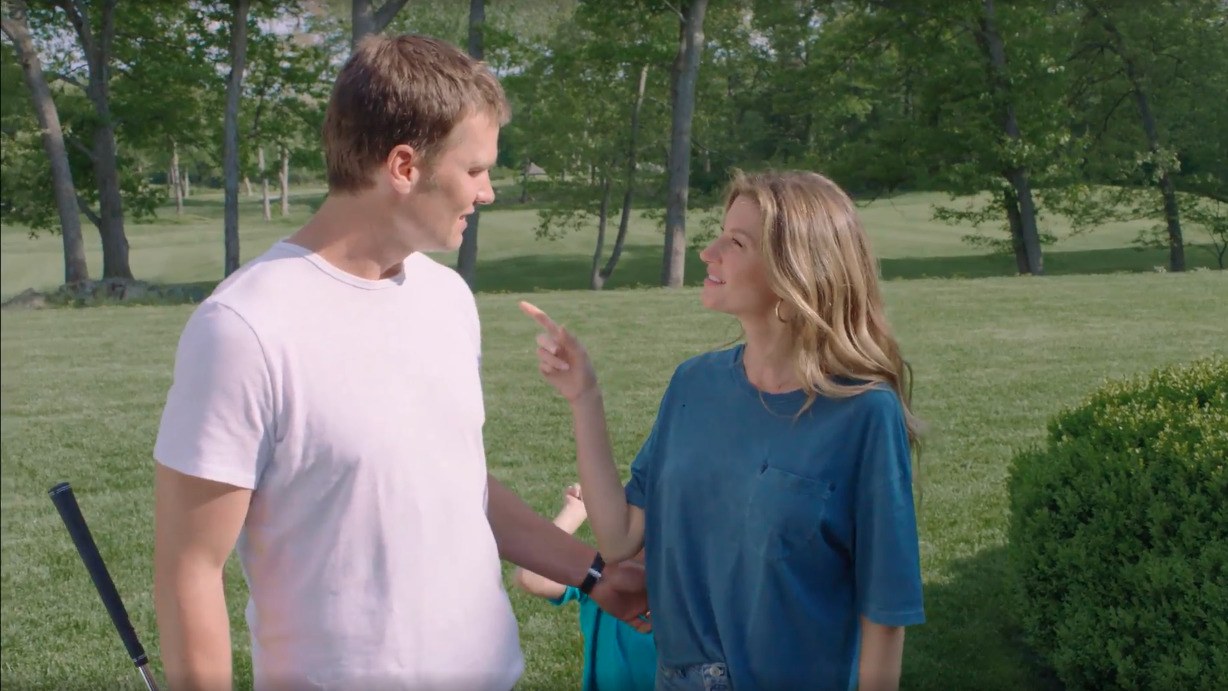
Surprise proposals tend to involve a fair amount of (playful) subterfuge, and Tom Brady’s proposal to Gisele Bündchen was no different. The Brazilian supermodel recently sat down with Vogue to answer 73 Questions, one of which was, “What’s the most romantic thing that Tom’s ever done for you?”
“When he proposed to me, he made up this whole story [about] how my apartment was flooding,” she answered in the video. “And I ran over there to try to fix the situation. When I got there, the whole apartment had candles and rose petals, and then he went down on his knees to propose.”
“And I’m like, ‘Get up,'” Bündchen continued, fake-yelling, “’cause he just had surgery and had three staph infections. I’m like ‘What are you doing?!’ He’s like, ‘I gotta go on my knees.’ I’m like, ‘No, no, no! Get up, please.’ So, and here we are.”
Nine years later, Bündchen has some marriage advice. “Keep it open and loving communication,” she told Vogue. She also revealed some juicy secrets about Mr. Gisele Bündchen, who made a cameo in the video while practicing his golf swing in their backyard. Apparently, one thing most people don’t know about the New England Patriots quarterback is that “He doesn’t like being barefoot.” Another interesting tidbit? Bündchen taught him how to recycle. (Meanwhile, she says, he taught her how to say no.) As for what emoji “best encapsulates who he is,” the supermodel said, “the one with the sunglasses, like cool and collected, you know?”
See more: Tom Brady Wears “I Heart Gisele” T-Shirt to Celebrate Brazilian Valentine’s Day
Elsewhere in the interview, the two had a slight disagreement about where they were going on vacation (Bündchen said Costa Rica, while Brady said Montana) and were joined by their 5-year-old daughter, Vivian. While Vivian clung on to Bündchen’s leg, the model said the best part about being a mom is “the love you receive and the love you feel.” (The hardest part, she revealed, is “sleep deprivation.”)
Vivian had some facts to share about the Bündchen-Brady household as well, saying that she takes after her mom’s love of pizza and that their rescue dog, Fluffy, “likes juicy bones.” Good to know!