


Category Archives: marriage advice
HEART ADVICE: Is he too old for me to marry?

Q: I am a lady aged 21 dating a man who is 45. He is divorced. We are planning to get married in the coming year. I love him and he loves me too.
My question is, is our marriage going to work given that sometimes he seems troubled by the fact that he is twice my age? Is our age difference going to bring problems in our marriage?
READERS REPLY
Age is not really a barrier in marriage but needs to be discussed for both parties to be comfortable. I notice that your friend is troubled about the difference in your ages. He is also divorced and probably is still processing the loss of his marriage.
Marriage is a lifetime decision and you need to thrash out issues that may cause future problems. I recommend you both get help from a marriage therapist before you get committed. God bless you. John Wambugu, via email.
The man is twice your age, meaning maturity levels are different. Age is not really an issue but you really have to give a lot of input and understanding into the relationship. If you are both in love with each other and are ready to do it, go ahead. For better or for worse. All the best. Calvin Queens, via email.
21 against 45, no matter what, will keep on bringing misunderstanding, so go on with the knowledge that you’re ages apart in matters perspective. John Muchiri Mwangi, via email.
The fact that you are dating a man twice your age can be challenging. You should first seek his explanation on the reasons for divorcing his wife. If you are comfortable with being his wife in future, just assure him of your commitment.
The success or failure of your relationship is in your hands. Age difference shouldn’t pose a threat to your marriage. Dennis Kangwana, via email.
Your age difference should not worry you; instead, get to understand why the two of you decided to settle for each other. If you have a solid foundation, then your marriage should be able to work out. But if your man seems troubled by the age difference as you put it then consider having a talk with him.
Let him understand that it’s just a number that cannot necessarily determine the success of your relationship or marriage. On the other hand, if you see it straining your relationship so much then you can as well part ways before it’s too late. Juma Felix, via email.
EXPERT ADVICE
Maurice Matheka, a relationship counsellor answers:
Older men have married younger women for centuries. It’s not a question of age, it’s more about mutual interests. Why is he really marrying you? Are your families supportive? And most importantly, are you compatible?
If he is marrying you out of some sense of thrill and obligation then the chances of your marriage collapsing are pretty high. If he is the traditional, controlling man then there is a chance that he will limit your potential if you aspire to be more than just a housewife.
If indeed he is troubled by your age difference, that could be a sign that things might not be as rosy as you expect. As a young woman you have many choices to make and your untapped potential in life should not be limited by anyone at this stage.
NEXT WEEK’S DILEMMA
Thanks for the advice you give every week Maurice.
I am in my early 30s and so is my boyfriend of five years. He recently lost his father, and I recently lost my job. We have been quite happy over the past few years, but now I am suffering from depression and he is also affected by his bereavement.
Both issues have made our relationship difficult. We get angry with each other all the time because we both want support from each other that the other cannot give. Can our relationship survive our double depression? Should we just break up until we are both healed?
This 1948 Medical Guide Paints A Terrifying Photo Of Women's Healthcare In The Past — And Present

It started out, really, as a joke: When my sisters, my mother, and I discovered the Pictorial Medical Guide in my grandmother’s library — first published as Every Woman’s Standard Medical Guide in 1948 — we couldn’t believe some of the medical recommendations it gave. What essentially amounts to an encyclopedia of opinions by, as the book states, “experts in every essential field of medicine, family health, and child care” offered medical advice that, more often than not, appeared to us only a generation or two more advanced than medicinal leeching, trepanning, or bloodletting. And not just medical advice; it offers advice on marriage (and “marriage”, quite often, as a euphemism for “sex”) and raising children as well.
“I usually suggest the experimental approach to sexual adjustment to the couples with whom I talk. Their attitude should be the same as with a new Ford,” reads one section titled “Medical Preparation for Marriage,” which is, in effect, coaching women on how to lose their virginity upon tying the knot. “With the car, they would find the highest hill and see how good a hill-climber it was. They would find a rough piece of road and test the springs. They would find a long, level space and try its speed. After they had put it through its paces and knew what its performance was, they would settle down to thirty-five miles per hour.”
We laughed at the reference to the Ford, scoffed at the idea of settling down to such a tame speed as 35 miles per hour, and read on. But soon, the book wasn’t so funny.:
“Girls frequently state that they would not care to try this approach because they feel that it would interfere with their emotional and spiritual responses to intercourse. That is perhaps true to some extent, but it must be remembered that this experimental effort does not last indefinitely. The situation is not unlike learning the piano. You may learn to play be ear, without practice, and secure a reasonably good accomplishment. On the other hand, if you devote yourself for a while to five-finger exercises, you will find that it interferes temporarily with your musical enjoyment but eventually you will not only become technically more proficient, but the emotional and spiritual values of your music have improved.”
Hold on now… what say you? All “five-finger exercises” jokes aside, “Medical Preparation For Marriage” had suddenly shifted from awkwardly antiquated to borderline predatory. Was a medical professional sincerely advocating for a woman to engage in sexual activities that she didn’t want to engage in, for the sake of her own “technical proficien[cy]”? (While referring to her as a “girl”, no less — a pattern repeated throughout the Guide.) This wasn’t funny at all. Especially when we considered how many of the people still making healthcare decisions for women (old, white men in Washington) grew up within the social climate that made books like the Pictorial Medical Guide possible.
In fact, these kinds of ideas about women’s health still pervade the medical industry today — women’s pain is discounted; women’s diseases are under-funded and under-researched; and far too-often women’s bodies are acted upon by the larger medical and political establishments, rather than women being given opportunities to play active (and validated) roles in their own healthcare and health-related decisions. (For a great resource in learning about these issues, and more, consider checking out Abby Norman’s excellent medical memoir, Ask Me About My Uterus: A Quest to Make Doctors Believe in Women’s Pain.)
Still less funny, my mother recalled our grandmother referencing it, as a genuine source of medical guidance, throughout her life.
Inexplicably, “Medical Preparation For Marriage” goes on to feature a lengthy (and illustrated) description of the male testicles, their function, and various options for entertaining them. A half-dozen sentences are dedicated to the clitoris (sans diagram.) But it’s about to get a whole lot worse.
Under the heading “The Need For Sexual Excitement” foreplay, as the Guide terms “lovemaking”, is discussed as though it’s a relatively new concept among sexual (again: married and same sex) partners — although, given the social context, perhaps some credit is due for considering it at all. However, the discussion of foreplay concludes with: “…sexual excitement is not necessary for the woman. She may have intercourse willingly and with pleasure, against her will, or even while unconscious.”
From Bill Cosby and Brock Turner to the Me Too Movement and Time’s Up, the idea of women having non-consensual sexual intercourse while unconscious suddenly didn’t seem so 70-years-ago after all. The Guide offers a terrifying picture of how women’s sexual health and well-being was once discussed, even in the medical community — but it also demonstrated the equally terrifying reality that we haven’t come quite as far as we think in the intervening years, after all.
Dating after divorce? Take this advice from a relationship expert
Get the latest from TODAY
Sign up for our newsletter
There’s a phrase that best describes the feeling many people have when they begin dating after divorce: Scary as hell.
Putting yourself out there after marriage or a long-term relationship has ended, can make you feel uncomfortably vulnerable. This is especially true now that the number one way in which couples connect is by looking at thumbnail-size photos of each other, reading a two-sentence description of the person and swiping right or left.
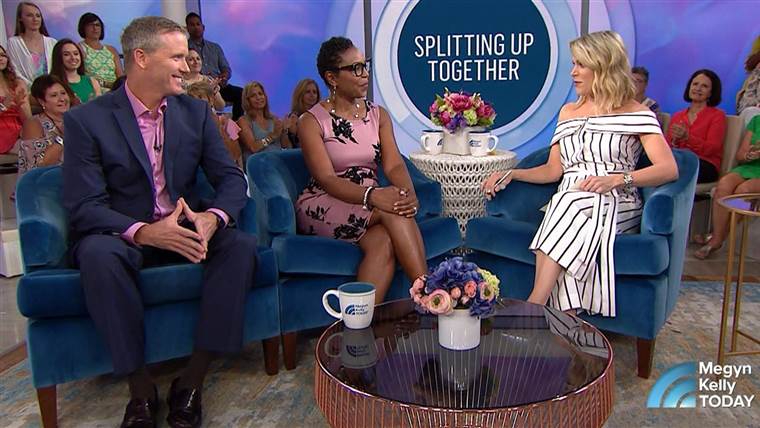
As a relationship columnist, I have a few pieces of advice to offer and I stopped by Megyn Kelly TODAY to chat about this topic. Whether you are recently divorced or broken up, or you’ve been divorced and single for awhile, here are some tips that might help prepare you for a better, smoother dating experience.
1. Ask lots of questions on your date.
Let’s be honest: A date really is like an interview. You are trying to learn more about your date to see if he or she is a good fit for you. Many people get nervous on dates, and as a result talk, talk, talk about themselves. Not only does their date end up feeling like they couldn’t get a word in, but the talker never gets to learn about the other person.
2. Don’t focus too much on your divorce or your ex.
Your date doesn’t want to hear about how your ex is a jerk or isn’t adhering to the terms of your divorce agreement. If you talk negatively about your ex, or call him or her a four-letter word, you will most likely never hear from your date again. If your divorce does come up, try to keep the conversation brief, and try to refrain from using these words: depressed, heartbroken, devastated, bitter or deadbeat.
Aug.10.201805:02
3. Ask yourself two key questions.
“Does he bring out the best in me?” and “Do I like myself around him?” These determine if he or she is a good fit for you. I once dated a man who made me feel bad about myself when we were together. I was constantly trying to get him to love me, and he just didn’t. Instead of continually trying to make it work, tell yourself he or she isn’t the one, that it isn’t personal and that you need to move on for your own well being.
4. Don’t talk too much about your kids.
Our children are our pride and joy, and they are in most cases, the most significant part of our lives. That said, your date isn’t with you to talk about them the entire time. He or she is there to get to know you, and what defines you outside of being a parent.
5. Have fun.
Enjoy yourself and take it lightly. Don’t put pressure on yourself to find your next spouse. Take things slowly and let them evolve authentically.
6. Laugh about bad dates.
If a date turns out to be a nightmare, there is almost always a funny story to tell. Let yourself laugh about it! Also, no date is ever a waste of time. Try to find something good that came out of it.
7. Do not look at your phone during the date.
Unless you are checking on your kids, put your phone in your purse for the night!
8. Watch how your date treats the waiter.
If your date is rude to the staff at a bar or restaurant, you are seeing only the tip of the iceberg. Run fast!
9. Don’t drink more than two drinks.
After two cocktails, I find that most men and women become looser. While this can be a good thing, too loose can be dangerous. The alcohol might cause you to say or do things you wouldn’t normally say or do.
10. Don’t have sex on a first date.
I don’t feel this way because I’m old fashioned, I just think sex changes the entire landscape of the relationship way too quickly, and there is a whole part of flirting, foreplay and friendship that could get covered with lust and clouded emotions.
11. There are no “buts” in a healthy, happy relationship.
If you’re dating someone and your friends ask, “How’s so and so?” and you say, “Good, BUT …” that is an indication that there could be issues. When it is truly right, you will stop after “good.”

Jan.05.201804:31
12. Be understanding.
Remember that divorced men and women are juggling a lot: kids, jobs, an ex and more. Dating is very different than when you were younger. Last-minute cancellations, the kids not wanting to meet you, and his ex being rude to you are fairly typical scenarios. Also, there might be days he or she doesn’t call or text you, and you might not be able to see the person as often as you’d like. Don’t be disappointed, it’s just the reality of dating after divorce.
13. If your date doesn’t call back, do not take it personally.
I know that sounds funny, because how can dating not be personal? The thing is, his or her reason for not calling could be about timing or personal issues and have nothing to do with you. He or she doesn’t know you well enough for it to be personal.
Dating after divorce can sometimes feel like an emotional roller coaster ride, with highs that seem heart stopping and promising, only to come barreling down by disappointment, rejection and frustration. But if you have the right mind set and the patience to put up with all the nightmare dates that precede him or her, the ride will be well worth it. Remember, you got out of a marriage that wasn’t working. This is the time to really get it right.
Jackie Pilossoph is the creator and editor-in-chief of Divorced Girl Smiling, a divorce support website for men and women. She is also the writer of Love Essentially, a weekly column published in the Chicago Tribune Pioneer Press, the LA Times, and several other newspapers across the country. Pilossoph holds a master’s degree in journalism, and lives in Chicago with her two children.
Coach Mike Bayer Offers Advice To Man For Coming To Terms With The End Of His Marriage
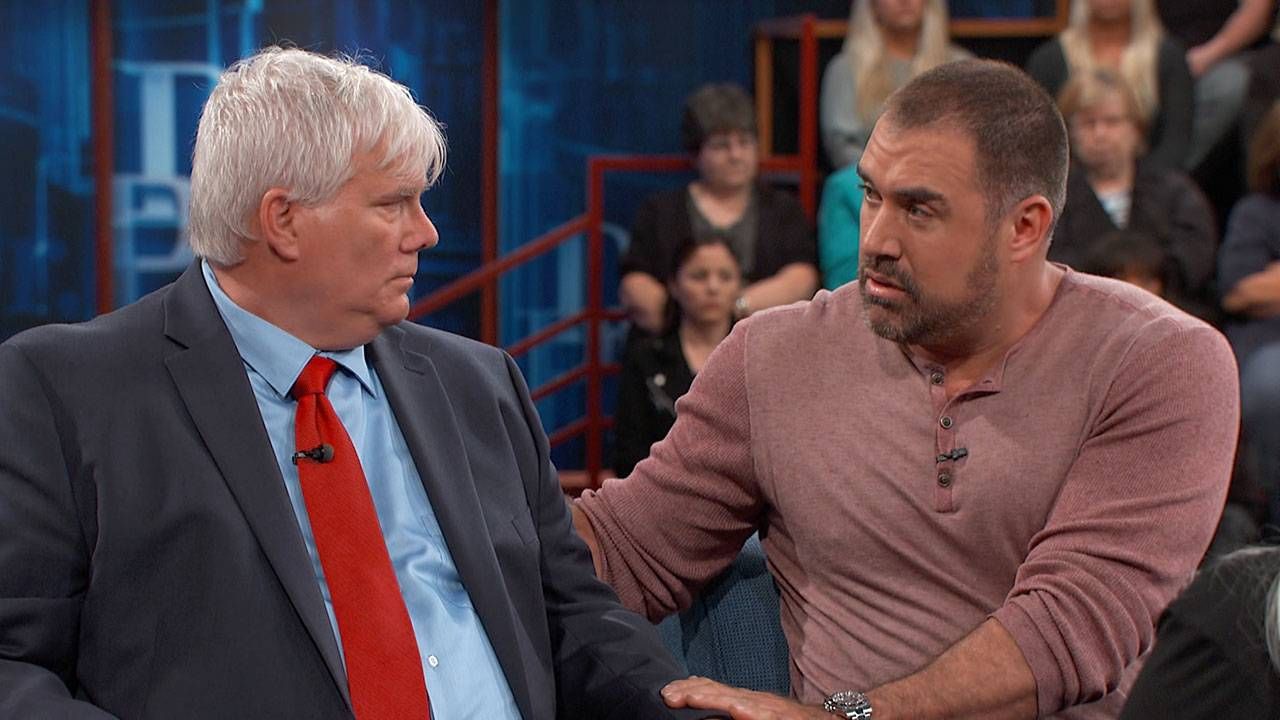
Charles says he’s desperate to save his 12-year marriage to Sally, even though he claims she’s a liar who has left him 19 times. He says the emotional turmoil caused by the stress of their relationship is also taking a physical toll on his health.
Coach Mike Bayer, a personal development coach, Dr. Phil Advisory Board member and show contributor, and CEO of CAST Centers, offers the estranged couple advice for moving forward.
“You need to stop blaming each other. You both need to start looking inside, because unless you have some interest in how do you improve your own life and stop blaming each other, nothing is going to happen,” Coach Mike says. “You can’t be a victim and be empowered at the same time. And you need to get empowered in your own life.” He suggests they end their relationship and work on healing themselves. Hear more of his advice in the video above.
Dr. Phil suggests Coach Mike set up Charles with a life coach, a nutritionist and an exercise physiologist. “I want to get this guy in shape and get him back to where he walks into a room with pride and presence, instead of sloughing in like he’s some kind of basket case,” he says.
Dr. Phil offers to send Sally to OnSite to heal some of the wounds from her past.
This episode airs Friday. Watch more here.