


Category Archives: Marriage & Divorce

Ask Amy: Wife and mom is missing one thing: friends – Arizona Daily Star

Dear Amy: I am at a crossroads in my social life and could use some advice.

I am a married mother in my early 30s. Over time I have had a “falling out” (so to speak) with each and every one of my lifelong friends (close friends from high school/college).

I will spare you the specifics of how these friendships ended, but I now find myself with no close friends to share my life with.

I miss the friendships I used to have, but I do not miss the drama and disruptions they caused in my life.

I have had no luck finding new friends my age that share my interests.

Is there something wrong with me? Why at this stage in my life is it so difficult to make and maintain these relationships?

My marriage is strong, my career is everything I want it to be, and my children are happy and successful, yet I seem to be failing terribly at having and keeping close friends. Any advice?

— Friendless

Dear Friendless: I don’t know if there is something “wrong” with you, but your behavior of dropping all of your friendships implies a pattern, and you are at the center. So, yes, you should carefully examine your own behavior, take responsibility and most importantly, see what negative patterns emerge that you can change.

Making new friends, especially in adulthood is a significant challenge. Most parents find themselves thrown together with other parents at the playground or at school; these glancing connections can evolve into very rewarding relationships centered around family life. Are there other moms in your circle you’d like to befriend? Many of us also find pals that bloom into friendships at work.

But making friends is challenging. And transforming an acquaintance into a friendship can seem like a delicate dance. One of my own besties simply approached me in our daughters’ kindergarten classroom and said, “Hey, you seem cool. Do you want to be friends?” Turns out, I’m not that cool (she is!), but we’ve managed to stay friends for 25 years.

Read “Friendships Don’t Just Happen! The Guide to Creating a Meaningful Circle of Girlfriends,” by Shasta Nelson (2013, Turner). Nelson is also CEO of the innovative friendship matching site: girlfriendcircles.com.

Dear Amy: We built a custom home a few years ago and went to great lengths to research our neighbor’s house colors before we decided on a color.

After much thought, we chose a white-and-black scheme for our house.

No other house on our street is similar to ours.

Fast-forward to today, and a new house is being built directly next door to ours. They are intending to paint their house the same colors as ours (although they believe their white paint will be “quite different”).

They bought their lot knowing our paint choices. They also are aware that this decision will frustrate us.

Is it tacky to copy someone’s house colors when you’re direct neighbors?

— Frustrated Neighbor

Dear Frustrated: There are many neighborhoods and housing associations where people are forced through strict rules and design limitations to paint their houses within a very narrow range. Lucky you, you have the freedom to paint your house the way you want.

Your new neighbor has the same freedom.

Having a house painted white isn’t exactly pushing the boundaries of taste and design, you’ve chosen the most popular house color for your own house. Surely you can’t be that surprised that someone else on your street will also choose to have a white house.

Even if this was a deliberate copying of your home, you have choices about how to behave. In this case, even if you are feeling petty, slighted and frustrated, you should behave as if you feel flattered.

No, it is not tacky to paint a house white, even if your neighbor’s house is also white. This might be a very good lesson for you. You seem very careful, deliberate and controlled. Other people aren’t like you. Understanding and accepting this will be a good exercise in neighborliness.

Dear Amy: “Wondering” was ensnared in a family drama when visiting her close older friend. Her friend’s cousins accused Wondering of coming on to male family members.

I think it’s possible that these family members were trying to isolate the older woman, in hopes of receiving an inheritance. Unfortunately, I have seen this happen.

— Wondering No More

Dear No More: This is a definite possibility. “Wondering” should take steps to try to reconnect with her friend.

Subscribe for just 99¢ per week
  • Support quality journalism
  • Get unlimited access to tucson.com and apps
  • No more surveys blocking articles

Coroner reveals married Fox TV meteorologist and mother-of-two hanged herself – Daily Mail

Married Fox TV meteorologist mother-of-two who hanged herself is among ‘at least 11 people’ who have committed suicide after laser eye surgery

  • Jessica Starr, 35, committed suicide on Wednesday in Detroit, Michigan
  • In October Canadian father-of-two Paul Fitzpatrick, 56, killed himself and blamed 20 years of agonizing post-Lasik pain in his suicide note 
  • Paula Cofer, the founder of a support group called Lasik Complications, claims at least 10 others in the US have committed suicide amid post-surgery pain 
  • It remains unclear if Starr’s suicide was directly related to her surgery
  • She told fans she was struggling and that her she had to use eye drops in November 

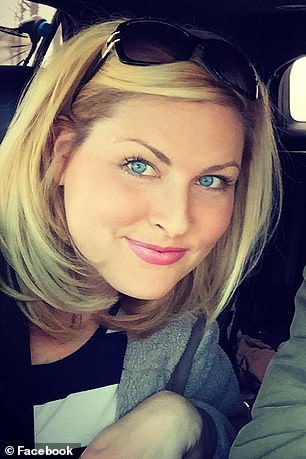
Jessica Starr, 35, died on Wednesday by hanging herself 

Jessica Starr, 35, died on Wednesday by hanging herself 

A beloved Fox TV meteorologist and mother-of-two who killed herself on Wednesday is one of 11 people to have taken their own life after undergoing Lasik eye surgery. 

Jessica Starr, 35, was found dead on Wednesday night. She was married with two young children and had a successful television career. 

Questions remain over why she killed herself but her final public remarks were to tell fans that she was still struggling to recover from Lasik SMILE eye surgery. 

She underwent the widely performed procedure in October to correct her nearsightedness so that she could stop wearing contact lenses. 

Ordinarily, patients take a few days to regain their sight but Starr complained on November 13, a month after her procedure, that she was still having trouble.  

On Friday, the Oakland County Medical Examiner confirmed her manner of death. 

A spokesman told Radar Online the coroner found a ‘gruesome scene’. It is not yet known what time she was found, where she died or who found her. 

An alarming number of Lasik patients suffer from agonizing, chronic pain following the surgery, according to Paula Cofer, the founder of a support group called Lasik Complications, which strives to educate potential patients about the risks of the surgery. 

In October, Canadian father-of-two Paul Fitzpatrick killed himself and blamed 20 years of post-Lasik pain in his suicide note. 

It remains unclear if Starr took her life as a direct result of complications from the surgery.  

Fitzpatrick was unequivocally clear when he died. He wrote a suicide note where he said he had been suffering excruciating pain for two decades years. 

Paula Cofer, who underwent Lasik in 2000 and has suffered from severe dry eyes as a result, told CTV that at least nine others she knew of had committed suicide after having the procedure. 

Other doctors have specifically warned against the procedure. 

Among them is Dr. Edward Boshnick of the Global Vision Rehabilitation Center who writes on his website: ‘Over the years I’ve had the misfortune of examining hundreds of patients who have lost quality vision and suffered severe depression as a result of lasik surgery. 

‘Two of these patients were so depressed by their post-surgical vision loss that they attempted suicide. In fact, there are several documented cases of post-lasik suicides. 

‘My feeling is that lasik surgery and other refractive surgical procedures exist solely to enrich doctors and the corporations that manufacture the laser equipment and not to benefit mankind.’  

Starr was a well-known television meteorologist who worked for Fox 2 in Detroit. She had returned briefly to work in November for one day but had to take time off again afterwards because she was still struggling from the surgery 

Starr was a well-known television meteorologist who worked for Fox 2 in Detroit. She had returned briefly to work in November for one day but had to take time off again afterwards because she was still struggling from the surgery 

Starr was a well-known television meteorologist who worked for Fox 2 in Detroit. She had returned briefly to work in November for one day but had to take time off again afterwards because she was still struggling from the surgery 

Starr, 35, worked for WJBK Fox 2 since 2011. On Thursday morning, her colleagues cried as they announced her death on the air. 

Starr, whose married name was Rose, left behind two young children and her husband of eight years, Daniel. 

Her devastated colleagues at the WJBK news station, where she had worked since 2011, announced her death on Thursday morning.  

‘Last night we were informed of the heartbreaking news that our friend and colleague, meteorologist Jessica Starr took her life,’ the station said in a statement.  

‘All of us here at FOX 2 are in deep shock and cannot believe that such a wonderful, bright and intelligent individual will no longer be with us. 

‘Her family and friends will be in our thoughts and prayers in the coming days as we all deal with our grief.’ 

Over the last month, Starr said she had been facing ‘challenging times’ since undergoing Lasik SMILE eye surgery. 

The procedure was approved by the FDA in 2016 and is carried out by doctors across the country.

Starr's colleagues announced her death tearfully on Thursday morning 

Starr's colleagues announced her death tearfully on Thursday morning 

Starr’s colleagues announced her death tearfully on Thursday morning 

Starr and her husband Daniel have two young children. They are shown with their kids, in a photograph she shared with Fox fans on Facebook, and her parents 

Starr and her husband Daniel have two young children. They are shown with their kids, in a photograph she shared with Fox fans on Facebook, and her parents 

Starr and her husband Daniel have two young children. They are shown with their kids, in a photograph she shared with Fox fans on Facebook, and her parents 

Starr and her husband Daniel had been married for eight years before she took her own life 

It involves the surgeon using a femtosecond laser to create a small piece of tissue within the cornea then, using the same laser, they make an arc-shaped incision on the cornea’s surface to extract the tissue through and discard it.  

It changes the shape of the cornea and corrects nearsightedness. Ordinarily,  patients’ incision heals within a few days, without stitches, and their vision is quickly improved.  

It is unclear where Starr underwent her procedure in Detroit.

She had the surgery in October and took four weeks off then returned to work for one day in November but it was too much of a struggle for her and she was back at home the next day. 

In a video uploaded to her Facebook page on November 13, the day she went back to work, she was downcast as she asked viewers for their prayers and well wishes. 

‘I am struggling a little bit so I need all the prayers and well wishes. This is a hard go.

‘If you have any tips I’d appreciate it, I’m trying to stay strong and get through this recovery.

‘Thanks again for all the wishes, I’m excited to be back I just want to get my vision back so I can keep you guys smiling,’ she said. 

The following day, she posted that she had not yet been ready to go back to work. Yesterday was a struggle for me. I really wanted to come back but I need more time to recover.

‘Please keep me in your thoughts during this challenging time. Will keep you updated,’ she said. It was her final post.   

In a video she uploaded on November 13, Starr said she was having a 'hard go' recovering from the surgery and asked fans on Facebook for their prayers and well wishes

In a video she uploaded on November 13, Starr said she was having a 'hard go' recovering from the surgery and asked fans on Facebook for their prayers and well wishes

In a video she uploaded on November 13, Starr said she was having a 'hard go' recovering from the surgery and asked fans on Facebook for their prayers and well wishes

In a video she uploaded on November 13, Starr said she was having a 'hard go' recovering from the surgery and asked fans on Facebook for their prayers and well wishes

In a video she uploaded on November 13, Starr said she was having a ‘hard go’ recovering from the surgery and asked fans on Facebook for their prayers and well wishes 

Just weeks earlier 56-year-old Fitzpatrick killed himself under similar circumstances 20 years after undergoing laser eye surgery in 1996.  

Since then, the father-of-two suffered headaches and described feeling needles in his eyes as well as an unbearable dry and burning sensation.

He left a suicide note when he took his life in October, which described the pain he felt that pushed him to death. 

‘I cannot experience any type of pleasure anymore,’ Paul wrote. ‘Just the pain of burning eyes inside my head and throughout myself… Since 1996 Pain, pain and more pain, please forgive me for not being strong enough to cope. The past few months have been unbearable.’

His parents Gene and Christine Fitzpatrick, of Ontario, spoke to CTV about their son’s condition.

‘It ruined his life, and it also left a lot of people around him suffering,’ Gene said.

‘He had always worn glasses, maybe since he was about 12 and he just thought it would be great not to have them,’ Christine said. ‘He researched it and he made sure that he was going to the best place. He felt the PRK was safer because there was less cornea used.’

PKR, or photorefractive keratectomy, was the first form of laser eye surgery and typically safe.

However, Paul’s family said he began suffering from migraines and dry eyes shortly after his surgery. 

Canadian doctors were unable to diagnose what was causing his pain, so the self-made-millionaire traveled to Europe and the US to find a specialist who could help.

He began treatments and underwent more surgeries which only made the pain worse. 

Paul’s family said in the months leading up to his death, the pain was so unbearable he would keep his eyes closed for most of the time, walking with a cane and planned to move in with his parents.

‘We didn’t know what to do for him,’ his mother told CTV. ‘We would recommend pain killers and he would take some. He wasn’t one to take pain killers much, but when they wore off he said the pain was worse so he’d keep his eyes closed most of the time.’  

Now his family believe he suffered from a rare, yet severe condition known as corneal neuralgia. 

Corneal neuralgia can cause nerve damage to the eye causing excruciating pain.     

‘Had he been aware (of his condition)…he definitely would not have continued with subsequent surgeries,’ his brother Kevin Fitzpatrick said.  

Paul’s case is the first-known suicide from laser eye surgery in Canada, according to CTV. 

If you or anyone you know is struggling and needs confidential help, contact the National Suicide Prevention Lifeline on 1-800-273-8255 or visit their website here.  

THE RISKS OF LASER EYE SURGERY

Of some 600,000 Americans that get laser eye surgery, or LASIK, only about one percent experience complications.

But for those who do, the effects can be devastating.  

Complications can include: 

  • Vision loss
  • Impaired vision  
  • Pain or burning 
  • Haloing 
  • Multiple-vision 

In 2017, the US Food and Drug Administration conducted a clinical trial to assess patient-satisfaction after LASIK.

About half of the patients in the trial developed burred or distorted vision that they had never experienced before surgery – even if their sight was technically ‘improved.’ 

They also found that patients were about half as likely to tell their doctors about developing complications after surgery as they were to admit to these issues in an online survey. 

The American Refractive Surgery Council claims that LASIK has never been the ‘primary cause’ of someone’s post-operative blindness. 

Back in 2008, the FDA held a hearing and heard testimony from patients who had suffered from blurred vision or burning eyes for years ever since surgery.

Families claimed their loved ones had lost their jobs and even been driven to suicide by the complications they developed after LASIK. 

LASIK also requires the surgeon to cut a ‘flap’ in the front of the cornea and fold it back, which raises the risks of infection and, if the flap is not properly replaced, this can cause blurred or double-vision. 

SMILE: THE NEWER, LESS-INVASIVE AND (SUPPOSEDLY) SAFER PROCEDURE 

The newer SMILE (small incision lenticule extraction) procedure is supposed to minimize those risks because it requires a much smaller incision in the cornea.

Approved by the FDA in 2016, SMILE so far seems to carry lower risk of dry eyes after surgery. 

Patients must be 22 years old, and the procedure is only intended to correct nearsightedness and astigmatism.

It still carries risks of: 

  • Haloed or glared vision 
  • Debris getting into the corneal incision area
  • Infection
  • Needing ‘retreatment’ with a more invasive surgery  
  • Making vision worse
  • Blindness   

If there are complications during a SMILE procedure, surgeons may have to switch to the more invasive technique, or do another operation. 

Recovery from SMILE is supposed to be shorter, lasting a few days as opposed to a month. 

Nearly all patients recorded in FDA data have shown improvements from SMILE, but 10 percent said they had moderate or severe glare and six percent  saw halos, though these mostly subsided after a year. 

However, about 2.5 percent of patients experienced minor deterioration of these corrections after a year.  

 Sources: American Academy of Ophthalmology, AllAboutVision.com

Advertisement
Read more:

Video: Banky W gives Ibrahim Suleiman marital advice – P.M. News

Banky W and Ibrahim Suleiman on TV’s Entertainment Splash

Adekunle Dada

Nigeria singer and actor, Banky W gave his colleague in the movie industry, Ibrahim Suleiman some marital advice on TV’s Entertainment Splash.

The House of Reps candidate took to Instagram to share the video of the interview. In the video, Banky W said woman are always right and they inherit anything they want from perfume, deodorant, t-shirts and even driver.

He claimed they get whatever they want and there’s nothing anybody can do about it.

Banky W is married to Adesua who happens to be a very close friend of Linda Ejiofor, whose Ibrahim Suleiman’s wife. Banky W has been married for over a year while Ibrahim’s marriage is just a little over a month.

Banky W’s Instagram post reads: On @tvcconnect earlier today, @ibrahimsuleimanofficial and I had fun talking about @upnorththefilm_ and I gave him marital advice. Lol.
Can any couples pls bear me witness in the comment section?

Tips from negotiation experts for truly happy holidays – Ladders

I’m having an amazing holiday season.

Each year it seems our travel gets more and more out of control. Between the multiple holidays, family we need to visit distributed all around the country and the rounds of parties for work and with friends, it’s difficult to find time for anything beyond social obligations. This year my husband and I took a different approach, consciously deciding and negotiating what we would do and what we would not do. In the end, we stayed home for Thanksgiving and had a lovely dinner with just the four of us (him, me, and our two boys, ages 9 and 11). We are planning one trip to visit his family over Christmas, but will combine it with some dedicated family time. We decided to forego hosting a party of our own and have strictly limited the other parties we will attend.

How did this happen? I applied the lessons from my academic study of bargaining and negotiation to my personal life. So, with another holiday season upon us, here’s some guidance on how to negotiate with your partner while strengthening this critical relationship.

From theory to practice

I became interested in negotiation as a graduate student, and part of my dissertation investigated bargaining behavior.

I have taught negotiation to students and executives, published many scholarly articles on bargaining and negotiation and given numerous public lectures on the topic. But, like many academics, I hadn’t thought to apply my academic expertise to my personal life.

Once I started to do so, however, I quickly realized that the concepts and skills learned from negotiation can be used not only to get what you need or want out of your family life but also to make your family life happier overall.

The most important insight is that negotiation does not have to be win-lose. It can be win-win.

Win-lose versus win-win

The popular conception of negotiation is all about getting the best deal for yourself or your side. It was a set of Harvard professors in their groundbreaking 1981 book, “Getting to Yes,” who first popularly introduced the idea that negotiation could be “integrative,” or result in both parties being better off.

In practice, many negotiators see only “distributive” or win-lose possibilities. In their minds, there is a fixed pie over which the parties are fighting: If you win, then I lose. As a result, most of the early academic literature and practical guidance have focused on power. As you might imagine, this can be quite problematic for negotiating within the family.

In contrast, the idea of integrative or win-win negotiations involves identifying outcomes that are good for both sides.

There are a number of ways one can achieve integrative negotiations, but here I will discuss three of the major ones described in “Getting to Yes” and subsequent articles.

Trade-offs. For example, consider a couple sharing a chicken for dinner. One way to share would be to cut the chicken in half and to each get an equal portion. This would be a distributive solution, since we are distributing the chicken between the couple, and if one were to get more (win), the other would get less (lose). An integrative agreement can be found by identifying trade-offs between the two parties. For example, it turns out that I like the dark meat and my husband likes the white meat. So I can give him my breast and wing and he can give me his leg and thigh, and we can both win.

Adding issues. A second way to achieve win-win solutions is to change the scope of the negotiation. For example, each year my husband and I negotiate about where to take our summer vacation. I want to go to the forests of Lake Tahoe and he wants to go to the casinos of Atlantic City. As long as the scope of the negotiation remains focused on this one trip, it will be difficult to satisfy us both. However, imagine we expanded the negotiation to include multiple dimensions. For example, we could make a multi-year deal where we alternated our destinations. Or I could commit to spending our winter vacation in Atlantic City in exchange for a summer vacation in Lake Tahoe. Or he could agree to let me pick the vacation destination if I allow him to host a monthly poker game at our house.

Las Vegas or Lake Tahoe? Public Domain

Beyond positions to interests. A third way to achieve win-win solutions is to move beyond each individual’s position and focus on his or her interests. For example, when my husband and I were getting married, we had our strongest disagreement about the wedding cake. I wanted chocolate and he wanted white (vanilla). After many rounds of arguing, I finally asked why he wanted white cake. He replied that white was traditional and he wanted the cake to be white in the pictures. I told him that my whole family liked chocolate, and we wanted to eat chocolate cake. Once you move beyond positions (white cake versus chocolate cake) to underlying interests (picture cake versus eating cake), many integrative solutions become possible: white chocolate, bride’s cake/groom’s cake, Photoshop and so on.

In the end, we had a three-tier cake, with two large chocolate tiers and one small white tier which we fed each other for the photos.

Negotiation tactics for the family

So, how should you negotiate with your partner, parents or children to get what everyone wants during the holidays?

Here are some suggested tactics to help you achieve these win-win outcomes.

Be honest, not mean. To achieve win-win negotiations, all parties involved must be honest about what they want.

One study found that married couples come to fewer win-win solutions than friends in part because they are unwilling to ask for what they want, thinking that the other person will be angry with them.

Simply giving in to the other person’s demands is not the pathway to win-win solutions. Instead, each party needs to express what is important to him or her and why, and listen carefully to his or her partner’s priorities and reasoning.

Explaining that I wanted to eat chocolate cake and understanding that my husband wanted white cake for the pictures was pivotal to our coming to a win-win agreement.

Make concessions. One of the hallmarks of negotiations is that no one gets everything he or she wants. You need to be willing to make concessions, to give up the aspects that are less important to you in order to get what is most important to you.

While cleaning up after poker games at our house is not my idea of a great time, it’s worth it to get the summer vacation I want.

Be creative. Once you understand and accept each other’s needs, you need to be creative about finding ways to meet them. This can involve brainstorming and being tolerant of your partner’s crazy, off-the-wall ideas in the process.

Should we go to Monaco? What about an online poker account? How about a long weekend in Reno during our Tahoe trip?

Make promises, not threats. Finally, a word about language. One of the realities of negotiation is that either party can walk away. One way to keep the conversation constructive is to make promises (if we both order the chicken, I’ll trade your white meat for my dark meat) and avoid threats (if you won’t trade, I’ll have to order the surf-and-turf).

The past and the future

Each family has a long history together, with real and perceived slights. Families also expect to have long futures together.

As a result, it is extremely important that these negotiations be handled with respect for the other party, and with a view to the long-term costs and benefits. Pick your battles, and concede on the other issues. You don’t need to win them all, just the important ones.

For this holiday season, we negotiated for a slower-paced experience with more quality time with our nuclear family. As the winter holidays approach, remember to consider your interests, listen to the goals of your partner and search for win-win solutions. May your holidays be joyous and your negotiations be integrative.

Rachel Croson, Dean, College of Social Science; MSU Foundation Professor of Economics, Michigan State University

Editor’s note: This is an updated version of an article originally published Dec. 19, 2017.

This article is republished from The Conversation under a Creative Commons license. Read the original article.