



Category Archives: Marriage & Divorce
Wedding Dress Shopping Tips for Brides – How to Buy Bridal Gowns – HarpersBAZAAR.com
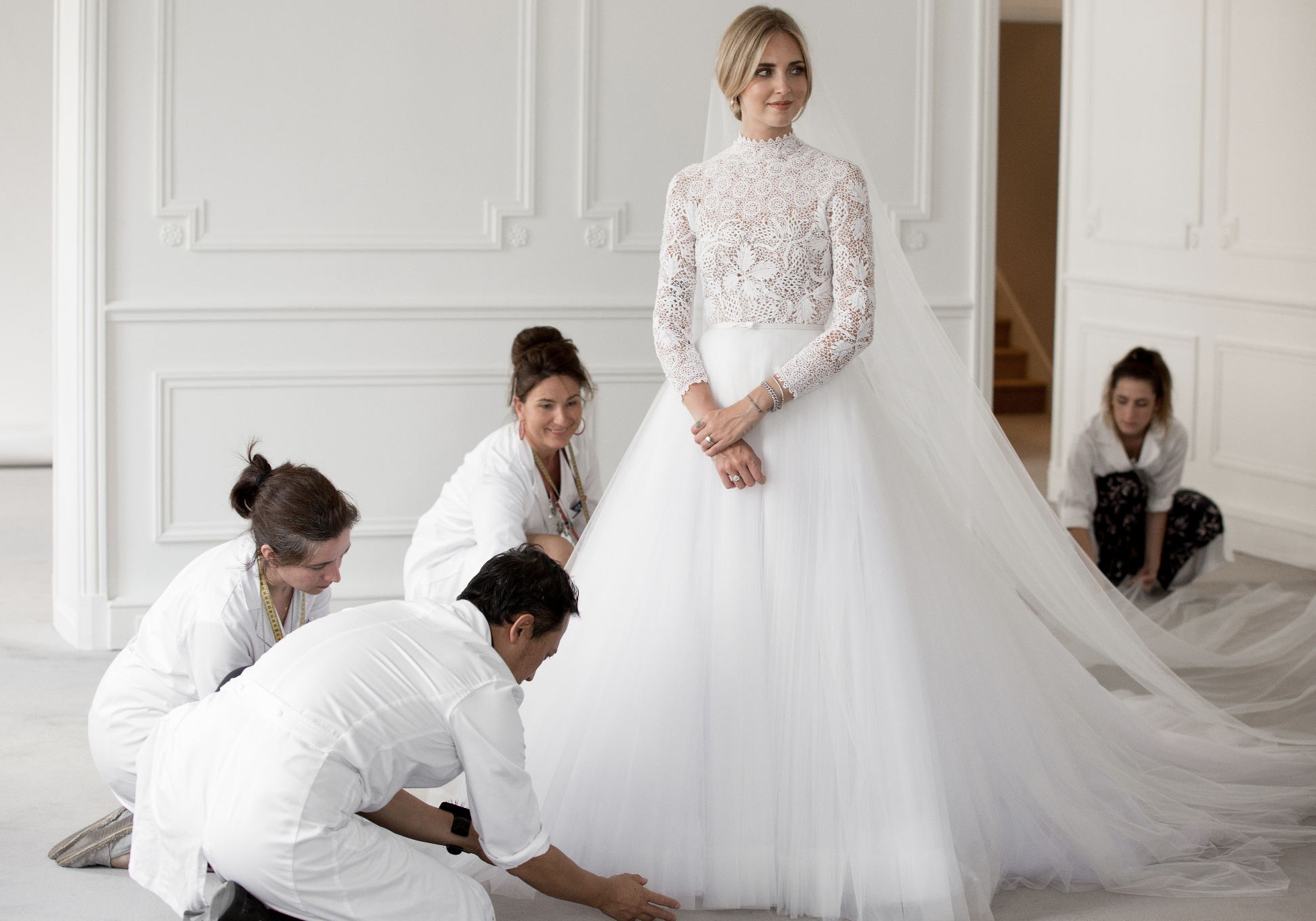
There is A LOT about the wedding planning process that no one tells you about. Even one of the most hyped events—dress shopping—can leave a bride-to-be feeling uninspired.
For most of us, purchasing a wedding dress is a major expense (maybe the most we’ve shelled out on anything, except for perhaps a car, condo, or house) and we expect the people, places, and product involved in the process to reflect both our financial investment and the importance of the occasion. Unfortunately, this is not the makeover scene in The Devil Wears Prada or the trip to Paris in Bridesmaids. It’s not even Say Yes to the Dress.
We’ve seen the good, the bad, the ugly–and the chic, the innovative, and the inspiring. So, some advice on what to expect, avoid, and know when you’re bridal shopping:
IT’S NOT A COUTURE ATELIER.
Bridal brands and salons use the term all the time, but these brands (unless they are members of the Chambre Syndicale de la Haute Couture in Paris, like Chanel, Dior, Valentino, Elie Saab, and others) are not Couture. You may think that the experience of going to a bridal shop would feel like being in a Parisian atelier. It’s not; brace yourself.
Given that they are operating year-round and don’t have the heavy duty teams of your favorite department stores, bridal boutiques (even the ones inside your favorite department stores) end up looking a bit drab in comparison to the refined, high touch shopping experience you’ve envisioned. Natural light is typically scarce—keep that in mind as you consider yourself and criticize your reflection.
Even more important to remember, is that the gowns you’re about to try on are samples. This means there is only one of them in the company; they’re often a different size than you normally wear; and at times they are “loved,” meaning that they’ve likely encountered makeup, hair product, and some dust from seasons of shuffling on and off of other brides and in and out of dressing rooms.

Overcome a must-see gown not looking its best, and make sure YOU look fabulous. Book a pre-appointment blowout, put on makeup, or better yet–schedule one of your beauty trials pre-appointment. Don your prettiest underthings and bring your favorite pair (or pairs) of heels with you.
WHAT’S ON THE RACKS ISN’T FROM THE RUNWAY.
Inspired by the pretty dresses you see on the pages of bridal magazines or at your favorite celebrity weddings? A lot of those styles will not be available through your local salon.
While some are one-off custom creations, many never make it from the runway into a brand’s showroom for shops to consider purchasing. Bridal salons are in the business of selling dresses and will often stick with styles that prove best-sellers, skipping over those that feel like fashion risks brides might have to be convinced are worth taking. Bridal salons are looking to give the bride what she wants; the best way to influence what may be available to you is to ask for it.

Prepare for miles of strapless A-line dresses, mermaids galore, and all things ultra-classic; do your homework before your appointment. Know what designers are carried by the salon and study the looks in their last several runway shows. Send the salon images of looks you love and ask if they can have those, or others similar, available for your appointment.
Even better? Make your appointment during a designer trunk show. Not only will you get a nice discount on your dress (typically 10%) but the designer or a member of their team will be there with a “trunk” of their creations—not all available at your local boutique— thus widening your selection. What’s more, the designer can also give you ideas on how to slightly customize one of their styles to make it more unique to you and your preferences.
APPOINTMENTS ARE 60 MINUTES OR LESS.
Do your wedding dress daydreams include a champagne-swilling afternoon trying on the finest in bridal couture? It’s possible, but rare in a world where salons are eager to see as many brides as possible each day. And to see as many dresses as possible in one day, stacking appointments back-to-back to in your hometown or on a destination shopping trip is a must. This is not the leisurely shopping day with your girlfriends you’re likely imagining.

In most cases, you’ve got no more than an hour. In addition to being super prepared about what you want to actually try on (or perhaps more importantly, styles you definitely are not interested in), designate one friend or family member with a good eye and a camera to photograph you in each look at every angle. While you may have an “a-ha” moment and know when you’ve found your dress, more often the decision is made upon reflection. Looking back at pictures will give you a good idea of how each dress looks on you from all angles, and will help you edit down selections for future visits—or cement your intuition about a favorite.
ALTERATIONS CAN BE PANIC-INDUCING.
When your dress comes in, it will not look like the sample you tried on. Stay calm.
The color will be whiter, the fabric may look or feel a little different, and it will not fit you perfectly. The color and fabric discrepancies between a dingy sample and a pristine new dress are a good thing. As for the less than perfect “couture” fit? If you purchased from a reputable salon, put your faith in the alterations team. Remember, your gown is made-to-order, not made-to-measure. After taking your measurements to a pre-existing pattern, gowns are sized to the largest measurement in the mix; i.e. pear shapes should expect bodices to be too big, while busty silhouettes will likely have lots to take in at the waist and hips.

Pair made-to-order sizing with the pre-wedding jitters that have most brides-to-be losing a few pounds, and your “custom” dress will likely look like it was customized for another girl. Be sure to articulate exactly where you would like changes made, and the dress should be pinned while you are in it so that you can visualize those changes. Don’t be alarmed by needing a few rounds alterations. It’s best to be slow and methodical when altering beading, lace, and complicated construction.
While it may feel more “luxe” when you’re shopping in the ready-to-wear section of a high-end designer department store, the multi-brand options, expert alterations, plethora of accessories, and expertise on hand at a bridal salon still cannot be beat. Manage your expectations and arm yourself with the above knowledge. Knowing what to expect, rather than being dismayed when the process isn’t as you’d dreamed of, will set you on the path to selecting your dream gown–without added stress.
The 1 Thing These Couples' Therapists Tell Newlyweds Is Such Valuable Advice – Elite Daily

Deciding to tie the knot is a huge step for a couple to take, and while marriage may be all smiles in the beginning, some ups and downs are almost always to be expected. Often, advice can be most helpful before problems arise to avoid doing more damage than necessary. That’s why I asked five professionals for their juiciest pieces of advice for couples who have recently said “I do”. The one thing these couples’ therapists tell newlyweds isn’t all the same, but they definitely do echo similar sentiments.
Although it seems like we’re constantly hearing about the high divorce rate plaguing the United States, the truth is that according to a recent analysis by University of Maryland sociology professor Philip Cohen, the divorce rate actually fell 18 percent between 2008 and 2016. Surprisingly, the data suggests that younger generations are outperforming their parents when it comes to staying married because more and more couples are deciding against marrying before they’re financially established.
It’s probably safe to say that divorce isn’t top-of-mind for most newlyweds, but actively cultivating a healthy marriage is a process that ultimately might help a relationship work out in the long run. Below, some advice from real life couples’ therapists that can help you make sure your marriage starts off strong, and stays that way.
Make sure you’re being regularly supportive of each other.
Ask yourself daily, “Am I there for my partner?” And if the answer is ever no, get to work. Emotional responsiveness is a good predictor of how strong a marriage will be — it’s absolutely essential to make your partner feel safe and secure in the marriage. If you haven’t already, discuss how you both feel supported by the other, what helps you feel able to be vulnerable with the other, etc. And when your partner reaches for you — whether for affection or support — acknowledge their attempt for your attention and connection.
— Anita Chlipala, relationship expert and licensed marriage and family therapist
Make sure you both feel appreciated.
The most important thing I recommend for newlyweds is to never take your partner for granted. One of the very best ways to do that is to find ways to express your gratitude for them. Find something every day to thank them for. It doesn’t need to be a big thing. Anything that you are sincerely grateful for can make someone’s day. Saying “thank you” each day can go a long way. Do this and you will dramatically increase the chances that your marriage will be more fulfilling, because you won’t take your partner for granted. There’s nothing like knowing you’re appreciated to help keep your love alive.
— Dr. Gary Brown, Los Angeles-based dating and relationship therapist
Let yourselves feel all of your emotions, good or bad.
Even happy occasions are still transitions. All major life transitions start with an ending. Prepare for a boatload of emotions. Honor the grief that comes up with the transitions so that you can make way for all the new opportunities your married life will present to you. Be patient and remember why you made the choice to marry when things get hard.
— Jennifer B. Rhodes, licensed psychologist
Learning to negotiate with each other is key.
The one most important piece of advice I would give to newlyweds is to negotiate. Forever and ever is a long time together, and couples need to be on the same page about major issues such as money, children, home ownership, relocation and retirement plans, among many other issues. Ideally, couples may want to negotiate a life together prior to an engagement. It is of the utmost importance, however, that couples plan and commit to a the kind of life they both want, together, rather than waiting to be suddenly hit with urgent decision-making. Negotiating life decisions together as early on as possible so there are fewer uncomfortable surprises in the future and so compromises can be made in advance.
— Denise Limongello, psychotherapist and relationship expert
Make sure you’re contributing equally to the relationship.
Marriage becomes challenging because of cumulative things that create resentment and unresolved conflict. Establish equity in daily living responsibilities early. Oftentimes people don’t fully appreciate the effort, time and planning related to the things that their partner does. I’m not talking about cultivating romance. I’m talking about daily living and functioning. i.e., If you’re preparing dinner for your partner and prior to you they were used to ordering out or restaurants, they became accustomed to someone else preparing their food. Their needs are being met. The time, effort, and planning isn’t part of their equation so it isn’t reciprocated. That differential is what can cause resentment and arguments.
— Clarissa Silva, behavioral scientist and relationship coach
Despite how much you know about yourself and your partner, transitioning into marriage isn’t always easy. If you realize you might need some outside input, there’s nothing wrong with reaching out to a professional. Don’t feel like you have to wait until a conflict has reached its breaking point before asking for help.
Melissa Gorga Says Her Views On Marriage Changed; No Longer Agrees With Her Own Book – Reality Tea

My, how times have changed for Real Housewives of New Jersey’s Melissa Gorga! When she first joined the Jersey Housewives, she was all about traditional roles in her Italian marriage, and how important it is to be a stay-at-home wife and mother. You know, all the things that her old-school husband, Joe Gorga, still desperately wants her to be.
In 2013, Melissa, even wrote a book on marriage, “Love Italian Style: The Secrets of My Hot and Happy Marriage.” We have certainly seen many changes in the Gorgas’ relationship roles.
The book’s main (and controversial) philosophy is treating your husband “like a king.” Melissa told Entertainment Tonight, “I’ll probably go back and read the book and go, ‘Yeah, no.’ She added, “I know anyone else in this business that has a family and a marriage the way I do knows what I’m talking about because it’s a struggle.”
Melissa opened her boutique, Envy, about two years ago. This when her thinking about male and female roles began to evolve. Her new role outside of the home has made her happy and fulfilled, but also has left her with some “mom guilt.” But what matters most at the end of the day is the love that Melissa and Joe feel for each other, and their three children.
RELATED: Melissa Gorga Shares Photos from Hospital While Visiting Joe’s Father
Melissa admits, “We’re fighting really hard and I think at the end of the day you really have to have the true love for one another because if you don’t, you’re not gonna get through this. [He] and I truly do love one another, and we’re gonna fight for [our] love, our kids.”
TELL US: ARE YOU SURPRISED HOW MUCH MELISSA GORGA HAS CHANGED HER VIEWS? DO YOU THINK THAT SHE SHOULD WRITE A NEW BOOK OF RELATIONSHIP ADVICE? WILL THE GORGAS MARRIAGE LAST?
[Photo Credit: Bravo]
Arts Meets Science and Chemistry Wins the Day – The New York Times

Forgive Paul M. Romer for turning two of the greatest days of his life into a one-day event. He was just being economical.
Mr. Romer, who was until January the chief economist of the World Bank in Washington, was married Monday to Caroline Weber, an author and full professor of French Literature at Barnard College, Columbia, in a celebration ceremony at the Anglican Episcopal Church of St. Peter and St. Sigfrid in Stockholm.
The bride, radiant in an aqua-colored caftan by Oscar de la Renta, and groom, stately in white tie and tails, exchanged ceremonial vows before the Rev. Nicholas Howe, an Anglican priest, and 16 family members, including the couple’s parents, as well as five of Mr. Romer’s six siblings and both of his children.
Later in the day, the couple arrived at the Stockholm Concert Hall for a different kind of reception, one filled with celebratory applause and presentation speeches, a diploma and a medal that His Majesty, the King of Sweden, placed around the neck of Mr. Romer, who is a co-recipient of the 2018 Nobel Memorial Prize in Economic Sciences.
“This came as a total surprise,” said Mr. Romer, 63, who learned he had won the coveted award in the quiet of an October morning at the Greenwich Village apartment he shares with Ms. Weber, 49, who was sound asleep when the Royal Swedish Academy of Sciences called with the news.
“I kind of nudged Caroline and said, ‘Um, sweetie, I just won the Nobel Prize in economics,’ and she woke up immediately and was very excited,” said Mr. Romer, who also learned that William D. Nordhaus, 77, a member of the economics faculty at Yale, was also a winner of the award.
“It was a once-in-a-lifetime moment,” Ms. Weber said. “I was absolutely thrilled for him.”
According to the Swedish Academy, Mr. Romer earned his Nobel, more specifically, “for integrating technological innovations into long-run macroeconomic analysis.” (Mr. Nordhaus won “for integrating climate change into long-run macroeconomic analysis.”)
“On a personal level, one of the most interesting things about winning the Nobel is how happy it made so many people I know,” said Mr. Romer, who is currently on a leave of absence from N.Y.U., where he is a University Professor of Economics.
“From colleagues at N.Y.U., to the woman who runs the dry cleaner’s where I take my clothes, to the doorman down the street who always gives my dogs’ treats, everyone just seemed so thrilled for me,” he said. “That was something I didn’t anticipate.”
In 2011, Mr. Romer founded the N.Y.U. Stern Urbanization Project, which works with rapidly-growing cities to make room for their inevitable expansion.
Two years later, he found Ms. Weber.
“She helped me discover a side of myself that was hidden,” he said. “And she has exposed me to a part of intellectual life that I’ve had little professional exposure to.”
On Dec. 18, they are to be legally married at the Manhattan Marriage Bureau, which seemed unlikely given the circumstances of their first official meeting five-and-a-half years ago.
In May 2013, Ms. Weber and Mr. Romer were introduced at a Manhattan restaurant as part of a blind date arranged by Donald Marron, the former chairman and chief executive of Paine Webber, and his wife, Catherine.
For Ms. Weber, whose first marriage had ended in divorce, it wasn’t quite love at first sight.
“I had the distinct feeling I had met Paul before,” she said. “I just couldn’t figure out when or where I had seen him.”
Nevertheless, they hit it off, and after dessert, Mr. Romer was walking Ms. Weber to her home in Greenwich Village, when he turned to her and said, “Thanks for being so discreet about how I had asked you out before.”
Ms. Weber was initially taken aback, but then it all started coming back. She soon remembered having met Mr. Romer three months earlier at a pizzeria-restaurant in Manhattan.
“We were both sitting at the bar, late-night, grading papers,” she said. “We started chatting, and I thought he was very handsome, but I was dating someone at that time.”
Before leaving that night, Mr. Romer asked Ms. Weber for her email address for the purpose of sending her information about a public lecture he was scheduled to give at N.Y.U.
“I thought she was very attractive, very outgoing and ferociously smart,” Mr. Romer said. “But I remember looking into her eyes as she handed me her email address and thinking, ‘She’s never going to contact me.’”
His instincts were correct, as Ms. Weber had decided to move on, but through some quirk of fate, they were back in each other’s orbit just three months later, with the Marrons joining them for dinner to help lighten the atmosphere.
Mr. Romer’s matchmaker had already given him one gift, a donation which breathed into life the Marron Institute of Urban Management at New York University — Mr. Romer is its former director. The institute works with cities and other jurisdictions to improve the provision of local services and effect positive social change.
By reintroducing Mr. Romer to Ms. Weber, who was now unattached, Mr. Marron gave him more than just another gift.
“He gave me a miracle,” said Mr. Romer, who still has the scrap of paper on which Ms. Weber scrawled her email address. “Who gets two chances at the same miracle?”
They began dating immediately, each fascinated by the other’s credentials in an arts meets science kind of way.
Ms. Weber learned that Mr. Romer, who graduated from the University of Chicago, from which he also received a Ph.D. in economics, is one of seven children born to Beatrice Miller Romer and Roy R. Romer of Denver.
His father, 90, once served as governor of Colorado, and was also head of the Democratic National Committee when Bill Clinton was president. He later became the superintendent of the Los Angeles Unified School District and a consultant to the College Board, based in Washington.
Ms. Weber, who graduated summa cum laude from Harvard and received a Ph.D. in French Literature at Yale, said of the younger Mr. Romer that she was “immediately struck by his incredible intelligence.”
“I had never been interested in or particularly savvy about economics,” she said. “I had briefly worked on Wall Street after college as a very unhappy and unsuccessful investment banker at Goldman Sachs and JPMorgan, but I had never really followed the economy.
“Yet I was really struck by how fluent Paul was in making the economic issues that are of interest to him relevant to contemporary considerations, and relevant to history and to human technological and human cultural development.”
The more she spoke of him, the softer her voice became, her tone drifting from scholarly to lovingly.
“He was also a very kind, very decent, incredibly principled person whose moral compass was front and center,” she said. “He was someone who completely accepted me for who I am, with all my quirks and foibles.”
Mr. Romer was equally impressed with Ms. Weber, the only daughter of Carol C. Weber and Russell J. Weber of Charlottesville, Va., whose parents are both retired professors of organizational behavior at the University of Virginia’s Darden School of Business.
He was quick to point out that her latest book, “Proust’s Duchess,” was published in May (Knopf) to flattering reviews, and was wowed by the fact that she taught her college courses — on such topics as 17th and 18th Century French theater and the literature and philosophy of the Enlightenment — while speaking French.
Mr. Romer, whose first two marriages ended in divorce, said that Ms. Weber “helped me discover things about myself that I didn’t know.”
“She taught me that I had more of a sense of humor than I had really known, and that I also I have this love of words that I really didn’t know was there.”
“I’m mildly dyslexic and I’ve always had trouble spelling,” he said. “I never thought of myself as a word person, or a writer, I was always more comfortable with mathematics, but Caroline helped me appreciate words through verbal interactions, and now I love words, I love the shadings that can generate humor and I love a well-crafted phrase, that was the side of myself that had been hidden.”
In September 2013, four months after they had reconnected, Mr. Romer and Ms. Weber journeyed together to N.Y.U.’s campus in Shanghai, China, where Mr. Romer had agreed to teach economics for a semester.
“That was one of our big adventures early on,” said Ms. Weber, who went on a sabbatical to be with him. “It was also a big test of our relationship as we were living in a country where neither of us spoke the language, which made some things difficult, but I’m grateful to have had that experience.”
Three years later, a more painful experience during a long-distance period in their lives brought them closer together.
In November 2016, just a few weeks after Mr. Romer had gone to the World Bank in Washington, Ms. Weber was walking their three dogs — they now have four — when two of the bigger ones began pulling her in the direction of another dog.
“Just as this is happening, a bicycle comes flying by,” Ms. Weber said. “It was just a perfect storm of awfulness that resulted in me tearing all the ligaments in both of my knees.”
Mr. Romer rushed back to New York by train, and found Ms. Weber in a hospital emergency room, still in much pain.
“Poor thing,” he said, “it was really tough to see her in that position.”
He began commuting from Washington every weekend to be by her side, and she has since recovered after two full years of physical therapy, just in time to celebrate two of the biggest days of her life, which, like his, happened on the same day.
“On our way to pick up Paul’s Nobel Prize, we’re stopping off to get married,” said Ms. Weber, laughing as she spoke, just before heading to Sweden.
She, too, had found her own economical miracle.