



Category Archives: Marriage & Divorce
The Best Books About Sex and Marriage in 2018 – Fatherly
Marriage counseling and sex therapy can be expensive and, despite the proven benefit of both, not a proposition the majority of couples want to consider. It’s a good thing, then, that each year there are a number of excellent reads from therapists, researchers, and other experts that offer insightful, research-driven, and actionable steps regular couples can take to either shore up their relationship or just learn more about what makes a good one tick. This year saw a number of excellent options, from one that delves deep into — and takes the stigma away from — the sexual fantasies of average Americans for the purpose of enhancing your sex life to a blunt book of marriage advice written by a divorce lawyer who really, really would like to see fewer broken couples in his office. So, without further ado, here are our favorite books on sex and marriage from 2018.
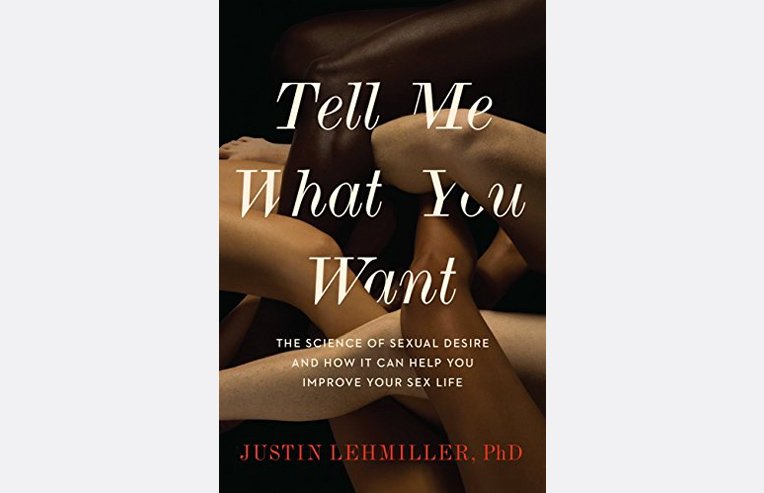
Tell Me What You Want: The Science of Sexual Desire and How It Can Help You Improve Your Sex Life by Justin Lehmiller
In attempts to open up a more frank dialogue about sex, Dr. Justin Lehmiller, a leading expert on human sexuality at the Kinsey Institute and author of the blog Sex and Psychology, organized one of the largest and most comprehensive surveys surrounding Americans’ attitudes towards sex and fantasy ever conducted, a two-year study involving more than 4,000 Americans of various backgrounds. This book explores the results, and, in the process, shines new light on ways in which these things operate within the context of American relationships. It’s full of sharp, interesting information. Did you, for instance, know that women are more likely to fantasize about same-sex experiences than men and men are more likely to have gender-bending fantasies (like crossdressing or having sex with a transsexual partner) than women? Or that, in fantasy scenarios, women are more likely to think about BDSM and to place more emphasis on where they were having sex and that, as Lehmiller told us, men report more taboo sexual fantasies and place more emphasis on who they were having sex with? As a whole, the book serves as an examination of sexual fantasies, why they’re good (and perfectly natural), and how to keep shame out of the equation.
ADVERTISEMENT
If You’re in my Office, It’s Already Too Late: A Divorce-Lawyers Guide to Staying Together by James Sexton

“Marriage is like the lottery,” James Sexton told us, “you’re probably not going to win, but if you win, what you win is so good that it’s worth buying a ticket.” Coming from most anyone else, this would be cynical. But Sexton, who, during his 20-year stint as a divorce lawyer in NYC, has helped more than 1,000 couples untie the knot, is simply calling it like he sees it. Such is the nature of his book, which is full of advice to help couples avoid stepping foot into his office. Through observations accrued during his two decades on the job, Sexton lays out a variety of helpful tips for married couples to go the distance. It’s all about maintaining your identity within the marriage, staying interesting, fighting in the appropriate manner, and much more. It’s all blunt and it all may sound obvious, sure, but it’s backed up by many examples of unions gone awry. Besides, if everyone followed the obvious, Sexton wouldn’t have a job.
Featured Video
Loading Video Content
Love Worth Making: How to Have Ridiculously Great Sex in a Long Term Marriage by Stephen Snyder

Props to Dr. Stephen Snyder’s editor, who gave this book a very enticing title. That’s not to say the substance isn’t there, as it is. Snyder, a leading sex and relationship therapist and an Associate Clinical Professor of Psychiatry at the Icahn School of Medicine at Mount Sinai in New York City, has first-hand knowledge of how married couples can fall into sexual ruts, where sex drives — and general interest — fall out of whack. His book details all the reasons this might happen (stresses of modern society, unspoken resentments, feeling more like roommates or, in the case of many busy parents, shift workers rather than lovers) and supplies actionable, research-backed ways in which couples can get their marriage and sex lives back on the right track.
ADVERTISEMENT
The Rough Patch: Marriage and the Art of Living Together by Daphne de Marneffe

Every marriage hits the occasional rough patch, something that sets things slightly off-balance. It can be money issues, in-law problems, or stress over raising the kids. The rough patch itself isn’t necessarily the issue. It’s how a couple navigates their way through it that can either make or break a marriage. That’s what psychologist Dr. Daphne de Marneffe, Ph.D.’s, new book explores, and offers a framework for avoiding the speed bumps that stall many relationships. It covers how modern life can reroute a marriage — stress, technology, etc. — and provides a roadmap for returning to not only where you once were but maybe even a better place. It’s smart, genuinely helpful, and enthusiastically optimistic.
ADVERTISEMENT
Happy Together: Using the Science of Positive Psychology to Build Love That Lasts by Susan Pileggi and James Pawelski

Suzann Pileggi Pawelski and James O. Pawelski are married. In fact, they’re also social psychologists who teach romance and love workshops around the world and study both marriage and positive psychology every day (James is Director of education at the University of Pennsylvania Positive Psychology Center). So, yeah, they’re pretty all in on marriage. They also genuinely want to arm couples with the skills to be in happy, fulfilling relationships. Through exercises and explanations, their book walks couples through ways in which they can extract more joy from their marriage. As they discussed with us, this includes such things as prioritizing positive emotions, really, truly complimenting one another, and working through bumpy patches without losing sight of the positive aspects of their relationship. Positivity, it turns out, can go a long way.
ADVERTISEMENT
Abby: Mom finds it hard to watch son in new marriage – The Detroit News

Dear Abby: Our youngest son recently married a woman who has an 18-year-old disabled daughter, “Lauren.” The girl’s mental level is between that of a 2- and 4-year-old. There have been physical confrontations between my new daughter-in-law and her disabled daughter, which are becoming more frequent now that they all live together. Our daughter-in-law refuses to pursue facilities for Lauren, saying she is waiting for her to be transitioned into a group home and feels much guilt in doing so.
Lauren is currently in a day program, which doesn’t seem to be helping her. She has definite behavioral issues and has been put on a higher level of meds that haven’t helped. Psychologists, counselors and school staff are noncommittal about offering any help and haven’t advised on how to address this.
My concern is, my son and his wife now have a 6-month-old son, and I worry about the baby in this home environment. Our son loves his wife and thought he could handle the challenges that come with living with Lauren. He now says he thinks it is best to end the marriage, but he’s uncomfortable about giving an ultimatum to his wife. He has a high-pressure job, and his new home environment is taking a toll on him, physically and mentally. Any advice for him is appreciated.
Mom On The Sidelines
Dear Mom: I appreciate your concern for the well-being of your son, but if you are smart, you will remain supportively on the sidelines and not insert yourself into this sensitive situation. If your son feels so pressured he’s considering ending his marriage, he should be telling his wife about it and not his mother.
Dear Abby: My husband and my mother had a good relationship before we were married. But since our wedding two years ago, he complains about her nonstop while pointing out ways that I am like her. My brothers feed into it, too. They often have long conversations together detailing her “many” negative qualities.
Recently, while we were visiting my parents’ home, Mom overheard my husband say critical things about her. She got upset and shut down emotionally and socially for the rest of the visit. We both apologized to her separately, but she said she was tired of being criticized and tired of him being mean to me, as well.
I have a history of depression. My husband and I have tried counseling multiple times, with no progress because he feels our problems are “my responsibility.” My husband is a good person, but it hurts me to see my mother upset and to have the two most important people in my life so at odds. Advice?
Torn in Nebraska
Dear Torn: I’m glad to offer some, but first you will have to accept that “good” husbands don’t act like yours does. If there are things he doesn’t like about your mother, he should take them up with her directly, not behind her back the way he did. I don’t blame her for feeling hurt. How else was she supposed to respond?
What your husband did was destructive, not helpful. The same is true for the way he treats you. Counseling hasn’t worked because of his unwillingness to accept any responsibility for your problems as a couple. My advice is to talk to a licensed therapist on your own, which will help you to see your situation more clearly than you appear to do.
Contact Dear Abby at DearAbby.com or P.O. Box 69440, Los Angeles, CA 90069.
Read or Share this story: https://www.detroitnews.com/story/life/advice/2018/12/06/abby-mom-finds-hard-watch-son-new-marriage/38686097/
Stephen Miller's Uncle Has A Message For Him: Get Married And Get Empathy – Forward

No one really wants unsolicited relationship advice from his uncle, but White House Advisor Stephen Miller is getting just that for Hanukkah.
On a December 6 episode of Vox Media’s “Consider This,” Miller’s uncle, Dr. David Glosser, who made headlines earlier this year for an op-ed criticizing his nephew’s immigration policies, advises Miller to “find a nice woman, fall in love, get married and have some kids.”
“Feel that surge of affection, that urge to protect that is such a wonderful part of human life,” Glosser says in a filmed monologue. “I think that might color your attitudes and make you more empathetic to people less fortunate than you or I.”
Before this bit of homespun guidance, Glosser gives a whole history lesson on just how fortunate he and his nephew are. In the episode, about the rise of hate crimes, Glosser explains how his branch of the family managed to leave Belarus and escape to America as refugees in the ‘30s. 75 other family members, unable to immigrate, died as victims of the Holocaust.
Glosser makes a direct comparison between the rhetoric brandished by Goebbels against the Jews and the talking points coming from the White House targeting asylum seekers.
“In order to justify a policy which is based on race, religion or exclusion they’ve decided to vilify people who are asking for asylum, accusing them all of being criminals, beasts, gang members, murderers and so forth,” Glosser said, and intercut news clips of the president and his nephew using almost the exact same phrasing back him up.
Glosser, a retired neuropsychologist, might well know how best to treat the troubled patient that is Stephen Miller, but armchair shrinks might wonder if a happy home life could be a cure-all for the guy. That said, blood is thicker than our own idle speculation. As Glosser says:
“Were my dead grandfather to hear of these policies being expounded so blithely by my young nephew Stephen I’m sure he’d be spinning in his grave.”
We have to take him at his word.
PJ Grisar is the Forward’s culture intern. He can be reached at Grisar@Forward.com.