



Category Archives: Marriage & Divorce
Help! I Wish My Workaholic Boyfriend Would Take a Chill Pill. – Slate

Photo illustration by Slate. Photo by Annie Spratt on Unsplash and Dmitriy Ilkevich on Unsplash.
Daniel Mallory Ortberg is online weekly to chat live with readers. Here’s an edited transcript of this week’s chat.
Daniel Mallory Ortberg: Good morning, all. Let’s chat!
Q. He loves his work more than me: I’m a young but moderately successful female journalist in a live-in relationship with a male Ph.D. student in the arts. He’s currently in his fourth year. I work roughly a 55-hour week, including a few weekend hours, but relish my time off whenever I can get it. My boyfriend, however, works roughly 60–70 hours a week, takes every Sunday to work, and sees the four-day Thanksgiving weekend as a “good opportunity” to get a lot of work done. He says that the academic job market is such that there is no alternative to this, even though I know many of his peers who take a somewhat more relaxed approach. We’ve been talking marriage and children, but I’m scared that if we do commit to each other, he’ll be constantly tucked away in his office working while I make our lives, and family, work. (This is exactly what his parents’ marriage is like.) This seems sexist, and also very scary—especially as my career is important to me too, and I’m doing well at it. Is there a way I can tell him to relax a little bit? Or am I doomed to being a Saturdays-only partner for the rest of my life?
A: There is a third option, which is to break up with him. That is, I think, your best option. That’s not to say you need to end it tomorrow. Certainly have these conversations with him, about your long-term concerns and your lack of interest in having a marriage like his parents’. But if he’s happy with the amount of time he dedicates to his work, and the idea of living like this for much longer makes you feel doomed, then I think you two have a fundamentally incompatible vision of the future. The problem is not that your partner needs to relax “a little bit.” That’s you hoping this won’t really require much of a change on his part, because you’re scared at the prospect of losing this relationship. The problem is that what he sees as his only option makes you very scared. Don’t try to downplay or rush past this fear! Your concerns about his availability for future children—and, frankly, for you now—are serious and grounded in reality, and if he doesn’t seem inclined to make a pretty serious adjustment in his priorities, then it’s better for you to get out now than to try to become a single parent with a husband hiding somewhere in the back of the house.
Q. In-laws refused to talk to their son about his cheating: My husband was having an affair, and I begged my in-laws to talk to their son and at least tell him they disapproved of his actions. They refused, not wanting to get involved, despite agreeing it was wrong and seeing how much pain his affair caused my children, 10, 15, and 18. I am now having a hard time talking to them—in fact, I really dislike them. I encourage my children to speak to them, and I still speak to them respectfully, but I prefer not to because I think they are spineless and lack morals. I do not wish to maintain a relationship. They don’t seem to think they did anything. I would appreciate your opinion on this.
A: I’m so sorry about the pain your husband’s cheating has caused you. But rather than trying to get his parents to step in and chastise him, you should figure out whether your marriage is salvageable and how to minimize the effects that your marital problems have on your young children.
How to Get Advice From Prudie:
• Send questions for publication to prudence@slate.com. (Questions may be edited.)
• Join the live chat Mondays at noon. Submit your questions and comments here before or during the discussion.
• Call the voicemail of the Dear Prudence podcast at 401-371-DEAR (3327) to hear your question answered on a future episode of the show.
Q: Confused widow: Ten months ago, I lost my husband to cancer, leaving me with a 2-year-old. I loved my husband very much. I’m medicated and counseled, and I have a job I love, so I’ve been doing OK. I have great support. After a tough few years which began with postnatal depression for me and moved onto all the terrible trappings of cancer treatment for him, I have been yearning for something good and fun that is wholly unconnected to all of this grief. This is the longest I’ve been alone. I’ve been monogamous for 20 years, and there was only a three-month gap between my late husband and previous boyfriend. Anyway, I met a woman through a friend a few weeks ago. We went on a couple of dates and slept together. It was the first time for me, and what a revelation! Women are great! I did dabble with women when I was in college but hadn’t explored that since. When I thought about dating again, I did think I would like to see a lady.
Another friend of mine heard about my date and gave me a talking-to about how I wasn’t ready and wasn’t gay. He said it was all the grief and that I didn’t have to be a lesbian as a way to deal with it (for what it’s worth, he’s gay). I was thrown by my friend’s comments, and yet there is some truth in them. I don’t feel ready to date men at all, and I feel like it’s easier to communicate with women. This woman was so sweet to me. She knew about my situation. It was nice to be so frank and careful with each other’s hearts. Since then, I have been getting comfortable with the feeling of being bi.
To what extent is this misdirected grief, and what should I do now? How fair would I be to the next potential lady, if I only want to date women because I’m too scared of dating men for obvious emotional reasons? I am so far from ready to be assertive with dating, but I do like the feeling of exploring romantic feelings within safe boundaries if the opportunity presents itself. I just miss the small things of being with someone and am not looking beyond that. Is it wrong to want to date now, knowing it’s still early days and that I need to tread carefully? Is it unfair to prefer women now? Please help me organize my thoughts.
A: Let’s start with this: Any friend who takes it upon themselves to police your dating life as a widow is not being a good friend. They are being rude, censorious, and judgmental and overstepping a serious boundary. I have no idea why your friend thinks he knows better than you whether you’re ready to have a fun couple of dates after years of hospital visits, grief, and pain, but he doesn’t.
As to his theory about your interest in women, let’s call it what it is: absolute nonsense. If you don’t feel like dating men right now, and you do feel like dating women, you can safely assume that it’s because you’d like to date women—not because “dating women” is the training wheels to “dating men.” If you briefly dated women in college, enjoyed having sex with a woman recently, and like the idea of continuing to date women now, I think it’s pretty safe to say that you enjoy dating women, no further justification or explanation necessary. For your friend to claim that your renewed interest in women is somehow the result of “misdirected grief” assumes that your natural resting condition is heterosexual. Which, based on your history of dating women, you already know isn’t true. Moreover, it’s weirdly homophobic! Just because your friend is gay doesn’t mean he isn’t capable of regurgitating weird homophobic talking points.
You loved your husband. You had a nice time going out with a woman recently. You’d like to date women again. That, frankly, makes you more of a bisexual expert than your friend, who so far sounds nosy and unhelpful. Go forth and date women, and spend more time with friends who don’t try to manipulate you into doubting your own experience.
Q. I don’t want bigots holding my kids: The husband of my sister “Tracey” is the son of a very conservative local politician. Tracey hosts several family gatherings a year, the biggest being Christmas. In public, her father-in-law and his wife rail against LGBTQ people. When my wife and I see them, however, they’re warm and friendly. We think they employ a “hate the sin, love the sinner” attitude, but since they see our love as a sin, we aren’t exactly impressed by their magnanimity.
We have two young children, and we’re increasingly uncomfortable having Tracey’s in-laws around them. Her mother-in-law adores babies and has always doted on them. My wife and I feel small for resenting this woman’s love for our kids. At the same time, seeing my children in the arms of a woman who has fought to prevent other LGBTQ people from adopting is jarring. Are we petty to want to limit our kids’ time around Tracey’s in-laws, and how do we navigate that without causing fights?
A: Two things here are true: 1) It is not petty to want to limit your family’s time with people who go out of their way to make life more difficult for families like yours. 2) Some things are worth causing fights over. The fact that Tracey’s husband’s parents are friendly to you and your children at family gatherings does not make them broad-minded or suggest that they’re reconsidering their bigoted stance. Rather, it’s a sign that they’re interested in keeping up the appearance of a conflict-free family and have a vested interest in keeping you just placated enough that you never say anything that makes them uncomfortable. “I don’t want someone holding my kids at Christmas who’s going to spend the rest of the year trying to hurt families like mine” is the best way to navigate this.
Q. Mom’s lost her tact: My mother hasn’t been working, for various reasons, for about three years. The lack of routine, social interaction, and mental stimulation has caused a decline in … something. She doesn’t seem to recognize social cues and often behaves inappropriately. Here’s the best example. A family friend posted on social media that her mother had passed away. My mom posted an appropriate condolence message, and that friend replied, “Thanks. Hope all is well.” Fine, right? No. Because my mother responds with a seven-sentence update on her own life that ended by saying the two of them should get lunch. My mom just recently started a new job. Is it my place to warn her she needs a social skills tuneup, and if so, how?
A: If this is a sudden and dramatic change, it might be worth encouraging your mother to visit the doctor in case there’s an underlying medical issue. And since you don’t seem to be too worried that she’ll react defensively off the bat, I think you can bring this particular issue up with her the next time you talk. Tell her you were surprised to see such a jarring, tonally out-of-place response from her on a death announcement on social media, and ask what she was thinking in that moment. Depending on how she responds, you may be able to have a larger conversation about how to read the room or whether it’s something to bring up with a medical professional. If you think this falls more under the rubric of “kind of uncomfortable but doesn’t make me worry about her mental condition,” then you can also let go of some of your concern and trust that your mother’s employer will monitor her social skills (insofar as they affect her work).
Q. Holiday transitions: I’m 25 and came out as a trans man this past year. My parents recently freaked out when I told them about my upcoming top surgery. My mom flew up to “ask questions”—i.e., she told me that my transition is the most painful thing that’s ever happened to her, and that my husband is a saint for staying with me. They now want to reopen communication and talk about “normal” things. I don’t want to pretend like nothing happened. I also don’t want to defend myself for being hurt. That being said, I need to communicate that a) my surgery got moved from early January to Dec. 19; and b) I will not be visiting for Christmas, even though I will be staying nearby with my in-laws (who are confused but not hostile). My parents will be upset. Can I just email them? Is it OK to take a break from phone communication for a while? Am I being a jerk about Christmas? Where’s the line between cruelty and watching out for myself?
A: Yes, you can email them. There’s nothing cruel about declining to sign up for another round of flights designed to talk you into delaying or abandoning your transition. If you’ve spent 25 of the last 25 Christmases with your family and plan on spending this one recovering from top surgery, your track record of Yuletide togetherness is still well above 90 percent. Christmas is not something you owe your family and are therefore a jerk for “taking away.” It’s a holiday that you can make plans for, sometimes involving your family, sometimes not. You’ll still be able to see them or talk to them at other times of the year. Send them an email letting them know that your surgery has been moved up and you’ll be spending December recuperating. There will still be time to talk and answer questions—genuine questions, not hostility designed as curiosity—in January.
Q. Friend-zoned: I recently asked to go on “a break” with my best friend whom I unfortunately developed strong romantic feelings for. We had been in constant communication during the day, texting good morning and good night every day, and hanging out five to six days a week. He recently started seeing someone, and it absolutely crushed me. I tried to distance myself without saying anything, but it was such a shock to our usual routine that it was obvious something was off. I found myself being short with him whenever I felt jealous. I know I was not being the best friend he deserved, so I decided to take “a break.” I told him I had developed feelings and that I needed time and distance to process these emotions. I asked that we not text every day. He responded very kindly, insinuating that he did not feel the same way and that he would respect my space.
I am nervous and confused. Realistically, I do not think I will be able to get over my feelings in the way that would allow me to be his friend and watch him date other women. This is making me tear up even writing this, but I think this means I will not be able to keep my best friend in my life. Do I need to sit him down and tell him I can no longer be his friend, or do I just ride this “break” into oblivion? If our genders were reversed, would I be considered that creepy “nice guy” who is upset he was friend-zoned?
A: Being honest about your feelings and subsequently asking for space upon learning they are not returned is not creepy, and nothing about your situation reads of the dreaded “nice guy”-ism. You should, I think, give yourself at least a few weeks or months to see what effect taking a real break has on your romantic feelings before saying anything else. But you’ve already made it clear why you need space from him, so if you did decide to simply “ride this break out,” he would not, I think, be confused or mystified as to why your friendship wasn’t able to continue. You both have all the information you need. It doesn’t sound like you think you’d get much out of a formal friend breakup, and that you’re only considering having one because you worry that you owe it to him. You don’t. He knows why you’re taking a step back, and he’ll understand if it’s not something you can just force yourself to get over in a few days or weeks.
Q: Re: Mom’s lost her tact: I agree that the letter writer should talk to mom about her rationale and the inappropriateness, but this may have just been sheer loneliness. Mom may not have regular friends outside of work, so three years into her relative isolation, she jumped on the opportunity to share about herself and set up a lunch date. New job or not, I hope mom has other people in her life she can meet up with.
A: That’s an excellent point, and one I hadn’t considered. These three years of isolation may have been very painful for the letter writer’s mother, and I can see a version of “let’s get lunch” that wasn’t a thoughtless, casual suggestion that jars against the reality of bereavement, but a genuine attempt to reconnect in the middle of loneliness and grief on both sides.
Discuss this column with Dear Prudence on his Facebook page!
Slate Plus members get more Dear Prudence every week: more answers from Prudie, full-length episodes of the Dear Prudence podcast, and a host of other benefits—and they help support Slate’s journalism. Join today.
Making it work: Couples reflect on 20 years together

The 2003 story featured comments from an expert on marriage dynamics who noted it was statistically unusual for all of the couples to still be married after five years.
Now 20 years later, they decided to revisit those couples and found that at least two of the unions ended in divorce.
Of the original eight couples mentioned in the 2003 story, members from six could be reached for this story. Of those six marriages, four remain intact.
In the case of one of two marriages confirmed not to have made it, one half of the couple declined an interview, but stated that he was “happily divorced.”
The other confirmed divorce was finalized this past spring.
When it came to the marriages that lasted, the couples answered questions aimed at sussing out clues as to what helped to make things work for them.
Here’s what their answers revealed.
The kid factor
Maren and Gary Niemeier, Grand Forks, N.D., have two daughters, 16 and 19 years old. They said children introduced a major change in their relationship.
“Our different child-rearing approaches had a big impact on us as a couple,” the Niemeiers said.
“It was hard to separate our own methods from habits that popped up from prior generations. You quickly realize your kids are learning by watching, so modeling good behavior really plays into the partner experience,” they added.
The arrival of children also introduced a major change in the marriage of Sheila and Stuart Gunness, rural Walcott, N.D., who have two children, a son, 14, and a daughter, 11.
“Our alone time is very limited!” the couple said. “You have to want to make time for each other.”
Challenges and triumphs
Scott and Lisa Mauch, of Marshall, Minn., have four children, three daughters ages, 9, 17, and 19, and a son, 14.
They count their children as a major accomplishment of their marriage.
“One major triumph is raising our four children to be great kids. They are loved by so many people,” the Mauchs said.
The biggest challenge of their marriage? “Trying to stay connected with your partner.”
The Gunnesses said they have been fortunate in that challenges have been few in their years together. “We feel a triumph for us is that we are still in love and enjoying this crazy life!” the Gunnessess said.
Staying together
“Trust and respect take a lot of work to build up and can be quickly undone with a cruel word, or selfish action,” the Niemeiers advised.
“Being married is not license to let it all hang out,” they added. “Do your best to be diplomatic. People visit the auto mechanic, but wouldn’t dream of consulting a marriage mechanic; it’s worth the investment. The grass is greener where you water it.”
The Gunnesses shared similar advice: “Don’t let the little things bother you. Pick your battles.”

For the Mauchs, it’s about working at it. “You need to make time for each other, whether just staying home or going on a date.
“We realize that to make it to the good times (and there are too many to count), we need to rise above ourselves and see how the other person feels and give in or compromise,” they said, adding: “Just work it out.”
Some takeaways
From the Niemeiers: “Our secret marriage technique: sitting up in bed on a weekend morning, grabbing a beverage (Gary — coffee, Maren — tea) and just talking for an hour about anything and everything. It’s amazing what you can learn.”
They also shared this bit of advice, which they found in an online advice column on what helps make a marriage work: Negotiate differences in taste intelligently and tolerate differences with generosity.
“With those two skills, a marriage could go far,” they said.
From the Mauchs: “We would not change a thing about our lives at this time. We are all happy and healthy and have a beautiful family.”
From the Gunnesses: “Marriage takes work! You have to learn how to compromise.”
A fourth marriage that lasted is that of Laurie and Brian Kuehl of Moorhead, whose busy lives did not permit them to fill out the questionnaire, though they kindly shared a portrait photo for this story.

I am married but I am in love with someone who lives ‘thousands of miles’ away: Ask Ellie – Toronto Star

Q: I’m a married man, late-30s, with two children, living thousands of miles from the woman I adore. She’s a few years older, living in North America, and doing business in my country every couple of months.
I met her through business and admire her greatly. We think alike, get along perfectly, help each other with contacts and sales. We’re a perfect, successful team. She’s met my wife and children who like her.
Back off. You have the best of a relationship that’s important to you both, as is, writes Ellie. (Richard Lautens / Toronto Star)
The Duchess of Cambridge went against the royals' request for her wedding day hairstyle
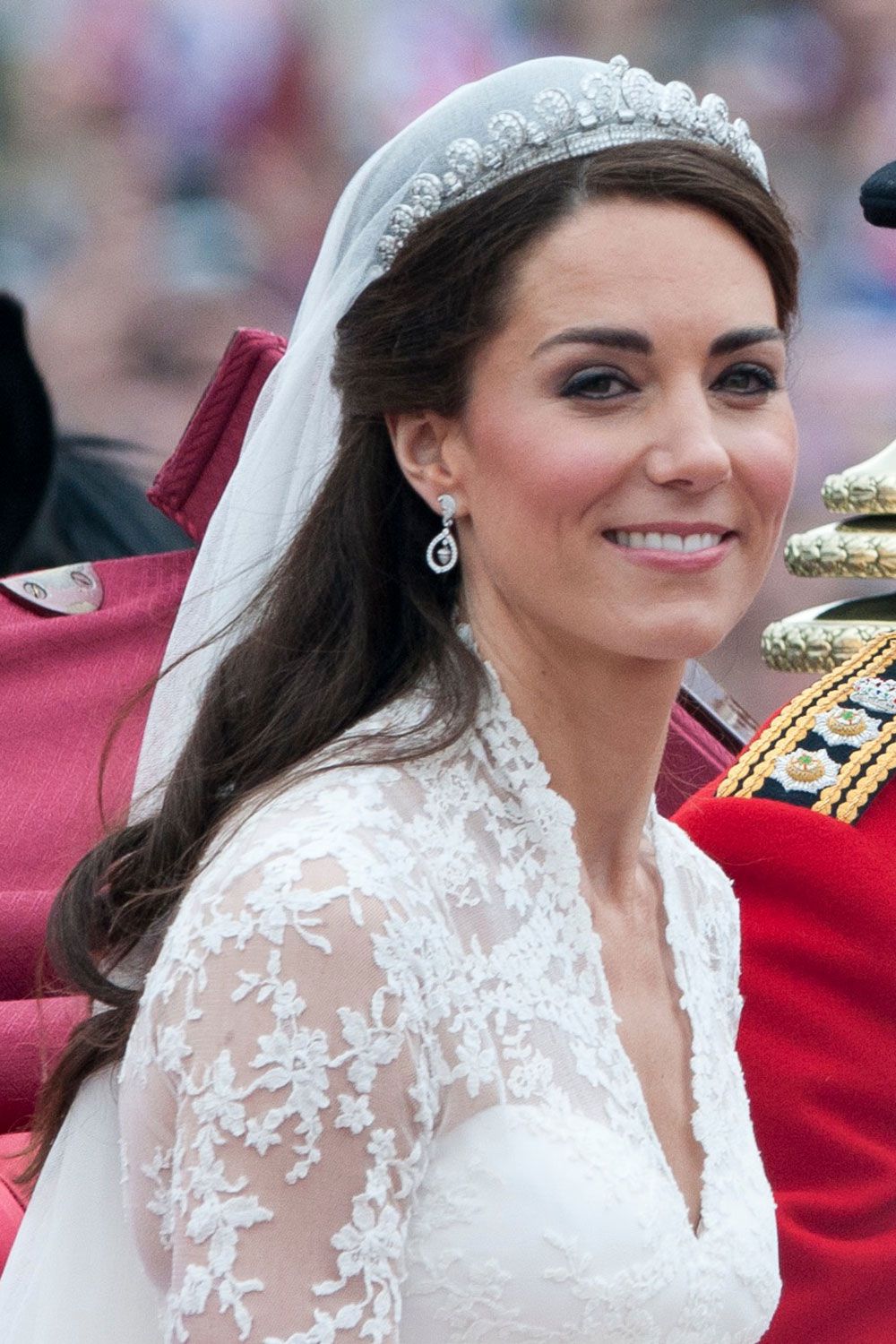
While the Duchess of Cambridge’s 2011 wedding look, with her regal Sarah Burton wedding dress and ‘done’ make-up appeared perfectly conformist, apparently one element of her look was a rebellion against royal request: her hairstyle.
Word has it that Kate’s half-up wavy hairstyle should have been a full up-do, according to tradition.
Advertisement – Continue Reading Below
In a new documentary about the royal wedding, William & Kate: The Journey, royal reporter Ashley Pearson claims that the bride was given official hair advice as such, but went against it.
“Royal sources tell me that the royals indicated very strongly to Kate that they would prefer her to wear her hair up for this very special occasion,” Pearson revealed.
“However, Kate had her heart set on wearing her hair down with long flowing curls, which is her favourite way to wear it and actually William’s favourite as well. They ended up compromising on her look.”
So, the bride’s hair was formal in the front, and romance in the back – and it worked. Well, they do say a marriage is all about compromise.

You’ll want to copy Kate’s velvet hair bow