



Category Archives: Marriage & Divorce
Eastern prelate urges 'prudence' on married priests
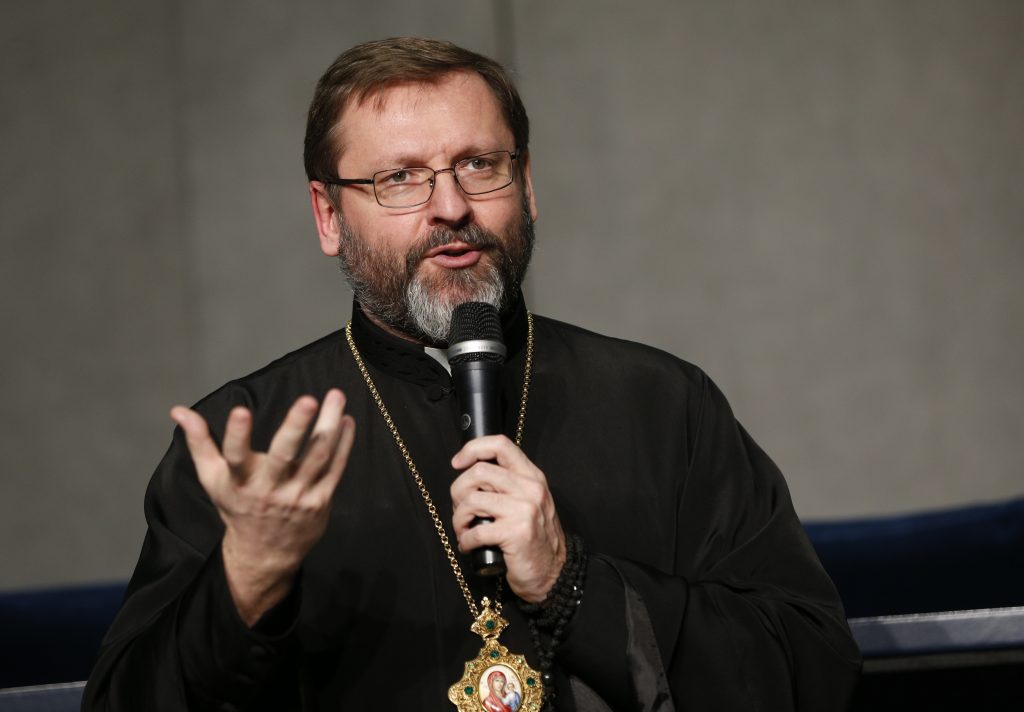
[Editors note: This is part two of a Crux interview with Archbishop Sviatoslav Shevchuk of Ukraine. Part one can be found here.]
ROME – So far there really haven’t been any great political battles during this month’s Synod of Bishops on young people, but when another group of 300 bishops or so gathers in Rome next year for a summit on the Amazonian region, some forecasts call for tension around a long-standing flashpoint in Catholic debate: Married priests.
Priest shortages are often terribly acute in parts of the Amazon, and some bishops from the area have long favored the idea of ordaining the viri probati, meaning tested married men.
Meanwhile in the West, some voices have revived the idea of a married priesthood as a response to the clerical sexual abuse crisis, arguing that marriage would provide priests the chance to express their sexuality in healthy and non-abusive ways.
Yet Archbishop Sviatoslav Shevchuk of Ukraine’s Greek Catholic Church, the largest of the 22 Eastern Catholic churches in communion with Rome that carry centuries of experience of married priests, has a basic message for his Western counterparts: “Not so fast!”
“If we must give advice, I would say that to remove celibacy from the priesthood will not resolve the problem. My experience is that there are holy priests who are married … this holiness, this maturity, is a great treasure, but it’s not a direct consequence of the state of life,” Shevchuk said in an interview with Crux.
Asked what advice he would give, the Ukrainian prelate, formally referred to as “His Beatitude,” was succinct: “To be prudent!”
Moreover, Shevchuk said, married priests create entirely new challenges in formation and priestly life, ones which debates entirely focused on a “yes” or “no” response often overlook.
“Often, our bishops are worried not only about the seminarian but also his girlfriend, and we’ve created a program for these women too,” he said. “Sometimes after two or three encounters they realize that they don’t want to be the wives of a priest. This can also make things more complicated.”
On other matters, Shevchuk:
- Praised the presence of young people at the synod: “They are the most vivacious nucleus of our group, which produces the most ideas and new solutions. So, it is a very important fact for the success of the synod.”
- Said there are few real tensions in the synod hall: “When you have in front of you a person who has needs, who needs to be accompanied, understood, cared for, a person to whom the Church today, as a good mother, is called to donate its spirit, this motherly warmth, it unites us all.”
- Said the Eastern churches haven’t yet been rocked by major sexual abuse scandals: “In a sense, we’ve been protected from the abuses of power and clericalism by the fact that, in the Soviet Union, our Church had no authority whatsoever.”
- Yet insisted that’s no excuse for complacency: “We must be careful not to lose our moral authority, because it is our only treasure. If the Church loses its moral authority in Ukraine, then our loss would be even more dramatic.”
The interview with Shevchuk took place Oct. 13 in Italian, and it was translated by Crux into English.
What’s your impression of the synod?
This is already my fourth synod. The first was on New Evangelization, in the time of Pope Benedict. At that time, I was named to the ordinary council of the synod, so I was one of those who prepared the synod, both the ordinary ones and the extraordinary ones. And now I participate in this synod as head of the Catholic Ukrainian Church ex ufficio.
I must say that my impression is very positive. Particularly the Instrumentum laboris, compared to the ones from other synods, it’s one of the best. Obviously, it’s a text destined to vanish, to die. Today we argue, we criticize, work in the small groups, but as a start it was very good.
The other very interesting part is the great participation of young people who feel like protagonists in this synod. In my small circle we have four young people, one from Australia, one from Nigeria, a girl from Russia and a girl from the Netherlands. They are the most vivacious nucleus of our group, which produces the most ideas and new solutions. So, it is a very important fact for the success of the synod.
The part which the pope set aside as a moment of listening has already taken place. But now we have to move forward, because to simply listen is too little. We need to discern and make some concrete decisions and get to work.
My impression is that in this synod there aren’t great tensions, great discussions. Is this your impression?
Absolutely. The topic itself, including the subjectivity of the young people, is awakening a paternal feeling in the heart of the Church and also among the synod fathers. It’s not about arguing over ideas, because this creates tensions, because everybody has different ideas. But when you have in front of you a person who has needs, who needs to be accompanied, understood, cared for, a person to whom the Church today, as a good mother, is called to donate its spirit, this motherly warmth, it unites us all.
Obviously, we come from different contexts. That which in one place is a pastoral emergency is not so in Nigeria, or in Ukraine. But the fact is that there aren’t great tensions. The synod is unanimous, it feels like one heart and one spirit. For this reason, I must say that the spirit of the participation in communion is also great. We share our opinions. And it’s also interesting that the young people present in the room react to each speech and take a position. You can sense if that which we say and think corresponds to their expectations. There’s an immediate response, there’s feedback. And this truly has created a very positive climate.
According to you, what are the great topics of this synod over which there’s a need to make decisions?
The question I would like to pose to the synod is an ecclesiological one. Up to what point is the Church an institution?
Why?
Because there’s a certain mistrust from young people towards institutions today. This we see in Ukraine when it comes to the government and other institutions. What young people today need is community. Obviously, the institutional form must be re-interpreted, because the institution is an instrument to the service of the community. Many young people feel abandoned by the family, by society, and there’s this great expectation that the Church will not abandon them. The Church must be a community where you can have the conditions to mature and develop, with education and formation both Christian and human.
It’s a very interesting time. I must say that for a long period of my priestly life, I was the formator in seminary. The issue of vocational discernment is central not only for the formation in seminary, but also for youth ministry.
This person who does the accompanying, this spiritual father, this spiritual councilor, has to be present in the life of every young person. Several bishops have said that we see few people capable of accompanying. How to promote this ministry that is a vocation within the Church’s ministry? According to me, the choices about the way to accompany must be pastoral.
The Church always, in my opinion, has to deepen the concept of the Church as a community that is generative. There’s a section of the document that speaks about the Church as generative, because the Church is a mother that generates. Through the grace of the Holy Spirit, it generates children of God and of the Church. But today, for many reasons, we’re becoming more and more a society of orphans. It’s fundamental to rediscover the maternal face of the Church that seriously takes care of its children.
Speaking about the maternal face of the Church, you know very well that, in many parts of the world, it’s difficult for young people to see this because of the scandals, particularly those of a sexual nature. Is this a problem for your churches too?
I think it’s an issue that is relevant for everybody because, regarding the issue of abuse, sexual abuse is only one form. There are many kinds of abuse: abuse of authority, of money, of trust, not only in the Church but in the culture in which we live. We’re not immune to these issues. For the moment, in our Church, at a global level, the issue of sexual abuse is not as dramatic as we have seen in the context of the Church in Ireland, Chile or the United States. In a sense, we’ve been protected from the abuses of power and clericalism by the fact that, in the Soviet Union, our Church had no authority whatsoever.
The only authority we had, and that we continue to have to this day, is a moral authority. Why? Because we were persecuted because of our faith. We were persecuted for that which we are. In this persecution, today we see authenticity emerging. Because to be a Christian in an atheist country is not popular, it’s to go against the tide.
Perhaps today, being a Catholic in Ukraine is not fashionable, but we’re Catholic. We’re truly convinced that we have a mission, to be witnesses of the unity of the Church. If we speak of Ukraine, in the 20th century there were so many abuses of power and trust, even within the Church, while in Western society we were placed by the Lord in a different situation.
But I must say that we too are pardoned sinners. We cannot say that we will be forever immune to certain problems.
Is there a fear that now that the situation for the Ukrainian Church has changed, because you can obviously be a Catholic in Ukraine, there’s going to be a “delay” and that all these problems that have affected the universal Church for the past 100 years will now become a problem also for you?
Yes. I believe that we have many things to learn from the Latin Church in many counties in the world. I’m in agreement that all these modern ways of living are beginning to arrive to Ukraine. Ukraine is a society in a period of a strong emancipation. For example, the sexual revolution that the West had in the 1960s is arriving in Ukraine only now. We’re conscious that, as Christians and as a Church, we’re challenged.
Nevertheless, I think that we can learn from the experience of the Church in Western countries. It can serve as a warning to us, not only to adopt certain practices and disciplines, but to be particularly attentive to the protection of minors, and to promote an integral education of the Church’s sexual moral education. We must be careful not to lose our moral authority, because it is our only treasure.
But, if the Church loses its moral authority in Ukraine, then our loss would be even more dramatic.
Could it be said that also in Ukraine the policy of the Church when it comes to clerical sexual abuse is that of zero tolerance?
Yes. We have also discussed this at our own synod, in September. We wrote a synodal letter to the pope, supporting the successor of Peter in his ministry and sharing his pain for the Church. We declared zero tolerance for these abuses and our commitment to protecting, working in favor of those who can be victims of any kind of abuse: of power, of trust, of conscience, sexual abuse, at the hands of any representatives of our Church.
Also, in each part of the world, our bishops belong to the Latin-Rite bishops’ conferences, so they adopt these measures of protection in their dioceses, according to the discipline of the country.
For us in Ukraine, together with the conference of Latin bishops, we’ve issued an instruction on how to proceed if a case of pedophilia is discovered. This document was produced at the explicit request of the Congregation for the Doctrine of the Faith. I would like to thank this Congregation that has asked us for this, even if for the moment we haven’t perceived a practical need in Ukraine. We have to learn from the Church in the West. We must be prepared, warned, and sensitized on this issue.
In February there will be a meeting in Rome with all the presidents of bishops’ conferences from around the world on sex abuse. Are there experiences that the Oriental churches can share with the Latin Church …
Yes. I will participate in this encounter. For me, it will be a great occasion of listening, of sharing with others. I will participate because this meeting is part of the zero tolerance policy that the Holy Father wants to apply in the most transparent way. It is also something that we want to adopt, not only as a policy, but also through concrete measures.
All the heads of the oriental churches will participate?
I hope so because in every organism of the Apostolic See, presidents of the bishops’ conferences and heads of the Oriental Churches are equal. For this reason, I think that I will have to participate ex-ufficio.
I must say that our Church also has some experiences also to share, because the great majority of our priesthood is married. The fact of having married priests does not mean that we’re immune against this evil. We know that, in the world, the great majority of cases of pedophilia take place in families. We need to create a culture of protection, of zero tolerance, not a system, that hides this evil.
I must say that, by the fact that they have their own children, our priests have a more natural relationship with children. They are often educators of their children and also of the children of those who attend their parishes. This experience of being father of one’s own family helps them to treat children in a healthy way. And the Church is called to help these children to mature.
As you have said, the vocation to the priesthood in the Ukrainian Church is a bit different because priests can marry. Do you have any recommendations for those today who ask the Latin Church to allow priests to marry?
To be prudent! If we must give advice, I would say that to remove celibacy from the priesthood will not resolve the problem. My experience is that there are holy priests who are married … this holiness, this maturity, is a great treasure, but it’s not a direct consequence of the state of life.
In the process of vocational discernment, it’s another challenge. It’s not easy to accompany a seminarian about what state, to be married or celibate, he should choose as he approaches priesthood.
At what point according to your rules do seminarians make this decision?
Right now, during their time in the seminary. Obviously, there are exceptions. Our seminaries accept only young men who are not married. This is because it is almost impossible to ensure a calm period of discernment during formation [after marriage]. If a married man entered seminary, they’d basically have to leave their family for six years.
I remember in the early 1990s, when our Church emerged from the underground, we accepted everyone in the seminaries, because there was a great need for priests. Every week, I saw with my own eyes the suffering of these families who were deprived of their father. This was a tragedy from a human perspective, a spiritual perspective, and also an economic one.
When I was the rector of the seminary, with the agreement of my bishop, I created a program for late vocations. If a father of children wanted to begin the path of formation to the priesthood, having a college education, we helped him live a community life in the seminary without making him leave his family. We helped him to to study and receive formation without leaving his profession, because he had to support his family. It was a very individual process, something we could do in our seminary. We were partially successful, because this program produced six priests.
Seminarians cannot marry while they are in the seminary. Nevertheless, in the second half of their studies, they often have a girlfriend. This is also a very delicate period. Relationships through email and skype are so strong, that sometimes during formation it’s hard to focus the attention of the seminarian in the community, because there’s someone from outside pulling on him.
They have to choose if they’re going to marry or remain celibate before the diaconal ordination. It often happens that a candidate who is called to be married, a father, has to wait a few years to find the right person. Many of our seminarians aren’t ordained because, after completing seminary studies, they come to Rome for advanced studies. Only after completing these studies can they be ordained. You can’t live as a married priest in a Roman college.
The crisis of the family touches priestly families too. Often, our bishops are worried not only about the seminarian but also his girlfriend, and we’ve created a program for these women too. Often, after two or three encounters they realize that they don’t want to be the wives of a priest. This can also make things more complicated.
So, to answer your question, we’re open to sharing our experience, but the decision has to be made by the Latin Church. I must say that this is not a topic of this synod, the issue of celibacy is not being discussed in the hall or in the small groups.
Emotional affair makes the workplace wobbly

Dear Amy: I have worked closely with a colleague since the beginning of our careers. We are both in our 30s and extremely close – she was there for me during my divorce, I attended her wedding, our kids have met and we do “non-work” stuff together.
She returned to work after a year off for maternity leave and something was different. We realized pretty quickly that we were actually in love with each other.
Though I am single, she is still very much married. We have been dancing around the issue, and have toed the line but never broken into a physical affair.
Ultimately, she has decided that in lieu of choosing between her husband and me, she is going to focus on her marriage.
Regardless of whether this love between us was mutual or one-way, we still work very closely together.
Do you have anything to offer as to how I should deal with working so closely with someone I very much want but cannot have?
– Work is Tough Enough
Dear Enough: Your characterization of her as focusing on her marriage “in lieu of choosing” between you and her husband sounds like a red herring.
You should assume that she has actually made this choice, and she is choosing him, and her family, over the personal destruction this affair could cause.
This is a very tough situation, but people do survive from emotional love affairs.
It is not easy to roll back this sort of intimacy, but it will get easier with time. You have a large emotional gap to fill. You have to “behave” your way out of this, and your feelings will follow.
Read more:
For now, you and she should not communicate outside of work. Talking with her about your mutual feelings reinforces the emotional intimacy.
If working together is triggering too much emotion or sadness for you, you should pursue different assignments, which will take you into other professional and personal realms.
You need to build up a life that is separate from this person. You should force yourself to meet new people. Get out there. Take up a new activity outside of work. Give other women the opportunity to get to know you.
Dear Amy: My wife has a friend, “Donna.” They’ve been close since college.
Donna is high maintenance and selfish, but I’ve always been nice to her, and have no trouble interacting with her.
I do not like the way Donna treats my wife. She is demanding, completely self-centered and domineering.
My wife works full time. We have two children. Donna works from home and is single. Everything is based around Donna’s scheduling, and if my wife objects, Donna flips out.
My wife has cried many times over something hurtful Donna has said to her. When my wife doesn’t go along with Donna, she tends to cancel all future plans, ignore all communication and wait for my wife to come crawling back, which she always does.
My wife is planning a group trip for my 40th birthday. I’ve asked her not to include Donna on the invite list. She is very concerned about how Donna will react and what this might do to their friendship.
How do I get my wife out of this cycle? How can I make her see that this relationship is bad for her?
– Worried Husband
Dear Husband: You should not feel obliged to invite your wife’s bully to join you on your 40th birthday trip. Hold firm on that.
Otherwise, you should determine not to give this relationship any attention at all.
You will not get your wife out of this cycle, because you are a small part of it: “Donna” bullies your wife. She cries to you. You react either with sympathy or annoyance. You two discuss Donna at length. This relieves some of the pressure. Time passes, and the cycle begins again.
Your wife is going to have to determine for herself that she is sick of being bullied and burned.
Dear Amy: I’m responding to the question from “Not So Fat,” whose mother bullied him over his weight.
After a particularly nasty visit to my father-in-law, my husband and I made a plan: At the first nasty remark during the next visit, we just got up, walked out of the house and drove home. By the time we got home, he was calling to apologize. The visits got much better after that.
– Success!
Dear Success!: I highly recommend this quick and quiet exit. I call it, “Gee, look at the time…!”
You can contact Amy Dickinson via email: askamy@amydickinson.com. Readers may send postal mail to Ask Amy, P.O. Box 194, Freeville, NY 13068. You can also follow her on Twitter @askingamy or “like” her on Facebook.
Read or Share this story: https://www.freep.com/story/life/advice/2018/10/22/emotional-affair-work-advice/1669400002/
20 Tips For Singles From Happily Married Couples

Matthrew 6:33 says “But seek first His kingdom and His righteousness, and all these things will be given to you as well.” First and foremost, you should steep your life in God-reality, God-initiative, and God-provisions. You have no reason to worry about missing out or not being provided for. When you devote your life to God, you quickly find that all your everyday human concerns will be met. This includes finding a spouse and relationship later on in life. Prioritize God, getting to know Him, and living out a life for Him and the rest will fall into place in His perfect timing.
One problem many singles have is being impatient. They are so excited to find the love of their life that they sometimes blind themselves to reality. They miss out on important red flags in a relationship, or justify the person’s issues. However God does not want us to settle for someone mediocre. Each of us is much more valuable that. While we won’t find anyone that is 100 percent perfect, you should have some personal non-negotiable standards. For example, you might want someone that wants to someday have children like you do. Don’t give that dream of having a family up just because you want to settle with someone that doesn’t have the same values.
While you shouldn’t settle for a partner, you also should be open and accepting of other people for who they are. When you get into a relationship, you should never manipulate your significant other into someone that they aren’t. No matter how much you try and change someone, at their core there are certain things that they can’t, and shouldn’t, have to change to satisfy you. Remember that God made us all free individuals, and built each of us to be beautiful. There is value in each of us. Don’t waste your time trying to force someone to fit the mold of who you want in a partner. They might just not be the one for you.
If it’s God’s Will for you to marry, it will happen perfectly in His timing. Until then, don’t stress or worry. Instead, enjoy and savor your time being single. Live in each moment and be actively present. Only focusing on your future will cause you to miss out on some great moments that are happening right now. Have fun spending time with friends and family, pick up a new hobby, or focus on your career. Don’t be that person that swipes right and left for hours on crappy dating apps, ignoring the people that already do care about you.
When looking for that future spouse, find someone who will stand with you and be in your corner no matter what. Through the tough times, the good times, through sickness and in health you want someone that isn’t going to forget the vows they made. True commitment from others can be hard to find in today’s society. We are often presented with temptation, and someone that isn’t 100 percent committed might be susceptible to other options. God wants you to be with a person that is always dedicated to you, no matter what crazy situations life throws your way.
Being overly prideful is the thief of love. When not kept in check, pride can even turn into narcissism. This is not how great relationships are developed. A relationship takes a lot of patience, love and work. They have to be built up on a strong foundation. When you are a prideful person, this makes building solid relationships difficult. You won’t be able to find the relationship God has for you this way, and may end up single longer than you had hoped. Be proud of your accomplishments in life, but don’t think that you are better than anyone else.
The Lord created intimacy between two people in marriage to be a beautiful gift. When you plant the seeds of purity in your single life, you are able to reap the benefits and blessings from this harvest all throughout your marriage. You will one day get to experience what it really means to be in love and connected with someone else. When you are intimate before marriage, you not only go against what God has planned for you, but you deteriorate what makes it special. Save yourself for the person you marry and you will be very happy you did.
The main thing that sours a marriage or any relationship is when people stop doing the little things for one another. Marriages deteriorate every day because people stop putting in effort. Don’t get stuck in a rut where you don’t think you need to show your passion, commitment or motivation. Showing gratitude towards others, especially in romantic relationships, is important because appreciating the little things shows the other person that you care about them. When someone does something nice for you, think about how special you feel. Learning this before you get into a relationship will help you be set up for success long-term.
To all the singles desiring to be married and raise a family, you must first get comfortable with the job of washing feet. This is advice you may have heard before, but didn’t fully understand. What married couples mean when they say this is that change isn’t easy. It’s dirty, messy, and can be incredibly difficult. You have to get comfortable with the idea that change is necessary in a relationship, and just a part of life. This is something you learn more as you grow up, so don’t stress if you aren’t as adaptable to change as you want to be yet. Be aware of it and work towards the goal.
Relationships fail. Sometimes it’s an amicable split, where two people realize they just aren’t meant for each other. Other times it’s a horrible fall out that leaves both parties feeling broken, helpless, angry and hurt. Oftentimes we carry around the pain of past relationships instead of resolving them and letting it go. We bring our lack of trust into new relationships, and penalize our new partner for things someone else has done. This will only make things harder. Instead of always thinking a relationship will blow up in your face, you have to learn to let go of the past to give new partnerships a real chance.
If you are looking for everlasting happiness, understand that you will never find it in another person. True joy in marriage is found when two whole people are joined by God, and through Him they work out their marriage together. They enhance each other, rather than complete each other. You can never rely on another person to make you happy. This only sets you, and the other person, up for failure. They ultimately will do something to hurt you because no one is perfect. Another person cannot fix your depression or low self-confidence, for example. This is something you need to work on yourself with God.
You have to be willingly committed to walk with Jesus before you make the decision to walk down the aisle. Jesus wants us to be committed to Him, and understanding of how He lived His life here on earth. When we study His actions, we learn how to be the best version of ourselves. We want to strive to be more Christ-like, because it sets us up to be great partners in relationships. We learn the values of grace, kindness, and the like that Jesus showed others. If you have questions about how Jesus lived, consult with a pastor or other trusted Christian leader.
Proverbs 19:14 says “Houses and wealth are inherited from parents, but a prudent wife is from the Lord.” Many single Christians get nervous that God is not going to show them the person they are supposed to marry. The truth is, though, that God will always provide for His children. God has shown us time and time again that He keeps His promises. There is no reason to stop trusting Him now. When you feel nervous or unsettled, take up your Bible. Remind yourself of the gifts God has already blessed you with, and you will help restore a little more trust.
While God will provide for you, that doesn’t mean you should live your life being passive. You aren’t going to find your spouse if you sit around at home all day. Sometimes you need to get out of your comfort zone and put yourself out there. This doesn’t mean you need to spend your time looking for your next relationship in a club or bar if that isn’t your thing. There are other great ways to meet new people. Attend a new Bible study, a hobby group, or rec league. Do something you enjoy doing, because you will find more like-minded people that way.
For Christian singles, it is important that they don’t allow cultural influences to shape or motivate their dating journey. You need to stay true to yourself and to the Lord, rather than what the dating trends currently are. For example, “ghosting” another person, or simply cutting them off from your life with no explanation, is not an action that Jesus would approve of. You can gently tell someone you are no longer interested rather than ghost them. Don’t conform to how others are trying to dictate the dating world. Do what you feel comfortable with, and you will save yourself a lot of heartache.
You have to know who you are before you can evaluate someone else’s compatibility with you. What are your goals? What are your values? How important is your faith and how important is it to you that your partner shares that faith? Remember, confidence attracts, and it’s much easier to be confident when you know who you are and what you want in life. Take time while you are single to get to know who you are and where you want to go in life. This will help you from wasting time with people that aren’t a good match for you.
Trying to maintain a life-long relationship is impossible without the Lord. You and your significant other both need to share a trust in the Almighty. Are you both willing to present your problems and difficult situations to Him for help when the time arises? Are you willing to spend time at church or in a Bible study together? No relationship will be strong without keeping Jesus at the center of it. When you are looking for your next partner, make sure they are someone that wants to enhance your faith in God, rather than strip you of it. You need to be a person that motivates your partner to become closer to God as well.
God has some passages in the Bible that explicitly spell out the meaning of love. One of the most popular is found in 1 Corinthians 13:4-7 which says: “Love is patient, love is kind. It does not envy, it does not boast, it is not proud. It does not dishonor others, it is not self-seeking, it is not easily angered, it keeps no record of wrongs. Love does not delight in evil but rejoices with the truth. It always protects, always trusts, always hopes, always perseveres.” These are some great guidelines on how we should love one another, both in friendships and romantic relationships. If you don’t understand what a healthy love is, then you won’t be able to give it out to someone else. It also makes you susceptible to accepting fake love.
Learn to be a “fruit” inspector in order to discern the relationships you allow in your life. God isn’t going to tell you to be with someone that doesn’t treat you right, doesn’t follow Jesus, or the like. Those should be immediate red flags that the person isn’t God’s choice for you. If you are having difficulty understanding who you are supposed to be with, speak with God. Pray to Him, read His Word, and ask for a sign. Consulting with Him will give you guidance on what next steps you should take. God is all-knowing, so trust in Him.
Communication is incredibly important in any relationship, including dating. When you are starting to get to know someone, you need to be honest and direct with them. If they ask you if you want children someday, don’t lie in the hopes of giving the “right” answer. This is not the way God wants us to find the person meant for us. You will only end up wasting your time on someone that isn’t a good fit for you, and doing so hurts the other person as well. Matthew 5:37 says “simply let your yes be yes, and your no be no.” This means you need to be intentional with your words, and be honest with what you say to others.
Being a single Christian can be hard. There are times you think you will never find the one God has for you, but with a little patience you will realize God will bless you with the person you need. Don’t spend time stressing over what might happen, but instead be present in your life now. Everything else will fall into place.
Young couples told to seek advice
“These days, many people have come out to destroy the sacrament of Holy Matrimony”
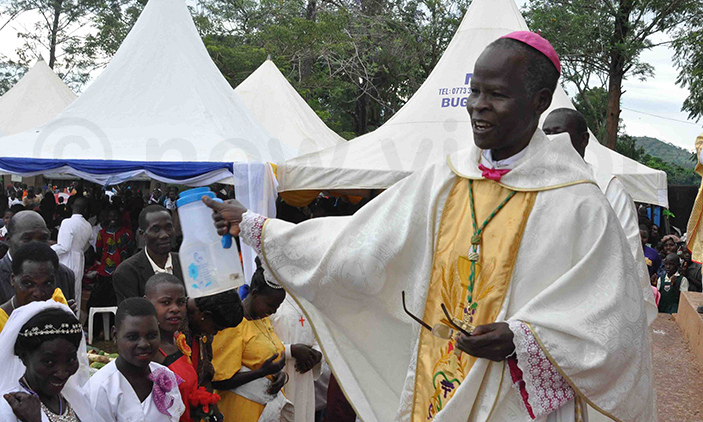
Bishop Matthias Ssekamaanya sprinkles holy water on members of the congregation. Photo by Juliet Lukwago
Young couples have been advised to seek advice to be able to succeed in marriage.
The advice has been sounded by the Retired Bishop of Lugazi diocese, Matthias Ssekamaanya.
“Baganda say senior’s eye (eriiso ly’omukulu). I know these couples have experiences and have been in marriage for many years than you, they face challenges but have survived and are still in their marriages,” Ssekamaanya said.
He noted that because of their education status, young couples ignore old couples’ counsel thinking they cannot offer much.
Ssekamaanya made the call on Friday at Our Lady of Assumption Church, Bbulo Parish in Mpigi district, during Holy Mass to commemorate parish day and one of the couples celebrated 46 years of marriage.
Ssekamaanya was assisted by Parish Priest, Fr Francis Xavier Mayinja Jr, his curate Fr John Mary Ssenfuka and Fr Sirus Kikulwe among others.
“Matrimony is the marriage contract between Christians raised by Christ to the dignity of a sacrament. But these days, many people have come out to destroy the sacrament of Holy Matrimony,” he said.
He advised couples on the essence of prayer, with the reward of children, as it enhances the true meaning of Holy Matrimony.
He decried the action of some parents who instead of nurturing their children, end up neglecting them.
Ssekamaanya also rapped some men that abdicate their duties and are not caring for their children. He said it is a pity that the burden is left to mothers.
The prelate said that Catholic Church dedicates the months of May and October as months of the Holy Rosary and is a good time to commit to praying the Rosary every day.