



Category Archives: Marriage & Divorce
3 controversial marriage rules from Pastor Adeboye & his wife

With Pastor Enoch A. Adeboye’s wife, Pastor Mrs. Foluke, recently causing a stir with her marriage advice, we take a look at three times the couple has offered controversial marriage requirements.
Here they are:
Marry a prayer warrior not a lazy woman
In 2016, Pastor Adeboye become a trending topic after offering this marriage advice at the Redeemed Christian Church of God (RCCG) annual convention.
During this event, he said, “Don’t marry a girl simply because she can sing! In the choir, there are some people that can sing but they are fallen, angels! Marry a prayer warrior! If a girl cannot pray for one hour, don’t marry her.”
Pastor Adeboye added, “Don’t marry a girl who is lazy! Don’t marry a girl who cannot cook, she needs to know how to do chores and cook because you cannot afford to be eating out all the time.”
ALSO READ: What you need to know before getting married in Pastor Adeboye’s church
Do not meet your spouse online
In March 2017, the man of God made headlines for making a ‘controversial’ statement on relationships.
Speaking at a singles programme in one of the RCCG parishes in Lagos, he said, “Let me tell you clearly Let me tell you clearly if you get a wife through the Facebook, you would lose her through the Youtube. You can quote me. Any married that is concocted through the Facebook is going to crash through the Youtube. No doubt about that.”

This statement got major backlash from social media users. Pastor Adeboye later pleaded with his members to stop putting up videos of him.
“Spare me the problem. I’m not talking to you so that you can put me on YouTube,” he said.
Go for a genital test before marriage
Earlier this year, Pastor Adeboye’s church ordered couples to go for a genital test before marriage. Prospective husbands were encouraged to register with a “trusted government approved hospital” for the medical examination.
This new requirement was announced in a memo dated 10 May 2018, and signed by Pastor J.F Adesola, Assistant General Overseer (Admin and Personnel).

The goal - to put an end to “reoccurring cases of marital crises resulting from falsehood especially in the case of undeclared or unconfessed reproductive/genital status”.
Once again, this was met with mostly negative reactions.
I Tested 'Love Languages' and 3 Other Relationship Books on My Marriage
My husband likes to show me online clips of baseball replays. He also enjoys sharing aerial shots of outer space. And on occasion, he’ll run down his fantasy football scores. TBH, I’m often completely uninterested and am inclined to tell him so. NBD, right? But according to psychologist and relationship researcher John M. Gottman, Ph.D., these moments might mean more than I’d ever have thought—and turning away could be a predictor of divorce.
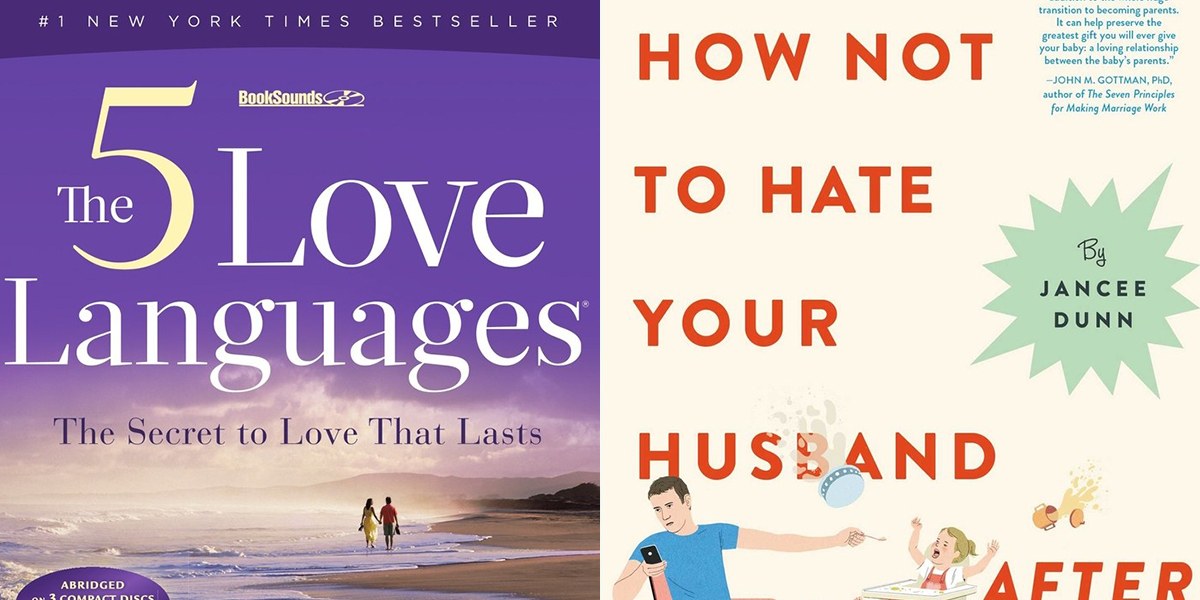
That’s one of the most useful and interesting things I learned when I decided to read four of the most popular relationship books on the market. I went to the library and took out Gottman’s seminal The Seven Principles for Making Marriage Work, the classic ’90s manual Men Are From Mars, Women Are From Venus, modern classic in the making The 5 Love Languages, and the hilarious if not as well known as it should be How Not to Hate Your Husband After Kids. After poring through these volumes, I got some interesting tips, asked myself some probing questions, and digested a lot of B.S. that didn’t do squat for my marriage of nearly 15 years.
Here’s how my marriage self-help experiment went.
1. The 5 Love Languages by Gary Chapman
With over 11 million copies sold and eight years as a number-one New York Times bestseller, this book has become a favorite among the book-club circuit. Chapman says that after 30 years of marriage counseling, he determined that there are five emotional love languages each individual responds best to: words of affirmation, acts of service, receiving gifts, quality time, and physical touch.
It’s clear that the Love Languages paradigm is appealing to couples hoping to improve their relationship, but—to me—this book read as if Nicholas Sparks were dolling out marriage advice. I couldn’t get past the flowery language that often suggested “filling up your love tank.”
While it makes for a great-selling book, I don’t think that complex humans can so easily fit into one box. Why can’t we choose to be affirmed and value physical touch and desire a fancy gift on occasion? I couldn’t pinpoint a box for Nate or myself, which made the whole premise fall flat off the bat.
That said, I appreciated that Chapman’s advice really boils down to listening to what your partner needs to feel happy. So we basically skipped the part where you have to pick a language and have tried to put some of his lessons into practice based on instinct. For example, pulling from the advice for people who need words of affirmation, we’ve worked to practice suspending complaints and instead give compliments and expressing verbal appreciation. And Chapman’s right: The backyard gets clean faster with a compliment than a complaint. Or, as my momma says, you catch more bees with honey than vinegar.
The takeaway:
This was at best a good reminder to communicate honestly and compassionately with the one language that matters in our relationship: English.
2. How Not to Hate Your Husband After Kids by Jancee Dunn
Confession: I don’t have kids and I don’t hate my husband. But the title of this book was so intriguing that I had to put it on my list. I loved Dunn’s whip-smart voice and appreciated that her solutions to problems were backed up by professional solutions and studies. Plus, as a reader, you feel totally immersed in the author’s life—as if you are going through her marriage struggles right along with her.
Some of Dunn’s problems, like feeling overwhelmed with responsibility and squabbling with her husband about chores, are not reserved for those with children; I could easily relate. We got to follow along with her page-turning experiments (like having sex every day for one week) and read about the honest outcome. Sometimes she failed and other times she succeeded, which is what marriage is all about. Reading about her marriage travails helped me and Nate identify similar patterns in our own relationship and start conversations about things—like how we eat dinner in front of the TV too often or that we tackle problems better when we’re fresh in the A.M.—that we might not have noticed or talked about otherwise.
Dunn honestly articulated how marriage can be affected by having children. (In Gottman’s research, he found that two thirds of couples underwent a precipitous drop in marital satisfaction when they became parents.) I think that while this book is marketed to parents and specifically to mothers, it’s a great read for those who might be on the fence about starting a family. While it likely wasn’t her intention, Dunn’s honesty and candor made us feel comfortable in our decision to be childfree and helpfully provided solutions to some of our own marital problems.
The takeaway:
Our problems are normal and manageable with some communication and appreciation for each other—and I’m glad we’ve chosen to be child-free.
3. Men Are From Mars, Women Are From Venus by John Gray
If the wear and tear of a library book are any indication of its success, this one hits it out of the park. Men Are From Mars, Women Are From Venus was the wildly popular self-help book from the 1990s that predicated marital success on understanding the fundamental differences between the sexes. The book dishes out advice in cheeky language that describe men as Martians and women as Venusians. Twenty-seven years later, this book feels not only antiquated but sexist.
I’d put this book up there with Fifty Shades as the top of my hate-reads. In one example, Gray describes men as having the desire to problem-solve and give advice to women, while women just want to feel heard. He even states that men are more goal-oriented. In our marriage, the opposite is almost always true.
He also says that men need to let women be irrational while women need to let the men ignore this and retreat to their “caves.” As much as this book irritated both of us, it made us realize that our marriage is much more equal than would be predicted by standard gender stereotypes. And while parts of our everyday life often fall along gender norms, we’re partners and understand that being sensitive is not feminine just like my intricate to-do list is not a man’s job.
The takeaway:
Nineties fashion might be back, but there is nothing cool about this retro attitude to gender roles in relationships.
4. The Seven Principles for Making Marriage Work by John M. Gottman, Ph.D.
If there’s a relationship bible, this would be it—and for good reason. The Seven Principles for Making Marriage Work has provided a blueprint for successful relationships and been adopted by countless therapists for years. Gottman has studied couples in his “love lab” at the University of Washington since 1986 and spearheaded what’s considered the most extensive and innovative research in marriage and divorce to understand why marriage is often so difficult and why some relationships click while others split.
Gottman says that what makes a marriage work is surprisingly simple and that happily married couples aren’t smarter, richer, or more psychologically astute than others. But in their day-to-day lives, they have hit upon a dynamic that keeps their negative thoughts and feeling about each other (which everyone has) from overwhelming the positives ones. He calls couples either “masters” or “disasters,” and this book is a roadmap (with great real-life examples) as to how to be the former.
When Nate is trying to get me to pay attention to his boring boy stuff on the Internet, he’s putting forth what Gottman refers to as a “bid”—a sign of needing interest and support. In his book, Gottman uses this example: A husband casually says to his wife, “Look at that beautiful bird outside!” The wife, who perhaps is reading a page-turning novel (or marriage book?!), has the choice to “turn toward” her husband and go to the window or “turn away” and ignore him. While this bird-bid may not seem like a big deal, it can reveal whether the couple is in mastery territory or heading for the big D.
One paradigm that really stuck with us was the “repair attempt.” In the book, a happily married couple was having a fight, and in the middle of the argument, the wife playfully put her hands on her hips and stuck her out tongue to mimic their child, causing them both to pause and laugh. Gottman says that this action—silly or otherwise—prevents negativity from escalating out of control and is a secret weapon of emotionally intelligent couples. It can be difficult to be silly amid a heated discussion, but we’re learning that a funny armpit fart noise or even a time-out really helps to diffuse an argument.
Another favorite example was called “fanning the flames,” which sounds hokey, but simply boils down to acknowledging positive aspects of your partner. Since reading this book, we’re not afraid to thank each other for anything and everything. In fact, it may seem like we’re going overboard, but I love when Nate thanks me for cooking dinner (and complimenting something I’ve made a million times) and he appreciates when I noticed he’s taken out the garbage or walked the dog when I have a deadline.
The takeaway:
There are so many valuable real-life lessons that resonated with us in this book (we even bought the workbooks after reading it!) and a lot of it boiled down to being kind, which anyone is capable of doing.
Anne Roderique-Jones is a freelance writer and editor whose work has appeared in Vogue, Marie Claire, Southern Living, Town & Country, and Condé Nast Traveler. Twitter: @AnnieMarie_ Instagram: @AnnieMarie_
Amy Dickinson: Family member shuns mixed-faith wedding
Dear Amy: My son is getting married in a few weeks. We are Jewish (although not religious), and my son is marrying a lovely Christian girl (also not that religious).
They are having a Jewish ceremony with a reformed rabbi as their clergy.
We parents are very happy and proud.
My nephew on my husband’s side (his brother oldest son), RSVP’d to the wedding that he was not coming “with regrets.”
My brother-in-law told my husband that his son wasn’t coming to the wedding because the son is an Orthodox rabbi (although currently not a practicing rabbi) and he couldn’t possibly go to a wedding of mixed faith.
He sent no card, no well wishes, nothing. And the RSVP card came a week late.
So basically, he chooses his religious beliefs over family, and is snubbing us.
How would you handle this? Should we never speak to our nephew?
Should we refuse to attend any future event that he might invite us to? — Excluded
Dear Excluded: There are ample examples of people of all faiths refusing to attend weddings or other religious ceremonies, for a variety of reasons. The list justifying this exclusion for Catholics is several items long. And even if there are actual religious reasons or justifications for refusing to witness this marriage, declaring this seems less about living out one’s values, and more about shunning people.
This behavior is always about the person doing the excluding, and not about the people being excluded.
It would have been very easy for your husband’s nephew to simply send his regrets regarding this wedding ceremony. Instead, he put the word out that he is actually rejecting their marriage.
There are natural consequences to excluding family members. One consequence is for family members to want to retaliate, or behave as he has. But should you? No.
You should be honest: “We heard from your father why you refused to attend your cousin’s wedding, and we want you to know that we are upset.” That’s it. There is some likelihood that he won’t care in the slightest how you feel.
Dear Amy: My mom has known her best friend “Maxine” for over 30 years.
Even though Mom and Maxine work similar jobs with similar pay, Maxine is financially comfortable due to a family inheritance, while Mom struggles to make ends meet because of poor financial decisions and no planning.
Whenever the two of them go out to eat or to a movie, Mom always expects Maxine to pay for the both of them. Mom says this is because, since Maxine is the one with plenty of money, she should be the one who generously pays for everything. Maxine usually does pay, and Mom never returns the favor.
I’ve told Mom that it’s not right to expect Maxine to always pay. Mom says that I just don’t understand how it works. I disagree.
Of course, Maxine can be generous with her money if she likes, but I think it’s presumptuous and rude of Mom to treat Maxine like an ATM just because she has more money. What do you think? — Distressed Daughter
Dear Distressed: I think your problem with your mother runs deeper than her relationship with “Maxine.” You obviously believe that she has squandered her own earnings; I assume you are worried about her financial future.
Your mother’s relationship with her friend is her own business. Prosperous friends are sometimes quite happy to pick up the check with no hard feelings, financial reciprocation or strings attached.
If you are worried that your mom will turn to you as her own personal ATM post-retirement, then this is an important issue, and in this case, your mother’s choices become your business. If you want to weigh in on her business, this should be your focus. Maxine might not be there forever.
Dear Amy: “Confused in Colorado” was griping about his lady-friend’s babysitting commitments for her kids interfering with their time together as a couple.
He never said that his friend didn’t want to do this, only that he thought her daughters were taking advantage of her.
I’m glad you pointed out that she had basically taken a job and that he should find useful ways to use his time. He sounded selfish. — Active Gran
Dear Gran: I believe that the last-minute nature of some of these commitments was getting under “Colorado’s” skin. Yes, his friend has basically left retirement to work. The two of them should develop a more predictable schedule.
You can contact Amy Dickinson via email: askamy@amydickinson.com. Readers may send postal mail to Ask Amy, P.O. Box 194, Freeville, NY 13068. You can also follow her on Twitter @askingamy or “like” her on Facebook.
Romanians vote on changing the definition of marriage

BUCHAREST, Romania (AP) – Romanians were voting Sunday for a second day on a constitutional amendment backed by the influential Romanian Orthodox Church that would make it harder to legalize same-sex marriage.
The conservative Coalition for Family initiated the referendum and Orthodox priests during Sunday services encouraged the faithful to vote.
The proposed amendment would change the definition of family in Romania’s Constitution to make marriage a union between a man and a woman instead of between “spouses.” Same-sex marriage is already illegal in Romania.
The Central Electoral Bureau said 11.67 percent of voters had cast a ballot by lunchtime Sunday in the two-day referendum. The vote requires a 30 percent turnout to be valid.
Concerned about the low turnout, Patriarch Daniel on Sunday called on Romanians who hadn’t vote to “vote before it’s too late.”
“We call on you to vote, to have this honor, to demonstrate this freedom and right, and to receive God’s blessing for all his good works” he wrote on the basilica.ro website.
Opponents say the new constitutional language could make LGBT people feel more like second-class citizens and could discriminate against non-traditional families. They also say the amendment is unnecessary since Romanian civil law already says that marriage is a union between a man and a woman.
In the village of Adunati-Copaceni, south of Bucharest, the capital, only 62 people had cast their vote by midmorning out of a total electorate of 1,147.
Priests leading worship at St. Mary’s Church encouraged the congregation to vote. Retired farmer Ana Buturgianu, 69, said she’d heed that advice as did Andrei Aurelian, a 53-year-old cashier.
“The vote is for us and for our children. It’s normal to have a man and a woman, not two men together,” Aurelian said.
But Bucharest resident Marin Soare, 50, who was cycling through the village Sunday, was boycotting the vote, calling it “a waste of money.”
“We already have traditional families in Romania and have done so for 2,000 years,” he said. “And there’s always been same-sex relationships.”
Alex Hartan, 23, a hemophiliac who relies on an electric wheelchair, said he was opposed to legalizing same-sex marriages but thinks the traditional family is not under threat in Romania.
“I can’t vote in any case, as I can’t get into the polling station with my wheelchair,” he noted.