With drinks, dinner, movie tickets, cab fare, a haircut and new clothes, dating can cost a fortune. The average single American spent $1,596 on dating in 2016, according to a survey by Match. Men spent $1,855 on average, and women spent $1,423.
And in the era of endless dating apps, young people are spending more time on dating than ever before — one survey found millennials spend 10 hours a week swiping through suitors.
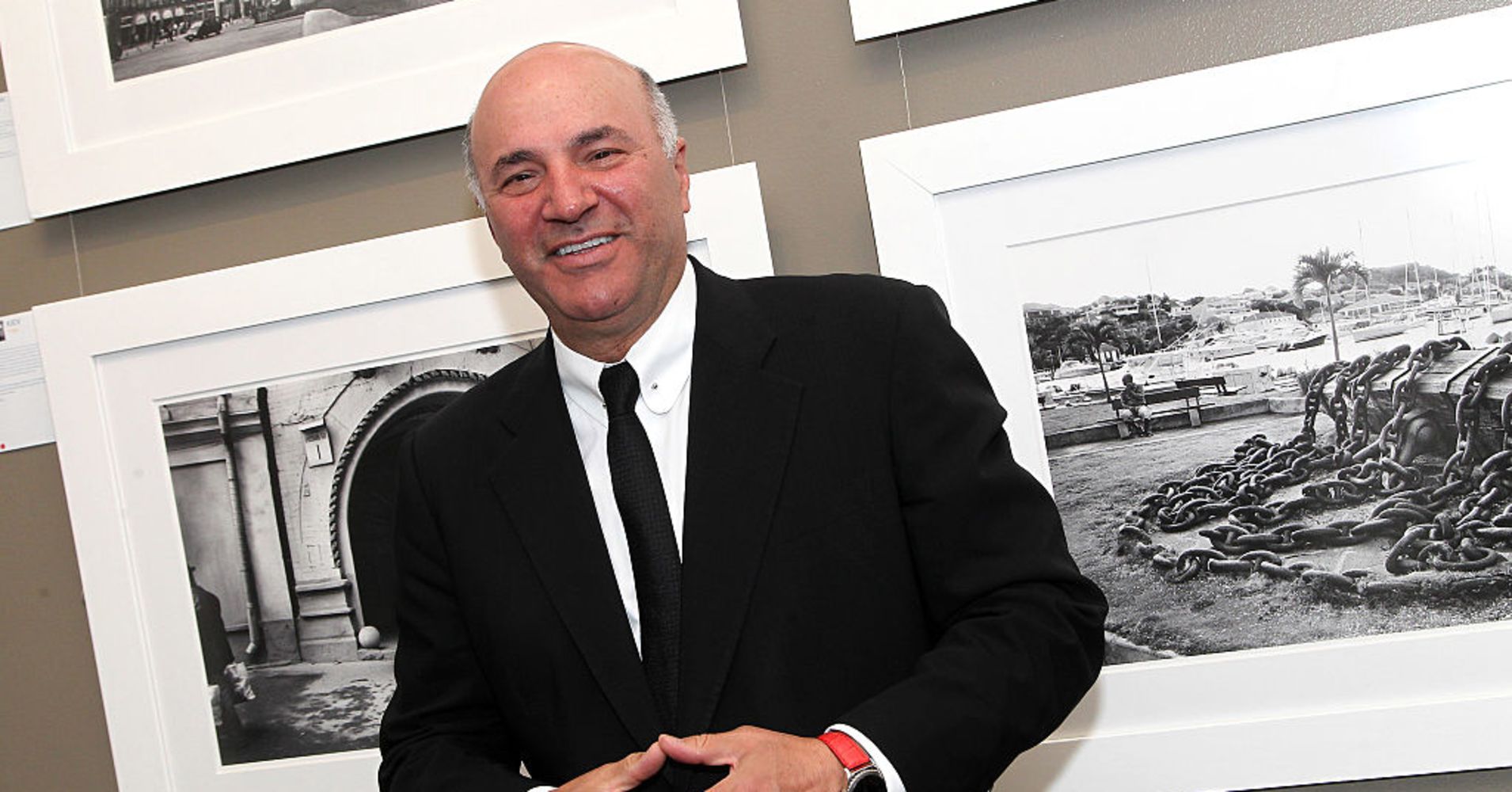
For young people searching for their soul mate, Kevin O’Leary, personal finance author and investor on ABC’s “Shark Tank,” has a word of advice: Think of dating like an investment, and make sure it’s one that will pay off.
“You’re going to spend money and you’re going to spend time [on dates], so look at that significant other in the context of, ‘Do I want to spend time with them?’ And, ‘Do I want to invest money in them?'” O’Leary tells CNBC Make It.
“If it doesn’t look like a good return is there, don’t spend the money,” he says. “Move on, meet somebody else.”
But until you’re sure about the other person, there’s nothing wrong with inexpensive dates, O’Leary says — you can be frugal without looking cheap.
“If you think about dating on a budget, because when you’re starting out you don’t have a lot of money, you’ve got to be crafty,” O’Leary laughs.
If you plan to eat out on the first date, “make it a low budget restaurant,” he suggests.
Or, if dating is high priority, look to your budget to see where else you can save instead, suggests personal finance expert Dayana Yochim. “What else are you spending on that’s not bringing you joy, or not bringing you closer to your life goals? Cut back there,” Yochim tells The Washington Post.
After the meal, if you’re interested in the person, pick up the check, advises O’Leary. (Though according to etiquette expert Lizzie Post, the great-great-granddaughter of Emily Post, “it’s the person who does the asking who should do the paying,” Post tells CNBC Make It. “Or at least who should be prepared to offer to pay.”)
With later dates, consider low-cost ideas like taking a walk — or cooking, says O’Leary. On his second date with now-wife Linda in 1982, the pair made dinner at his apartment.
“I went to the grocery store and bought a bunch of stuff that would be really hard to chop up so we could do it together in the kitchen,” O’Leary says. “We had a great time and we got to know each other a little bit.”
Ultimately, for O’Leary, love isn’t just about what the heart wants — it’s also about setting yourself up for success.
“The whole idea is to remember you’re building for your future. Don’t get into debt, save, save save and invest,” he says. “It’s a fantastic way to protect yourself down the road.”
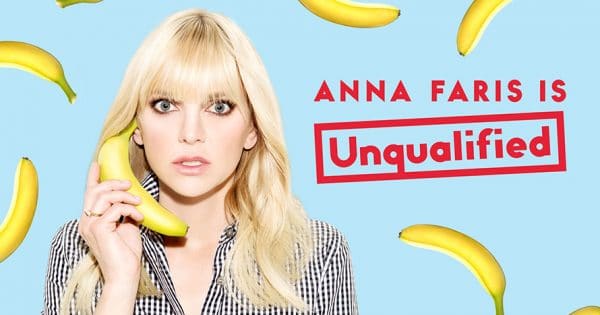
If there’s anything people in relationships want, it’s iffy advice from perfect strangers. Now, broadcast radio listeners across the country will be able to tune in for unsolicited and highly questionable dating advice, thanks to a partnership between Anna Faris and iHeartMedia. The company and Faris have joined forces to bring her podcast, “Anna Faris is Unqualified,” to iHeartMedia’s listeners.
On “Unqualified,” Faris and co-host Sim Sarna discuss the ins and outs of dating, alongside various celebrities and cultural icons, and offer up dubious relationship advice to callers.
“I am absolutely thrilled to be partnering with iHeartMedia to bring ‘Unqualified’ to millions of new listeners,” said Faris. “At ‘Unqualified,’ we pride ourselves on generally not knowing what we are doing, and it seems iHeart is willing to accept our values and form this expansive partnership with us. Being able to embarrass Sim to millions of new listeners is simply a dream come true.”
“Unqualified” is also collaborating with iHeartRadio’s podcast network on bringing exclusive content to iHeartRadio’s listeners. The initiative is aimed at bringing awareness of podcasts to broadcast listeners who may not otherwise be exposed to the medium.
“We are so excited to introduce our podcast to millions of new listeners that may not have known that Anna Faris had a podcast, or even what a podcast is,” said Sarna. “We hope that by working with iHeartMedia, we can give even more people deeply unqualified advice.”
Dating gurus will often give you a set of dating rules to follow to get your soulmate. These rules are designed to get someone to fall in love with you. To chase you. To find you so attractive that they can’t resist you.
Those bullshit dating rules go something like this:
Don’t make yourself too available. (Message: available people are not desirable. Reality: Available people are the most attractive partner. They are supportive, caring, and invest into the relationship)
Say you’re busy, even if you’re not. (Message: lie, because…that’s a healthy way to start a relationship? Reality: Starting out with a lie only encourages you to hide your true feelings and lie later in the relationship.)
Don’t call him – wait for him to call you. (Message: don’t express your needs, they’re not valid. Reality: Your needs come first. If you lack the self-respect to express your needs, how do you expect someone else to respect them?)
Don’t appear to care too much. (Message: showing someone they matter is not a way to keep them. Make them feel insecure and they’ll stick around. Reality: You will never have amazing sex or a happy relationship unless you can be vulnerable and truly care about your partner.)
Act mysterious. (Message: Uncertainty in a relationship is healthy. Reality: Studies show constant uncertainty and lack of security in the relationship leads to health issues and depression, among other problems. There is always a sense of mystery to every person, but it doesn’t mean you have to hide things to keep life sexy. That leads mistrust. Mistrust leads to misery. )
◊♦◊
All of these messages teach us that independence is the way to preserve our dignity and gain our partner’s respect. If you are following this advice and you are “needy,” you’re doing the exact opposite of your true self. You’re behaving in inauthentic ways that are not true to your needs and feelings. You’re manipulating someone to fall in love with a fake person.
You put on a mask to appear strong and self-sufficient.
◊♦◊
But these books and the advice they offer are correct. They do indeed make you more attractive.
What they neglect to tell you, because they’re unaware of the science of love, is that they will make you only attractive to a very specific kind of person; a person who is emotionally unavailable. The one that pushes you away when you need closeness.
Why?
The advice is teaching you to ignore your needs and let the other person dictate the amount of closeness in the relationship. The person you will attract will be able to have his cake and eat all of it. They get to enjoy the closeness when you are together, and then they can can ignore your needs for intimacy and togetherness the rest of the time.
By being someone you’re not, you’re allowing another person to decide the terms of your relationship.
In the long run, you’ll turn into a crash test dummy who’s getting slammed into the emotional walls your partner puts up. Only to tear open your heart. After that happens, the emotionally unavailable partner will notice the real you starting to show.
We all know we can only hide our true self for so long.
◊♦◊
When you start to show that you want intense intimacy and desire to spend a lot of quality time together, you’re partner will turn cold. They’ll start to disengage from the relationship in any way that they can.
Taking the common dating advice to heart will only break your heart. You’ll never win because you are attracting the wrong kind of partner for you.
You’ll attract someone who:
Sends ambiguous messages about their feelings and commitment to the relationship.
Longs for an ideal relationship, but subtly hints that you are not that ideal person.
Disregards your emotional needs and will disregard them, even when confronted.
Tells you that you are “too needy,” “the sensitive one” or “overreacting.” All of these tell you that your feelings don’t matter to them. They’ll make you second-guess yourself.
The summer after my junior year of college, I parlayed my affinity for meeting cute guys on dating apps into a job as a matchmaker for an elite dating service.
I had spent a year setting up my classmates and writing about their blind dates for my college’s blog. Matchmaking was never my ultimate career goal. But I wanted to be a writer, and it just so happened that my very favorite writer on the planet, Elle’s E. Jean Carroll, ran a matchmaking company. I emailed her about having set up my classmates, and I was shocked when she replied in less than three minutes. She wrote, “How can I convince you to come work for me?” Of course, I accepted the job.
During my training sessions, I learned that most of the company’s clients were either too busy or slightly too high-profile to use dating apps. (This was 2014, when the stigma surrounding online dating still loomed large in certain social circles.)
I was assigned a roster of clients, most of whom were women in their late 30s with enviable careers. I was tasked with finding each of my clients two eligible first dates per month for as long as they kept up their membership.
A typical day as a matchmaker went like this: I’d wake up in my dorm room, blow-dry my hair in a way that made me look older than I was, meet a client for lunch to ascertain what kind of person she’d like to date and spend the rest of the day looking for her ideal match.
I’d begin by scouring my company’s database of thousands of eligible singles. Next, I’d take a spin through Tinder and the seven other dating apps on my phone until my thumbs went numb. I used my own profile with my real name, age, photos and bio. Older men, I was told, prefer to swipe on young people’s profiles.
I’d swipe right on anyone who looked like a potential match for one of my clients. If I matched with someone, I’d divulge my identity as a matchmaker and coax him into calling me or meeting me for drinks so I could suss out whether he was the right fit for my client.
Glamour called me a dating expert in a story about how to be better at dating, and my friends were turning to me more often than ever for dating advice. Despite appearances, my own love life was a mess, and it was only getting worse.
I became a matchmaker because I thought dating was genuinely fun. I liked when my dates took me to explore new neighborhoods or taught me something different. I liked the nervous thrill I got before a first date and the giddy butterflies I got from a perfect good-night kiss. And of course, I liked the validation I got every time I’d swipe right and Tinder proclaimed, “It’s a match!”
But a few months after I started my job, I noticed something odd. In the midst of swiping sprees for clients, I’d hesitate to swipe right on guys I was interested in for myself. I’m an introvert by nature, and now that my job required me to court dozens of potential matches a day, I felt emotionally drained. Was it really wise to waste energy on my own dating life?
One typical night, around 2 in the morning, I was lying awake on the twin XL bed in my dorm room. The adrenaline rush of the job often made it tough to lull myself to sleep. That night, like most nights, I wound up on Tinder. It was practically a 24/7 habit. I swiped right on a dark-haired guy named Jon who lived in Brooklyn and worked as a writer’s assistant.
“It’s a match!” Tinder announced. He was my 20th match of the day, and the cheery notification barely gave me that jolt of validation anymore. I had crafted my profile to be as broadly pleasing as possible, and by that point in the summer, I was surprised only when I didn’t get a match.
Jon messaged me with a flurry of questions.
“Are you really a matchmaker?” he wrote. “Are you serious? What’s that like? How did you get into something like that? You’re 21, right? How can you possibly be qualified for that, if you don’t mind me asking?”
I toggled back through the app to find another conversation, in which I had supplied the same answers to a previous suitor. I copied the text and was about to paste it into a message for Jon when I paused. I was so bored by having the same conversations over and over again. Matchmaking was all anybody wanted to talk to me about.
Instead, I wrote, “I can tell you over drinks. Are you free on Wednesday?” Before matchmaking, I never asked guys out. But by then, I did it several times a day without blinking.
It turned out that he was free on Wednesday. When we met up at a wine bar in Manhattan’s East Village, I was worn out. I had spent the afternoon on back-to-back phone calls with six men, delivering the same speech to each one about how the matchmaking service worked and asking them the same questions about their jobs, interests and life stories. So no offense to Jon, but the prospect of having a similar conversation again was exhausting.
Over glasses of rosé, I slid into matchmaker mode. It was hard to let the conversation flow naturally when I was used to firing off questions to potential matches. I had to remember that this was a date, not an interview, and that half the questions I typically asked men were off-limits — what physical traits he finds most attractive, if he’s more interested in a serious relationship or just casual hookups and the real reason his last relationship ended.
Jon was eager to hear more about what I promised on Tinder, so I gave my spiel about working as a matchmaker. I had recited it so many times that I had memorized the cadence of my words, which lines to emphasize and when to pause for a laugh. It was so rehearsed that I could mentally check out while speaking. The date was on cruise control. I could hear the boredom creeping into my voice.
Jon and I went out twice more — once to an art gallery in Brooklyn and then for a walk through Prospect Park. We must have fizzled out after that, but I can’t remember why. Keeping track of my own dates on top of a roster of 15 clients’ dates meant that the details all blurred together.
One encounter that’s crystal clear is the night my ex came back to town. We had dated on and off for two years and were feeling out the possibility of establishing a friendship. He invited me out for dinner at our favorite Mexican spot. When we were together, he worked unbelievably long, intense hours as an investment banker, and a big source of stress in our relationship was that I felt he treated his BlackBerry like another limb.
When we were together, he was always disappearing to take work calls and answer emails; as a college student, I had very little experience with the corporate world, so I felt neglected. When I arrived at dinner, he slipped his BlackBerry into his pocket and out of sight. I purposely left my phone faceup on the table.
“My client has a date in a half hour,” I explained. “I need to keep my phone out in case she calls.”
Sure enough, she did. I excused myself from the table and stood outside to deliver a long pep talk before she met her match. When I returned to dinner, he gave me a smug smile.
“Looks like the tables have turned,” he said. “Who’s the workaholic now?”
So I was emotionally exhausted, bored on dates and unable to make it through dinner without work getting in the way. Despite all that, I kept throwing myself into the dating world. I spent all my working hours trying to help my clients fall in love, and as a result, I assumed that’s what I wanted too.
I kept telling people that I got involved in matchmaking because I thought dating was fun. But the truth was that I was stuck on a carousel of unfulfilling dates and flings. I wasn’t having any fun at all. I no longer found any joy in dating, but I couldn’t stop either — not when a knack for dating translated into a paycheck.
That fall, I scaled down my client list so I could finish my senior year. By January, I quit the job. It took another year or two to fully break the bad dating habits I had picked up as a matchmaker, and I can’t say that I ever fully learned the lesson that I shouldn’t turn dating into a job. I’m now the dating editor at Elite Daily, and my debut novel, Playing With Matches (out this month), is inspired by my stint as a matchmaker. I even met my boyfriend on Tinder while researching a story about dating apps. We went out for the first time after I ran into him two weeks later on Hinge, where he happens to work.
Simon and Schuster
The cover of my book based on my matchmaking experiences.
Despite my exhausting experiences, I still champion dating apps. I root for them because they’ve brought me so much: a job as a matchmaker and a career writing about dating and love, as well as a very happy relationship. I believe in their power.
I hear a lot of single people say that they’re burned out by dating apps, and I understand that feeling completely. I’ve been there. The key, I’ve discovered, is to step away when you’re overwhelmed and return to dating when the mood strikes. You aren’t missing out by taking a break. In fact, the opposite is true: By chaining yourself to the quest for love, you might be preventing yourself from ever finding it.