



Category Archives: marriage advice
Prioritize marriage, not parenting: Rosemond


Instead of teaching your kids not to curse, have you ever thought about just telling them what curse words mean? Buzz60
Q: I am stepfather to my wife’s only child, age 8, from her first marriage. My wife always and in every way puts her son before our marriage. We went through counseling several years ago and things got better for a while, but then began slipping back into child-comes-first mode.
Believe me, we have a near-perfect marriage outside of her putting her son first and not supporting me when it comes to discipline. My wife struggles constantly to make him happy and it’s really hurting our relationship. Do you have any advice for me or us?
A: You’ve described what is in my estimation the number one reason why the divorce rate is so high (relatively speaking) for marriages where at least one party brings a child or children with them into the union. Specifically, either the male parent cannot shift out of dad and into husband, or the female cannot shift out of mom and into wife. Said another way, for the person or people in question, being a parent trumps being a spouse.
More: 5 reasons you shouldn’t be your child’s ‘friend’: Rosemond
More: Kids acting up? Relax, it’s normal — and it’s not because of your parenting: Rosemond
More: 6 benefits included in a RGJ digital subscription
A parent-child relationship of this sort is defined by the lack of an emotional boundary between the two parties. Your wife experiences her son’s emotions as if they were her own. Any unhappiness on his part makes her anxious and kicks her into high-enabling mode. Furthermore, his unhappiness is, from her perspective, indication of her failure as a parent. The solution, she thinks, is more enabling. A vicious and mutually destructive cycle has developed. The more she enables, the more helpless he behaves, and the more she enables. And around and around they go. That is, in a word, codependency.
The following is pure speculation: Your wife may have thought she wanted to get married, but in fact what she really wanted was a live-in male role model for her son as well as your income. I admit to the cynicism of that, by the way. Your wife would certainly take great umbrage over it, but if I were counseling the two of you, I would challenge her to prove that it is not the truth.
More often than not, responsibility for marital problems is shared 50-50, but this is an exception. A stepparent who walked unknowingly into a pre-existing situation of this nature should not be held accountable for solving the problem. He or she can certainly make matters worse (e.g., getting angry at the child), but the heavy lifting must be done by the codependent parent. The good news is that your wife has in the past demonstrated some willingness to come to grips with the nature of her relationship with her son.
Since the prior round of counseling had a positive effect, it makes sense for the two of you to give that another try. Know, however, that this is one of the most intractable problems a counselor will ever encounter. My question, therefore, to you: Are you prepared to hang in there another 10 years or so, in the hope that when said son goes off on his own, the “near-perfect” marriage you now have will realize its full potential? That would certainly be my recommendation.
By the way, the problem of one or both spouses putting parenting in front of being husband or wife is not only the single biggest problem in step- and blended families; it is also the single biggest problem in first marriages where there are children. Unfortunately, the child-centric family has become the norm. That’s why so few husbands and wives these days are found on the same parenting page, or even in the same parenting book, or even in some cases in the same parenting library.
It may sound counterintuitive, but agreement concerning parenting issues requires being married first, parents second.
Read more from family psychologist John Rosemond at johnrosemond.com and parentguru.com.
Read or Share this story: https://www.rgj.com/story/life/2018/08/07/prioritize-marriage-not-parenting-rosemond/917579002/
9 Simple Ways to Be a Better Husband Right Now

Want to be a better husband? Well, the first step is to try to be a better husband. We’re not screwing with you. The best marriages are those in which both members play active roles, where they can not only identify their flaws (I.e. “I go on the defensive too much”; “I often bring home work stress”) but also ways to fix them. In attempting to know yourself better, you will get better. In other words: Make an effort, do the work, and you’ll be rewarded. Want to start? Well, there are a number of small, simple things that all of us can focus on to be happier, more present, and more attentive husbands and partners. Like these nine items right here.
1. Put Down Your Phone
A recent study published in the Journal of Applied Social Psychology has found that phone snubbing, or “phubbing”, actually facilitates relationship dissatisfaction on an almost-subconscious level by creating emotional distance between romantic partners. This is yet another study in a growing body of research that highlights how our phones are distracting us from authentic human interaction — and there are very real, very deep, consequences. The best remedy for this is also the most difficult: just put the phone down and focus on your partner. Make eye contact. Have a conversation. Be human.
ADVERTISEMENT
2. Be Mindful of the Energy You Bring Home
Life is full of stressors. We can’t control them. What we can do is decide what energy we bring home — which is essential for staying present with your partner. “Choosing the energy we wish to bring into our home is so important before walking in,” Rose Lawrence, a Psychotherapist and the owner of Mind Balance, Inc., told us. “When we do this we have more control over our intentions, our mood, and our behaviors. It involves a thoughtful choice each day, each hour.”
Featured Video
Loading Video Content
3. Do Your Share of the ‘Emotional Labor’
The majority of women bear the weight of not only management of daily tasks but also their personal feelings and their partner’s in order to accomplish everything. This is often referred to as “emotional labor,” or the invisible work necessary to run a household. Constant overseeing of their families’ needs can take a major toll. If this burden goes unrecognized, it can have a very bad effect on your marriage.
One of the best ways to do your share the emotional labor is to talk about it and arrive at a plan. This can just be a plan of what both people want to get out of their relationship and what matters to each of them. If both partner’s goals are clearly outlined, it can be much harder for things to fall by the wayside. “As far as lessening emotional labor on a wife,” says Phillip Young, who founded Better Together Breakthroughs with his wife Brittney, “a husband can always refer back to this — hopefully in a weekly family meeting — to check-in with his wife on how they are living this shared creation.”
4. Prioritize the Positive
At the beginning of a relationship, positive emotions are flowing with regularity. Excitement, joy, and passion are all right at your fingertips. But, as the relationship progresses and you both get more comfortable with each other, some people expect that those positive emotions will just happen without any effort. Not so, says Suzann Pileggi, who, along with her husband, James Pawelski, director of education at the University of Pennsylvania Positive Psychology Center, authored Happy Together: Using the Science of Positive Psychology to Build Love That Lasts.
ADVERTISEMENT
“The research shows that the happiest couples with the most sustainable marriages are the ones who actively cultivate them all the time and prioritize them as opposed to waiting around for them to happen,” she says. “Because, like with anything, the newness of something, those heightened positive emotions, the level and the frequency just naturally don’t occur as much as in the beginning of a relationship, the falling-in-love stage.” What does this mean for those in long-term relationships? It’s a matter of asking themselves what can they do each day, what activities or actions can they do in order to keep positive emotions flowing in a marriage.
5. Express Appreciation More Often
According to Jonathan Robinson, a couple’s therapist and author of the new book More Love, Less Conflict: A Communication Playbook for Couples, one of the most core aspects of a relationship is that “people want to be understood and they want to feel like their emotions are being valued.” One of the best ways to go about this is to simply tell your partner you appreciate them. A simple note, text message, or compliment can go a long way in a relationship, Robinson says. Just letting your spouse know that he or she is appreciated and that their efforts aren’t going unnoticed can help them to feel validated and understood. “The number one correlation with happiness in couples is the number of appreciations they give to each other,” he says.
6. Learn to Press the ‘Pause’ Button
In a relationship, it’s easy to overreact when you’re being criticized or questioned. One of the best things you can do: Understand that you need a minute. When your partner comes at you with a query, don’t immediately go on the defensive. Take a second to hear what’s being said and understand it before your craft your response. “We’re wired to retaliate when attacked,” says Jean Fitzpatrick LP, a relationship therapist in Manhattan. “By taking a breath, you give yourself time to shift your focus inward and to find a more constructive way to respond.”
ADVERTISEMENT
7. Use “I” Statements During Arguments
Arguments happen all the time in marriage; they don’t have to be atom bombs. When you do argue with your spouse, try and shift the focus by not casting blame and saying, “You did this” or “You need to fix this” and instead use “I” statements. “When you use ‘you’ statements, they feel blamed and their ears turn off,” says Robinson. “So, when you use ‘I’ statements, you avoid that. You can take responsibility by using a statement like, ‘One way I see I contributed to this upset is…’ What you’re trying to do is not have your partner become defensive and ‘I’ statement or taking some responsibility helps with that.”
8. Be Specific When Expressing Gratitude
Just saying “thanks” to your partner isn’t enough. True gratitude lies in the specifics. Consider this: If your spouse gives you a gift or does something kind for you, don’t just thank them — say something like, “You really know what I need and you’re such a good listener.” or “You’re so thoughtful, and I can see how thoughtful you are with our children and the way you are at work.”
ADVERTISEMENT
It’s about being deliberate and specific in how you express appreciation. “Express your thanks and express it well,” says Pileggi. “Which means focusing on your partner and her actions and her strengths rather than solely on the gift and the benefit to you.” In fact, per Pileggi, couples who did this greatly increased their marital satisfaction.
9. Flirt More Often
The happiest relationships are those in which the people constantly remind each other that they’re loved, respected, and having fun. Flirting, therefore, is an essential skill. “For whatever reason, when we’re married we don’t think we have to or need to do the things we did when we were dating,” says Fran Greene, a couple’s counselor and author of The Flirting Bible. “Somehow when the commitment is there we feel like we can say ‘Thank God, I don’t have to do that anymore.’ But it’s the opposite.”
Gizelle Bryant Shares Her Best Divorce Advice: “You Can Get Divorced and Look Like This!”
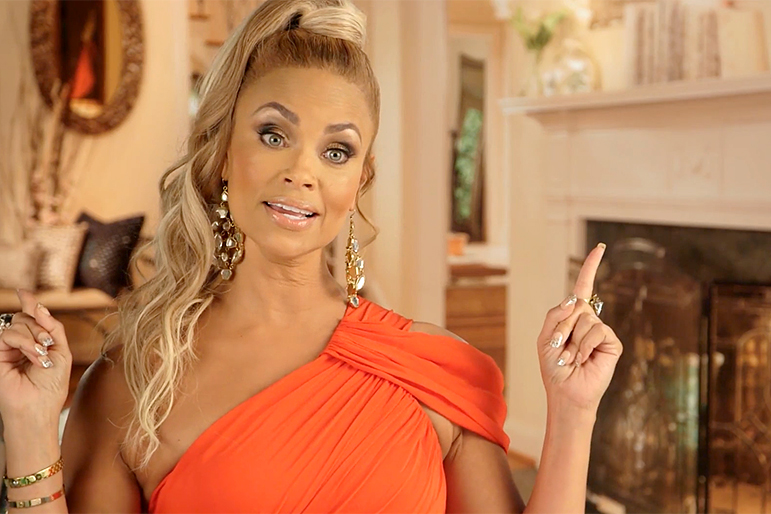
Gizelle Bryant is getting real about her former marriage. The Real Housewives of Potomac makeup mogul was wed to megachurch pastor Jamal Bryant for about eight years until she discovered his infidelities and the two split. Now, she says, it’s best to leave if you know you’re not happy.
“Biggest lesson I learned from my marriage is that I’m never doing that again!” she joked to Personal Space in the video (above). “Okay, no. When it’s bad, leave. You only have one life. You do need to work as hard as possible within your marriage, but once you feel like it’s not working anymore, don’t stay in something that’s making you miserable. ‘Cause you’re making everybody else around you miserable, you’re making your kids miserable. Just get out, that’s what I have done and you can get divorced and look like this,” she said, pointing to herself.
Not a bad way to look at getting back into the dating pool after divorce in what might otherwise be a fairly traumatic event.
Personal Space is Bravo’s home for all things “relationships,” from romance to friendships to family to co-workers. Ready for a commitment? Then Like us on Facebook to stay connected to our daily updates.
Medic Mindset Podcast: Critical care with Eric Bauer

In this episode, host Ginger Locke pulls back the curtain a bit on a well-known EMS educator, podcaster and flight medic, Eric Bauer. He is the founder and CEO of a critical care education company.
Ginger listens to his podcast, has attended one of his courses and has formed a friendship with him over the past year.
They discuss critical care topics like acid-base balance, intubation, ventilators and EKGs. They also discuss leadership topics, including mentoring. She even gets some marriage advice out of him.
Listen in as Ginger picks the brain of the man you want to know if you have any interest in becoming a flight medic or a better ground medic.