



Category Archives: marriage advice
My marriage is sexless: Ask Ellie

My sexless marriage is killing me. We had an amazing sex life in our early affair-charged life. My wife previously had far more partners than I did.
I brought children from a prior relationship. Now, many years and another child later, she’s shut down sex.
I’m always angry with her.
We only have sex every few months and only when I beg. She wants to lie together (which never leads to sex) which I spitefully refuse.
I’ve used massage therapists for release. But I’m still angry and sad for the loss of intimacy.
Avoiding her is my only solution, so we don’t sleep or spend much time together.
I don’t think this is only for me to figure out. Nor is matching her pathetic level of interest an acceptable option for me.
She thinks I should “just get over it as all married couples are like us.”
That’s untrue and not what I signed up for.
More paid sex is an avenue to pursue, but it’s risky.
How can I calm my anger and restore my balance? I don’t think we can live like this much longer.
Sexless Marriage
I have to assume that you’re staying for the sake of the child you had with this wife.
Perhaps you also feel that your older children need the (false) stability of this union.
My point: Have you examined why you stay with her and done the “pro-and-con” lists with the help of counselling?
That’s a natural route to go whether you’ve determined to try to live with this situation, OR you can’t take it any longer.
From my perspective, your constant anger, frustration, resentment (all valid) of your wife’s arbitrary decision will inevitably affect your home environment negatively, as well as the children.
Also, any pattern of “outside” sexual contact – paid or otherwise – does present some sexual health risks, can distance you emotionally from your home, which can also affect the children.
Besides needing professional help to weigh these choices, you should insist that your wife be part of the solution. Can she handle your having sex with someone else?
You haven’t and won’t just “get over it,” which is not her right to command.
Whatever options you choose, sooner than later you’ll need to confront her with the reality that if she won’t be part of the solution, you’ll do what you please… just like her.
I’m finishing my undergraduate degree and looking to study abroad (hopefully in England) for my Master’s degree.
My family lives out west, my dad has cancer. My parents don’t want me to study abroad because of my dad’s illness (although they’re seemingly fine with my currently living across the country).
But it’s always been my dream to pursue my academic career at the best institutions.
Am I selfish for wanting to study overseas? Should I sacrifice some goals to stay close to them?
Uncertain Move
Apply to universities of your choice, abroad and in your country, for backup.
Meanwhile, talk to your father’s cancer specialist for an estimate of the severity of his condition.
Once accepted at school(s), you can make your decision on how often you’ll be able to return home to spend time with your family.
You may consider taking preliminary post-graduate courses towards your ultimate goal, by staying at closer distance if his condition is critical.
If not, accept an overseas school, but be prepared for needing to make a sudden trip home – or postponing a semester.
You’ll still be building towards your ultimate career.
Tip of the day
Warning: When one partner cuts off sexual relations, the other starts reacting.
Read Ellie Monday to Saturday. Email ellie@thestar.ca or visit her website, ellieadvice.com. Follow @ellieadvice.
Using marital advice to fix our political divide

Listening to people argue about politics these days is like overhearing people in a restaurant who are in a bad marriage. They’re always trying to use disagreements to establish superiority. It’s not merely, “We’re different.” It’s, “I’m better.”
So I thought it might be a good idea to consult some marriage books for lessons on how to repair national politics.
One of the things the books emphasize is that when a marriage hits a rough patch, both people in it are likely to feel unknown or misunderstood. So the first task in repairing it is to seek empathetic understanding of the other person – understanding the other person’s likes and dislikes, his or her oddities, how half-forgotten wounds in the past can trigger ridiculous overreactions in the present.
The second task is to understand the marriage itself. Each person brings into the marriage a pattern of interaction absorbed from his or her original family. Psychologists joke that early marriage is a battleground in which two families send their best warriors to determine which family’s culture will direct the couple’s lives.
Then over time the couple creates their own pattern of interaction, which may propel them to act in ways that neither person particularly likes.
Apparently one of the most common dysfunctional scripts is the demand/withdrawal cycle. One partner makes a request of the other – please do the dishes – but there’s a hint of blame in his or her words. The other partner hears it as complaining and just withdraws.
This prompts the person making the request to make the blaming more explicit, in turn causing the withdrawing partner to withdraw even more. The more the latter disappears, the more the former creates a scene to get any response.
It’s only by recognizing the old scripts that couples can establish a new one.
The third task is to recognize that repairing marital strife will require both spouses to become better people, more empathetic, more sacrificial on a daily basis. Marriage has been likened to a gem tumbler; it’s banging two rocks together in order to eventually bring out their deeper sparkle.
When you read these books in the context of today’s political tribalism, you’re reminded that we’ve had relational tears between groups in this country since the beginning. Overcoming tribalism means rising up and taking care of problems that weren’t addressed at the founding and certainly not during reconstruction.
In The Meaning of Marriage, Tim and Kathy Keller emphasize that in any bad relationship the natural tendency is to see the other person’s selfishness as the key problem. But relationships only thrive when each partner sees his or her own selfishness as the key problem.
After all, your own selfishness is the only one you can really control, the only one you have responsibility for.
This brings us to the truism that, when arguing, “I” sentences are better than “you” sentences. As Daphne de Marneffe writes in her excellent book The Rough Patch, think of the different emotional impacts of these two sentences:
“I’d stop yelling if you were more helpful.” And: “I know I’m a piece of work, but I’m trying to control my yelling.”
The crucial step, which several books come back to, is the raw and willful decision each partner must make just to recommit. The relationship is strife-ridden. Every fiber of your body says to retreat to the safety of your foxhole. But you have to go against yourself and lunge toward intimacy.
As Mike Mason puts it in The Mystery of Marriage, “A marriage lives, paradoxically, upon those almost impossible times when it is perfectly clear to the two partners that nothing else but pure sacrificial love can hold them together.” This involves, he writes, “a deliberate choosing of closeness over distance, of companionship over detachment, of relationship over isolation.”
That involves a relentless turning toward each other.
John Gottman, who I suppose is the dean of marriage experts, describes relationship as a pattern of bids and volleys. One partner makes a conversational bid: “Look how beautiful the sunset looks!” The other partner can either respond with a toward bid: “Wow. Incredible. Thanks for pointing it out!”; or an against bid: “I was reading the paper, do you mind?”; or a turning-away bid, which would be grunting and not responding at all.
Successful marriages, Gottman finds, have five toward bids for every one of the other kinds. The relationship masters, he told Emily Esfahani Smith in The Atlantic, are the people who are actively scanning the social horizon for things they appreciate about the other person and can say thank you for.
Good manners seem superficial but are essential. Furthermore, the people who repair their marriages don’t necessarily fix their central disagreement. They just overwhelm the negative with the positive.
Red or blue, we are stuck together permanently in this country. And as the saying goes, the only way to get out of this mess is to get into it.
David Brooks is a columnist for The New York Times. Reach him c/o The New York Times, Editorial Department, 620 Eighth Ave., New York, NY 10018. © 2018 New York Times News Service
Brides Reveal the WORST Marriage Advice They Were Ever Given

If you’re in a relationship, you’ve undoubtedly received unsolicited advice. Some of it’s been good, and some of it’s been bad. But hands-down, these nuggets of truly bad marriage advice that was given to these real brides might just be the worst out there. (We suggest you don’t take it.)
Never go to bed angry.
“Everyone seems to love this advice, but sometimes I think going to bed instead of arguing is a much better option. Especially if it’s after a long night out, or you’re completely exhausted and it’s taking a toll on your emotions and rationality. Sometimes it’s better to revisit a potential argument well rested and with a clear head than to head into battle late at night.” —Nicole
“At my bridal shower, guests were asked to write down a piece of marriage advice for me. My bridesmaids read them aloud as I opened gifts. There were about a dozen “don’t go to bed angry/mad” advice cards. And one funny-but-true piece of advice that said: ‘Don’t listen to the don’t go to bed angry advice … sometimes you just need to sleep that $h!t off!'” —Samantha
“The worst advice are those cliche statements that are not even realistic, like never fight (my future MIL actually wrote this), never go to bed angry, etc. I got so many of those on the advice cards at my bridal shower. It really annoyed me because it sets unrealistic expectations. I do think it’s important to keep an open line of communication and discuss your concerns or disagreements as soon as you can, but that doesn’t mean it all needs to be resolved in one night. Some issues can only be resolved after each person has had their own time to process and reflect, and you can’t always put your anger aside in an instant.” —Evelyn
Do whatever you need to do to stay married.
“I’ve heard that, ‘Marriage isn’t about being happy, it’s about being stable. Do whatever you need to so that you can stay married.’ But we are so fortunate to actually live in an era where people have the opportunity to choose a partner. I believe the only way to actually bring the divorce rate down is to focus on picking a highly compatible partner at the onset. So many people prioritize other things before their own happiness and they end up living a lackluster life with very few bursts of joy.” —Ashley
Train your husband like you would a puppy.
“The wife of my then-fiancé’s colleague told me, ‘It’s important that you train him just like you would a puppy. He should learn to obey you and respect your commands, or suffer the consequences. When puppies mess up they get their noses rubbed in it and thrown outside — they do not get your praise or attention.’ I thought she was joking, and laughed. But then she said, ‘I am not joking. My husband does what I want, or he sleeps on the couch and doesn’t get sex until I’m happy again.’ This advice was horrendous because relationships should be respectful and have equal participation as much as possible. Men are not dogs — despite our tendency to call them that! — and to me, sex is not a weapon.” —Paula
Stay together for the sake of your kids.
“The worst marriage advice I’ve received is, ‘stay together for the sake of your kids.’ I’ve heard it from family, I’ve read it in magazine and newspaper articles, and I’ve been to churches that convey that message as well. Sadly, that’s not a sound way to help a marriage or protect the children you love. Children subjected to a toxic, dysfunctional, abusive or in other ways wounded marriage lose the joy of childhood. They become instant adults who try to ‘fix, heal or remedy’ the broken relationship around them. It’s a no-win reality for children, and totally selfish for parents to subject them to this in childhood.” —Rosalind
Just agree with everything he says.
“I was told that you will fight all the time the first year of marriage, so you should just agree with everything he says. A friend gave this advice to me based on the reality of the first year of her marriage. But my mother always instilled in me the importance of my voice and my opinion. Just going with the flow is not my M.O. Agreeing with everything my husband says is very subservient and just not who I am as a person.” —Ariel
See more: 23 Pieces of the Best Marriage Advice EVER (Collected Over 13 Years)
Enjoy it now.
“Everyone told us it’s marriage, house, then kids so to enjoy our marriage early on. Newsflash, we’re enjoying it now more than ever and have the house with a kid on the way. Things don’t have to be in order, and there’s no happiness deadline.” —Christiana
Any unsolicited advice.
“If I wanted advice, I would ask.” —Jennifer
Polo Star Nacho Figueras Dishes on the Royal Wedding
Getty / Design by Perri Tomkiewicz
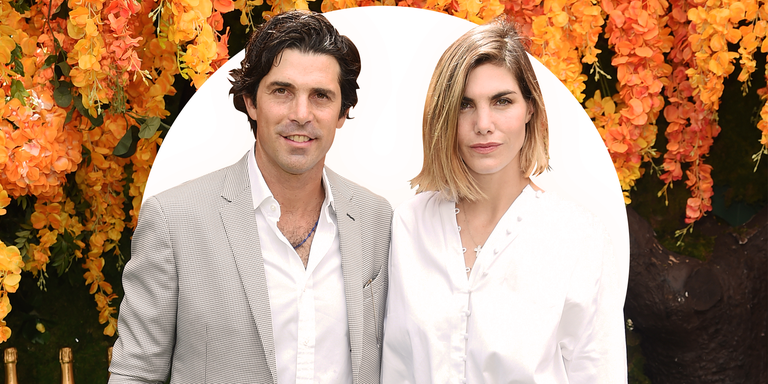
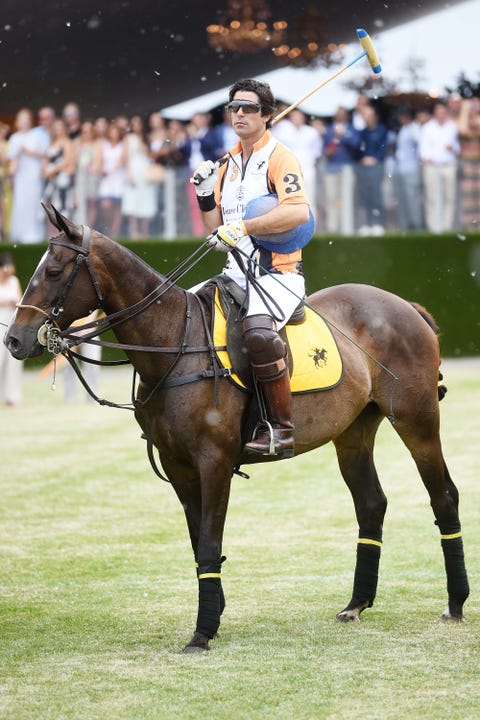
World-renown polo player Nacho Figueras celebrated another win on Saturday at the Veuve Clicquot Polo Classic, where he and Delfina Blaquier—his wife, teammate, and MVP—led their team to victory. However, two weekends prior, they were celebrating a different occasion: Prince Harry and Meghan Markle’s royal wedding.
Advertisement – Continue Reading Below
Figueras, a longtime friend of the Duke of Sussex, and Blaquier were among the first A-list guests to arrive to Windsor Castle on May 19. “It was an incredible moment, an incredible place, a historic moment, so it was great,” Figueras gushed over the ceremony at St. George’s Chapel to BAZAAR.com.
His favorite part, though, was honoring Harry. “But I was really there for my friend’s wedding, so I enjoyed being there with him,” the athlete said. Figueras even got some one-on-one time with the groom amidst the wedding craziness. “He was a busy man, but then we talked for a while,” he added.
Figueras and Blaquier also enjoyed the afterparties following the ceremony, including the exclusive reception at Frogmore House later that evening. But don’t expect the polo player to spill details on the latter. “The reception at the castle was great, and the second reception, I don’t remember,” he said with a wink. “I can’t recall.” At least we have his (possibly accidental) photo of the party invitation for clues.
Advertisement – Continue Reading Below
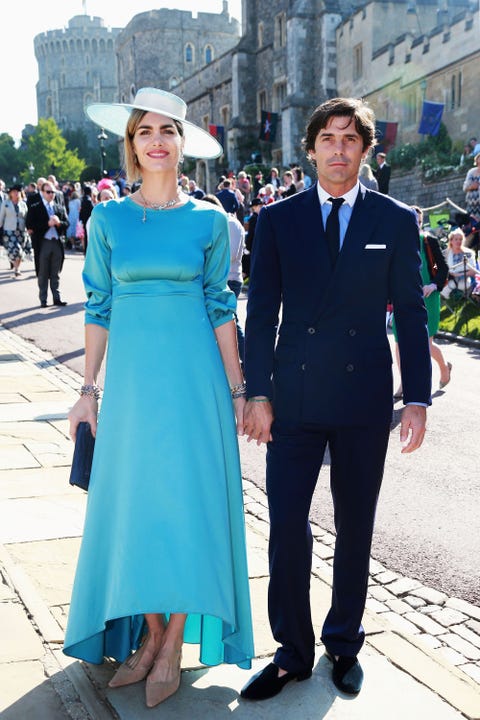
The Argentinean polo star and his wife have been together for 20 years and married for 14. When asked what marriage advice he’d bestow on his newlywed friend Prince Harry, Figueras did not hold back on the wisdom.
“I have an amazing wife, so it’s easy for me to say that,” he said. “I think that for us, what has worked is sharing a lot of things. We share a lot of projects and things in common—the children, the family, the travels, the polo, the horses—and we’ve been together for a very long time. I’m 41, so I’ve been with her almost half of my life, and she’s 37, so she’s been with me more than half of her life. I think that helps. We’ve been through a lot together, and I think that makes you stronger. You have to water the plant every day.”
Advertisement – Continue Reading Below
Advertisement – Continue Reading Below
The couple has four children together—Hilario, Aurora, Artemio, and Alba—ranging from 18 to 5 years old. Like their parents, the kids are polo players, too (their eldest frequently plays in California), but Figueras makes sure to be “50/50” in teaching his brood the sport and them figure it out on their own. “I get involved and then I also push away,” he said. “I can be a little intense.”
Advertisement – Continue Reading Below
Figueras is also a model, the face of Ralph Lauren Black Label, and a romance novel writer, but his passion for polo remains unmatched. “I just love it. I love horses. I love the game. I love what I do. I love that my kids love it too, so it comes very naturally,” he says. “It’s like every time I like it a little bit more.”
Later this year, Figueras plans to visit Africa, as an ambassador to Prince Harry’s Sentebale organization. He’ll also face off against the royal in a charity polo match, but Harry won’t be easy to beat. “He’s very competitive, so no,” Figueras said. “He’s not an easy opponent, and he’s a good teammate.

#ManCrushMonday: Nacho Figueras

The Hottest Men at The Royal Wedding