


Category Archives: marriage advice
I'm ready for marriage and children, but I don't want to scare off my boyfriend: Ask Ellie

I’m female, 31, with a professional job. I’d been on my own for a couple of years after my boyfriend of eight years (three years living together), walked out.
Online dating didn’t work for me.
My cousin then introduced me to a great guy. We’ve been dating for six months, and it’s going well.
I find it hard to take that my ex met someone and married her just months after he dumped me.
When we’d talked about the future and starting a family, I knew I wasn’t ready.
We’d met while young. I felt we needed to finish university, find good jobs and grow more.
He decided to just walk away and not look back.
I do like my current boyfriend a lot – maybe even love him. I now feel ready for marriage and having kids.
I don’t know if I raise this if I’ll scare my boyfriend off. Or should I wait till he gives me the first signal that we’re headed to the next phase.
Undecided and Nervous
Calm your nerves and call up your confidence. Take heart from knowing that you are ready for a new stage.
Show that confidence and optimism to your boyfriend now, by talking openly about the interests you share, by accommodating easily to any small differences between you.
With bigger differences, show willingness to compromise or address the divide together, even suggesting couples’ counselling if needed to make life smoother.
These are natural phases of creating an environment that bonds you closer.
Soon, you’ll know if you love him and feel he’s the right partner for you. Say so.
Hanging back won’t make this happen any sooner.
A confident woman can speak up about what she’s sure she wants.
Reader’s Commentary “A warning to others, through my story:
“Several years ago I reconnected with a man who’d been the love of my life. We were both the happiest we’d ever been.
“We moved into our small dream house in 2016. A wedding date was set for the following summer.
“But one day in winter I arrived home to find my fiancé absent. I knew instantly there was something wrong, he was always there waiting to greet me. I called the police.
“I notified his children and mine that their dad was missing. My fiancé’s body was discovered the following day. His snowmobile had gone through the ice and he was unable to make it to safety.
“Since his death one of his children feels entitled to everything from our lamps to the house (which I was told I could buy from the estate), and to every dime of insurance money, and to his ashes.
“I’m now having to pay all the household bills and anything else related to the estate and also risk losing my home.
“People reading this — Please get your affairs in order. Your life can change in the blink of an eye. The people you thought would be there with you, are not.
“The feeling of losing everything you worked your entire life for can be taken away by children who wanted nothing to do with your life, despite my efforts. At 50, I’m scared, alone and still unsure of what tomorrow will bring.
“My savings have been drained due to lawyers’ costs so far, with more money needed for litigation to try to keep some of our stuff.
“I wouldn’t want anyone to go through this, if you can avoid it.”
TIP OF THE DAY
If your relationship contains love, shared interests, and compromises, feel confident to discuss the future.
Read Ellie Monday to Saturday.
Email ellie@thestar.ca or visit her website, ellieadvice.com. Follow @ellieadvice.
20 Worst Pieces of Health Advice on the Internet

Using dental floss to remove moles
“There’s some pretty scary skin-care advice out there,” says New York City dermatologist Bobby Buka, MD, founder and chief science officer of the First Aid Beauty. One of the worst ideas he’s ever seen: Tying dental floss around a mole or skin tag to reduce blood flow and make it fall off. Any mishaps could lead to dangerous infection or even kill skin tissue—both way more serious than any concerns about your appearance. A quick in-office removal is always a smart bet. “You get the benefit of a sterile environment, a practiced hand, and some lidocaine to numb the pain,” says Dr. Buka. Learn more myths about skin tags you need to stop believing.
Treating depression with essential oils

“I’ve recently seen a couple of posts suggesting essential oils and ‘psychedelic medicine’ as treatments for anxiety and depression,” says Shiri Macri, MA, a licensed mental health counselor at Vermont wellness retreat center Green Mountain at Fox Run. “While essential oils are wonderful and can be a great addition to a repertoire of self-care strategies, depression and anxiety are very real mental health conditions that often need more than simple self-care to heal.” As for the psychedelics: Using illicit and unregulated substances to “cure” mental health conditions can exacerbate the struggle and even contribute to addiction. Here are more mental health myths that need to be set straight.
Getting “flat abs” in 10 minutes

Countless Instagram posts, YouTube videos, and online articles promise to deliver a workout (in some cases just one exercise move) that’ll give you a flat stomach in mere minutes a day. Unless you have very low levels of body fat, the muscles in the abdomen are naturally covered by a layer of fat, says Jasmine Marcus, DPT, a physical therapist in Ithaca, New York. “Even if you did a great abdominal workout five times a week, you still probably wouldn’t be able to see them,” she says. They might feel stronger, but they’ll keep hiding under that layer of fat until you lose weight. No one exercise has magical results. Here are some more common myths about ab workouts.
Drinking charcoal to “detox”

None of those benefits you hear about activated charcoal supplements are based on evidence, says registered dietitian Tracy Lockwood Beckerman, MS. “It started a few years ago when Kim Kardashian started drinking activated charcoal lemonade. Then it spiraled into pills and supplements in more concentrated forms, which are very dangerous,” she says. “A more concentrated form of charcoal, such as in a pill, causes major [gastrointestinal] disturbances and may cause you to have bouts of diarrhea, cramping and massive bloating. It also disrupts the normal absorptive process in your gut, which can leave you unable to absorb the vitamins and minerals from food or unable to obtain benefits from any medications you may be taking.” Learn the truth behind activated charcoal for skin and teeth too.
Content continues below ad
Never going to bed angry

“The worst health advice I’ve seen on the Internet, and no doubt you’ve heard this elsewhere as well, is to ‘never go to bed angry,'” says therapist Raffi Bilek, LCSW-C, director of Baltimore Therapy Center. “This supposedly is good for your physical and mental health, as well as your relationships. But the truth is, this is a recipe for disaster!” Trying to resolve an argument when you are tired and angry is likely to make things worse, not better—for your relationship, as well as your mental and physical health. Lack of sleep hurts your mood, disrupts metabolism and hunger cues, and weakens your immune system. Acknowledge to your partner that you’re angry and still want to resolve the issue, then try to get some sleep, says Bilek. Return to the problem in the morning, when you’re feeling refreshed. Here’s more surprising marriage advice from happily married couples.
Washing your mouth out with oil

Recently, the lifestyle gurus at Gwyneth Paltrow’s Goop have started selling an ancient practice called “oil pulling” as a tooth-whitening treatment. They claim swishing an expensive cold-pressed coconut oil around in your mouth—for a solid five to 20 minutes!—will pull toxins from your gums and teeth. As you might imagine, there’s absolutely no evidence that this is the case. A mouthful of oil isn’t likely to hurt you, experts say, but it also won’t help you in the way folks online are claiming that it will. Learn more things nutritionists wish you knew about coconut oil.
Using household products to fight acne

“You can’t imagine some of the terrible skin advice we hear and see,” says Rhonda Q. Klein, MD, a dermatologist in Connecticut. “Do not use sandpaper to exfoliate and even out skin tone and texture! While we use something similar in-office to help with tone and scars, do not try this at home,” she says. It can scar, wear away skin, or leave dark marks if done improperly. One more bonus myth-buster: “Don’t use kitty litter for a DIY ‘clay’ face mask,” says Dr. Klein. “Even though many of these do contain clay, please stick with safe, tested cosmeceuticals.” Learn more of the worst skin-care myths dermatologists wish you’d ignore.
“Resting” your colon

“The worst piece of nutrition advice I have seen on the Internet is that you need to do a juice cleanse to ‘rest’ the colon and remove ‘toxins’ from the body,” says registered dietitian and podcaster Jessica Jones, MS, CDE, co-founder of Food Heaven Made Easy. “Many of my patients who come to me after completing a restrictive cleanse report feeling weak and tired. They are typically under the impression that this fatigue and brain fog is a proof of the ‘toxins’ leaving the body. In reality, their body is functioning sub-optimally from not getting enough calories, fat, and protein. In order to keep your colon healthy, you have to basically do the opposite of a juice cleanse: have plenty of fiber, pre- and probiotics such as fruits, vegetables, yogurt, kefir, fermented vegetables, soy products, and/or beans.” Find out the truth behind 50 more myths about the human body that could damage your health.
Content continues below ad
Sipping “raw” water

Companies selling unfiltered, unsterilized bottled water claim that this so-called “raw” water is healing and offers healthy probiotic bacteria to the drinker. Any supposed benefits are unproven, and health experts warn that untreated water can carry some extremely dangerous pathogens including E. coli and cholera. Don’t miss these other widespread myths about hydration.
Skipping sunscreen to get vitamin D

Vitamin D is vital to health and UV radiation triggers our skin to produce it. Because sunscreen blocks some of these rays, misguided claims sometimes circulate online that people should stop wearing SPF. Bad idea, says dermatologist Tsippora Shainhouse, MD, FAAD, a clinical instructor of dermatology at the University of Southern California. Large studies have found no connection between sunscreen and vitamin D deficiencies. “Moreover, it’s easy and inexpensive to get your recommended daily vitamin D dose through food and supplements,” says Dr. Shainhouse. Check out these other 15 health myths that make doctors cringe.
Exercising to “cancel out” what you eat

“Something I’ve always loathed seeing online are those charts that tell you how long you would have to work out in order to burn the number of calories in that brownie/burger/pizza,” says licensed professional counselor Tori Rodriguez, MA, author of The Little Book of Bettie: Taking a Page from the Queen of Pinups. “This is problematic on so many levels. First, it reinforces the diet-culture concept that you have to earn your food—that you can’t simply enjoy some fries or sweets without doing something to cancel it out. This can lead to the dangerous ‘counting’ trap that is often a part of disordered eating and makes exercise a form of punishment for food ‘mistakes’ instead of a way to feel good. This kind of thinking basically leeches all the joy out of both food and fitness and makes them—and by extension, your body—all about shame.” Quit associating exercise with burning off those calories, and don’t feel forced to burn off every bite that passes your lips, she says.
Popping pimples the “right” way

This is a ridiculous idea, says Adam Friedman, MD, FAAD, associate professor of dermatology at George Washington School of Medicine and Health Sciences—because you shouldn’t pop pimples at all. Messing with a pimple increases your risk of scars and more breakouts. “Technically all acne is inflammatory, meaning inflammation around the oil gland/hair follicle is brewing before you even see the early signs of a pimple,” says Dr. Friedman. “Think of it this way: Acne is inappropriate inflammation, and injury to the skin creates more inflammation, like picking at an open wound. Not a good plan.” Check out these other myths about acne adults need to stop believing.
Content continues below ad
Curing cancer with a weed

One of the most-shared articles on Facebook about cancer in 2016 was on claiming that dandelion root “builds up blood and immune system—cures prostate, lung, and other cancers better than chemotherapy.” Many medications do begin with chemicals and extracts from plants, herbs, and other natural substances, but there’s no evidence that ingesting dandelion roots—in whole form or supplements—treats cancer. Find out more about 50 other cancer myths that won’t go away.
Taking magic diet pills

One persistent myth is that “appetite-crushing” diet pills actually work, says wellness coach and nutrition educator KJ Landis, CPT, CFI. “Whether prescription or herbal, we must remember that the mind is part of the equation,” she says. “No pill or potion will reduce appetite unless we are ready emotionally and mentally to shift our lifestyle permanently. The promises of reduced appetite and subsequent weight loss and fat burning with a potion or pill are just nonsense. Otherwise, we would all have had successful long-term weight loss years ago.”
Getting stung by bees in the name of health

Another winner from wellness-guru Gwyneth Paltrow: apitherapy—which in some cases involves getting stung by bees. “People use it to get rid of inflammation and scarring. It’s actually pretty incredible if you research it. But, man, it’s painful,” she told the New York Times. But if you do your own research outside of Goop, you’ll learn experts warn that bee venom could lead to blood clots, kidney failure, or stroke. Just because something is natural doesn’t mean it has no side effects, W. Clay Jackson, MD, vice president of the board of the American Academy of Pain Management, tells Business Insider.
Going without antidepressants

Not everyone suffering from depression needs medication, but others truly do, says Gwendolyn Nelson-Terry, MA, LMFT, a marriage and family therapist in San Diego, California. “I have clients who come to my office who have been struggling with depression for years—they have been to therapy, have made many changes in their life and they still continue to struggle,” she says. “Some are very resistant to speaking with the doctor about medication because they’ve read online that antidepressants are ‘bad.’ The truth is, some people need them! You can do all the therapy in the world, make dietary changes, be doing everything that you are supposed to be doing, and you can still suffer if the depression is caused by something biological.” Watch for these other silent signs you need antidepressants.
Content continues below ad
Going on fasts

Fasting is a big trend at the moment, but it’s also “one of the worst pieces of health advice out there,” says Sarah J. Thompson, an eating disorder recovery coach and certified Body Trust advocate. “When we restrict, our bodies can only interpret this as starvation or semi-starvation. We set ourselves up for our bodies to crave and think about food all the time. It’s because our bodies need food, and it’s a built-in mechanism to get us to eat. Restriction like this puts you at risk for developing disordered eating. Regular meals throughout the day are the best way to nourish your body and maintain your weight.” Quit falling for these other 21 food myths that are wildly untrue.
Using “black salve” on moles

Despite the lack of evidence that the alternative treatment is safe or effective, online vendors and wellness bloggers promote something called “black salve” as a natural remedy for skin cancer. “Using it can lead to extensive scarring, deformity, and incomplete destruction of cancer cells,” says dermatologist Lauren Snitzer, MD, FAAD. “Not only does the salve damage normal tissue as well, [but] using it can delay diagnosis and treatment of skin cancers, which in some cases can be life-threatening.” The Food and Drug Administration includes black salve on its list of illegally sold cancer cures that consumers should avoid. If you want to avoid surgery, your doctor can recommend safer non-surgical solutions. Check out these 14 health myths even some doctors believe.
Posting “thinspiration” as motivation

You might think that looking at an image of someone who has an “ideal” body on your fridge or Instagram feed will motivate you to eat better or exercise more. But posting a picture like this sends the message that you should be ashamed of your body and should be focusing on how you look instead of your body’s real needs, says Rodriguez. “Plus, as many of us know by now thanks to social media, photos rarely tell the whole story. They’re often heavily filtered or edited and shot at strategic angles,” she says. “Instead, put up a pic of yourself that reminds you of a time when you felt especially healthy, content, loved, or any other wonderful feeling. Don’t use it as motivation for anything at all—just use it as a reminder of that feeling and let it feed you.”
Falling for #NaturalNonsense

Scientific research is building that certain complementary, herbal, and Eastern medicine therapies can be helpful for everything from chronic pain to anxiety. Unfortunately, the boom in natural wellness information has given a platform to medical conspiracy theorists slinging fake health news. Some particularly egregious headlines: “Doctors kill 2,450 percent more Americans than all gun-related deaths combined” and “Microwave ovens ‘fluke’ your heart while they ‘nuke’ your food.” Doctors and scientists have started labeling repeat offenders #NaturalNonsense on social media. Outlandish headlines make excellent click bait, so beware the next time you see a Facebook friend share a health story that’s either too good or too awful to be true—it probably isn’t. Don’t fall for these other 55 health myths that need to die.
Content continues below ad
Antonia Kidman on being a working mum: 'Don't try and be perfect'

Antonia Kidman is one of the most inspirational mums I have ever met.
The mother-of-six is best known for her work as a journalist and TV presenter.
She now lives in Singapore with her husband, Craig Marran, where, in addition to raising her children, she is finishing off a post-graduate legal degree.
Read more: Wife of 11 years gives the best marriage advice
As soon as we started talking, I was immediately drawn to Antonia’s warmth and openness. It became apparent that despite her high-profile, she is very down to earth and as a busy working mum, has the same struggles as the rest of us.
I began by asking her what the secret is to juggling six children.
Kidman, 47, has four children from her marriage to Angus Hawley who passed away in 2015. They are Lucia, 19, Hamish, 17, James, 15 and Sybella, 11.
With new husband Craig Marran, whom she married in 2010, the 47-year-old has two children – Nicholas, eight, and Alexander, six.
Kidman and her large brood live in Singapore, where businessman Marran is based.
“There really is no secret,” she said of motherhood. “No matter how many kids you have, it’s tricky.”
(Antonia Kidman with daughter Lucia and husband Craig. Image: Don Arnold/WireImage/Getty)
Kidman said she likes to keep her children busy.
“I like to be out of the house and it’s good for the kids to be involved in activities. I pick a few key activities that we focus on and try not spread ourselves too thin.”
Her children are aged from six to 19, so they are all at different phases in their lives.
“But each phase has its own charm,” she said.
When it comes to spending time together as a couple, Kidman said there isn’t a lot of time away from the kids.
“Craig travels a lot, so if he’s back we don’t like to leave the kids,” she said.
“We grab moments together when we can. We’ll sit and watch the kids while they are doing activities and chat between ourselves.
“We have a tradition of barbeques on Saturday nights with the kids so we all enjoy that time as a family. And yes, sometimes just the two of us will grab something to eat.”
Kidman said she believes “communication is key” when it comes to a happy marriage.
“I like to have things resolved and it’s important to choose your moments to discuss the tough topics. We both want, and choose to be together. We genuinely enjoy each other’s company.
“If you want to have something good, you are going to have to consciously compromise and listen and try and make it better.
“Marriage is a team approach and a view of fairness and equality. It’s not a given, and it’s always being readjusted.”
Kidman knows it’s important to make time for herself as well as her family, and says swimming and studying is how she stays sane.
“That’s my time,” she said. “When I swim, I get time to myself and so I get to think a lot. And the law degree has been fascinating for me. I love writing, politics and history.
“I like to have purpose, that’s why I do so many things. It feeds me, it feeds my sense of self.”
When I asked her if she had any advice to give to working mums, she laughed and said, “It’s hard. It’s really hard.”
Kidman said she believes different things work for different people, however what works for her is maintaining her own interests through her studies, prioritising her relationship with her husband, exercising for physical and mental health and spending time together as a family.
“We play tennis with the kids. I’m not great at tennis but I do it for the kids. It creates a family culture.”
She says while they do experience particularly busy periods and hard times, they get through it, and then they move on.
“It’s like childbirth. Don’t try and be perfect, just surrender to it.”
When it comes to raising her children, Kidman said “kindness” and “consideration” are at the top of the list, among other virtues she hopes to instil in them, including respect, social justice, caring for other people, self-respect and independence.
“I also want them to have fun. There’s so much pressure on kids these days, so I encourage them to try and pull back from the pressure. Life is fragile – I want them to enjoy life! “
Kidman describes life as part of a big family as fun. “Although I never have any privacy, I love the buzz at home, there’s always someone there. Although there are sometimes sibling arguments and niggles, the kids do like the energy.”
Six children later, Kidman says the best part of being a mum is the “love”.
“I was transformed as soon as I had my first baby, I was so excited. I like being responsible and it makes you step up. I just love it.”
And she isn’t finished with babies yet.
The 47-year-old is looking forward to becoming a grandparent one day.
“At the moment my focus is just on finishing my degree, then I’m planning to practise in law. Something community-based with a human element – possibly in environmental law.
“And I’m really looking forward to being a grandparent, I can’t wait! I love babies.”
Clare Wood is a business coach who works with women to grow their businesses. Find out more at clarewood.com.au.
I asked Silicon Valley relationship experts who have been married for decades for their 3 best pieces of relationship …
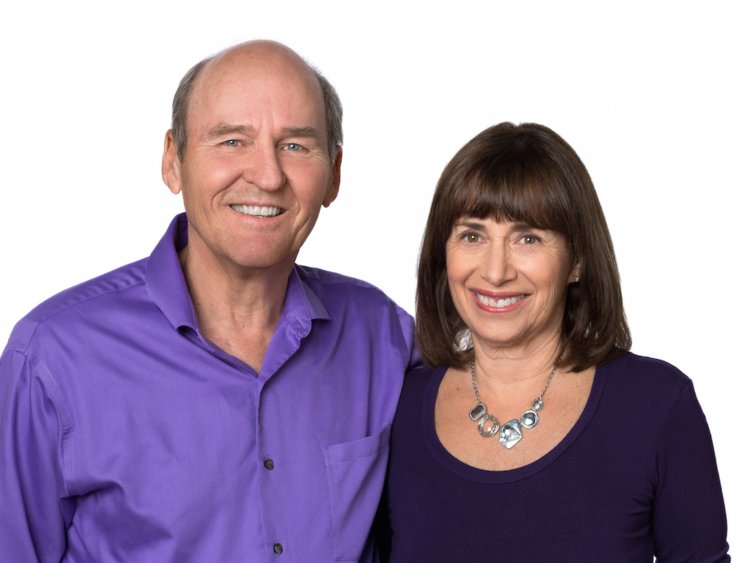
Know the “why.” Peter Pearson and Ellyn Bader are the co-founders of The Couples Institute. Courtesy of The Couples Institute
Last November, I got married.
In the months leading up to the wedding, I was mostly consumed with floral arrangements, and invitation fonts, and shoes that wouldn’t cause me to trip while walking down the aisle. Now that those details are behind me (whew!), I’m on a new quest: Searching for the best marriage advice I can find.
To that end, I recently interviewed a series of relationship experts who are married… to each other. I asked them about the strategies they not only preach, but also practice behind closed doors.
Two of my most fascinating interviewees were Peter Pearson, PhD and Ellyn Bader, PhD, who run the Couples Institute in Menlo Park, California, and work with many entrepreneur couples in Silicon Valley. Pearson and Bader have seen it all, and they’ve come up with creative strategies to help resolve conflict, both in their clients’ marriages and in their own.
Three insights from the interview stood out to me:
1. Before you do any big project, decide which of 3 decision-making strategies you’ll use
Bader shared a technique she and Pearson teach many of the couples they see: Decide in advance of a big undertaking (like a home renovation) which of three decision-making strategies you’re going to use.
a) unilateral
b) equilateral
c) 51/49%
Unilateral means one partner gets to make the decision and the partners don’t have to agree. Equilateral means each partner has an equal say, and they’re “willing to hash it out and stay with it until they both agree.”
51/49% is the most interesting, and often the most effective, Bader said. The partner with 51% of the say gets to make the final decision, but the partner with 49% trusts that the 51% partner will take into account what they want.
In the example of home renovations — which, by the way, can be a huge source of relationship conflict— it makes sense for the 51% partner to do more of the work. For example, they might be the one to choose the sinks and the color palette.
“They can solicit input, but they don’t have to get into the conflictual discussions,” Bader said. “It makes things go a whole lot easier smoother and it supports that kind of interdependency of ‘Okay, I’m going to trust you and rely on you and let you carry the load for this project.'”
2. Know the ‘why’ in your relationship
Pearson and Bader have different feelings about clutter: Pearson doesn’t mind it; Bader can’t stand it.
The only way to reach an agreement about the level of clutter that’s acceptable in the house, Pearson said, is to figure out and keep in mind the “why.”
“Why would I be interested in putting forth the effort of less clutter? Why would Ellyn be interested in relaxing her standards a bit?” Pearson said. “We need a bigger picture.”
In the case of any disagreement, the question that both partners should be asking themselves is, “How does changing this dynamic, this problem, improving this area fit into a bigger picture of what we want to create in our marriage?”
The “why” varies from couple to couple, Pearson said. It’s about what you want to create more of as a twosome, whether that’s peace, happiness, or personal fulfillment.
3. Listen to your partner with curiosity
Pearson admitted this tip can be hard to implement — even for people who are trained in the science of relationships (ahem).
Let’s go back to the clutter example. Instead of lashing out and asking Pearson, “Why are you such a slob?” Bader might say, “It seems to me you have a pretty relaxed standard around clutter,” and then ask a question like, “In your family of origin, how did they deal with clutter?”
“That requires a lot of emotional restraint, a lot of emotional editing, a lot of putting your ego out of the way,” Pearson said. But the end result is that, instead of getting into a major blow-out, you actually have a productive conversation.