



Category Archives: marriage advice
The advice Princess Diana shared with her sons about love
Sign up for our newsletter
As excitement and anticipation over Prince Harry’s wedding to Meghan Markle builds, so does a certain sadness among longtime royal fans over who will noticeably be absent from the May 19 ceremony.
Harry’s mother.
Princess Diana died in a car crash on Aug. 31, 1997, when Harry was 12. His brother, Prince William, was 15.
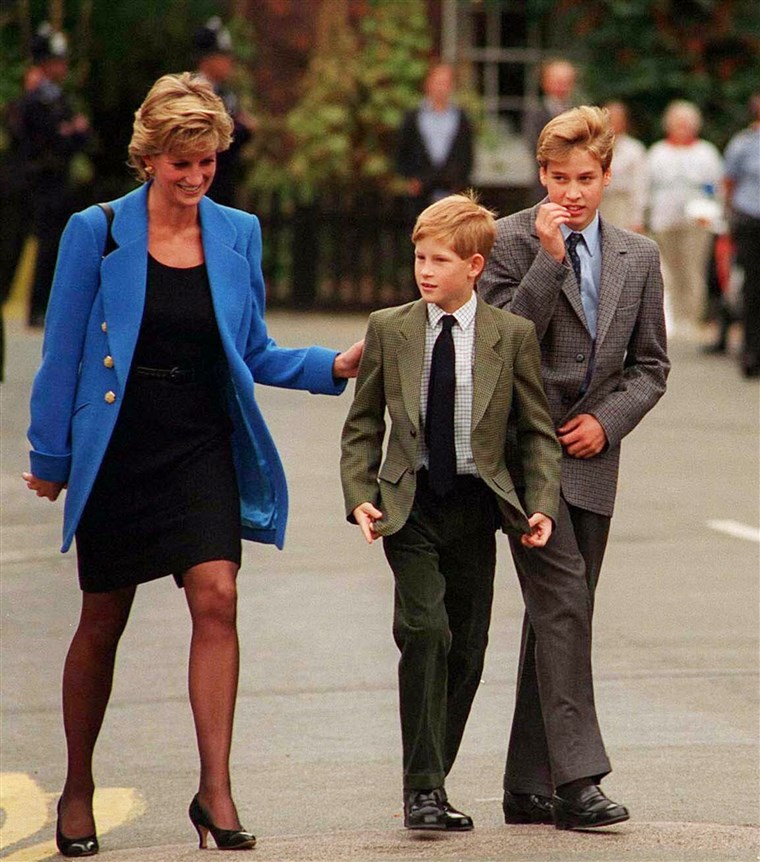
“She smothered us with love, that’s for sure,” Prince Harry has said about his mother, Princess Diana.Anwar Hussein / Getty Images
Her sons have honored her memory in numerous ways. Among them, taking to heart the advice Diana shared about the importance of holding on to love.
“I went to the school and put it to William, particularly, that if you find someone you love in life, you must hang onto it and look after it,” Diana recalled in a 1995 interview with the BBC. “And if you were lucky enough to find someone who loves you, then one must protect it.”
 The two princes and their mom in 1995. Johnny Eggitt / AFP – Getty Images
Ironically, the advice came as she tried to warn her children of stories that had emerged about her crumbling marriage to their father.
Nevertheless, the advice stuck with William, who found his love with his college sweetheart, Kate Middleton. The two married in April 2011 with the bride wearing Diana’s sapphire and diamond engagement ring.
 Prince William proposed to Kate Middleton with the engagement ring that belonged to his mother. Reuters
“It’s very special to me, as Kate is very special to me now as well. It was only right the two were put together,” William told reporters after announcing their engagement.
“It was my way of making sure mother didn’t miss out on today and the excitement and the fact that we’re going to spend the rest of our lives together.”
The couple have since had three children, welcoming their latest bundle of joy on April 23.
Mom still marks anniversary of marriage ending in divorce

Dear Abby: My parents were separated for most of my life and divorced 10 years ago. Dad and I don’t talk much, but we do get together for special occasions and visits during vacations. Mom and I speak frequently and see each other as often as possible.
My problem is, when I talk about doing things with Dad, she makes me feel guilty for not inviting her — even when my family is going to stay the night at Dad’s. And every year on the date of their anniversary, Mom never fails to remind me how long they would have been married that year. It’s uncomfortable, and I have told her that, but every year I get the call wondering why I haven’t acknowledged their anniversary.
Am I wrong in thinking it’s strange to wish someone happy anniversary when the couple is no longer together and hasn’t been for a decade? Am I wrong for not inviting her along for the few visits with my dad? I’m at the point where I avoid talking about him, but I can’t lie when I’m asked directly what our plans are. How can I stop these uncomfortable conversations?
— Uncomfortable in the South
Dear Uncomfortable: Please stop letting your mother make you feel guilty. You have done nothing wrong. She is acting like she’s still married to your father and their divorce is simply a “vacation” he has taken.
If she asks if she can come with you when you visit your dad, an appropriate response would be to suggest she ask HIM that question. And her expecting to be congratulated for the anniversary of a marriage that failed strikes me as bizarre. Because these conversations make you uncomfortable, change the subject or talk with her another time.
Dear Abby: My husband owns a restaurant. It’s a demanding endeavor, and I help him out by running weekly errands, marketing, and occasionally fronting money for larger purchases or unplanned expenses. Generally, I don’t mind. I have years of hospitality experience and some schooling in the field.
For the past few days, I have been fuming because my husband hired a man with whom we have a bad history. He dates my cousin and has been blatantly rude to my family. He has taken advantage of their kindness and turned my cousin into someone she was not before. (She’s doing drugs.)
When I asked my husband if he really thought this was a smart choice, he said, “You don’t own the restaurant. It’s none of your business!” I disagree. Shouldn’t I have a say when I help that place function week after week? Or is he right?
— Miffed in Missoula
Dear Miffed: When you asked your husband the question you did, it clearly hit a nerve or he wouldn’t have become defensive. Because you have been putting money into the business to keep it going, you should be able to offer an opinion about how it is run and have it be respected.
Newlyweds pay dinner tab for couple celebrating 66th anniversary
CANTON, Mass. – A couple celebrating their first year of marriage decided to pay it forward in the name of love.
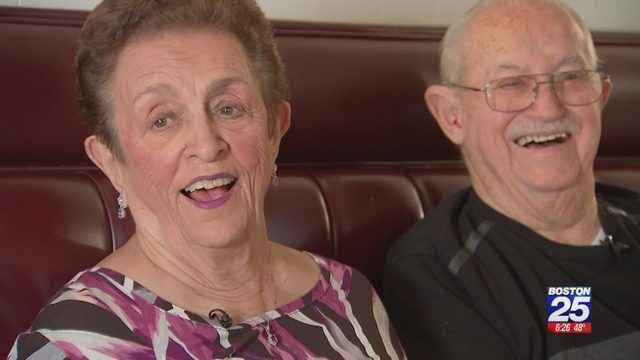
Judy and Russell Lamontagne were celebrating their 66th wedding anniversary at Rosetta’s Italian family restaurant in Canton when a young couple, inspired by their journey together, took care of their tab.
The Lamontagnes were celebrating the special occasion with friends and family, a celebration that would’ve eventually cost them about $400 – if another couple hadn’t stepped in.
In need of a feel good story? Meet Judy and Russell who just celebrated their 66th wedding anniversary. The incredible- an unexpected surprise during their celebration dinner. My story at 5:15 PM on @boston25. (You need to watch just for the couple- such comedians!!) pic.twitter.com/VtHfTkYpJ1
— Stephanie Coueignoux (@StephanieCNews) April 27, 2018
The reason, they said, was out of admiration for the Lamontagnes and how they’re an example of the love they hope to have for each other when they’re that age.
“I turned around and said ‘why?’ and he said ‘you just don’t see it that often, you do not see people who have been married 66 years and have this kind of family and togetherness and I want to be married for 66 years,'” said Judith Goodman, Judy and Russell’s daughter.
Rosetta’s owner, Carlo Gaita, said the gesture from the young couple, who wanted to remain anonymous, was so incredible the entire restaurant stopped to witness what was happening.
“When you see something like this, it’s just, it’s hard to describe – it spread through the restaurant, it was pretty emotional for everyone,” said Gaita.
While the generous couple looks up to an example of a marriage they aspire to have, Judy and Russel said that for them, this experience is a message of hope.
“There has to be a lot more kindness, there needs to be more from the heart,” said Judy.
While the newlywed couple didn’t ask the Lamontagnes for marriage advice, Judy and Russell said they still hold hands, 66 years after saying ‘I do.”
When asked what the secret was to being married for 66 years, Russell said “sometimes it’s a miracle,” to which Judy added “sometimes it’s not!”
© 2018 Cox Media Group.
Getting Married? Forget Sweet Nothings; Let's Talk About Money

If there is one statistic that does not lose its ability to scare, it’s how many marriages end in divorce. “About half” is thrown about often, if a bit loosely.
Research has added nuance to that figure. Factors like age, education and socioeconomic status contribute to reducing the likelihood of divorce. So, too, does the number of marriages: First marriages are less likely to end in divorce than third marriages. Still, the numbers do not fill a young (or old) heart with joy.
The response for many wealthy people is the prenuptial agreement, which details what each spouse is entitled to financially if the marriage ends in divorce.
Whether a person’s betrothed or own family raises this issue, the ensuing conversation is likely to be about as romantic as deciding who takes out the trash. Any discussion, after all, will focus on the parameters for who gets what at the end of a marriage that has not even started.
This is where Nathan Dungan, a wealth educator and founder of Share Save Spend, a financial consulting firm in Minneapolis, is trying to take a smarter approach to any conversation around prenuptial agreements. He wants to require both partners to attend what could be called Prenup 101.
It is far from something couples can take casually. Mr. Dungan has developed work sheets and quizzes to complement extensive counseling that lasts at least six months, though ideally closer to a year. He calls the whole process “onboarding” — a far more welcoming description than “divorce planning.”
“You want to say, ‘We’re in this together,’ but then there’s this big wrench that gets put in place,” he said. “What if we looked at it as an opportunity and not this huge problem?”
To this end, the work sheets ask open-ended questions about how people feel about money: “What is money to me?” “What things matter most to me in life?” “Why is it important to understand how each person is wired with respect to money?”
“They have homework assignments they need to do,” Mr. Dungan said. “Some are together, some are separate.”
But emphasis is put on the discussion, he said.
“Part of this is to recognize that this is not a romantic conversation,” Mr. Dungan said. “We get that, but it’s an opportunity for them to step into this and talk about their own family of origin and their own money story.”
Mr. Dungan said his goal is to take the prenuptial agreement out of the conversation and present the couple with an opportunity to have an honest conversation about money. He wants them to learn if they are spenders, savers or sharers when it comes to money in their lives.
Andrew, who comes from a prominent Midwestern family and asked that his last name not be used, said his family had been a client of Mr. Dungan’s since he was a teenager. He’s in his late 20s now and has been married for four years.
His wife became part of the family’s financial discussions while they were dating. Still, when they got engaged and the process ramped up, the conversations were not easy.
“There were things that got brought up that my wife and I never knew were bothering us,” Andrew said. Mr. Dungan helped them ask about their attitudes toward money. “It allowed my wife and me to learn why this is important and to understand this isn’t a ‘me vs. you’ thing,” he said.
The process took about six months until a prenuptial agreement was signed.
“It can feel like you’re against each other from the start,” Andrew said. But in the end, he was glad they were both on the same page. “It lets you start your marriage on the right foot,” he said.
Mr. Dungan’s method appeals to people who are confident and open enough to at least discuss money within their own families. That’s usually how they know about him in the first place: as clients of his getting advice on wealth and inheritance.
But many prenuptial financial conversations are not well planned. More often, couples wait until weeks or even days before their wedding before talking about a prenuptial agreement — a hasty decision signed in what the industry calls “the shadow of the altar.”
Casting that kind of uncertainty on a wedding can dim the sunny days most couples expect. But such an approach can also have unintended ramifications.
The person who is being presented with the prenuptial agreement can feel unprepared or, worse, ambushed. As for the agreement itself, that kind of rush also increases the likelihood that whatever is signed will not hold up in court.
Part of what makes a prenuptial agreement enforceable is a full disclosure of existing assets. To do this, there needs to be time for both parties to understand what is involved.
“It’s difficult to challenge a prenup in New York,” said Jacqueline Newman, managing partner at the New York law firm Berkman Bottger Newman & Rodd. “But if it’s literally thrown to the person in the shadow of the altar, courts consider all of that. It’s not smart on the part of the person who wants a prenup to give it to someone last minute.”
Inherited assets and family gifts are generally protected in divorce proceedings. But if, say, income from a trust was used to pay for the family’s lifestyle, it could be subject to division in a divorce, said Silvana D. Raso, managing partner at Schepisi & McLaughlin, a law firm based in New Jersey.
The same, she said, holds true for a family business, even if a new spouse is only partly involved in managing it and receiving income from it. Both concerns can be handled in a properly drafted agreement, but doing so takes time and discussions.
Ms. Newman, however, noted that for the so-called non-monied spouse, a prenuptial agreement can offer access to funds supporting the couple’s married lifestyle that would not be available in a divorce, such as otherwise untouchable inheritance funds.
There is consensus on what makes a good prenuptial agreement: time to discuss all the issues and draft a document that is fair to both sides and perhaps even has provisions to change over time.
But getting to that document can cause lasting problems in a family if the process is not handled with care. Mr. Dungan’s classes attempt to fend off emotional distress, much of which can revolve around how families talk — or don’t talk — about money.
Alison Comstock Moss, chairman and chief executive of Paul Comstock Partners, which advises clients on a total of $2.2 billion in assets, recalled a client who told his future son-in-law that he would not get a dime from the family if the marriage ended. The son-in-law, who was himself financially successful, had not planned to ask for anything from his wife’s family in the prenuptial agreement.
Years later, the marriage is happy, but the two men still do not get along. “Knowing all the parties involved, I don’t think the intent was to be nasty,” Ms. Moss said. “I think they got bad advice and the way they communicated with each other was really hurtful.”
A better way to have handled the situation, she said, would have been to ask a simple question about expectations, which would have allowed the son-in-law to speak his mind.
But an approach like that requires planning, education and openness about financial expectations, which may not be possible if the focus is on the agreement itself.
Mr. Dungan said that his process still led to the same end — a prenuptial agreement — but that it got there in a way that required more thought.
“We’re not robotically moving through this process,” he said. “We’re creating a dynamic that allows them to have the best outcome.”