



Category Archives: marriage advice
How All Relationships Prepare Us For Marriage

With over a decade of dating under my belt, I’d like to think I know a thing or two about relationships. Friends often flock to me for advice and appreciate my candid commentary. However, after a potential love interest left me crushed, I started questioning if I’m indeed as wise as my friends make me out to be. How could I have fallen for someone who ended up being such a jerk?
I cried to a friend, “I’m going to be single forever.” While she empathetically listened and wiped my tears, she also proclaimed “You know that’s not true.”
Despite my major disappointment, I had to agree with her. I know I am closer than ever to finding a meaningful and healthy romantic relationship even though I’ve been single for years.
How do I know?
Years ago, I was introduced to the work of therapist Dr. John Van Epp who studies and promotes intentional romantic relationships. In his book How to Avoid Falling in Love with a Jerk, I learned how our non-romantic relationships eventually influence our romantic ones.
Our interactions with strangers, co-workers, friends, family, and even our previous romantic partners usually fall into specific patterns. Van Epp likens these relationship scripts to a river. As he writes in his book,
The constant flow of new experiences followed within the banks of those scripts, reinforcing their already formed paths. Over time, subtle changes modified the patterns of these scripts by simply exaggerating or diminishing certain features, while still keeping their basic form … major changes in your scripts require extensive reconstruction. Patterns will replicate unless a new course is charted.
Van Epp writes that our relationship scripts that ultimately impact our marriage can be divided into three categories: peripheral others, meaningful others, and romantic others.
01. Peripheral Others
Whenever I talk about my lack of a love life to my mother, she almost always says, “Well, isn’t there a nice doctor at work you can date?” My mother is right in that as an ER nurse at a teaching hospital, I am surrounded by young, attractive doctors, medical students, and a variety of medical professionals. Unfortunately, I find many of them undateable because of how they treat who Van Epp calls “peripheral others.”
Peripheral others are strangers, acquaintances, employees under our command, and anyone else that we share a minimal degree of closeness with. We feel emotionally distant from our peripheral others because we don’t know them intimately and usually feel superior to them.
But this distant feeling is very similar to how we feel in an argument with our significant other. Van Epp writes that we can expect to treat our significant other and be treated by our significant other like peripheral others are treated when we’re emotionally distant.
Some of my colleagues can be extremely impolite and impatient with patients and even co-workers. I’m used to seemingly rude exchanges in emergency situations where short and direct communication is vital. That’s one thing. But a number of seemingly eligible “Dr. McDreamy” types at work show a persistent pattern of disrespectful behavior, and I know that this behavior would eventually be directed towards me in a long-term relationship.
As Van Epp writes, “Look very closely at the ways your partner treats all other people. It may be just a matter of time before you are treated the same.”
Some of the doctors I work with are astoundingly compassionate, even when they are stressed or working with particularly difficult patients. The empathy shown these small interactions gives me a glimpse into how I could be expected to be treated in a romantic relationship, even in emotionally distant and difficult times. A consistently compassionate person is the only kind of person I could date.
02. Meaningful Others
I probably should have known my crush would probably not end well when the guy’s close friends consistently agreed when I said he was one of the worst communicators I had ever met. “That’s him,” one of his best buddies said, laughing.
As Van Epp writes, “If peripheral relationships crack open a window to peer into the values and character of a partner, then significant relationships bust down the door.” These significant relationships are what he calls our “meaningful others,” our friends, family, and anyone else we have a substantial relationship with.
I admired how my crush consistently made time for his family despite his hectic work schedule. I too can be a horrible texter, so I forgave his forgetfulness which I chalked up to being busy. Yet, I found it odd that he rarely went out of his way to make time for his friends.
Family is almost always a meaningful relationship and sometimes a complicated one, but we have a lot of freedom when it comes to friends. We tend to be friends with people that resemble us in some way. Van Epp suggests looking closely at a potential significant other’s friends, since as the cliché goes, “Birds of a feather flock together.” Our friends reveal our character and uncover how we can expect to be treated when the initial excitement of a new relationship fades.
I truly liked my crush’s friends and family. They were kind, fun, and had similar beliefs to my own. However, his tendency to put work ahead of his friends and forgetfulness in responding would have become a major issue long term.
03. Romantic Others
Something about a romantic one liner in a movie makes me swoon. A line like, “You complete me” sounds great in a Hollywood movie but can spell disaster in a real-life relationship. Though Hollywood teaches us that true love can make someone change, evidence shows otherwise. Van Epp cites various research to conclude, “The dramatic changes that occur with a new relationship usually revert back to the prerelationship state by the end of the first year of marriage.”
However, Van Epp cautions against judging your significant other solely on their dating past. I’m not alone in the fact that discussing past relationships makes me cringe. Despite being a strong, confident woman, I’ve historically been a bit of a doormat in relationships. A lot of that behavior was tied to some unhealthy non-romantic relationships, and I’ve had to work through those insecurities. I would hate for my future significant other to base dating me just on my past romantic relationships!
Also, some of us just haven’t had a relationship yet. I have good friends in their mid and late twenties who are absolute catches who have never had an “official” boyfriend. Things just always fell apart before they defined their relationship or the guy had commitment issues. Judging a person based on their past relationships or lack thereof can be counterproductive and can give us an incomplete mental image of our partner. Yes, our past romantic relationships can provide insight into how we act in a potential new one, but it’s not the only way we act.
So back to my disappointment and my uncertainty I will ever find love. As I pouted to my friend, she cited my amazing relationships with my friends and family as proof of a bright romantic future ahead. Van Epp and his commentary on relationship scripts has taught me just how right she is. It’s easier to swipe right on a dating app or flirt with a cute guy at a bar than to treat a disrespectful patient with kindness or engage a bubbly cashier when I just don’t want to talk to people. But consistently doing the latter will be infinitely more helpful years after I meet my special someone.
Editors’ Note: Submit your own Dating Unscripted story here.
John Humphreys: Tax advice and the 'Silver Splitter' generation

John Humphreys: “With family trees becoming ever more complicated, it is imperative that clients have an up-to-date will.”
Life changes are key moments when financial advice is needed and no more so, as John Humphreys explains, than when a marriage ends or a new one begins
Government figures published this autumn indicate that divorce rates are falling. While good news at first glance, dig a little deeper and it seems this is sadly not the case for the over-60s. In the baby-boomer generation divorce rates have actually increased, leading to the rather unfortunate nickname ‘Silver Splitters’.
Advisers will be well aware that, with divorce, comes a whole host of financial dilemmas and planning needs. Given an estimated 42% of marriages in England and Wales end in divorce, advisers are likely to find themselves guiding newly-single clients many times throughout their careers.
In among the delicate act of splitting a couple’s wealth, the area of inheritance should not be overlooked. In straightforward situations, family wealth may pass through generations in straight lines from parents to children to grandchildren. Following a divorce, however, the inheritance pattern can take a sharp turn sideways, which may be all too easy to miss.
The first point clients may need reminding of is that, whereas a couple can combine their nil-rate bands (NRBs) and, if applicable, residence nil-rate bands (RNRBs) for inheritance tax (IHT), following a divorce the ability to transfer them to a spouse or civil partner is immediately lost.
The maximum combined NRB and RNRB that can, currently, be offset against net assets becomes £450,000 (£325,000 of NRB and, if applicable, £125,000 of RNRB) rising to a maximum of £500,000 from 6 April 2020.
Not only are the over-60s more likely to divorce than their millennial counterparts, they are more likely to be home owners, with figures showing home ownership in 65 to 74-year olds has risen gradually to almost 80%, and less likely to have a mortgage.
This is the ‘baby-boomer’ generation, who have benefitted from significant house price inflation and typically have the added benefit of final salary pension schemes, so they can ‘afford’ to divorce and still maintain a comfortable lifestyle.
Yet the divorced, mortgage-free generation may find that, unless they start planning, they will potentially leave significant IHT liabilities for their heirs – unless they remarry, which brings in a different set of inheritance issues.
The time needed to plan ahead also needs consideration. For a married couple or civil partnership, IHT only becomes chargeable on the death of the second spouse or civil partner. This may be many years later, during which time the surviving partner may have taken advice and time to plan for IHT.
A single person’s estate (divorced or otherwise) does not have the luxury of delaying the IHT assessment, with any IHT chargeable immediately on their passing. Clearly there is a need to review and consider any actions needed.
For some clients, arranging a life policy written into trust for their beneficiaries may be sufficient to mitigate IHT. Families may also wish to consider using trusts to ensure that assets are distributed as the settlor wishes.
The wide range of trust structures available does allow room for flexibility. If, for example, clients wish to make a gift into trust but still have the ability to receive annual capital payments, a flexible interest-in-possession trust may be suitable. In addition, wills, death-in-service and pension scheme nomination forms should all be updated.
The situation for divorced over-60s is not necessarily static though, and remarriage may be the next happy chapter. Indeed, 90% of weddings in the over-45s are a second or later marriage for either the bride, the groom or both.
Here again comes a crucial point at which financial advice is needed. On remarriage, unless a will states otherwise, a large proportion of family wealth will pass to the new spouse, potentially leaving any children from previous marriages or relationships without any inheritance or a much-reduced inheritance.
Sideways move
Unless action is taken, inheritance to the next generation may move sideways, with children from a second or later marriage potentially receiving more of the deceased’s estate than children from a previous marriage or relationship.
With family trees becoming ever more complicated, it is imperative that clients have an up-to-date will. Alongside a will, a trust can be used to specify exactly what assets the settlor wishes to pass to their children, a new partner, a new partner’s children and anyone else.
The trust can also have the benefit of avoiding probate, thereby being able to distribute money to a surviving spouse or civil partner and/or children and grandchildren immediately. This can quickly alleviate fears of financial hardship, which can occur if there is significant drop in pension income for the surviving partner – a 50% reduction is very common.
Life changes are key moments when financial advice is needed – no more so than when a marriage ends or a new one begins. Understanding a client’s wishes for how, when and to whom they would like to see their wealth distributed is crucial to ensuring appropriate plans can be made and assets are received by those the client wishes in the most tax-efficient and timely manner.
John Humphreys is inheritance tax specialist at WAY Investment Services
Boris Kodjoe Reveals The Solid Career Advice That Came From This Oscar-Winning Black Actor
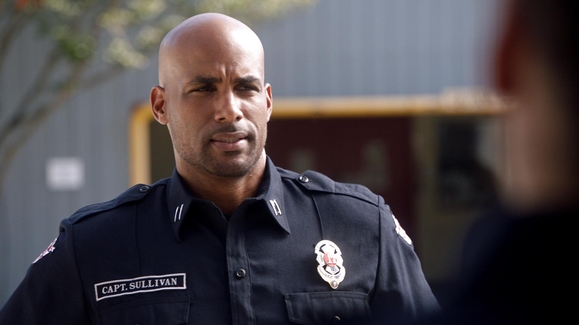
The actor is now starring in “Station 19,” airing Thursdays at 9 p.m. ET on ABC.
The best piece of career advice Boris Kodjoe every received came from Sidney Poitier.
“Treat every fan like he’s your boss,” Poitier told the German-American actor, who’s been heating up the screen since he popped up in Love and Basketball. While Kodjoe’s acting career has soared since the 2000 film, he’s continued to live by the Oscar winner’s sage advice.
RELATED: Boris Kodjoe Posted A Sexy Thirst Trap Photo For Wife Nicole Ari Parker and Every Woman On The Internet Fell In Love
RELATED: Applaud This Man! Boris Kodjoe Beautifully Explains 13 Reasons Why He Loves Being Married To Nicole Ari Parker
In fact, before ESSENCE sat down to talk about his latest role in ABC’s hit drama Station 19, Kodjoe recalled an incident with a fan he’d had over the weekend while he was at the hospital with his daughter, Sophie.
“The guy must have been through something. He needed the love more than ever,” Kodjoe said of the man who was bloodied, handcuffed, and being detained by the police.
RELATED: Boris Kodjoe Pens Sweet Message To Daughter Before Her First School Dance
RELATED: Boris Kodjoe: Single Women Should Stop Dating for ‘Potential’
While many would have ignored him, Kodjoe took a page from Poitier and treated the man with the utmost respect.
“I gave him a pound,” he recalled, chuckling. “He must have been through something, so maybe I got to lift his spirit a little bit.”
Respect is extremely important to the 45-year-old actor. Throughout his time in the business, he’s made it his mission to be considerate of everyone who crosses his path — from the actors he works alongside, to the assistants who help things run smoothly. It’s one reason he fits so well into the Station 19 family.

“I’ve admired [Shonda Rhimes] for a long time and I’ve always wanted to be a part of [Shondaland], so this seemed like the perfect opportunity,” Kodjoe said of joining the ABC drama.
On the show, Kodjoe plays Captain Robert Sullivan, a strident leader who’s a stickler for the rules. Although Captain Sullivan’s background is still a mystery to viewers, Kodjoe said growing up in Germany helped him get into character.
“I have no problem playing these authoritative figures. Growing up in Germany people are much more no-nonsense than other cultures,” he explained. “They’re very disciplined; very structured. Sco it comes almost naturally to me to play a character like that because I’ve seen it all around me.”
“A lot of people think that when you get married now you’re one, which is totally untrue.”
Kodjoe’s disciplined nature carries over to his personal life as well. Though he’s extremely busy with Station 19 and his development deal with BET to create content for the network, his family comes first.
“You know how you always have 20 balls in the air, juggling? I’m willing to let 10 of them drop on the floor for a while if I have to. My priority is my family and raising my kids the right way,” he said. “Everything else is secondary.”
Nurturing his marriage to Nicole Ari Parker and being a present parent is Kodjoe’s main concern, noting that his son often watches him “like a hawk,” as a guide to model his behavior. Still, his marriage has become #RelationshipGoals for many. It’s a hashtag, and a title, the actor said has become stressful for the couple.
“It’s flattering, but it also adds pressure because we can’t break up,” he said with a chuckle. “We make sure we take care of each other. Everything else we can’t control.”
No marriage is perfect, but Kodjoe and Parker continually put in the work necessary to ensure their union lasts, the actor explained. In fact, before they began dating, Kodjoe said he took some time to see a therapist and work through his own past traumas before diving into a serious relationship with Parker.
“I knew she was special, and I didn’t want to f-ck it up,” admitted Kodjoe.
Thirteen years later, Kodjoe said there are a few things that keep their marriage alive like remembering they’re individuals.


Michael Rowe Photography
“A lot of people think that when you get married now you’re one, which is totally untrue. You’re still gonna be individuals and you have to respect each other’s individuality and each other’s space, which is very important, while at the same time create synergies here and there throughout your life,” he explained.
“You also have to like each other, which a lot of people don’t understand,” he continued. “You have to make sure you connect with that person in terms of their values and principles. The basic foundation that you’re made out of has to be aligned.”
But the most important key to Parker and Kodjoe’s union? Giving each other the space to make mistakes.
“We give each other space to f-ck up,” he says. “We live in this very instant gratification environment where everything has to be right now, and if it doesn’t work out [you leave].”


Barry King/Getty Images
Instead of running at the first sign of trouble, Kodjoe advised couples have to give each other some grace and be willing to work through their issues.
“We have to learn how to take a beat, and say OK, you made a mistake, I’m not gonna run, I’m going to hear you out, I’m going to work with you the same way I would want you to help me get through this,” he said.
So far, these words of wisdom have served Kodjoe and Parker well, but he doesn’t care if some people aren’t feeling his advice. Instead, he’s going to continue to focus on his family.
“All we worry about as a couple is to be true to each other and nurture our relationship the best way we can and hope to come out on top,” he said.
James Brolin gets candid on his lasting marriage to Barbra Streisand, surviving Hollywood
James Brolin opens up about Barbra Streisand
James Brolin thanks his lucky stars for his lasting relationship with Barbra Streisand. The stars tied the knot in 1998 and have successfully kept the spark alive, despite their hectic Hollywood careers.
James Brolin thanks his lucky stars for his lasting relationship with Barbra Streisand.
Brolin and Streisand tied the knot in 1998 and have successfully kept the spark alive, despite their hectic Hollywood careers.
“If you look at Cancer and Taurus – not that I’m into astrology, but I’ll click on that if I’m on the computer – almost every time, it says, ‘You guys are magic together,’” Brolin, 78, told Fox News. “‘You’re so opposite that you’re able to work it out.’ And that’s what a makes a great team.”
“I think we’re both very opposite and very good negotiators,” chuckled Brolin. “She sees a color that’s one shade and I say, ‘No, it’s another color.’ And then we are able to negotiate around it.”
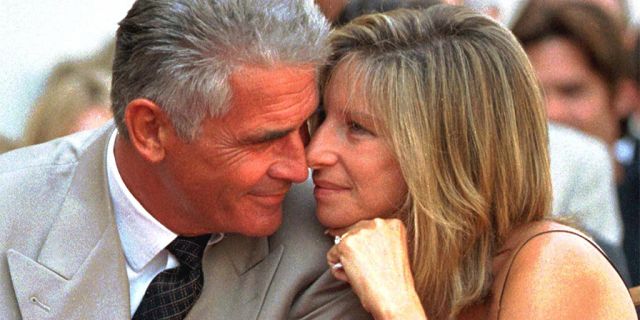
James Brolin and his singer-actress wife Barbra Streisand, 74, share a tender moment during the Hollywood Walk of Fame ceremony for Brolin. (Getty)
Brolin revealed that despite their busy schedules, which at times can keep them apart, they always find a way to come home to each other.
“We both long to come home to see each other and yet we both love to be in the mix of things at our age,” he explained. “We should be retired and on rocking chairs. But she is so intent on what she’s doing. As for me, I’m busy all the time. But we come home to each other. The evenings we’re always together. The days are just us running and holding our pants up.”
And Brolin has plenty of reasons to be thankful these days. He’s currently filming Season 4 of CBS’ hit sitcom “Life in Pieces.” He revealed it’s a relief to finally return to his comedic roots for television.
“I grew up in a real comedic family,” he shared. “It was constant joking. … I’m surprised no one has ever hired me for comedy because that’s what my private life has always been about… It’s a blessing to do this… Sharing this with a bunch of people who are kind of like family? It’s really just wonderful.”
However, the real surprise is that Brolin, who’s had a passion for filmmaking since he was 10, has gone on to lead a thriving career in front of cameras.
Despite his hesitations, fate was persistent.
“I was in a play in junior high school,” he recalled. “And I got so scared, I didn’t show up. I couldn’t even give book reports… People kept pushing me in front of the camera. And when I was 18, somebody stopped me and said, ‘Would you be interested in driving a Dodge pickup in a commercial?’ I did and suddenly, I’m in the actor’s union. Then an agent came to me… I was pretty shy about it all. Especially when I had to talk.
“Then I got an appointment at Fox Studio when I was 19 years old. And I was put under contract to do various jobs a week. I would dub other actors’ voices in movies. I would do walk-on parts. And they thought I may have a future. At that point, I was getting this money, way more money that I had been making parking cars on Restaurant Row.”

Brolin said he used his earnings to attend acting classes every night in hopes of improving his craft and boosting his self-esteem.
And there was also that major flub in front of James Stewart. Brolin made his motion picture debut in 1963’s “Take Her, She’s Mine” alongside the star and teen idol Sandra Dee. It was during his time on that set that Brolin realized he needed to hit the books if he wanted to survive.
“What excited me was just being in the same room with the man,” said Brolin on working alongside Stewart. “It was a real confidence booster. But there I was, with all this confidence and opportunity, and I couldn’t remember my lines in front of 100 people… I couldn’t remember anything… It really scared the heck out of me.
“That’s when I really buckled down and I started going to school, to workshop every night. I spent every single nickel on trying to educate myself and humiliate myself until it became status quo…. I just thought to myself, ‘I’m going to sit in this awful feeling and enjoy it.’ That went on for quite a few years.”

James Brolin and son Josh Brolin in 1983. (Getty)
Since that unfortunate mishap, Brolin has remained working. He’s starred in numerous feature films, including 1973’s “Westworld,” 1979’s “The Amityville Horror,” as well as 2000’s “Traffic.” He’s also directed two Hallmark Channel films, including “Royal Hearts” and “I’ll Be Home for Christmas.” In addition, he’s currently developing to direct the true crime tale of Ruby McCollum, as well as producing the romantic comedy “Smooth Operator.”
And while his son, fellow actor Josh Brolin, was wary of pursuing the family business, the famous patriarch gave him some no-nonsense advice.
“He had a chance of taking an acting class, metal shop or woodshop,” said Brolin about his son’s high school days. “He had to take one of these classes in his senior year. He asked me and I said, ‘What are you asking me for? I thought you hated the whole idea.’ You know what it was? It was the backlash from kids and gangs around the school that would say, ‘Oh, so your dad is like a bigshot?’ And they’d want to fight. It’s as if Stallone walks into a bar and somebody wants to pick a fight with him.”
“I said, ‘If you take an acting class, it’s better than a psychology class. It will apply immediately what you learn. You will put yourself in the other guy’s shoes, look back at yourself, and really see where the conflict lies.’ He didn’t say anything. And the next thing I knew, he was in the school play. … He soon started doing workshops every night. … Then he was in ‘Goonies’ with Spielberg.’ Now he’s booked for the next three years. Otherwise, he’d be making metal bowls.”

American actor James Brolin astride a motorcycle, as Dr. Steven Kiley in the US television drama “Marcus Welby, MD” 1969. (Getty)
Still, fans have wondered if Brolin would take on one other challenge. During the early days of his career, Brolin starred in the TV series “Marcus Welby, M.D.” from 1969 until 1976. With so many classic shows recently getting the reboot treatment in Hollywood, some have wondered if “Marcus” would join the bandwagon.
The series, which starred Robert Young as the leading role, explored how Doctor Marcus Welby and his young assistant (Brolin) try to treat patients as individuals in an age of specialized medicine and uncaring physicians.
Brolin isn’t opposed to the idea.
“My manager keeps mentioning it,” he explained. “There’s so much nostalgic stuff being reshot now, I don’t know why we couldn’t do something. But to have a sweet doctor that everybody loves? I don’t know if that will work today. But to have an old guy like me riding motorcycles and maybe even having some Hell’s Angels buddies that he rides with on the weekends? You can go in several directions with this… It’s a possibility. I need a walker. Then I’ll do it!”