



Category Archives: marriage advice
Exactly How To Prevent A Divorce, According To A Divorce Lawyer

First-hand advice.
People often say to me, “It must be so depressing seeing people’s marriages fall apart all around you every day. Does it affect your own marriage?” As surprising as it may sound, I think that being a divorce lawyer has had a pretty positive effect on my marriage.
To begin with, it allows me to get behind the curtain and see people’s real relationships and that not everyone is so “Facebook perfect,” which I think sets unrealistic expectations in people and causes strain in many marriages. Not to mention that when I hear constant tales of people having torrid affairs with tennis instructors or the nastiness that goes on at the dinner table, it makes the fact that my husband leaves the occasional dirty dish in the sink not seem so bad (although it is still incredibly annoying – I mean, the dishwasher is right there!).
When I hear constant tales of people having torrid affairs with tennis instructors, it makes the fact that my husband leaves the occasional dirty dish in the sink not seem so bad.
WATCH: How Positive Illusions Can Make Your Relationship Work
I also think that due to the fact that I negotiate and argue all day long, when I come home at night, the last thing I want to do is fight with my husband about why he chose to use my favorite coffee cup when we have 50 other mugs in the cabinet. My emotional bandwidth for disagreements is low, so a lot of time the petty annoyances that would normally have me voicing discontent, if I had the energy, is gone. What this equates to is that I let the little things go, which I think is really important to maintaining a working marriage.
Learn How to Negotiate
As I negotiate for a living, I also try to use that skill-set in my marriage. For example, when my husband and I moved into our first apartment together we had a small kitchen that did not have a dishwasher. While I hate there being dirty dishes in the sink (see above), I also do not really care much for doing dishes either. So the deal my husband and I made when we were first together is that I would do the laundry and he would do the dishes. That would have been fine, but my tolerance for a sink of dirty dishes is way shorter than my husband’s tolerance.
So the second deal we made is that when I could not take it anymore, I would make a request for him to do the dishes, and he had 24 hours from the time of my request to do them, and I could not nag him once during that time period. Now, he may have waited 23 hours and 55 minutes to do it, but he would always clear the sink before the 24-hour expiration period. This exercise was helpful in building trust in our relationship (as well as teaching me to work on my patience – also key in a marriage and forever a work-in-progress for me).
Don’t Fight Dirty
The bigger benefit that I think I have learned from being a divorce attorney is that it has taught me to be very careful and controlled when my husband and I do get into arguments. When things do get heated, I will think twice before saying what is really on my mind. I will consider the many times that a client will tell me a story of some fight she had with husband when she told him that if he does not stop doing X, Y, Z “he will never see the kids again” or the good ol’ “If you do not do X, Y, Z, I will take every last penny we have and fight you until you have nothing.”
These types of comments are litigator’s gold, because they will be spun to tell the tale of a mother who is going to use her children in a custody litigation as pawns to get what she wants or a husband who will use his larger income to financially try to bury his wife. Now, in both cases, my guess is that neither client meant what was said but spoke out of anger. But I am very careful to not say things that would ever be thrown back against me in motion papers one day.
The result of this restraint is that when I do have disagreements with my husband, they generally stay civilized and productive (despite what either of us may really be thinking). Bottom line – keep the punches above the belt.
Avoid the “D” Word
In the same vein as not fighting dirty, in all our years of marriage, I have also never used the “D” word during an argument. Not once have I threatened, hinted, or even used a word that rhymes with the word “divorce.” The reason is that I have a more true understanding of what that the concept actually means more than the average bear. To me, if I ever said it or heard it, it would not be a lighthearted comment that I would simply brush off.
I know firsthand (or as firsthand as a person can know who has not actually been divorced) the serious damage that a divorce can bring upon a family. I had heard the heartbreaking stories of when my clients have to tell their children that Mommy and Daddy are not living together anymore. I have heard clients complain about losing their extended families and their friend circles in the divorce.
I have seen the financial sacrifices that families have to make to support two households rather than one. So, unless you are really serious about wanting to divorce, don’t say it.
Make Quality Time Together a Priority
While most spouses had something in common and liked each other enough at one point to walk down that aisle, often those commonalities fall to the wayside over time. The marriage becomes more of a business relationship involving the raising of the children and who is driving who to which practice and which tutoring lesson. What ends up happening is that the spouses lose their identities as husband and wife and their identities are consumed by being Mommy and Daddy. Mommy and Daddy are not usually very sexy titles.
To try to maintain the Mr. and Mrs. status, my husband and I tried to institute a weekly date night. That worked for a few months, but many Saturday nights were tough because we spent the day running around from the soccer fields to birthday parties and every errand in between, so the last thing we felt like doing was getting dressed up for dinner and a movie.
I used to compare those weekly date nights to going to the gym — I always felt too tired to go and made excuses, but after I went, I was always glad I did. The date nights were great for our marriage but ultimately an unrealistic goal for us at this stage in life. Now in a more practical way, we try to do a date night at least once a month and try to go away for a weekend together at least twice a year. We do a nice hotel with a spa and keep our kid discussion to a minimum so we can focus more on adult talk and remember that we are interesting individual people.
Final Thoughts
No matter how you slice it, marriage is tough. Even the good ones are hard, and the difficult ones are even harder. There are going to be highs and lows and times when you really think your spouse is great and other times when you are like “eh.”
It is important to be realistic about marriage and not compare your relationship to the pictures your high school nemesis posts on Facebook of her smiling children and handsome husband (she has probably already consulted with me, and trust me, her life is not so perfect).
You need to pick your battles and then let the little things go. Learn to negotiate with your spouse and to fight fair (without saying things that can get you in trouble or using the “D” word). Hopefully, these tips will result in you liking your spouse enough to spend some quality time with him or her. If you can learn to grow together rather than apart, you increase the likelihood of staying out of my office!
Jacqueline Newman is a New York City-based divorce lawyer and experienced New York matrimonial law expert. She is also the author of Soon-to-Be Ex: A Woman’s Guide to Her Perfect Divorce and Relaunch and Soon-to-Be Ex For Men: Preserving Wealth, Fatherhood, and Sanity During Divorce.
WATCH: Can Your Marriage Survive An Affair?
This article was originally published at PopSugar. Reprinted with permission from the author.
Dear Abby: Playboy and homebody share long marriage despite leading separate lives

Advice: Your problem may be lack of self-esteem or fear of being alone, a problem shared by many women in dysfunctional marriages.
DEAR ABBY: I have been married for 30 years. Although my husband and I are both positive people, we have not had a happy marriage.
He leads the life of a bachelor, including sex with other women and unilateral decision-making. He’s outgoing, generous and well-liked. I’m a homebody who often feels lonely and rejected.
Outsiders would be surprised at the true nature of our relationship. We have been to counseling, but it didn’t help. Why do I stay in this marriage? What’s wrong with me? Are there others like me? — INCREDULOUS IN INDIANA
DEAR INCREDULOUS: You wouldn’t have stayed married to your husband if you didn’t derive some benefit from it. Because counseling didn’t change the dynamic between you and your husband doesn’t mean you shouldn’t have some independently.
Your problem may be lack of self-esteem or fear of being alone, a problem shared by many women in dysfunctional marriages. If you’re sincere about finding the answers to your questions, they await you in the office of a licensed therapist.
DEAR ABBY: My older sister recently passed away after a 22-year battle with lupus. She beat the odds for so long, and even gave us the miracle that is her son.
Logically, I understand that medically there was nothing left the doctors could do, but emotionally I feel like I killed her because I went along with the doctors. Is it normal to feel this guilt?
I have nightmares every night now because I hear her last words. I see how she was both on and off life support. When I make myself eat, I overeat. But honestly, I could easily go back to never eating like I did before. Is all of this normal for the grief process? — FEELING GUILTY IN OREGON
DEAR FEELING GUILTY: Yes, what you’re experiencing is normal — to a degree. However, if the nightmares and feelings of guilt persist, discuss them with a grief counselor or a religious adviser.
You alluded to having “gone along with the doctors.” If by that you mean you agreed that your sister should receive palliative care at the end, you did her a favor, not a disservice.
DEAR ABBY: I dated this woman for almost a year. It ended when she gave me an ultimatum: convert to her religion or walk. She is Pentecostal, and I am Catholic. We are both deeply rooted to our own churches.
A few months have gone by. She still has deep feelings for me, but I don’t know if I feel the same way because of her ultimatum. One of us must convert or we won’t be able to move forward. But there are big differences between the two religions. What should I do? — CONVERTING IN THE SOUTH
DEAR CONVERTING: Because you are deeply rooted in your Catholicism and no longer sure you feel the same way about her, let her go so she can find a good Pentecostal husband. Religion is something a person must believe in, not switch to please someone else. There are plenty of fish in the sea for both of you, so keep fishing.
Dear Abby is written by Abigail Van Buren, also known as Jeanne Phillips, and was founded by her mother, Pauline Phillips. Contact Dear Abby at www.DearAbby.com or P.O. Box 69440, Los Angeles, CA 90069.
3 controversial marriage rules from Pastor Adeboye & his wife

With Pastor Enoch A. Adeboye’s wife, Pastor Mrs. Foluke, recently causing a stir with her marriage advice, we take a look at three times the couple has offered controversial marriage requirements.
Here they are:
Marry a prayer warrior not a lazy woman
In 2016, Pastor Adeboye become a trending topic after offering this marriage advice at the Redeemed Christian Church of God (RCCG) annual convention.
During this event, he said, “Don’t marry a girl simply because she can sing! In the choir, there are some people that can sing but they are fallen, angels! Marry a prayer warrior! If a girl cannot pray for one hour, don’t marry her.”
Pastor Adeboye added, “Don’t marry a girl who is lazy! Don’t marry a girl who cannot cook, she needs to know how to do chores and cook because you cannot afford to be eating out all the time.”
ALSO READ: What you need to know before getting married in Pastor Adeboye’s church
Do not meet your spouse online
In March 2017, the man of God made headlines for making a ‘controversial’ statement on relationships.
Speaking at a singles programme in one of the RCCG parishes in Lagos, he said, “Let me tell you clearly Let me tell you clearly if you get a wife through the Facebook, you would lose her through the Youtube. You can quote me. Any married that is concocted through the Facebook is going to crash through the Youtube. No doubt about that.”

This statement got major backlash from social media users. Pastor Adeboye later pleaded with his members to stop putting up videos of him.
“Spare me the problem. I’m not talking to you so that you can put me on YouTube,” he said.
Go for a genital test before marriage
Earlier this year, Pastor Adeboye’s church ordered couples to go for a genital test before marriage. Prospective husbands were encouraged to register with a “trusted government approved hospital” for the medical examination.
This new requirement was announced in a memo dated 10 May 2018, and signed by Pastor J.F Adesola, Assistant General Overseer (Admin and Personnel).

The goal - to put an end to “reoccurring cases of marital crises resulting from falsehood especially in the case of undeclared or unconfessed reproductive/genital status”.
Once again, this was met with mostly negative reactions.
I Tested 'Love Languages' and 3 Other Relationship Books on My Marriage
My husband likes to show me online clips of baseball replays. He also enjoys sharing aerial shots of outer space. And on occasion, he’ll run down his fantasy football scores. TBH, I’m often completely uninterested and am inclined to tell him so. NBD, right? But according to psychologist and relationship researcher John M. Gottman, Ph.D., these moments might mean more than I’d ever have thought—and turning away could be a predictor of divorce.
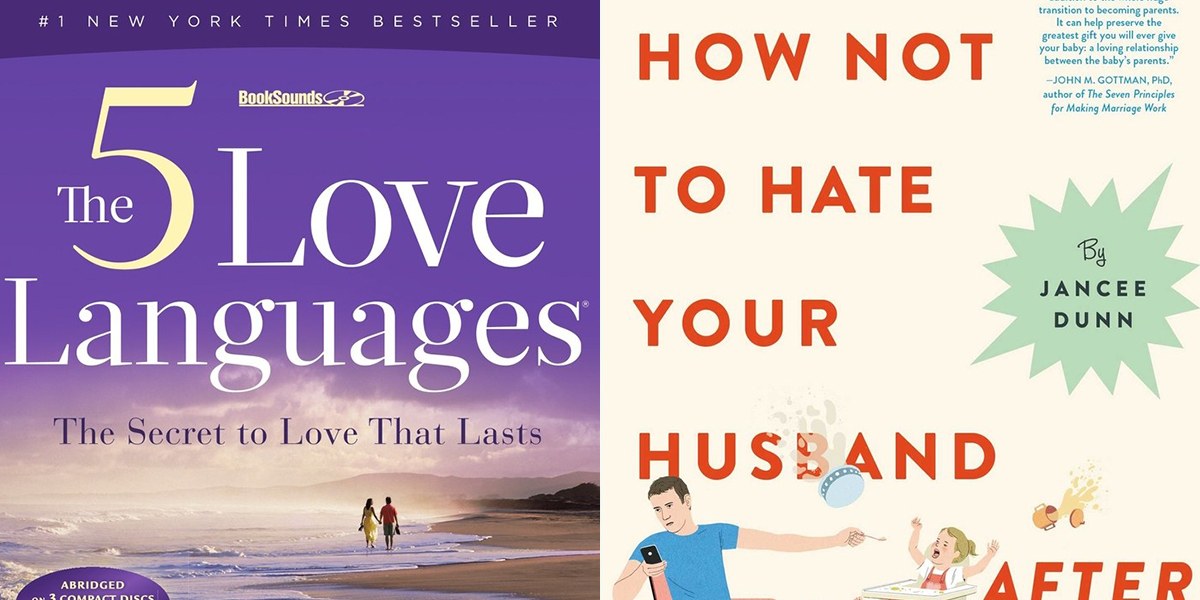
That’s one of the most useful and interesting things I learned when I decided to read four of the most popular relationship books on the market. I went to the library and took out Gottman’s seminal The Seven Principles for Making Marriage Work, the classic ’90s manual Men Are From Mars, Women Are From Venus, modern classic in the making The 5 Love Languages, and the hilarious if not as well known as it should be How Not to Hate Your Husband After Kids. After poring through these volumes, I got some interesting tips, asked myself some probing questions, and digested a lot of B.S. that didn’t do squat for my marriage of nearly 15 years.
Here’s how my marriage self-help experiment went.
1. The 5 Love Languages by Gary Chapman
With over 11 million copies sold and eight years as a number-one New York Times bestseller, this book has become a favorite among the book-club circuit. Chapman says that after 30 years of marriage counseling, he determined that there are five emotional love languages each individual responds best to: words of affirmation, acts of service, receiving gifts, quality time, and physical touch.
It’s clear that the Love Languages paradigm is appealing to couples hoping to improve their relationship, but—to me—this book read as if Nicholas Sparks were dolling out marriage advice. I couldn’t get past the flowery language that often suggested “filling up your love tank.”
While it makes for a great-selling book, I don’t think that complex humans can so easily fit into one box. Why can’t we choose to be affirmed and value physical touch and desire a fancy gift on occasion? I couldn’t pinpoint a box for Nate or myself, which made the whole premise fall flat off the bat.
That said, I appreciated that Chapman’s advice really boils down to listening to what your partner needs to feel happy. So we basically skipped the part where you have to pick a language and have tried to put some of his lessons into practice based on instinct. For example, pulling from the advice for people who need words of affirmation, we’ve worked to practice suspending complaints and instead give compliments and expressing verbal appreciation. And Chapman’s right: The backyard gets clean faster with a compliment than a complaint. Or, as my momma says, you catch more bees with honey than vinegar.
The takeaway:
This was at best a good reminder to communicate honestly and compassionately with the one language that matters in our relationship: English.
2. How Not to Hate Your Husband After Kids by Jancee Dunn
Confession: I don’t have kids and I don’t hate my husband. But the title of this book was so intriguing that I had to put it on my list. I loved Dunn’s whip-smart voice and appreciated that her solutions to problems were backed up by professional solutions and studies. Plus, as a reader, you feel totally immersed in the author’s life—as if you are going through her marriage struggles right along with her.
Some of Dunn’s problems, like feeling overwhelmed with responsibility and squabbling with her husband about chores, are not reserved for those with children; I could easily relate. We got to follow along with her page-turning experiments (like having sex every day for one week) and read about the honest outcome. Sometimes she failed and other times she succeeded, which is what marriage is all about. Reading about her marriage travails helped me and Nate identify similar patterns in our own relationship and start conversations about things—like how we eat dinner in front of the TV too often or that we tackle problems better when we’re fresh in the A.M.—that we might not have noticed or talked about otherwise.
Dunn honestly articulated how marriage can be affected by having children. (In Gottman’s research, he found that two thirds of couples underwent a precipitous drop in marital satisfaction when they became parents.) I think that while this book is marketed to parents and specifically to mothers, it’s a great read for those who might be on the fence about starting a family. While it likely wasn’t her intention, Dunn’s honesty and candor made us feel comfortable in our decision to be childfree and helpfully provided solutions to some of our own marital problems.
The takeaway:
Our problems are normal and manageable with some communication and appreciation for each other—and I’m glad we’ve chosen to be child-free.
3. Men Are From Mars, Women Are From Venus by John Gray
If the wear and tear of a library book are any indication of its success, this one hits it out of the park. Men Are From Mars, Women Are From Venus was the wildly popular self-help book from the 1990s that predicated marital success on understanding the fundamental differences between the sexes. The book dishes out advice in cheeky language that describe men as Martians and women as Venusians. Twenty-seven years later, this book feels not only antiquated but sexist.
I’d put this book up there with Fifty Shades as the top of my hate-reads. In one example, Gray describes men as having the desire to problem-solve and give advice to women, while women just want to feel heard. He even states that men are more goal-oriented. In our marriage, the opposite is almost always true.
He also says that men need to let women be irrational while women need to let the men ignore this and retreat to their “caves.” As much as this book irritated both of us, it made us realize that our marriage is much more equal than would be predicted by standard gender stereotypes. And while parts of our everyday life often fall along gender norms, we’re partners and understand that being sensitive is not feminine just like my intricate to-do list is not a man’s job.
The takeaway:
Nineties fashion might be back, but there is nothing cool about this retro attitude to gender roles in relationships.
4. The Seven Principles for Making Marriage Work by John M. Gottman, Ph.D.
If there’s a relationship bible, this would be it—and for good reason. The Seven Principles for Making Marriage Work has provided a blueprint for successful relationships and been adopted by countless therapists for years. Gottman has studied couples in his “love lab” at the University of Washington since 1986 and spearheaded what’s considered the most extensive and innovative research in marriage and divorce to understand why marriage is often so difficult and why some relationships click while others split.
Gottman says that what makes a marriage work is surprisingly simple and that happily married couples aren’t smarter, richer, or more psychologically astute than others. But in their day-to-day lives, they have hit upon a dynamic that keeps their negative thoughts and feeling about each other (which everyone has) from overwhelming the positives ones. He calls couples either “masters” or “disasters,” and this book is a roadmap (with great real-life examples) as to how to be the former.
When Nate is trying to get me to pay attention to his boring boy stuff on the Internet, he’s putting forth what Gottman refers to as a “bid”—a sign of needing interest and support. In his book, Gottman uses this example: A husband casually says to his wife, “Look at that beautiful bird outside!” The wife, who perhaps is reading a page-turning novel (or marriage book?!), has the choice to “turn toward” her husband and go to the window or “turn away” and ignore him. While this bird-bid may not seem like a big deal, it can reveal whether the couple is in mastery territory or heading for the big D.
One paradigm that really stuck with us was the “repair attempt.” In the book, a happily married couple was having a fight, and in the middle of the argument, the wife playfully put her hands on her hips and stuck her out tongue to mimic their child, causing them both to pause and laugh. Gottman says that this action—silly or otherwise—prevents negativity from escalating out of control and is a secret weapon of emotionally intelligent couples. It can be difficult to be silly amid a heated discussion, but we’re learning that a funny armpit fart noise or even a time-out really helps to diffuse an argument.
Another favorite example was called “fanning the flames,” which sounds hokey, but simply boils down to acknowledging positive aspects of your partner. Since reading this book, we’re not afraid to thank each other for anything and everything. In fact, it may seem like we’re going overboard, but I love when Nate thanks me for cooking dinner (and complimenting something I’ve made a million times) and he appreciates when I noticed he’s taken out the garbage or walked the dog when I have a deadline.
The takeaway:
There are so many valuable real-life lessons that resonated with us in this book (we even bought the workbooks after reading it!) and a lot of it boiled down to being kind, which anyone is capable of doing.
Anne Roderique-Jones is a freelance writer and editor whose work has appeared in Vogue, Marie Claire, Southern Living, Town & Country, and Condé Nast Traveler. Twitter: @AnnieMarie_ Instagram: @AnnieMarie_