



Category Archives: Marriage & Divorce
EXCLUSIVE: Shamari DeVoe on joining 'RHOA' cast, new music, and her “solid” marriage to Ronnie DeVoe
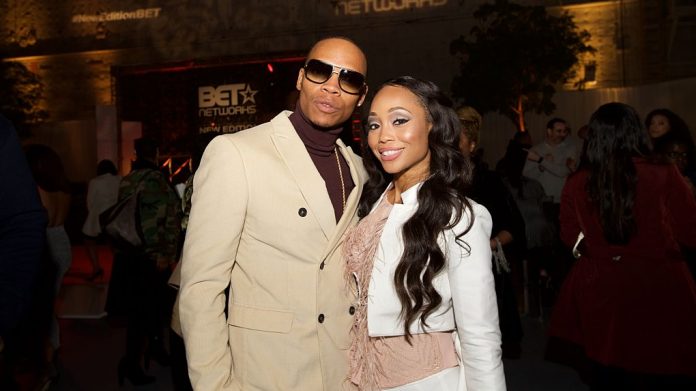
It’s almost time for The Real Housewives of Atlanta to return to the small screen and the show is getting some new blood in its eleventh season by adding Shamari DeVoe to the cast.
The latest lady to nab a peach should look familiar because she has been in the business for years. As a member of the nineties girl group, Blaque, she also snagged a role on the cult classic Bring It On, alongside her bandmates Brandi Williams and the late Natina Reed.
Now, she has her sights set on reality television and we caught up with her to find out what we can expect when she going the cast of the hit Bravo series.
5 things to know about ‘RHOA’ newbie, Shamari Devoe
“I felt like it was time for the world to know who I am as a marriage ambassador and a recording artist and a family woman It was time for a change and I decided this was a great opportunity.space“> Of course you have some reservations but sometimes you just have to go out and look at the bigger picture. The world will get to see my family and hear my testimony,” she told TheGrio during an exclusive interview.
Fans will get to see Shamari DeVoe balance life as a wife and mother to one-year-old twins with her mission to help couples stay connected as a marriage ambassador.
“We’re on a journey to save marriages and have healthy relationships and help to heal families which will impact the community. We don’t get paid to do it. We do it because we have a passion for it,” she explained.
“Being a marriage ambassador lets me go out and help people heal their marriages and save their families. We offer advice and provide the tools needed to maintain a strong relationship. Today, it’s so hard to stay married and there’s no one telling you what to do. We are there to help because we have gone through our own issues and trials ourselves. Now we are going out and doing events around the country like the Married For Life Walk where couples walk two miles holding hands, reaffirming their love for one another.”
Shamari says she’s not worried about the “reality TV curse” when it comes to her relationship with her husband, Ronnie DeVoe of New Edition.
“It was never a thought in my mind. We keep our marriage on a very firm foundation and we have a bond that is unbreakable. There’s no way any reality Tv show could ever break up our marriage. There are so many issues we have to deal with but reality television is not one of them,” she said.
“We are used to being in the limelight and being in this industry and being seen. I’m constantly doing shows every weekend and so is my husband so it’s the normal routine for us. Now it’s just on a bigger platform.”
Ronnie DeVoe will appear on this season of RHOA and so will Shamari’s adorable twins. Fans may also get a glimpse of the couple working on new music together as Me and Mari.
“We have a single coming out called “Love Comes Through” and I’m so excited about that. It’s all about our journey and what we have gone through so I’m excited for the world to hear it,” she says.
Shamari DeVoe is also readying the release of new music from Blaque after securing the masters from a previously unreleased project, Torch.
“It’s just the two of us. There will never be a replacement because Natina is irreplacable. We are releasing our Torch album. It’s an unreleased album that our fans started a petition for us to release. It’s from when we were signed to Elektra Records and we just got all the masters for that project and we are going to put that out as Blaque. It’s very special music because Natina recorded the songs with us. We brought in a DJ for the show because we don’t want to have anyone else do her parts,” she said of her bandmate who dies in a car accident in 2012.
“It’s hard. Natina was our biggest cheerleader and our biggest fan. It’s really hard. She was my best friend. She’s like a sister to me. We feel like we are paying homage to her and celebrating her life by continuing to do what we love and what she loved. Every year, we host huge party on her birthday and that’s coming up on October 28. We have over 400 RSVPs so far. We have a great time. It’s getting bigger and bigger each year.”
Nene Leakes throws epic shade at pregnant former ‘RHOA’ star Kenya Moore
When it comes to dealing with the other women RHOA, Shamari DeVoe doesn’t seem too concerned about the never-ending drama.
“In this group, there are gonna be people who have things to say or aren’t so welcoming of course. You have to stay tuned and see exactly what’s going to happen,” she said. “Being around a bunch of women, everyone is not going to love each other. It is what it is.”
Season 11 of The Real Housewives of Atlanta premieres November 4 at 8/7c on Bravo.
Chicago couple from 'Married at First Sight' talks spinoff, relationship status
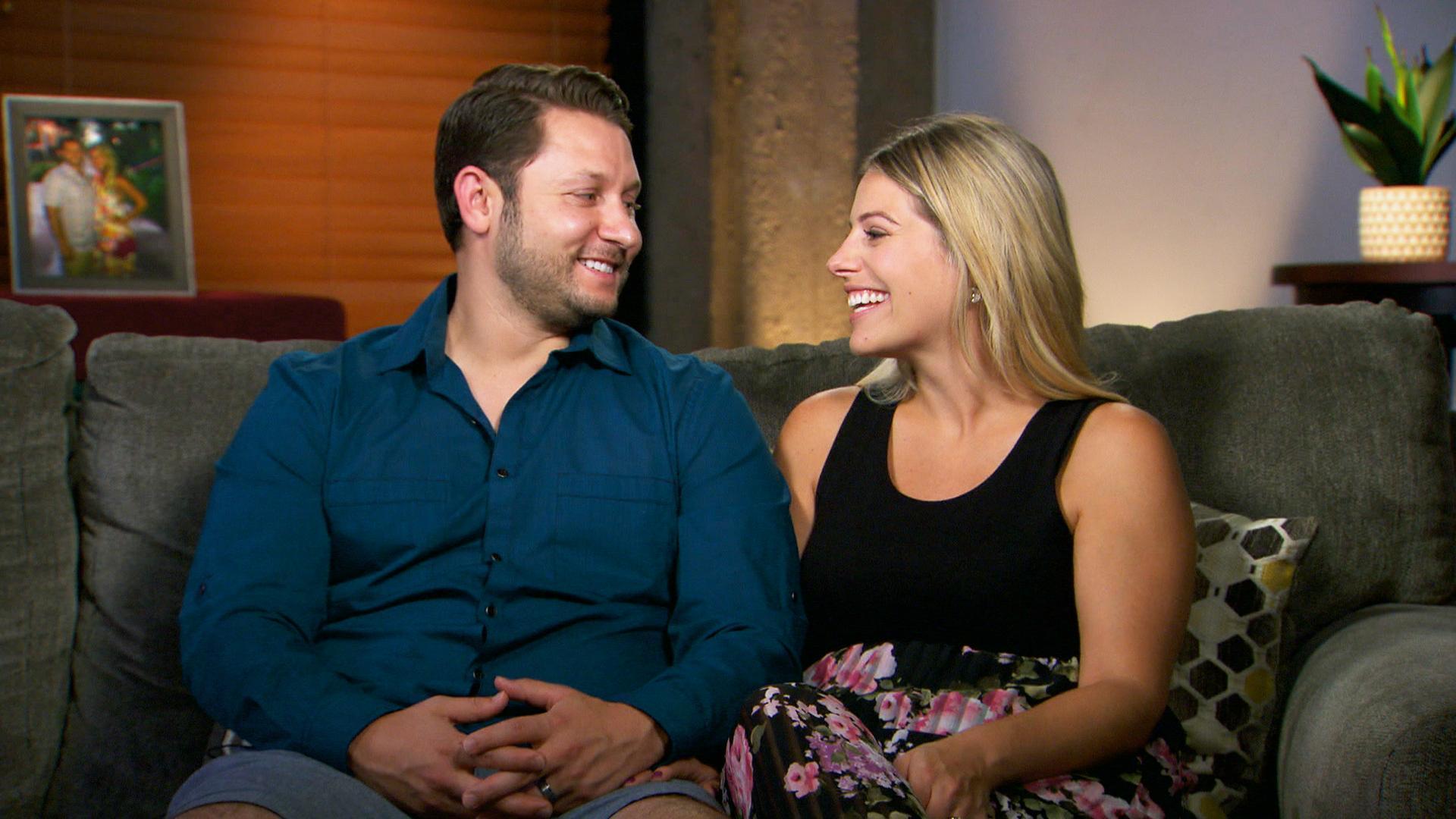
Since you last saw them on TV, Chicagoans Anthony D’Amico and Ashley Petta have celebrated their second anniversary and announced they are expecting their first child. But let’s get down to brass tacks: Did the couple ever find a Chicago apartment with a parking space for Petta?
“We moved into a place where I have my own parking spot. Anthony does street park,” Petta told the Tribune by phone. “He was almost late to this interview because he couldn’t find parking.”
Two years after meeting at the altar at the Palmer House Hilton, Petta and D’Amico are once again letting reality TV cameras into their relationship. “Married at First Sight: Happily Ever After?” follows them and two other “Married at First Sight” couples as they prepare to become parents.
D’Amico and Petta are the only pair from the “Married at First Sight” Chicago season featured on the spinoff, which is scheduled to premiere at 9 p.m. Tuesday on the Lifetime network.
“The first time around you don’t even know the person you’re spending every day with,” Petta said about filming. “But now it’s just more natural.”
D’Amico, Petta and four other strangers were selected from a pool of thousands of lovelorn Chicagoans and paired by “Married at First Sight” relationship specialists for Season 5, which aired last year. Cameras trailed the three couples as they wed, celebrated their honeymoons and merged their lives over eight weeks.
The Chicago edition of the series — which is set in a different city each season — was noteworthy because all three pairs announced on the finale that they planned to stay married. That goodwill didn’t last long for two of the Chicago couples who divorced last year after their season aired.
“It worked for us,” Petta said about the process. “We definitely put in the work, but I think we were also lucky. We were matched very well.”
The spinoff is more relaxed than the original series. On both shows, the couples meet often with the franchise’s relationship specialists for marriage advice. The difference is that on the spinoff, there isn’t a deadline to decide whether to stay married or call it quits. Instead, the focus is on the couples’ impending births. Petta and D’Amico made their pregnancy announcement in August.
Petta, a 32-year-old suburban bar manager, and D’Amico, a 35-year-old sales and marketing professional, seemed compatible from the start of Season 5, though they did get into some spats. They both said it was difficult to watch their season together because it rekindled arguments they had on the show. Some of those disputes were over finding a Chicago home with a parking space for Petta and D’Amico’s tardiness.
“I am not as late as it looks like,” D’Amico said.
“I disagree with you on that for sure,” Petta said. “He’s still late all the time, but I definitely just got used to it.”
D’Amico said viewers can expect “a whole lot of crazy Anthony and Ashley” on the spinoff.
“We have a really solid relationship,” Petta said. “I think that things are really looking up from here, and we’ve never been in a better place.”
tswartz@tribpub.com
Twitter @tracyswartz
Chicago-area couples reunite for ‘Married at First Sight’ holiday special »
Divorce final for 2nd couple from Chicago season of ‘Married at First Sight’ »
A year after ‘The Spouse House’: Two Chicago divorces and an engagement »
How All Relationships Prepare Us For Marriage

With over a decade of dating under my belt, I’d like to think I know a thing or two about relationships. Friends often flock to me for advice and appreciate my candid commentary. However, after a potential love interest left me crushed, I started questioning if I’m indeed as wise as my friends make me out to be. How could I have fallen for someone who ended up being such a jerk?
I cried to a friend, “I’m going to be single forever.” While she empathetically listened and wiped my tears, she also proclaimed “You know that’s not true.”
Despite my major disappointment, I had to agree with her. I know I am closer than ever to finding a meaningful and healthy romantic relationship even though I’ve been single for years.
How do I know?
Years ago, I was introduced to the work of therapist Dr. John Van Epp who studies and promotes intentional romantic relationships. In his book How to Avoid Falling in Love with a Jerk, I learned how our non-romantic relationships eventually influence our romantic ones.
Our interactions with strangers, co-workers, friends, family, and even our previous romantic partners usually fall into specific patterns. Van Epp likens these relationship scripts to a river. As he writes in his book,
The constant flow of new experiences followed within the banks of those scripts, reinforcing their already formed paths. Over time, subtle changes modified the patterns of these scripts by simply exaggerating or diminishing certain features, while still keeping their basic form … major changes in your scripts require extensive reconstruction. Patterns will replicate unless a new course is charted.
Van Epp writes that our relationship scripts that ultimately impact our marriage can be divided into three categories: peripheral others, meaningful others, and romantic others.
01. Peripheral Others
Whenever I talk about my lack of a love life to my mother, she almost always says, “Well, isn’t there a nice doctor at work you can date?” My mother is right in that as an ER nurse at a teaching hospital, I am surrounded by young, attractive doctors, medical students, and a variety of medical professionals. Unfortunately, I find many of them undateable because of how they treat who Van Epp calls “peripheral others.”
Peripheral others are strangers, acquaintances, employees under our command, and anyone else that we share a minimal degree of closeness with. We feel emotionally distant from our peripheral others because we don’t know them intimately and usually feel superior to them.
But this distant feeling is very similar to how we feel in an argument with our significant other. Van Epp writes that we can expect to treat our significant other and be treated by our significant other like peripheral others are treated when we’re emotionally distant.
Some of my colleagues can be extremely impolite and impatient with patients and even co-workers. I’m used to seemingly rude exchanges in emergency situations where short and direct communication is vital. That’s one thing. But a number of seemingly eligible “Dr. McDreamy” types at work show a persistent pattern of disrespectful behavior, and I know that this behavior would eventually be directed towards me in a long-term relationship.
As Van Epp writes, “Look very closely at the ways your partner treats all other people. It may be just a matter of time before you are treated the same.”
Some of the doctors I work with are astoundingly compassionate, even when they are stressed or working with particularly difficult patients. The empathy shown these small interactions gives me a glimpse into how I could be expected to be treated in a romantic relationship, even in emotionally distant and difficult times. A consistently compassionate person is the only kind of person I could date.
02. Meaningful Others
I probably should have known my crush would probably not end well when the guy’s close friends consistently agreed when I said he was one of the worst communicators I had ever met. “That’s him,” one of his best buddies said, laughing.
As Van Epp writes, “If peripheral relationships crack open a window to peer into the values and character of a partner, then significant relationships bust down the door.” These significant relationships are what he calls our “meaningful others,” our friends, family, and anyone else we have a substantial relationship with.
I admired how my crush consistently made time for his family despite his hectic work schedule. I too can be a horrible texter, so I forgave his forgetfulness which I chalked up to being busy. Yet, I found it odd that he rarely went out of his way to make time for his friends.
Family is almost always a meaningful relationship and sometimes a complicated one, but we have a lot of freedom when it comes to friends. We tend to be friends with people that resemble us in some way. Van Epp suggests looking closely at a potential significant other’s friends, since as the cliché goes, “Birds of a feather flock together.” Our friends reveal our character and uncover how we can expect to be treated when the initial excitement of a new relationship fades.
I truly liked my crush’s friends and family. They were kind, fun, and had similar beliefs to my own. However, his tendency to put work ahead of his friends and forgetfulness in responding would have become a major issue long term.
03. Romantic Others
Something about a romantic one liner in a movie makes me swoon. A line like, “You complete me” sounds great in a Hollywood movie but can spell disaster in a real-life relationship. Though Hollywood teaches us that true love can make someone change, evidence shows otherwise. Van Epp cites various research to conclude, “The dramatic changes that occur with a new relationship usually revert back to the prerelationship state by the end of the first year of marriage.”
However, Van Epp cautions against judging your significant other solely on their dating past. I’m not alone in the fact that discussing past relationships makes me cringe. Despite being a strong, confident woman, I’ve historically been a bit of a doormat in relationships. A lot of that behavior was tied to some unhealthy non-romantic relationships, and I’ve had to work through those insecurities. I would hate for my future significant other to base dating me just on my past romantic relationships!
Also, some of us just haven’t had a relationship yet. I have good friends in their mid and late twenties who are absolute catches who have never had an “official” boyfriend. Things just always fell apart before they defined their relationship or the guy had commitment issues. Judging a person based on their past relationships or lack thereof can be counterproductive and can give us an incomplete mental image of our partner. Yes, our past romantic relationships can provide insight into how we act in a potential new one, but it’s not the only way we act.
So back to my disappointment and my uncertainty I will ever find love. As I pouted to my friend, she cited my amazing relationships with my friends and family as proof of a bright romantic future ahead. Van Epp and his commentary on relationship scripts has taught me just how right she is. It’s easier to swipe right on a dating app or flirt with a cute guy at a bar than to treat a disrespectful patient with kindness or engage a bubbly cashier when I just don’t want to talk to people. But consistently doing the latter will be infinitely more helpful years after I meet my special someone.
Editors’ Note: Submit your own Dating Unscripted story here.
John Humphreys: Tax advice and the 'Silver Splitter' generation

John Humphreys: “With family trees becoming ever more complicated, it is imperative that clients have an up-to-date will.”
Life changes are key moments when financial advice is needed and no more so, as John Humphreys explains, than when a marriage ends or a new one begins
Government figures published this autumn indicate that divorce rates are falling. While good news at first glance, dig a little deeper and it seems this is sadly not the case for the over-60s. In the baby-boomer generation divorce rates have actually increased, leading to the rather unfortunate nickname ‘Silver Splitters’.
Advisers will be well aware that, with divorce, comes a whole host of financial dilemmas and planning needs. Given an estimated 42% of marriages in England and Wales end in divorce, advisers are likely to find themselves guiding newly-single clients many times throughout their careers.
In among the delicate act of splitting a couple’s wealth, the area of inheritance should not be overlooked. In straightforward situations, family wealth may pass through generations in straight lines from parents to children to grandchildren. Following a divorce, however, the inheritance pattern can take a sharp turn sideways, which may be all too easy to miss.
The first point clients may need reminding of is that, whereas a couple can combine their nil-rate bands (NRBs) and, if applicable, residence nil-rate bands (RNRBs) for inheritance tax (IHT), following a divorce the ability to transfer them to a spouse or civil partner is immediately lost.
The maximum combined NRB and RNRB that can, currently, be offset against net assets becomes £450,000 (£325,000 of NRB and, if applicable, £125,000 of RNRB) rising to a maximum of £500,000 from 6 April 2020.
Not only are the over-60s more likely to divorce than their millennial counterparts, they are more likely to be home owners, with figures showing home ownership in 65 to 74-year olds has risen gradually to almost 80%, and less likely to have a mortgage.
This is the ‘baby-boomer’ generation, who have benefitted from significant house price inflation and typically have the added benefit of final salary pension schemes, so they can ‘afford’ to divorce and still maintain a comfortable lifestyle.
Yet the divorced, mortgage-free generation may find that, unless they start planning, they will potentially leave significant IHT liabilities for their heirs – unless they remarry, which brings in a different set of inheritance issues.
The time needed to plan ahead also needs consideration. For a married couple or civil partnership, IHT only becomes chargeable on the death of the second spouse or civil partner. This may be many years later, during which time the surviving partner may have taken advice and time to plan for IHT.
A single person’s estate (divorced or otherwise) does not have the luxury of delaying the IHT assessment, with any IHT chargeable immediately on their passing. Clearly there is a need to review and consider any actions needed.
For some clients, arranging a life policy written into trust for their beneficiaries may be sufficient to mitigate IHT. Families may also wish to consider using trusts to ensure that assets are distributed as the settlor wishes.
The wide range of trust structures available does allow room for flexibility. If, for example, clients wish to make a gift into trust but still have the ability to receive annual capital payments, a flexible interest-in-possession trust may be suitable. In addition, wills, death-in-service and pension scheme nomination forms should all be updated.
The situation for divorced over-60s is not necessarily static though, and remarriage may be the next happy chapter. Indeed, 90% of weddings in the over-45s are a second or later marriage for either the bride, the groom or both.
Here again comes a crucial point at which financial advice is needed. On remarriage, unless a will states otherwise, a large proportion of family wealth will pass to the new spouse, potentially leaving any children from previous marriages or relationships without any inheritance or a much-reduced inheritance.
Sideways move
Unless action is taken, inheritance to the next generation may move sideways, with children from a second or later marriage potentially receiving more of the deceased’s estate than children from a previous marriage or relationship.
With family trees becoming ever more complicated, it is imperative that clients have an up-to-date will. Alongside a will, a trust can be used to specify exactly what assets the settlor wishes to pass to their children, a new partner, a new partner’s children and anyone else.
The trust can also have the benefit of avoiding probate, thereby being able to distribute money to a surviving spouse or civil partner and/or children and grandchildren immediately. This can quickly alleviate fears of financial hardship, which can occur if there is significant drop in pension income for the surviving partner – a 50% reduction is very common.
Life changes are key moments when financial advice is needed – no more so than when a marriage ends or a new one begins. Understanding a client’s wishes for how, when and to whom they would like to see their wealth distributed is crucial to ensuring appropriate plans can be made and assets are received by those the client wishes in the most tax-efficient and timely manner.
John Humphreys is inheritance tax specialist at WAY Investment Services