



Category Archives: Marriage & Divorce
Did Prince Philip Tell Charles to Have an Affair With Camilla While He Was Married to Diana? – The Cheat Sheet
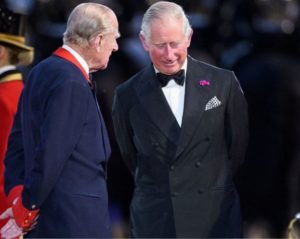

Prince Philip and Prince Charles | LEON NEAL/AFP/Getty Images
During her explosive Panorama interview in 1995, Princess Diana admitted that she knew Prince Charles was carrying on an affair with Camilla Parker Bowles while they were married.
“There were three of us in this marriage so it was a bit crowded,” the princess explained at the time.
Then in 1997, just months before her tragic death, Diana talked about the first time she learned that Charles was still seeing Camilla and later, in secretly recorded tapes, detailed her confrontation with her husband and his mistress. What was on those tapes was revealed during a documentary that aired in the U.S. several years ago but was only recently screened in the U.K.
Here’s more on that confrontation plus the shocking thing Diana claimed Prince Philip told his son about having an affair, and Queen Elizabeth II‘s reaction to it all.
What happened when Diana confronted Camilla and Charles?

Prince Charles and Princess Diana | EPA/AFP/Getty Images
The Princess of Wales revealed that she ultimately decided to show up at a party and confront Camilla face to face. Diana said she remembered telling her husband’s mistress, “I know what’s going on between you and Charles and I just want you to know that.”
The princess then described how Camilla shot back saying, “You’ve got everything you ever wanted. You’ve got all the men in the world fall in love with you and you’ve got two beautiful children, what more do you want?’”
According to Diana, the last thing she said to Camilla was: “I want my husband. I’m sorry I’m in the way … and it must be hell for both of you. But I do know what’s going on. Don’t treat me like an idiot.’”
Diana’s confrontation with Charles didn’t go as expected either as he acted as if it was perfectly fine for him to cheat on her with another woman because of his royal status.
“I refuse to be the only Prince of Wales who never had a mistress,” he told her.
Diana claimed Prince Philip told his son to have an affair

Prince Philip and Prince Charles | Justin Tallis – WPA Pool/Getty Images
The princess claimed that it was actually Charles’ father, Prince Philip, who put the idea that it was okay to have an affair in his head.
“My father-in-law said to my husband ‘if your marriage doesn’t work out, you can always go back to her after five years.’” Diana alleged in her recordings. “Which is exactly — I mean, for real I knew that it had happened after five [years] — I knew something was happening before that but the fifth year I had confirmation.”
What was Queen Elizabeth’s reaction?

Queen Elizabeth II | Sean Gallup/Getty Images
Diana also described what Queen Elizabeth told her when she went to Her Majesty seeking advice on everything.
“So I went to the top lady, sobbing, and I said ‘what do I do. I’m coming to you, what do I do?’ And she said ‘I don’t know what you should do. Charles is hopeless,’” Diana recalled. “And that was it, and that was help.”
Read more: Did Prince Charles Consider Marrying Another Princess Before Diana?
Check out The Cheat Sheet on Facebook!
Tough Love Relationship Advice Married Couples Need To Understand For A Good Marriage – YourTango

If you want a strong and healthy relationship, there are a few things you need to understand.
Recently, I was asked what the core principles are for making a good, strong marriage.
Interesting question. These sort of questions fascinate me. Trying to identify the “core”, or “basic”, foundations of something requires drilling down below the froth, and discovering those things that cannot, or should not, be ignored.
After having listened to the life stories of so many people over the course of the past three decades, I found it pretty easy to come up with a short list of core truths every married couple should keep in mind (no surprise, I also have a long list).
The relationship advice I give is not solely informed by my experience as a therapist. Each of the foundations I mention below are also supported by research. But, as is often the case with psychology, research simply confirms what your grandparents already knew and took for granted.
So here we go, five truths about marriage that every husband and wife should keep in mind.
1. Your spouse is not perfect.
So what? Great marriages are not made by having the perfect spouse. If that were the case, there would be no great marriages.
Instead, great marriages are made when two people are reasonably compatible, when each looks for the good in the other, and when there is mutual support, forgiveness, and respect.
No one finds the perfect spouse. We all have our shortcomings. Dwelling on the imperfections of your spouse poisons the relationship. Learn to let the little things go. If you must focus on something, choose to focus on the good qualities of your husband or wife.
2. Your spouse cannot make your life complete.
Many young couples have the unrealistic expectation that the marital relationship will act to “fill in”, or “mend”, the broken parts of their life. To some extent, this does occur, but it is not complete.
If you enter marriage believing that this wonderful person you have married will be your best friend, counselor, motivational coach, substitute father/mother figure, etc., you will be disappointed. Resentment will eventually take root. When it does, great unhappiness is not far behind.
Instead of insisting that your spouse fill all of these functions, rely on friends, family, and yourself. By reaching out in this way you live a fuller life, and have a happier marriage.
After all, is it truly realistic to think that your spouse can meet all of your needs? Of course not. No one would even voice such an expectation. But many people unintentionally and subconsciously fall into the trap of having this mindset. Sadly, they may not come to realize this until after the pressure such demands create has resulted in a divorce.
Each of us (no matter the relationship: spouse, parent, child, friend) needs to take a sober look at our expectations. When they turn out to be unrealistic, let them go. You and your spouse will be happier, and paradoxically, your relationship will grow closer.
3. As is true in life more generally, you get out of your marriage what you put into it.
If you invest time/thought/energy into growing a stronger and healthier relationship, you are likely to be rewarded with a terrific relationship.
That is not a guarantee, but a principle (just the same as if you exercise and eat right you are likely to be healthier and live longer than if you never exercise or eat properly).
The effort you put into your marriage can be made more effective by candidly talking with your spouse about what is going well in the relationship. You’ll then learn what can be focused upon even more to help your marriage flourish.
Also, take the time to patiently talk about what is not going so well. Honestly consider how each of you can take steps to shore up weak areas in the relationship.
Lastly, give one another grace: let the little things go. Pick your battles.
Have this talk once a month. It’s important: put it on your calendar.
4. Marriage is somewhat like an investment account.
The more you put into building a strong connection with your spouse (showing kindness, support, affection, and respect), the more the emotional bank account grows. Then, when you really miss the mark (forget about an anniversary or impulsively purchase that must-have item without your spouse’s approval), there will be sufficient ‘emotional funds’ to cover the loss your relationship sustains.
This approach must not be used as a ploy to allow for misbehavior — that just comes across as manipulative.
Be intentional about building intimacy, good memories, shared successes, and so forth. Be a pro-active investor in building a strong emotional bank account.
5. Love is a verb, not a noun.
Most people report that one of the important reasons they chose to get married was that they were ‘in love’ with their spouse. They had deep feelings of affection, admiration, and affection for each other.
Feelings, however, will wax and wane. There will be times in a marriage when these feelings are very weak, or altogether missing. Some men and women, faced with these weakened feelings, will then ask “Why should I stay married if I don’t love my husband/wife any longer?”
Someone who has this view of love may very well end up with multiple marriages. Feelings are fickle things; do not base your marriage on the unstable foundation of feelings.
Recognize instead that love involves more than feelings. That at its heart love is a commitment to do what is best for another and that this commitment then needs to be expressed in daily actions that are supportive, affirming and respectful.
When this approach is taken consistently, the feelings of love that may wane at times will eventually return, mature, and root more deeply in the relationship.
Forrest Talley, Ph.D., is a clinical psychologist in Folsom California. He spent 20 years training interns at the University of California, Davis, Medical Center before recently opening a private practice called Invictus Psychological Services.
This article was originally published at Medium. Reprinted with permission from the author.
How To Fix A Broken & Unhappy Marriage | Dr Karen Finn – YourTango

No matter how hopeless things feel.
If you’re wondering how to fix a broken marriage, you’re not alone. This type of relationship anxiety affects so many couples who swore they would be happy together but then wound up in an unhappy marriage, wondering what went wrong.
If your relationship has hit a rough patch, don’t panic — there’s some marriage advice that could help you learn how to save your marriage and keep you both from the brink of divorce.
The bliss of “dating/engagement/wedding” is hardly a trustworthy predictor of a marriage’s success post-honeymoon phase. Saving an unhappy marriage may not be on a wedding-day radar, but it sometimes becomes the unexpected goal not too far into the future.
Anyone who has ever aspired to grow-old-together love has witnessed at least one iconic couple so interwoven at a soul level that the partners are veritably “one.” They speak and move in unison, respond with impeccable timing, and somehow, inexplicably, look alike.
The deeply-entrenched love of elderly couples who have been together almost their entire lives can be so inextricable that the spouses can’t live without one another. Literally. The stories of spouses dying within months, weeks, even hours of one another are so poignantly common that they have their own name: the widowhood effect.
Whether these beacons of hope are grandparents, friends or movie characters, their mastery of commitment gives witnesses pause to consider their “tricks.”
Were they always this happy? Did they ever fall on tough times? Did they ever get bored or angry with one another? Did they ever have to worry about saving an unhappy marriage?
Relationships are organic in the sense that they are always in motion. Even stagnancy bears an undertow of change. Love relationships course through different forms of love. Many are to be expected — the giddy stage of romance, the power-struggle stage, the sunset years.
Most couples, however, commit during the romantic stage of love when they are marinating in matchmaking brain chemicals and hormones. They see all that is perfect and possible, and brush off the negatives like dandruff off a shoulder.
Give them a couple years, however, and that chemistry starts to wane. Suddenly reality sets in, and, even if the spouses aren’t incompatible, they don’t “recognize” their relationship. It doesn’t look or feel as it did early in their relationship.
They have power struggles, and the discomfort is often mistaken for unhappiness and/or boredom. They fight to “get back to where they once were” instead of embracing the course of love and working together to keep it vital.
Suddenly they are second-guessing their decision to marry and wondering if it is worth saving an unhappy marriage. Because they don’t recognize where they are in their relationship, they may be convinced there is nothing to do to save the marriage. And not having the “feeling of being in love” can cast a dread on the prospect of working on their commitment.
Some couples, of course, allow years to go by while negative emotions fester and morph into contempt, criticism, and defensiveness.
According to marriage expert Dr. John Gottman, couples wait an average of six years before seeking help for their issues. Perhaps one or both partners believe they shouldn’t (or don’t) need help at all.
So the big question is this: Is saving an unhappy marriage possible?
The answer is a cautious “yes.”
The caution is because the success of saving a marriage is contingent on the commitment of the partners to … well … save their commitment. Surprisingly, if even one person in the relationship is committed to growth, change, and working together, there can be a great hope for the marriage.
Here are 7 steps to take in order to fix your broken relationship and save an unhappy marriage turning things around.
1. Seek help early.
Don’t wait for those negative emotions and behaviors to take root. It is far easier to guide couples in developing compassionate communication skills than it is to untangle resentment that has had plenty of time to deepen.
2. Learn to listen.
This is so important no matter how silly it sounds. It is so easy when falling in love to hear what you want to hear and to move forward in the spirit of everything being rosy.
But too often people don’t know how to truly listen — to themselves or to their spouses. They get lost in blame and a need to be right and fail to hear with their hearts.
Everyone has triggers, fears, and painful memories. By learning to communicate those deeper realities with responsible expression and compassionate reception, intimacy and love grow. Too many relationships are lost simply because people don’t feel heard.
3. Prioritize your marriage.
Saving an unhappy marriage takes work. And making that investment can seem like a contradiction in terms if one or both of you is really unhappy.
But if you are committed to making your marriage work, you will need to infuse it with dedicated time and energy. Even ten minutes a day that is completely devoted to emotionally connecting with your spouse can work wonders. Remember the power of listening discussed above.
4. Replace the “divorce” mindset with a “marriage” mindset.
This is a decision that you are going to choose your thoughts.
Remember that you didn’t get to this place overnight, and you’re not going to get out of it overnight, either. Take the time to rediscover the reasons you got married in the first place. And repeat them and expand on them … over and over. As you work from this commitment mindset, you will likely discover new reasons to add to the list.
5. Work on yourself with no expectations of your spouse.
Yes, the objective here is for both spouses to be committed to the recovery of the marriage. But your work can’t be contingent on your spouse’s. That may seem like a big risk — and it is. “What if I do xyz, and s/he doesn’t do her/his part?” Yep. Could happen. Or maybe you won’t both evolve or “get it” at the same time.
But if the character and behavior traits you are working on are all positive traits, how can you lose? And if you start growing and demonstrating the results, your spouse may take notice and begin to change, as well. Either way … do your own work.
6. Take responsibility.
This can be so difficult, especially if your spouse has done something that you believe is more egregious than anything you have done. But relationships are always a common ground where two people come to work out their lives by learning, struggling and growing.
There is always responsibility on both sides. Owning up to yours will help to diffuse defensiveness on the other side while sharpening your self-awareness and -accountability. That goes for the little things as well as the big things.
7. Be transparent and accountable.
Leave your pride at the door. Transparency and accountability require self-reflection and an examination of your thoughts, behaviors, and intentions. There is no room for convenient omissions of details and information.
Your goal needs to be bringing you and your spouse onto the same page. Your intentions, therefore, need to be pure and for the good of the relationship. Your personal commitment to this — especially if you have violated your spouse’s trust — will speak volumes about your commitment to the good of your relationship going forward.
Saving an unhappy marriage is a commitment to a lot of hard work. But assuming that the marriage is not abusive and you can still see through the clouds misery to the memory of loving light coming through, there is hope.
Seeking help for saving an unhappy marriage can help define areas that need work, while giving you tools for working on them. It’s amazing how the “impossible” becomes “possible” when problems are identified and a plan of action is made to overcome them.
Dr. Karen Finn is a divorce and life coach whose writing on marriage and divorce has appeared on MSN, Yahoo! & eHarmony among others. You can learn more about Karen and her work on her website.
This article was originally published at Dr. Karen Finn. Reprinted with permission from the author.
How to Power Through Your Wedding Day Without Losing Your Mind – Washingtonian

Eating nutrient-dense food like an avocado is key to sustaining energy on your big day. Photo by femme run via Flickr Creative Commons.
The big day is going to be fun—and very, very long. Here, Registered Dietitian Nutritionist Taylor Johnson offers tips to help you power through.
1. The night before the wedding, get seven to nine hours of sleep.
2. The morning of, practice meditation to stay calm and focused for all that’s to come (in-laws!).
3. Hydrate with water.
4. Eat something nutrient-dense every three to four hours for sustainable energy. Johnson suggests pairing a protein and/or healthy fat with a whole carbohydrate: avocado (healthy fat) and hard-boiled egg (protein) on whole-wheat toast (whole carb), or hummus (protein) and olives (healthy fat) with a whole-wheat wrap (whole carb).
5. To calm nerves, Johnson turns to adaptogens, herbs that help the body deal with stress. One of her favorites, ashwagandha—traditionally used in India—is considered both a food and a tonic medicine for improving energy and reducing anxiety. Another key antianxiety herb is rhodiola, which helps promote calm and strong mental performance, so you won’t forget those vows.
This article appears in the Summer/Fall 2018 issue of Washingtonian Weddings.